
Why tenants aren't renewing leases in commercial office buildings (and how to keep them)
Key takeaways
- Roughly 49% of pre-pandemic office leases remain unrenewed, and about 1.4 billion square feet renews between 2025 and 2027 (Newmark). Renewals are now negotiations, not formalities.
- Hybrid work permanently cut footprints. Average lease sizes are down 11.6% versus pre-pandemic (Newmark).
- Flight to quality split the market in two. Class A holds tenants while commodity buildings lose them.
- Losing a tenant is rarely cheaper than keeping one once downtime, tenant improvement allowances, and free rent stack up.
- The levers an asset manager controls are differentiation, documented engagement, and provable building value.
The commercial lease renewal used to be a formality. The tenant stayed, the rent stepped up, and the paperwork closed. That is over. Renewals are now real negotiations, and asset managers walk into them with less leverage than they had before 2020.
The scale is large. Roughly 49% of pre-pandemic office leases remain unrenewed, and about 1.4 billion square feet is scheduled to renew between 2025 and 2027, according to Newmark. Every one of those conversations is a chance to keep a tenant or lose one.
Here is the useful part for an asset manager. Tenants leave for reasons you can diagnose. Most of those reasons are addressable before the renewal window opens. This article names the five reasons office tenants don't renew, what non-renewal costs you, and the retention levers you control.
The five reasons office tenants don't renew
Non-renewal is rarely one decision. It is usually several pressures arriving at once. These five explain most of them.
Hybrid work permanently shrank how much space they need
Tenants need less office than they used to. Average office lease sizes have declined 11.6% versus pre-pandemic levels, according to Newmark. Organizations in 2025 are leasing 15% to 30% less space while trading up to higher-quality buildings, per Century 21 Edge. The demand shock is real. Gupta, Mittal, and Van Nieuwerburgh estimate a 46% long-run decline in New York City office value tied to remote work. When a tenant renews, they often renew for a smaller footprint, and that pressure starts the negotiation.
They're trading up, not just leaving (flight to quality)
Many tenants are not exiting the market. They are moving to better buildings. Class A buildings posted positive net absorption in most major markets through early 2025, while Class B and C buildings kept losing tenants, according to Century 21 Edge. There are effectively two office markets running in parallel. Manhattan posted 11.4 million square feet of leasing in Q1 2025, its strongest quarter since late 2019, as high-quality space tightened (Colliers). If your building sits in the commodity tier, the renewal risk is that your tenant simply chooses someone else's asset.
The building offers nothing they can't get elsewhere
Sameness is the real threat. An undifferentiated building gives a tenant no reason to stay and every reason to shop. Amenities have shifted from nice-to-have to occupancy drivers, and Voit, citing Yardi Matrix, links amenity investment to double-digit rent premiums and higher retention. Buildings without differentiation or certification risk a "brown discount." When every option looks alike, price becomes the only conversation, and that is a conversation the owner loses.
Rent and concessions stopped feeling worth it
Owners are already paying to compete. On new long-term direct deals in New York City, tenants can obtain 6 to 12 months of free rent and tenant improvement allowances of $120 to $160 per square foot, according to BDO. When the only lever is price, the asset manager gives up margin and still risks losing the tenant. Concessions buy a signature. They do not build a reason to stay.
They can't see or feel the building's value
Tenants renew for a reason they can point to. If the building offers no memorable reason to stay and no evidence of engagement or performance, there is nothing to weigh against a cheaper or newer option down the street. Gensler's Peter Weingarten calls this the "flight to experience," arguing the office must earn attendance through memorable culture and connection. Put plainly, a building that gives tenants nothing to feel gives them nothing to defend at renewal.
What non-renewal actually costs an asset manager
Retention reads as sentiment until you price the alternative. Then it reads as math.
Losing a tenant starts a run of costs. Vacancy and downtime come first. Then the tenant improvement allowance for the next tenant, the leasing commission, and the free-rent concession to close the deal. Those stack up fast, and they often exceed what it would have cost to keep the tenant you had.
The distress data shows where this leads. Distressed transactions rose to 19.4% of traded square footage since 2024, up from 6.2% in 2021 to 2023, and 73% of resold central business district properties sold at a discount, according to CommercialCafe. Losing tenants in a commodity core is expensive, and the market prices that failure directly into the asset. Losing a tenant is rarely cheaper than keeping one.
What actually keeps office tenants renewing
Diagnosis is useful only if it points to action. These are the levers an asset manager controls, and they are practical and repeatable.
Give the building a reason to choose it
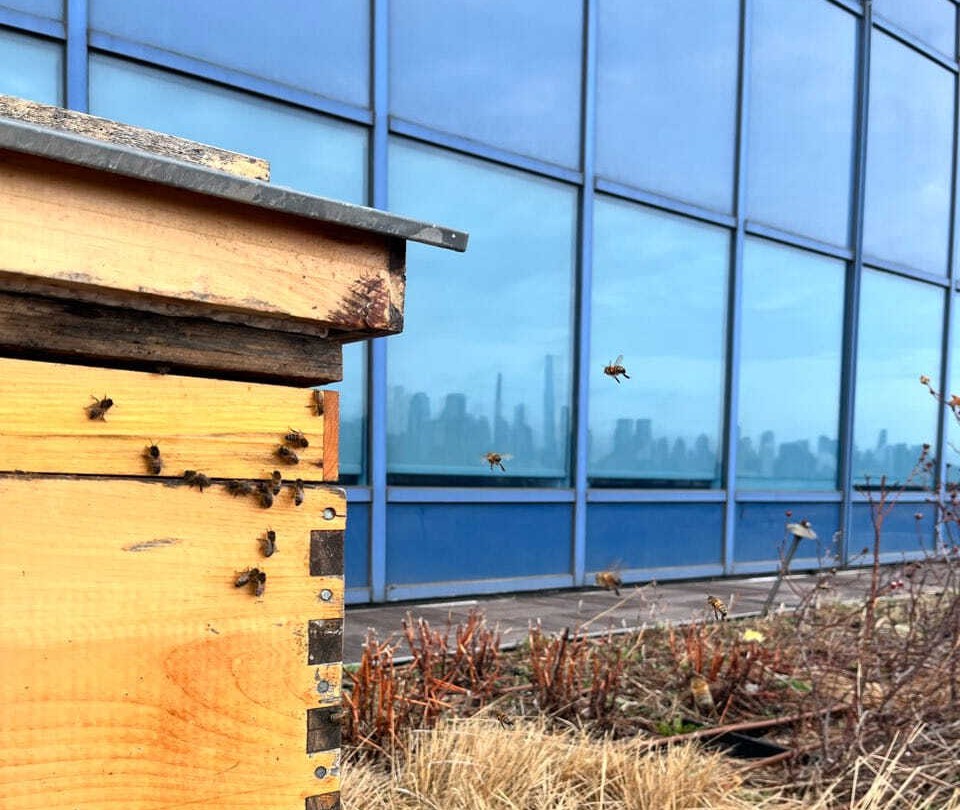
Differentiation beats sameness. Tenants and their employees notice concrete, visible features, and those features give a renewal conversation something to anchor to. Nature-based programs are one proven way to do this. Alvéole runs managed urban beekeeping and Wild BeeHome habitats across more than 2,200 commercial buildings, and the programs are visible on-site rather than buried in a policy document. A tenant who can see the building doing something distinct has a reason to stay that price alone cannot match.
Make engagement something you can document
Renewals reward evidence. An asset manager who can point to documented, differentiated tenant engagement negotiates from proof rather than instinct and concessions. Alvéole's MyHive platform gives portfolio-level participation data an asset manager can bring straight into the renewal conversation. Event registrations, participation rates, and building-level activity become numbers you can show, not claims you assert.
Tie building value to reporting you can prove
Certified buildings hold their value, and they hold their tenants. A CBRE analysis of 20,000 US office buildings found LEED-certified buildings command rents about 31% higher than non-certified, with a controlled premium of roughly 4% after adjusting for location, age, and renovation. Certification also helps buildings avoid the brown discount. The asset manager also faces a reporting side. Verifiable, asset-level nature disclosure now supports GRESB, TNFD, and sustainability-linked financing, and a policy document no longer holds up when a reviewer asks to see the underlying program. Alvéole's Aura platform and Nature Sensor device generate GRESB, TNFD, and CSRD-ready data from on-site monitoring, so the disclosure rests on real measurement.
Invest in wellbeing, because that's what employees renew for
The renewal decision is really about the tenant's people. Roughly 90% of a typical business's operating costs are staff, versus about 9% rent and 1% energy, according to the World Green Building Council. Small gains in wellbeing and productivity outweigh space costs. Access to nature and biophilic elements reduce stress and absenteeism, which is exactly the value an employer weighs when deciding whether the building is worth staying in.
Start before the renewal window opens
The renewal conversation is won 12 to 24 months out, not at the notice date. By the time a tenant gives notice, the reasons to stay or leave are already set. An asset manager who waits until renewal season is negotiating from behind.
Treat retention as an operational program, not a capital scramble. Operating-expense programs let you start small, prove the result on one or two assets, and scale on evidence. Alvéole's programs run in the background as operational programs, which is how they fit a portfolio without a large upfront commitment. The opportunity is real when the building earns it. Newmark reports that 67% of tenants in the market plan to maintain or grow their footprint at renewal.
Frequently asked questions
Why are tenants not renewing leases in commercial office buildings?
Tenants need less space after hybrid work, and many are trading up to higher-quality buildings. Commodity buildings that offer no clear differentiation lose out. Owners who cannot show engagement or provable building value are left competing on price alone.
What is a commercial lease renewal option?
A renewal option is a clause in the original lease that gives the tenant the right to extend for a defined term, often at a pre-set rent or a market rate. It sets the terms and timing for extending. It does not guarantee the tenant will use it.
How much notice is needed for a commercial lease renewal?
Notice periods are set in the lease and commonly range from 6 to 12 months before expiration. The exact window depends on the specific agreement. Asset managers should track these dates well ahead, because the retention work happens long before the notice date.
How can landlords improve their lease renewal rate?
Give the building a visible reason to stay, and document the engagement so you can prove it at renewal. Tie building value to reporting you can verify for GRESB, TNFD, and financing. Start these programs 12 to 24 months before the renewal window, not during it.
The bottom line
Renewals go to buildings that give tenants a clear reason to stay and give owners the evidence to prove it. Diagnosis is the first step. The five reasons tenants leave are addressable, and the levers that keep them are ones an asset manager already controls. Differentiation is no longer optional.
To see how nature-based programs and asset-level reporting fit your portfolio, book a demo with Alvéole.