

LEED v5 changed the biodiversity rules. Here's what that means for your existing buildings.
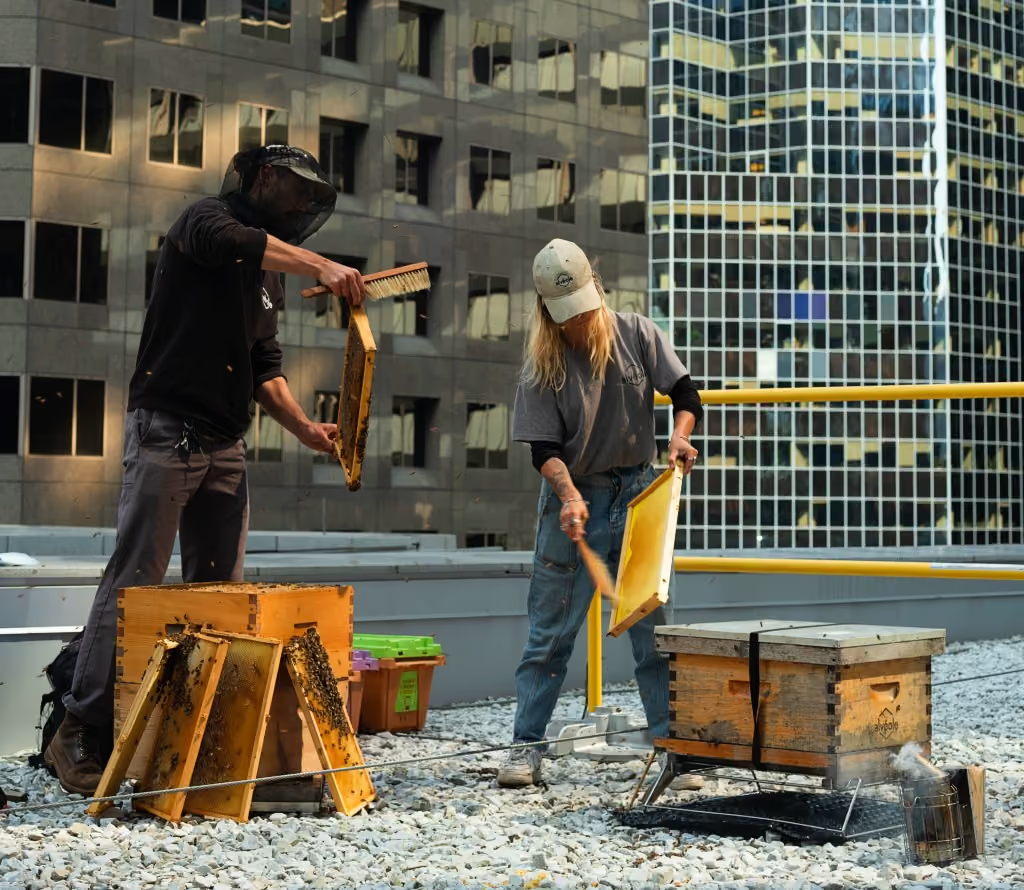
LEED is the most widely used green building certification in the world. Run by the U.S. Green Building Council, it scores buildings on energy use, water use, indoor air quality, site management, and more. A high LEED rating signals to tenants, lenders, and regulators that a building is doing the work.
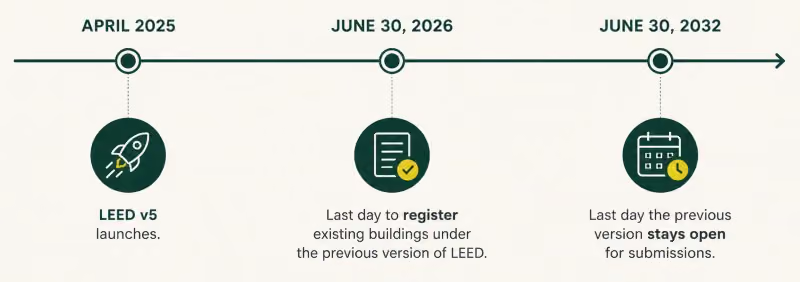
The latest version, LEED v5, launched in April 2025. As of July 1, 2026, it's the only version available for new commercial registrations. Most owners renewing their certification in the next 18 months will be on v5 whether they planned for it or not.
The headline change for our world: biodiversity now counts for 25% of available credits, up from a single line item in the previous version.
For new construction, going green has always been the easier story. You can design biodiversity into a project from day one. For existing buildings, it's been the harder one. You're working with a site that already exists, an operations team that's already busy, and a budget that's already spoken for. LEED v5 changes the math for both, but especially for the buildings that already exist.
How LEED v5 is structured
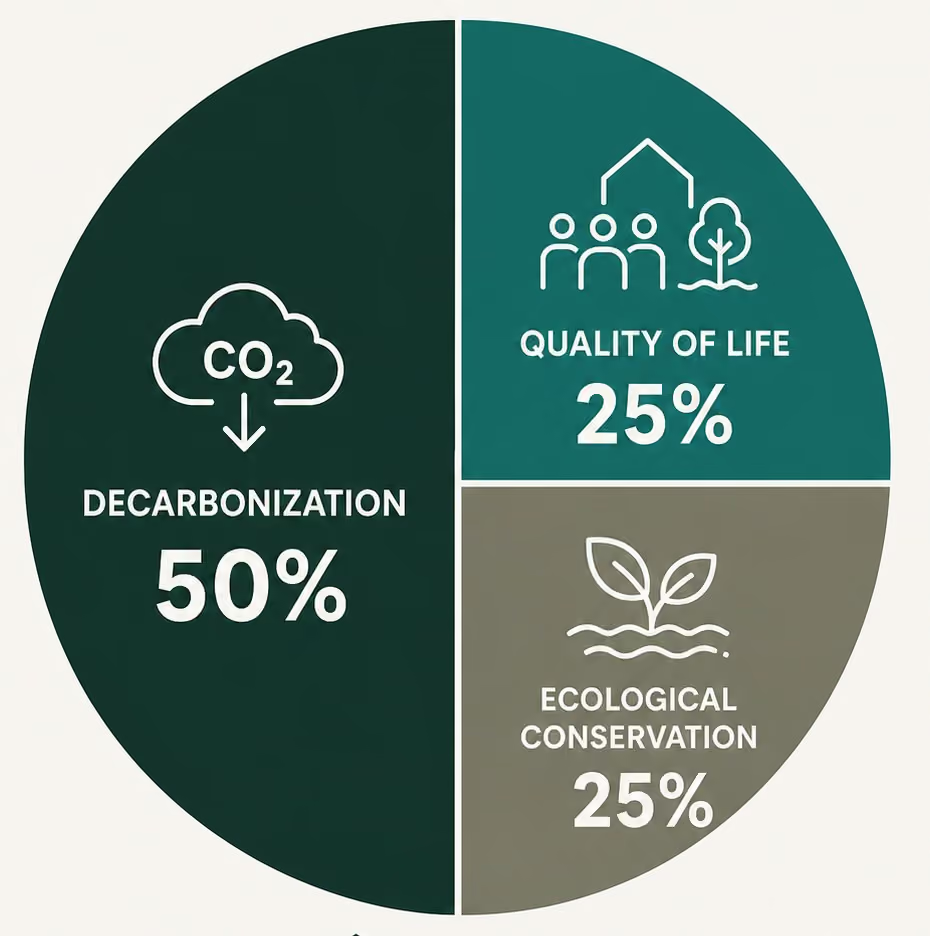
LEED v5 is organized around three pillars:
- Decarbonization (50%) covers energy efficiency, electrification, and embodied carbon in materials.
- Quality of life (25%) covers indoor air quality, accessibility, and tenant well-being.
- Ecological conservation (25%) covers biodiversity, water, healthy soils, and light pollution.
Biodiversity used to be a footnote. Now it sits on equal footing with tenant well-being. That's a deliberate shift from USGBC, and it reflects where major reporting frameworks are already pulling.
The quality-of-life pillar, in more depth.
Quality of life is the other 25% of LEED v5, and tenant experience is where it lives in your operations.
On May 27th at 1pm ET, join us live to go deeper on how green building strategies and tenant experience reinforce each other, with takeaways you can apply to existing buildings.
Register to join the conversation →
What changed for existing buildings
Three changes worth understanding.
Biodiversity is now part of your operations file
LEED v5 bundles several previously separate operations policies into one required document covering climate, well-being, and ecological work together.
Biodiversity is no longer a standalone story. It sits next to energy, water, and tenant satisfaction in the same file.
In practice, that means a record of what species are present, when they were observed, how the habitat is performing, and how tenants are engaging with it. An install date and a few photos won't carry you. The credit assumes an ongoing record, the same way an energy credit assumes monthly utility data.
The bird credit got real teeth
The old outdoor lighting credit now also covers bird collisions. Roughly a billion birds collide with buildings in North America every year, most from glass and night lighting. LEED v5 requires owners to address both. That can mean lighting that points down instead of out, glass treatments birds can see, and operational policies that reduce nighttime light spill. Canadian buildings have a regional version tailored to local guidelines.
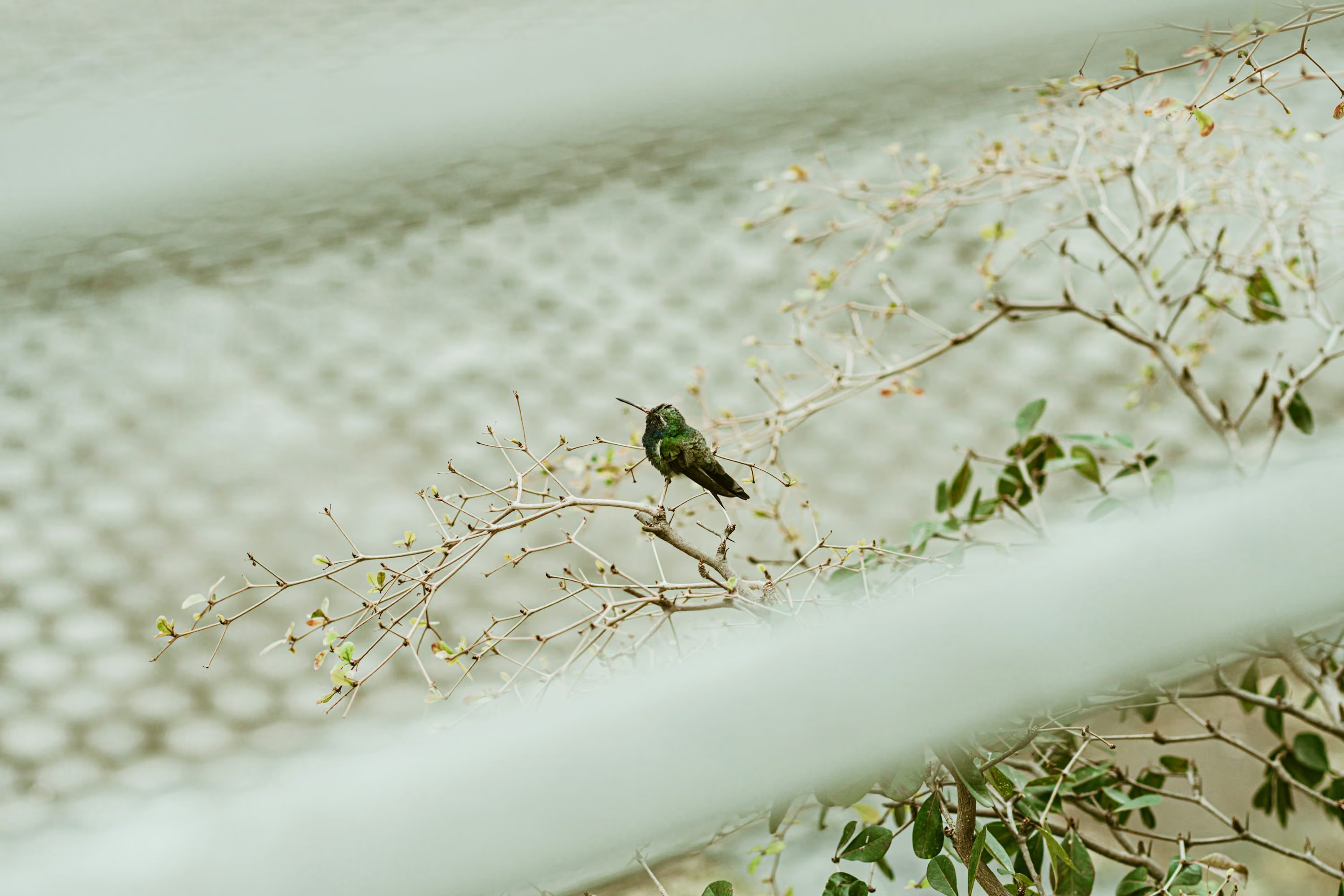
The old credit on outdoor lighting now also covers bird collisions. Roughly a billion birds collide with buildings in North America every year, most of them from glass and night lighting. LEED v5 acknowledges that buildings are part of the problem and part of the solution.
For Canadian buildings, there's a regional version of the credit tailored to local guidelines.
The dates that matter
LEED for existing buildings runs on a recertification cycle. You certify once, then re-verify performance every few years to keep the rating current.
To stay on the previous version, your building needs to be registered by June 30, 2026.
Buildings that already hold a v4.1 certification get an extra year, until June 30, 2027, to register a recertification. After that, LEED v5 is the only path. The previous version stays open for submissions until June 30, 2032, but no new buildings can register under it.
If you want to model what LEED v5 looks like for your portfolio, USGBC has a free scorecard builder for existing buildings. Worth running before any decision goes upstairs.
Why ongoing measurement is suddenly worth more
Reporting frameworks like TNFD, CSRD, and GRESB are now asking real estate owners for nature data, not just intentions. A pollinator habitat with no measurement record is hard to put in an annual report. One with quarterly data on species diversity, hive health, and tenant engagement fits straight into the disclosure your team is already producing.
LEED v5 lines up with where these frameworks are pulling. Owners that already collect biodiversity data have less work to do across the board, inside LEED and outside it.
Why ongoing measurement is suddenly worth more
There's a reason USGBC made this shift. Reporting frameworks like TNFD, CSRD, and GRESB are now asking real estate owners for nature data, not just intentions. A pollinator habitat that produces no measurement record is hard to put in an annual report. A pollinator habitat with quarterly data on species diversity, hive health, and tenant engagement fits straight into the disclosure your team is already producing.
LEED v5 lines up with where these frameworks are pulling. Owners that already collect biodiversity data have less work to do across the board, both inside LEED and outside it.
How Alvéole supports your LEED v5 work
On-site biodiversity infrastructure. We install and manage beehives, native plantings, insect hotels, and educational signage. Installations are managed by trained beekeepers and ecologists, so the data behind them is real, not estimated.
Aura, our nature intelligence platform. Aura tracks biodiversity data on your site over time and formats it for the reports your operations team is already running. That's the ongoing record LEED v5 now expects, and the evidence TNFD, CSRD, and GRESB ask for.
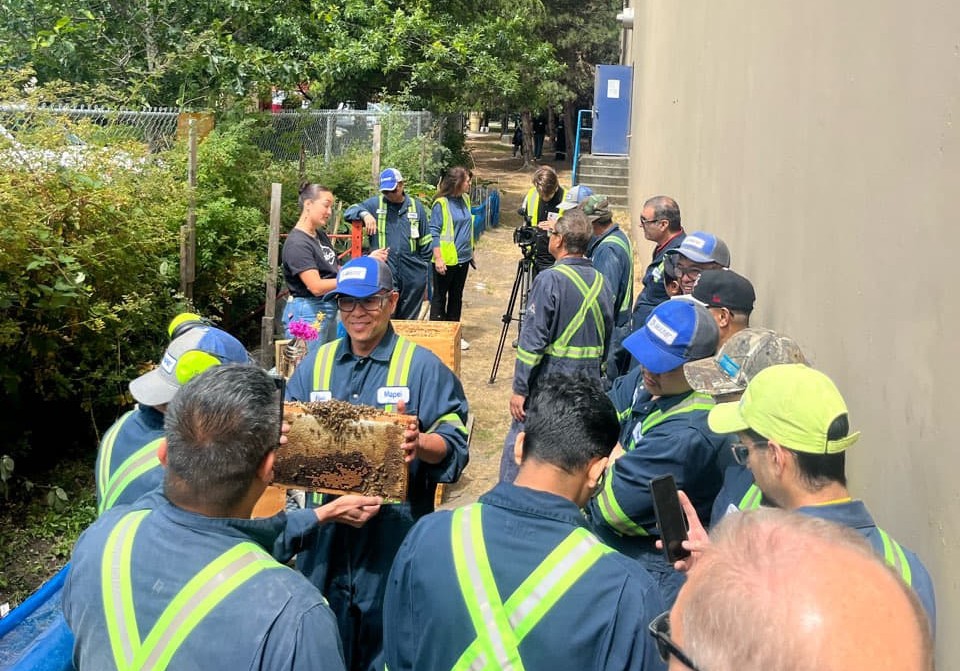
Tenant programming. We run beekeeping workshops, honey harvest events, and educational sessions that connect tenants to the biodiversity work on their building. Every event generates attendance and engagement data that maps directly to the quality-of-life pillar of LEED v5.
What to do next
The window to plan is now. If your building or portfolio includes a recertification due before mid-2027, this belongs on next quarter's agenda. The choice isn't whether to engage with LEED v5. It's whether to enter it with a biodiversity story already in motion or scramble to build one once the certification clock starts.
_b72540c5.jpeg)