
Tenant engagement programs that work across a multi-building portfolio

Key takeaways
- Programs that work portfolio-wide are recurring, standardized, locally flexible, and measured. One-off events do not scale.
- Nature-based programs and a shared platform travel well across every building.
- Participation data gives the asset manager evidence for renewal conversations.
- The same programs produce biodiversity data that feeds reporting and certification submissions.
Introduction
A single building can run a wine night. A portfolio cannot rely on ad hoc events. When each property team invents its own programming, you get scattered activity, uneven turnout, and no way to compare buildings.
Hybrid work permanently shifted leverage to tenants. Renewals that used to be formalities are now negotiations, so what you do to engage tenants affects occupancy and net operating income directly. For an asset manager, the question is no longer "what event should we host?" It is "what program runs the same way across every building?" This guide answers that.
What portfolio tenant engagement means
Tenant engagement is the set of recurring ways you involve tenants in the life of a building. It is not a one-time party. It is the ongoing programming, communication, and shared moments that give tenants a reason to stay connected to the property.
At the scale of one building, a property manager can run engagement by hand. One calendar, one set of relationships, one point of contact. That does not hold up across ten or fifty assets.
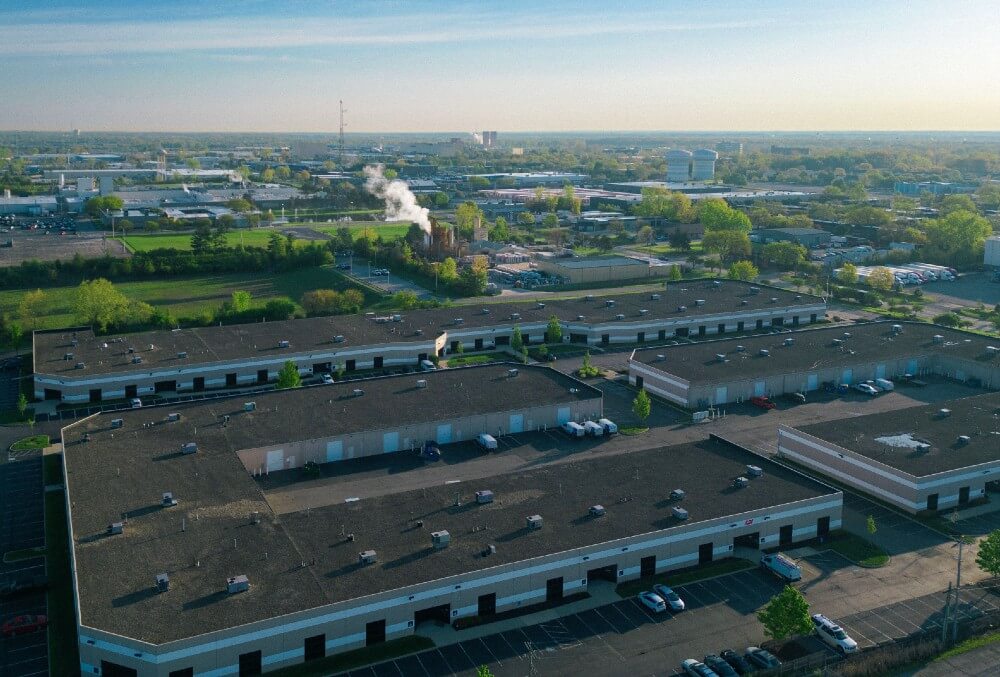
Portfolio tenant engagement means one program design, run consistently across every asset, with local delivery. The asset manager sets the standard: the same core program, the same cadence, the same data. Each building executes it on the ground. The result is engagement that looks familiar in every property and still feels specific to each one.
Why one-off events do not scale across buildings
When engagement is left to individual property teams, it fragments. There is no shared calendar, so buildings run different things at different times. There is no comparable data, so you cannot tell which property is actually engaging tenants and which is quiet. Participation swings from building to building based on who happens to be organizing.
Property-management leaders at Lincoln Property Company describe engagement as ongoing design, not a count of events. Adding more parties does not build the connection that keeps a tenant through a renewal. A repeatable program does. So name the failure mode, then move past it: the fix is a standard program, run the same way everywhere, that you can see and measure.
Tenant engagement programs that work across a portfolio
Some program types repeat cleanly across buildings. They share a design, run on a schedule, and generate data you can compare. These are the ones that hold up at portfolio scale.
Recurring nature-based programs
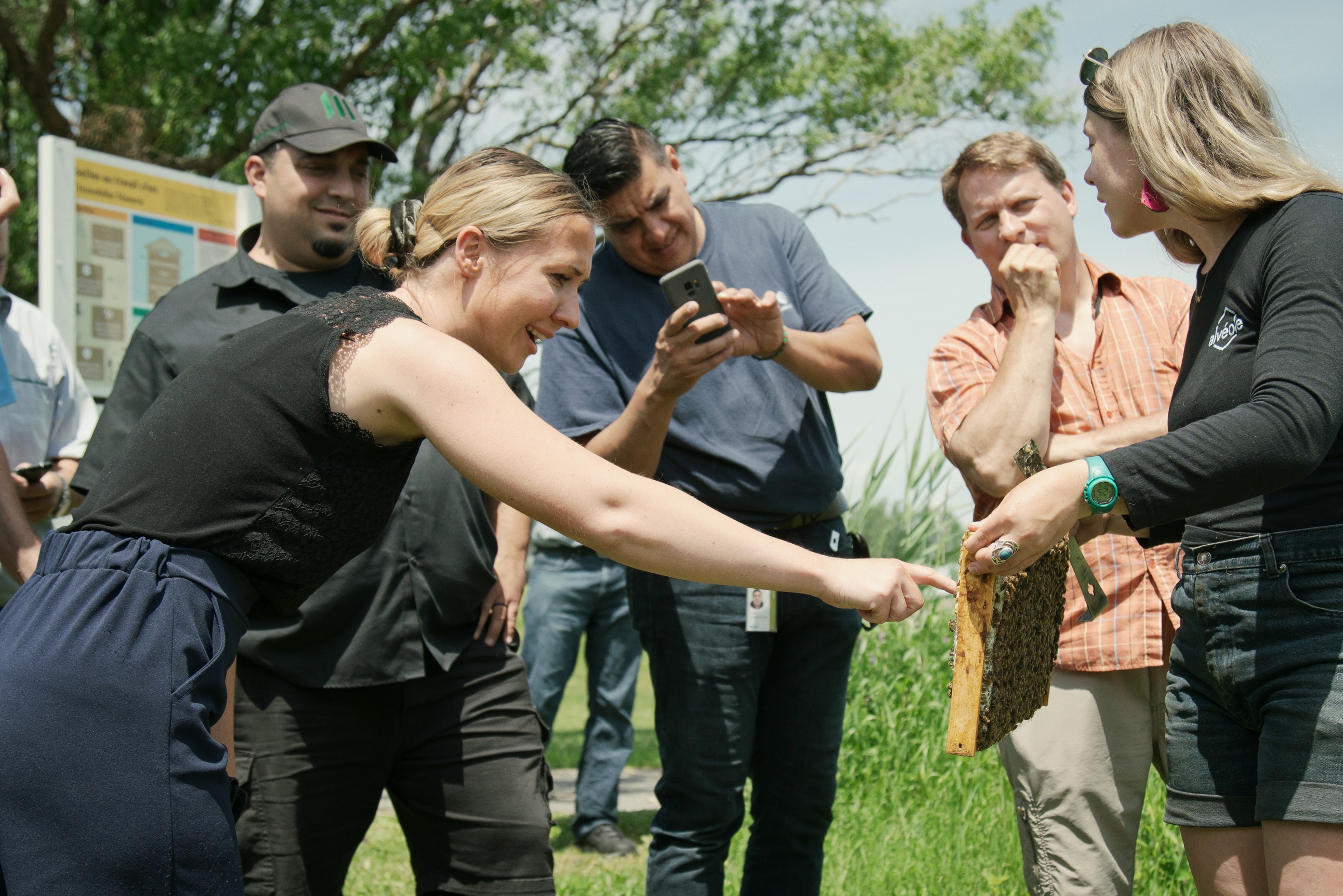
Managed urban beekeeping and wild pollinator habitat run the same way in every building. A professional team installs the program and maintains it, so the property team is not asked to become beekeepers. That is what makes the model portable: the work happens in the background, and the standard is consistent across assets.
Each building still gets a local touch. Branded honey carries the property's own label. On-site workshops and hive checks give tenants something specific to their address. Alvéole runs nature programs across more than 2,200 commercial buildings, with its Wild BeeHome habitat for solitary pollinators installed across more than 500 buildings, so the turnkey model is proven at portfolio scale. Pollinators also do real ecological work: bee pollination supports a large share of global crop production, which is the credible basis for putting habitat on a commercial roof. The programs also generate biodiversity data, which matters later for reporting.
Wellness and community event series
Recurring series outperform standalone events. A five-week wellness program built around fitness, running, and nutrition workshops keeps tenants coming back in a way a single event never does. The reason is repetition. Tenants learn the rhythm and plan around it.
Standardize the series template across the portfolio, then localize the schedule. JLL now describes amenities and programming as essentials, not perks, so treat the series as core infrastructure rather than a nice-to-have. Every building runs the same format on its own calendar.
A shared platform for communication and sign-ups
A single digital platform keeps every building on the same system for event registration and participation tracking. Without it, each property is a silo and the asset manager has no portfolio view.
Communication should reach the occupant directly, not stop at the tenant admin. RSVP and check-in visibility tells you who actually showed up, building by building. Alvéole's MyHive platform provides web-based event registration and portfolio-level participation dashboards, so the asset manager sees the whole portfolio on one screen and each property team sees its own.
Local partnerships and placemaking
On-site retailers and local partners extend a standardized program with local flavor. A café in the lobby, a nearby studio, a neighborhood vendor: each adds relevance that a head-office calendar cannot manufacture. The cost is low and the relevance is high, because the partner already belongs to that place. Keep the program standard, and let local partnerships fill in the color.
How to standardize a program without making it generic
Consistency and local relevance are not in conflict. You get both by separating the standard from the delivery.
Set a portfolio-wide program standard first. Same core program, same cadence, same data fields in every building. That is what lets the asset manager compare properties and report on the portfolio as a whole.
Then allow local delivery. Each building keeps its own hive, its own schedule, and its own partners. The honey label, the workshop dates, and the neighborhood vendors are decided on the ground. Equip building teams with talking points and turnkey programming so consistency does not depend on any one person's effort. When the program runs itself and the platform is shared, standardization holds even as staff change. The standard travels. The flavor stays local.
How to measure tenant engagement across a portfolio
Measurement is where most portfolio programs fall short, and it is what turns engagement into evidence. Track three things in every building and roll them up portfolio-wide.
Engagement penetration: the share of the building population that takes part, not a raw attendance count. Repeat participation: how many tenants come back, which is the real signal of connection. Participation trends: whether involvement is climbing or slipping over time.
Measure every building on the same metrics so you can compare them directly and see which properties need attention. Run satisfaction surveys against the whole building population, not just the tenant admin, so the picture reflects the people in the space. This matters for renewals: survey data from KingsleySurveys shows that 75 to 80 percent of tenants who say they are likely to renew actually follow through, so a measured "likely to renew" is close to money in the bank.
How engagement programs support renewals and reporting
Engagement connects directly to the two pressures on the asset manager: renewals and disclosure.
On renewals, documented participation changes the conversation. Instead of walking into a negotiation on instinct and concessions, the asset manager brings evidence: this tenant's team showed up, came back, and rated the building well. In a market where tenants hold the leverage, that record is worth more than another round of tenant-improvement dollars. Green credentials add to the case. A CBRE analysis of roughly 20,000 U.S. office buildings found LEED-certified buildings commanded about 31 percent higher gross rent, and about a 4 percent premium after controlling for location, age, and renovation. In a CBRE survey, 79 percent of respondents said green building certifications affect their real estate decisions.
On disclosure, nature programs produce data you can actually submit. The built environment accounts for roughly 40 percent of global greenhouse gas emissions, so reviewers want proof at the asset level, not a policy document. Alvéole's data capabilities close that gap. Floral eDNA analysis, the Nature Sensor bioacoustic monitoring device, and the Aura nature intelligence platform capture on-site biodiversity data and feed it into GRESB, TNFD, LEEDv5, BREEAM, and BOMA submissions. The same program that engages tenants generates the verifiable, asset-level record the reporting side needs.
How to get started across your portfolio
Start small and prove it. Pilot the program in one or two buildings. Set the program standard and the data fields you will track from day one, so the pilot produces comparable numbers rather than anecdotes.
Then scale on measured results. Roll the program out to more buildings once the pilot shows the penetration and repeat-participation numbers you want. Protect the two things that carry engagement even on a tight budget: cadence and communication. Cut those and the program stops working, no matter how good the launch was. Keep them, and the program holds across the portfolio.
Frequently asked questions
What tenant engagement programs work best across multiple buildings?
Recurring programs with a shared design travel best: managed nature programs, wellness series, and a common platform for sign-ups. They run the same way in every building and produce comparable data.
How do you run tenant engagement consistently across a portfolio?
Set one program standard, cadence, and data set for the whole portfolio, then let each building handle local delivery. Turnkey programming and a shared platform keep it consistent without depending on individual effort.
How do you measure tenant engagement across buildings?
Track engagement penetration, repeat participation, and participation trends in every building on the same metrics. Roll them up portfolio-wide and survey the full building population, not just the tenant admin.
Do tenant engagement programs affect lease renewals?
Yes. Documented participation gives the asset manager evidence for renewal negotiations, and survey research shows 75 to 80 percent of tenants who say they are likely to renew follow through.
How do engagement programs support green building certifications?
Nature-based programs generate asset-level biodiversity data that feeds GRESB, TNFD, LEED, BREEAM, and BOMA submissions, turning a policy commitment into a verifiable on-the-ground record.
The bottom line
Portfolio engagement is won by a standardized, measured program, not by scattered events. When the program runs the same way in every building and you can see the participation data, engagement becomes something you manage, compare, and report on.
Nature-based programs plus a shared platform give the asset manager all three: consistency across the portfolio, data for renewals and disclosure, and local relevance in each building. To see how it runs across your assets, book a demo.