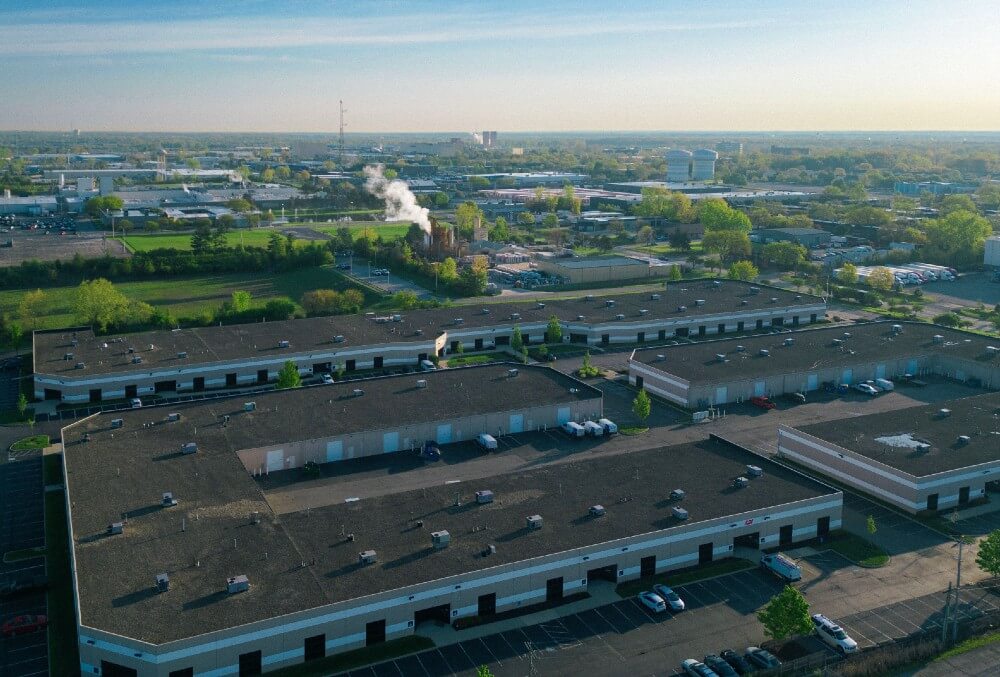

How industrial asset managers can reduce vacancy in oversupplied submarkets

Key takeaways
- National industrial vacancy is easing but stays elevated in oversupplied submarkets, with the rate near 6.9% in Q2 2026, according to Cushman & Wakefield.
- Cutting asking rent alone erodes net effective rent and NOI, because effective rents already sit roughly 7.7% to 7.9% below peak.
- Differentiation and tenant retention reduce vacancy more durably than price cuts.
- Visible nature-based amenities plus investor-ready biodiversity data give the asset manager a low-capex edge on occupancy and reporting.
Introduction
If you manage industrial assets, you feel the oversupply in specific submarkets. The 2023 to 2024 speculative build wave delivered excess big-box space, and vacancy and concessions climbed while rent growth stalled. The reflex is to cut rent. That defends nothing durable, and it compresses NOI across the hold period.
This guide gives the asset manager a different plan. You will read where the industrial vacancy rate sits today, why small-bay and big-box behave differently, and why price cuts fail. Then you will get concrete levers: differentiate commoditized space, retain tenants, and turn biodiversity data into reporting your investors accept.
Why industrial vacancy is rising in oversupplied submarkets
The headline number is improving. According to Cushman & Wakefield, national industrial vacancy fell 10 basis points to 6.9% in Q2 2026, a sign the rate has likely passed its cyclical peak as demand begins to outpace new supply. Net absorption accelerated, and first-half absorption was the strongest since 2023.
The relief is uneven. CBRE reports more than 100 million square feet of negative absorption in pre-2020 buildings last year, as occupiers returned older stock. Speculative development is minimal in 2026 because of oversupplied first-generation space and tight construction financing.
Rent growth reflects the pressure. Plante Moran Realpoint put year-over-year rent growth at 1.2% in Q1 2026, the lowest since 2012. A rollover risk compounds the picture. According to CompStak, about 31% of leased industrial square footage across major markets is scheduled to expire between Q3 2026 and Q2 2028. That expiration wall is the reason the asset manager should act now, before those tenants make decisions.
The small-bay versus big-box split and what it means
Not all industrial carries the same risk. According to Cushman & Wakefield, shallow-bay vacancy sits near 4.8%, the lowest of any size segment. Buildings over 500,000 square feet run higher, near 8.1%, even after improving from a late-2024 peak.
The pattern is clear. Infill and smaller units stay tight, because new supply rarely targets them and demand is steady. Big-box product in outer submarkets carries the oversupply risk, because the spec wave concentrated there.
So read your own exposure first. If your at-risk assets are large-format buildings in outer submarkets, price competition alone will not save them. Match your strategy to the segment, and put your effort where vacancy actually threatens occupancy and NOI.
Why cutting rent is not a durable fix
Price cuts feel decisive, but they rarely fix vacancy. According to CompStak, landlords are holding face rents in most markets and extending concessions instead, which compresses effective rent without moving the headline number. Free rent reached cycle highs near 4.5% to 4.8% of lease term in early 2026, and effective rents sit roughly 7.7% to 7.9% below peak.
Discounts also miss the point. A lower rent refills a unit without solving why the tenant left. And in a flight to quality, older stock loses on price alone, because occupiers weigh building quality, power, and amenities, not just the asking rate.
The asset manager needs non-price levers. The next three sections cover them: differentiation, retention, and reporting.
Differentiate commoditized space to win occupiers
In an oversupplied submarket, identical warehouses compete only on price. Give brokers and occupiers a concrete reason to choose your building instead.
Visible nature-based amenities do that work. Managed rooftop beehives, Wild BeeHome habitats for wild pollinators, and on-site programming make a commoditized asset distinctive on a tour. Branded honey gives your leasing team a tangible talking point and a renewal touch that a competing box down the road cannot match. The MyHive tenant platform keeps occupiers engaged between visits and gives you portfolio-level participation data.
These deploy as low-capex operational programs, not capital projects. That matters for older and Class B stock, where a large repositioning budget is hard to justify. You add a differentiator without a major buildout.
Be precise about the evidence. A 2021 to 2022 Cushman & Wakefield study found LEED-certified buildings command roughly 11.1% higher rent, but that study covers office and multifamily, not industrial. So treat the rent premium as office and multifamily proven. For industrial, frame nature-based amenities as a differentiation, tenant-engagement, and reporting lever, not as a proven industrial rent premium.
Retain tenants to reduce re-leasing and vacancy
Every tenant you keep is vacancy you never create. Retention generally costs less than replacement, because a departure adds downtime, tenant improvement allowances, and leasing commissions before a new lease begins. CBRE notes landlords are already offering more generous tenant improvement allowances and longer free-rent periods to close deals.
Timing is shifting too. CBRE reports renewals are being signed about 30 days earlier than the prior year, so the asset manager who gives tenants a reason to stay can lock in occupancy ahead of the expiration wall.
Recurring engagement supports that. Nature-based programming and MyHive give occupiers a reason to renew and give you documented participation data across the portfolio. That evidence strengthens renewal conversations, protects net effective rent, and reduces the re-leasing cycle that drags on NOI.
Turn biodiversity data into investor-ready reporting
Your occupancy strategy can also serve your reporting obligations. Asset managers face growing nature and biodiversity disclosure expectations from investors and lenders, and a policy document no longer satisfies a reviewer who asks for underlying evidence.
The frameworks are moving. GRESB added a biodiversity strategy indicator, currently unscored, so participants now report whether a strategy is in place. TNFD adoption is rising and remains voluntary. CSRD and its ESRS E4 standard cover biodiversity reporting across sectors including real estate and apply to EU-scope companies, so they matter to the asset manager with EU exposure or EU investor requirements.
Alvéole produces the underlying data. The Nature Sensor captures on-site biodiversity through bioacoustic monitoring, and floral eDNA analysis adds species-level detail. That asset-level data feeds portfolio dashboards and biodiversity reporting aligned to GRESB, TNFD, CSRD, LEED, WELL, BOMA, BREEAM, and Fitwel. A visible program gives reviewers proof on the ground, not just a written commitment.
A practical playbook to reduce vacancy
- Segment your portfolio by vacancy risk. Separate tight infill and small-bay assets from at-risk big-box space in outer submarkets.
- Audit which assets compete only on price. Flag the buildings where you have no differentiator beyond the asking rate.
- Add a visible differentiator to at-risk buildings. Install nature-based amenities and on-site programming that brokers and occupiers notice.
- Build a retention plan around renewals and engagement data. Use MyHive participation data to open renewal conversations early.
- Capture biodiversity data for reporting. Deploy the Nature Sensor and eDNA monitoring to feed GRESB, TNFD, CSRD, LEED, and WELL disclosures.
- Equip leasing teams with the story and measure results. Track occupancy, retention, and net effective rent against each intervention.
Frequently asked questions
What is the current industrial vacancy rate in the US?
According to Cushman & Wakefield, national industrial vacancy was about 6.9% in Q2 2026, down 10 basis points and likely past its cyclical peak. Rates remain higher in oversupplied big-box submarkets.
How can owners reduce vacancy rates in commercial properties?
Differentiate commoditized space, retain existing tenants, and report credibly to investors. The playbook above lays out the steps in order.
Why is small-bay industrial space tighter than big-box?
New supply rarely targets small-bay space, and demand for infill units stays steady. Cushman & Wakefield puts shallow-bay vacancy near 4.8% versus roughly 8.1% for buildings over 500,000 square feet.
Does a sustainability or nature program help lease industrial space?
It helps as a differentiation and reporting lever. The measured rent premium is office and multifamily proven, so for industrial, treat nature-based amenities as a tenant-engagement and disclosure advantage rather than a guaranteed rent premium.
Conclusion and next step
Oversupply is a submarket-level problem, and price cuts do not solve it. They erode net effective rent and NOI while leaving the underlying weakness in place. The asset manager who differentiates commoditized space, retains tenants, and reports credibly wins occupancy and defends rents. A low-capex nature program moves all three at once, on older and Class B stock included.