
Apartment tour tips: how to make move-ins and leasing tours memorable
Key takeaways
- Renters compare five or more communities before signing, so the tour and the move-in are where your team wins or loses the lease.
- Staff interaction is the one lease factor your team fully controls. In a 2024 NMHC/Grace Hill survey, 44% of renters called customer service "very important" to their decision.
- Personalize every tour, offer guided, self-guided, and video options, and follow up within 24 hours.
- Treat move-in day as the first renewal conversation, not paperwork.
- Give prospects and residents one thing they remember and retell. A visible nature program is a repeatable talking point most properties cannot match.
Sameness is the real threat on a leasing tour
Be honest about what a prospect sees in a single afternoon. They tour five or six Class A properties, and the script barely changes. Sleek gym. Sparkling pool. A co-working lounge. By the fourth stop, your amenities look exactly like everyone else's. The gym and the pool are expected now. They are not memorable.
The market makes this harder. NAHB reported 608,000 multifamily completions in 2024, the highest total since 1986. Supply is deep, and so are the discounts. RealPage found that 16.5% of stabilized units offered concessions in June 2026, with average discount depth at 11.1%, the deepest in more than 25 years. Class A led at 11.4%. Asset managers cannot win on price alone. That race only compresses net effective rent.
Here is the better lever. The leasing tour and the move-in are where real differentiation happens, and they cost far less to improve than rent. This guide gives leasing teams and property teams a repeatable way to make both moments count.
Why the tour and move-in decide the lease
Lease decisions hinge on many factors. Location, price, and floor plan all matter, and most sit outside your control on any given day. Staff interaction is different. It is the one factor your leasing team fully controls. In the 2024 NMHC/Grace Hill survey of 44,715 renters, 44% rated customer service and staff interaction "very important" to their lease decision. That is the top controllable factor, and it runs straight through the tour and the move-in.
Treat those two moments as one continuous impression, not two separate transactions. Customer service expert Shep Hyken puts it plainly: "Make every interaction count. Even the small ones. They are all relevant." A prospect does not file the tour and the move-in in different folders. They remember how your team made them feel from the first hello to the first night in the unit.
The financial stakes are concrete. Zego's 2026 report found average retention fell to 57% in 2026, down from 60% in 2024. Turnover costs about $3,872 per unit, based on 2023 data from a Zego survey of property management companies. Lost rent is more than half of that figure, roughly $2,060, driven by vacant days between residents. Every avoided move-out protects real dollars.
Retention also defends premium rent, which is the whole point for Class A asset managers. Zego found renters begin reconsidering renewal at an 8% rent increase. The relationship you build at move-in is what gives your team room to hold rent later. A resident who feels known is easier to renew than one who only remembers a transaction.
How to make the leasing tour memorable
Great tours are not accidents. They follow a repeatable pattern any leasing team can run. Use these apartment tour tips to make each visit feel deliberate.
Personalize the tour
Use the prospect's name from the first greeting. Ask discovery questions before you walk anywhere. Do they work from home? Do they have a dog? Do they cook, or do they order in? Then tailor the route to their answers. A remote worker wants to see the quiet corners and the reliable Wi-Fi. A dog owner wants the nearest exit and the pet areas. Show the actual unit they would rent, not just a staged model. A scripted tour feels like every other stop. A tailored one feels like it was built for them.
Offer guided, self-guided, and video tour options
Different renters want different formats, so offer all three. In-person guided tours still lead, preferred by 71% of renters, up from 69% in 2022, according to Multifamily Executive. Live video tours with a leasing rep are rising fast, from 13% to 20%. Self-guided tours hold steady near 38%. Grace Hill found 45% of renters value interactive virtual and 3D tours, up 10 points versus 2022. The lesson is simple. The human touch is not fading. Give prospects the format they prefer, and keep a person available at every step.
Sell beyond the unit
The unit is only part of the decision. Show the amenities, the community culture, and the surrounding neighborhood. Then anchor the tour on one distinctive, visible feature people actually remember. Most tours blur together because they point at the same list. A signature moment breaks the pattern. Picture a leasing agent pausing on the rooftop and saying, "These are our beehives, and residents get honey harvested from their own building." That is a specific, visible detail a prospect will repeat to a partner over dinner. Give your team one thing like that to point to.
Follow up within 24 hours
Speed signals that you care. Send a personalized recap within 24 hours, reference something specific from the visit, and offer a clear next step. Blend automation with a genuine human note. The stakes are real, as Jennifer Staciokas of Western Wealth points out: a prospect tours five to seven communities, and leads go cold when only one or two follow up. Fast, continuous follow-up makes the lease decision easier and keeps your property top of mind.
How to make move-in day memorable
Move-in day sets the tone for the entire lease. Jenna Miller of Bozzuto calls it a "make or break moment," and the research backs her up. Moving ranks as the second most stressful life event, after financial problems. Per a RealPage-sponsored survey, 97% of renters are more likely to choose a community that offers a streamlined move-in. The move-in is not paperwork. It is your first chance to prove the tour was not just a sales pitch.
You do not need a big budget to make it memorable. Property teams can run these steps every time:
- Prepare the unit like you are expecting company. Turn the lights on, stock a few essentials, and leave a handwritten welcome note.
- Replace the plain key handoff with a short VIP walk-through. Show the resident how things work, then hand over the keys as a moment, not a transaction.
- Give a branded, take-home gift that lives on the counter for months. A useful, local item reinforces the community's identity long after move-in day.
- Reduce day-one friction. Put Wi-Fi setup, trash and recycling details, and amenity access in one simple welcome guide.
Then frame move-in as the first renewal conversation. Zego found 31% of renters are more likely to renew when a community offers a rewards or recognition program. The thoughtful touches you deliver on day one are what residents recall eleven months later, when your team asks them to sign again.
Give them a story worth retelling: the differentiation most properties miss
Standard amenities are table stakes. A gym and a pool are expected, and they no longer set you apart. Experiential and community amenities are gaining the fastest. In Greystar's 2025 design survey of its own 137,000 residents, outdoor cinemas jumped in popularity and are now favored by about half of renters, while clubhouses and gaming spaces climbed too. Renters increasingly want moments, not just square footage.
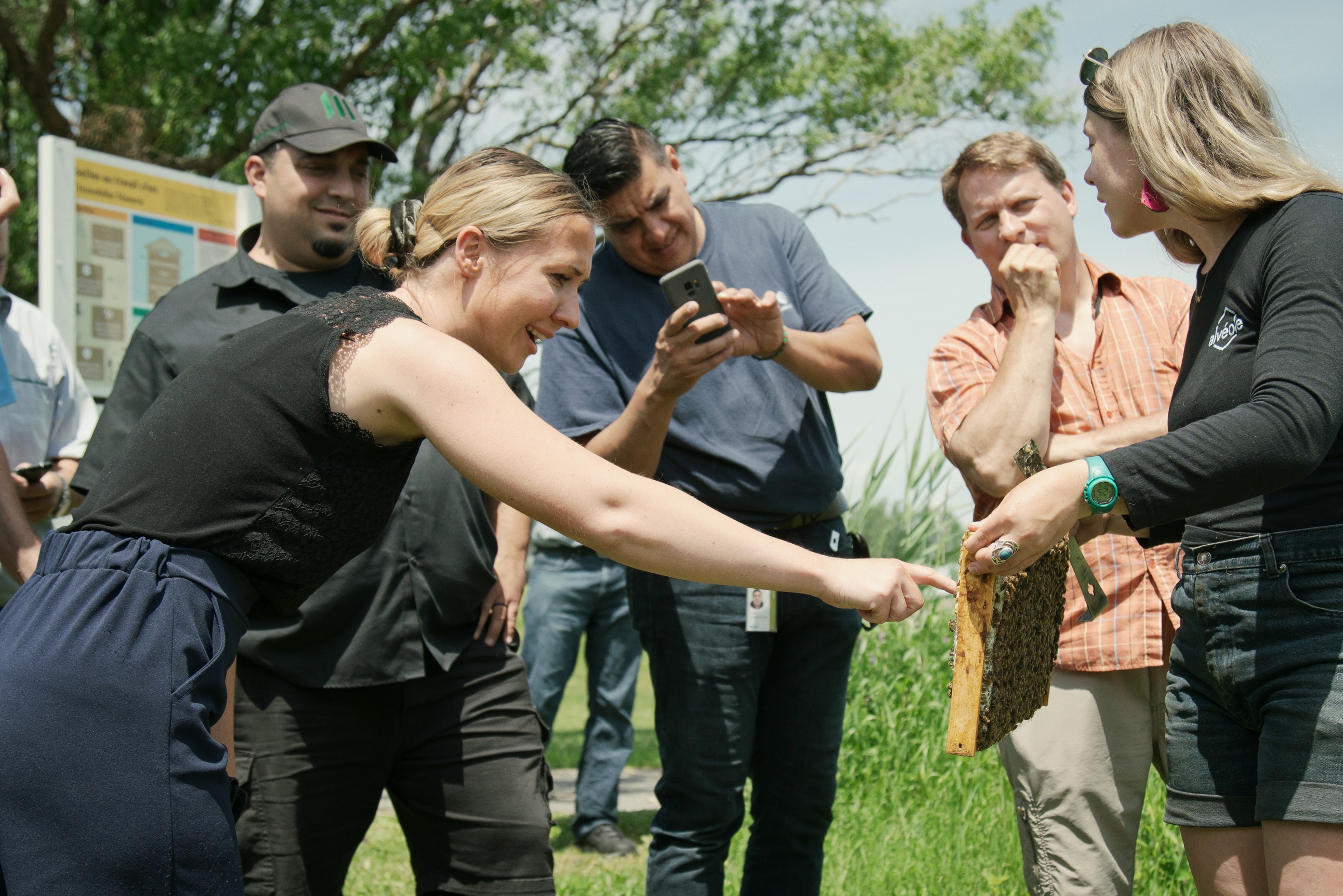
A memorable property gives leasing teams one surprising, visible thing to point to, and gives residents something to talk about. This is where Alvéole fits. Alvéole runs fully managed rooftop beehives across more than 2,200 buildings. The hives create a genuine tour moment your team can anchor on. Branded jars of honey harvested from the building become the take-home gift for move-in and renewal. Year-round workshops and beekeeper hive check-ins keep residents engaged well past the lease signing. The MyHive platform lets property teams plan, promote, and measure the program from a portfolio-wide dashboard.
Consistency at scale is the operator advantage. One repeatable program runs the same way across 10, 50, or 200 buildings, so every leasing team tells the same story with the same proof.
Set expectations on willingness to pay. The Greystar survey found willingness to pay a premium for eco-friendly features fell 24% year over year. So the value here is not a rent premium. The value is differentiation on the tour, engagement that supports retention, and data that feeds your reporting.
The reporting bonus: a tour moment that also documents impact
Institutional owners face growing pressure for nature-related disclosure. GRESB added a biodiversity indicator, RM7, in 2025. It is TNFD-aligned and exploratory, and it was unscored in 2025. That signals where scored requirements are likely headed, so asset managers who build a documented program now are ahead of the reviewer's next question.
Here is the operational win. The same visible program that wins the tour also generates participation and biodiversity data. That data supports reporting frameworks including GRESB, WELL, LEED, Fitwel, BOMA, and BREEAM. MyHive dashboards tie on-site participation to the numbers your reporting team needs at year-end. One program serves both the leasing office and the reporting file. For context on why nature programs carry weight, the U.S. Fish and Wildlife Service estimates pollinators contribute $34 billion annually to the U.S. economy.
The bottom line: differentiation is not optional
A bigger gym will not win your next lease. A memorable tour, a thoughtful move-in, and a story worth retelling will. Asset managers who compete only on price keep giving away net effective rent. The teams that win give prospects something surprising and residents something worth talking about.
Start small. Equip your leasing teams with a few simple talking points, run one signature moment on every tour, and measure conversion and renewal as you go. Then scale what works across the portfolio. Book a demo to see how Alvéole helps leasing and property teams make tours and move-ins memorable.
Frequently asked questions
How do apartment communities create memorable move-in and leasing tour experiences?
They personalize the tour to each prospect, offer guided, self-guided, and video formats, and follow up within 24 hours. They treat move-in day as a welcome, not paperwork, with a ready unit, a short walk-through, and a take-home gift. Most importantly, they give prospects and residents one distinctive, visible thing to remember and retell, like a managed rooftop nature program.
How do I prepare for an apartment tour as a leasing team?
Get the unit ready before the prospect arrives, with lights on and a clean, staged space. Prepare a few discovery questions so you can tailor the route to their lifestyle. Plan one signature moment to anchor the tour, and have a personalized follow-up ready to send the same day.
Should we offer self-guided, guided, or virtual tours?
Offer all three. In-person guided tours still lead at 71% of renter preference, per Multifamily Executive, but live video with a rep is rising and virtual and 3D tours matter to nearly half of renters. Meeting each prospect in their preferred format widens your pipeline without adding much cost.
What are good move-in gifts that residents remember?
The best gifts are branded, useful, and local, so they live on the counter and reinforce community identity. A jar of honey harvested from the building's own rooftop hives is a memorable example. It is inexpensive, distinctive, and hard for competing properties to copy.
How do memorable tours and move-ins affect retention and NOI?
They protect the number. Retention fell to 57% in 2026 per Zego, and turnover costs about $3,872 per unit based on 2023 data, with more than half of that lost to vacancy. Since renters start reconsidering renewal at an 8% rent increase, the relationship you build at move-in is what lets Class A teams defend premium rent later.