
What makes a warehouse tour memorable
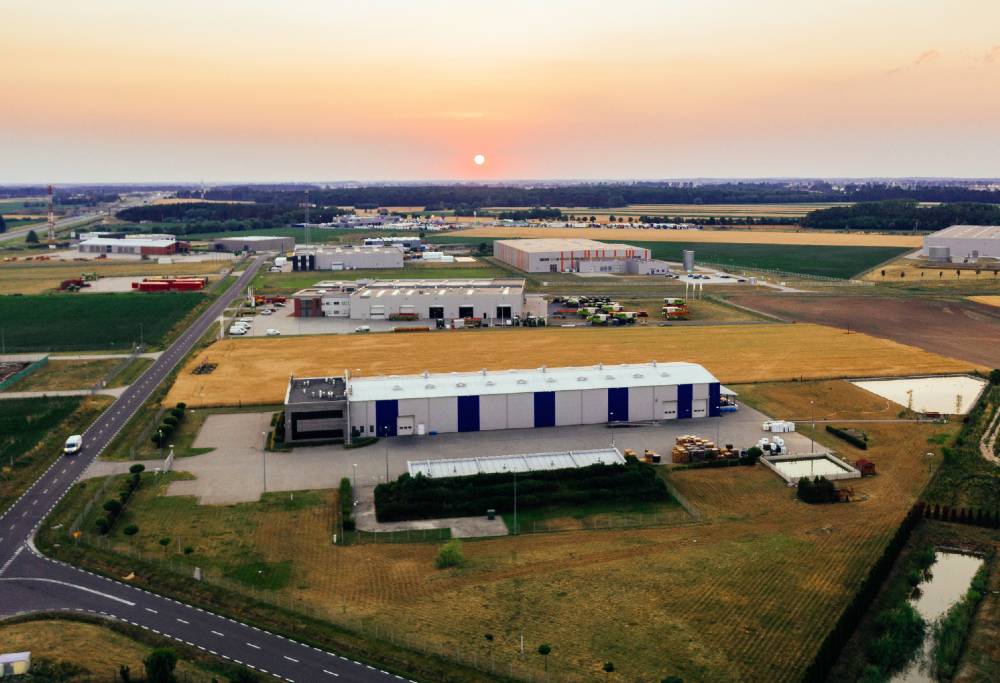
Picture a prospect touring five warehouses in one week. By Friday, the buildings blur together. Same concrete, same docks, same empty box.
For asset managers and leasing teams, that is a problem. CBRE estimates more than 1.7 billion square feet of industrial leases are heading into a major renegotiation cycle. Landlords now compete harder to secure and retain tenants. A forgettable tour is lost ground.
This guide gives you a warehouse tour checklist and a plan to make an industrial building tour memorable. A memorable tour does two things. It proves the space fits the tenant's operation. And it leaves the prospect with one thing to remember after they leave.
Key takeaways
- A memorable tour helps the prospect picture their operation running in the space.
- Get the fundamentals right first: clear height, docks, power, and floor.
- Tailor the route to the tenant's workflow, from truck arrival to shipping.
- One visible, low-impact amenity is what a prospect remembers afterward.
- In a renegotiation cycle, a differentiated tour supports leasing and retention.
Why most industrial building tours are forgettable
Industrial buildings look alike on a flyer. Prospects tour several options and default to the spec sheet. When every box reads the same, sameness is the real threat.
The data shows what occupiers weigh. In CBRE's 2026 U.S. Industrial & Logistics Occupier Survey, the top building-selection factors were occupancy cost (18%), flexible lease terms (18%), clear height (14%), transportation access (10%), and power capacity (2%). Those are operational fundamentals. A tour that only decorates the building misses them.
Newer space is winning. Cushman & Wakefield reported that 61% of leases over 100,000 square feet went to buildings delivered this decade. Prospects reward buildings that clearly fit their operation.
So the tour has to prove those fundamentals, not gloss over them. When two buildings match on specs, the tour itself becomes the tiebreaker. That is where most leasing teams leave value on the table.
What makes an industrial building tour memorable for a prospective tenant
An industrial building tour is memorable when the prospect can see their own operation running in the space. Not an empty building. Their trucks at the dock, their racking on the floor, their team at work.
That takes four concrete moves.
Tailor the route to their workflow. Walk the space in the order their goods move: truck arrival, dock, staging, pick path, shipping. The prospect follows their own process, not a generic loop.
Make specs tangible. Do not just say the numbers. Point to the evidence. Show the measured clear height at the lowest obstruction. Count the dock doors. Name the electrical capacity at the panel.
Remove friction. Bring accurate information. Keep the site clean and safe. No surprises, no locked doors, no guesswork.
Give one thing to remember. A prospect who tours five near-identical boxes needs a single anchor. First impressions form fast, and they last. One clear, positive detail can carry the whole visit.
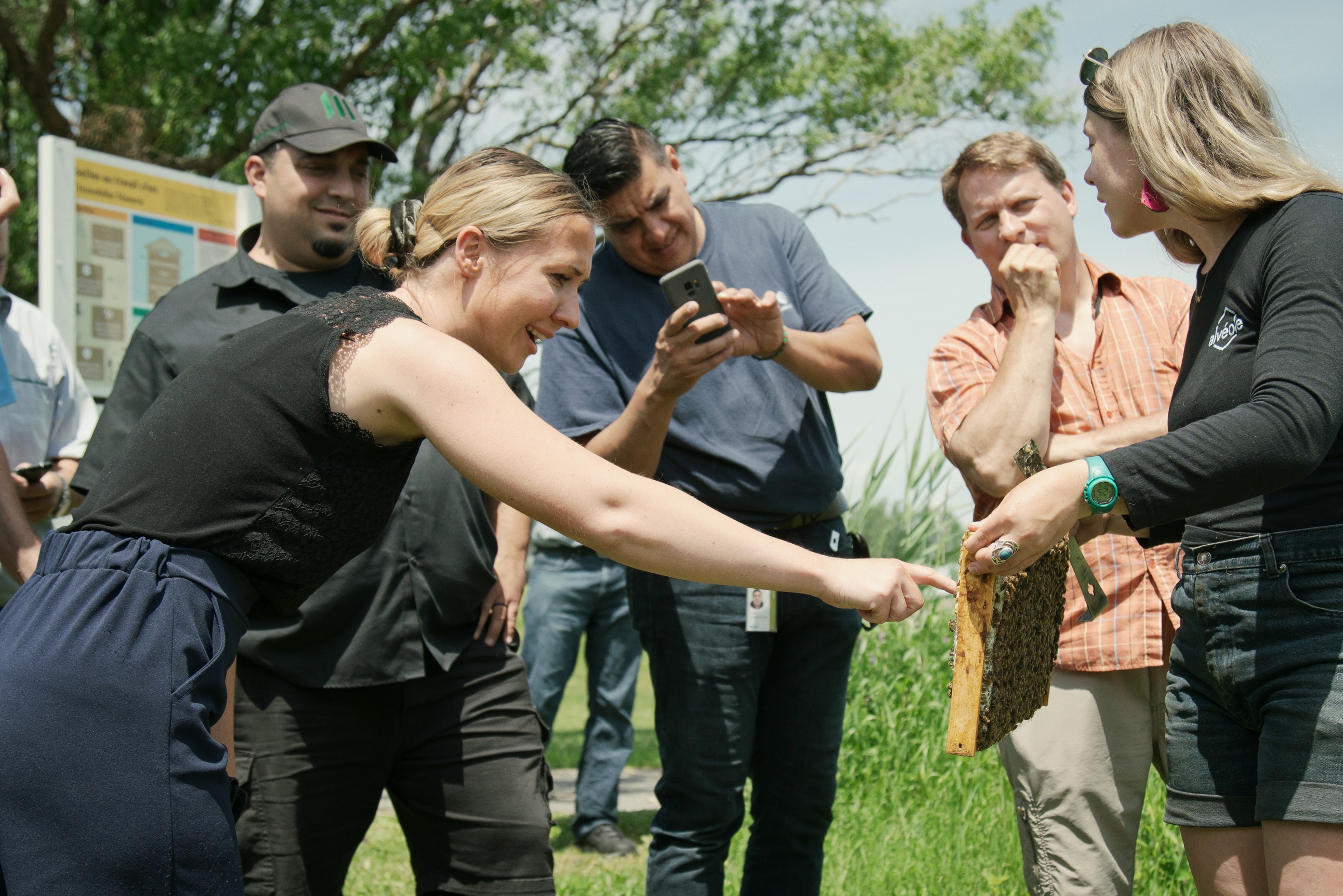
The human element ties it together. A knowledgeable host who connects each stop to the tenant's business is worth more than a polished brochure. The host proves the leasing team understands the operation. That builds trust before the lease terms come up.
The warehouse tour checklist: prove operational fit first
Before you differentiate, nail the fundamentals. This warehouse tour checklist covers what leasing teams should show and be ready to answer. Work it group by group.
Structure and space
- Clear height measured at the lowest obstruction, not the peak.
- Column spacing and how it affects racking layout.
- Floor levelness and load capacity.
- Building envelope condition: roof, walls, insulation.
Loading and truck access
- Dock-high and grade-level door counts and the ratio. A rough benchmark is one dock door per 10,000 square feet.
- Dock leveler and seal condition.
- Truck court depth for 53-foot trailers.
- Trailer staging and parking capacity.
Building systems
- Electrical amperage and transformer capacity.
- HVAC condition and age.
- Fire suppression type, ESFR versus conventional.
- Telecom and data connectivity.
Lease, timeline, and location
- Lease structure, typically NNN, and the true occupancy cost.
- Tenant improvement allowances on offer.
- Timeline to occupancy. Plan for a few months from search to move-in, and longer for build-to-suit or heavy tenant improvements.
- Highway access, labor pool, and zoning context.
Get these right and the tour earns credibility. Miss them and no amenity will save the deal. The checklist is table stakes. It is the foundation the differentiation moment sits on.
Design the tour, do not just walk it
A good tour is a designed sequence, not a wander. Plan it like the leasing tool it is.
Plan the route around the prospect's operation. Map the walk to how their goods will move through the building. Every stop should answer a question they already have.
Prepare the site. Clean, well lit, safe, with accurate signage. A spotless facility signals good management. A cluttered one raises doubts you cannot talk your way out of.
Brief the host. The person leading the tour should explain fit in plain terms and connect each stop to the tenant's workflow. No jargon dumps. Just clear answers.
Build in one deliberate high point. Decide in advance what the prospect will remember. Do not leave it to chance.
Follow up promptly. Send the specifics that matched their needs while the visit is fresh. Reference the exact clear height, the dock count, and the timeline you discussed.
Done this way, the tour works for the leasing team instead of against it. It proves the building fits and it stands out from the four others on the shortlist.
The differentiation moment: a memorable feature that fits an industrial site
When two buildings match on specs, the tour itself is the tiebreaker. Frame it that way. Amenities are not a top stated selection factor for occupiers. But they tip a close decision, and they give the prospect something to remember.
On an industrial site, the right differentiation moment follows three rules. It has to be visible without requiring anyone to participate. It has to stay independent of daily operations. And it has to have zero impact on throughput.
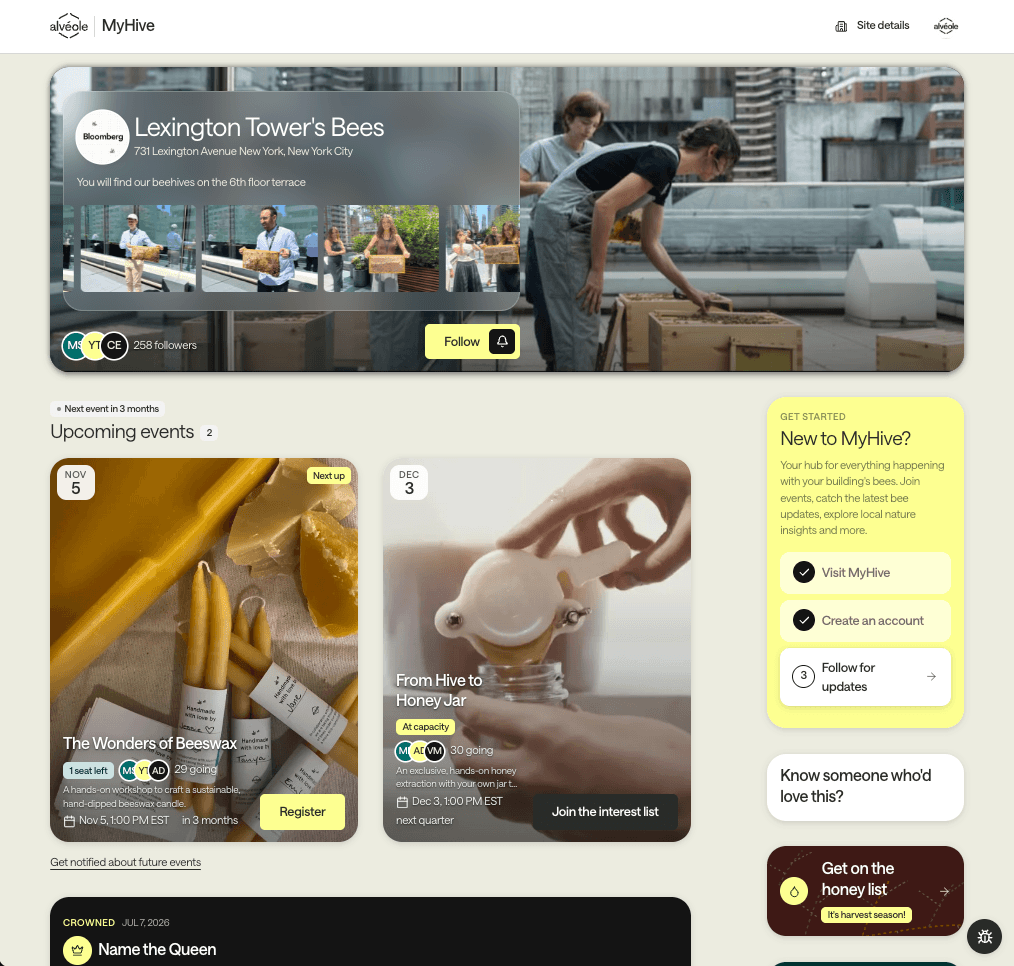
A managed nature program fits all three. On-site beehives, biodiversity monitoring, and branded honey give a leasing team something concrete to point to on the tour. The prospect remembers the building with the beehives long after the concrete blurs.
There is a retention link too. In office buildings, research from MIT's Center for Real Estate found that a one-point rise in tenant satisfaction was associated with 8.6% higher willingness to renew and 14.6% lower probability of moving out. That study covers office assets, not industrial. Still, it shows how a memorable, well-managed building supports retention.
There is a reporting angle as well. On-site biodiversity data feeds disclosure frameworks. GRESB introduced an experimental, unscored biodiversity indicator in its 2025 Real Estate Standard, aligned with TNFD, with intent to integrate it into scoring in future cycles. On-site data captured through a program like Alvéole supports that reporting today.
Why the timing is right
The market is tightening. CBRE reported US industrial vacancy fell to 6.5% in Q2 2026, the first decline since Q2 2022. Cushman & Wakefield noted new supply at its lowest level since 2017.
That sounds like a landlord's market. It is not that simple. CBRE estimates more than 1.7 billion square feet of leases are entering renegotiation. Pre-2020 buildings posted more than 100 million square feet of negative net absorption in a single year. Older, undifferentiated space is at risk.
Renewal rents are climbing. CBRE found an occupier with a five-year lease expiring end of 2025 can expect an average 27% increase on renewal. Tenants will shop harder for that money. A differentiated tour is now a retention lever, not a nicety.
Frequently asked questions
What makes an industrial building tour memorable for a prospective tenant?
The prospect can picture their operation running in the space. Specs are proven, not just stated. And one visible feature gives them a single thing to remember after touring several near-identical buildings. That combination is what makes a box stick.
What should be on a warehouse tour checklist?
Cover four groups. Structure and space, including clear height, column spacing, and floor load. Loading and truck access, including dock count, leveler condition, and truck court depth. Building systems, including power, HVAC, and fire suppression. Lease, timeline, and location, including NNN terms, tenant improvement allowances, and the occupancy timeline. Walk them in order so nothing gets missed.
How long does it take to lease a warehouse?
Most tenants should plan for a few months from search to occupancy. Move-in-ready space can go faster. Build-to-suit or heavy tenant improvements take longer. Share a realistic timeline on the tour so the prospect can plan around it.
How can a landlord stand out on an industrial building tour?
Prove operational fit first. Design the route around the tenant's workflow. Then add one visible, low-impact amenity the prospect remembers, such as an on-site nature program. Specs win the shortlist. The tour wins the lease.
The bottom line
A bigger spec sheet will not win the next industrial lease. Not when every building on the shortlist looks the same. What wins is a tour that proves the prospect's operation will run here and leaves them with one thing to remember.
In a renegotiation cycle, that is how leasing teams defend occupancy and retention. Prove the fundamentals with a clear warehouse tour checklist. Design the route around the tenant's workflow. Add one visible amenity that fits an industrial site without slowing operations.