
7 commercial building ROI metrics that predict tenant renewals

Property managers and asset managers are facing unprecedented challenges in 2025, with 44% of global business leaders preferring to see staff in the office five days a week while tenant expectations continue to evolve. Understanding which ROI metrics truly predict tenant renewals has become critical for maximizing property value and maintaining competitive advantage.
Recent industry data from JLL and CBRE reveals that properties focusing on specific performance indicators achieve higher tenant retention rates and command premium rents. The winning formula combines operational efficiency with tenant-centric amenities that directly impact renewal decisions.
Why ROI metrics matter for tenant renewals
As inflation subsides, landlords may find it more challenging to justify significant rent increases during lease renewals, making tenant retention more valuable than ever. Properties that can demonstrate measurable value through key performance indicators consistently outperform the market in both occupancy rates and rental income.
The relationship between building performance metrics and tenant satisfaction has never been clearer. Property owners and managers prioritize tenant satisfaction by delivering exceptional customer service, maintaining property aesthetics, and addressing tenant needs promptly, but data-driven approaches provide the roadmap for success.
Metric 1: Occupancy utilization rate
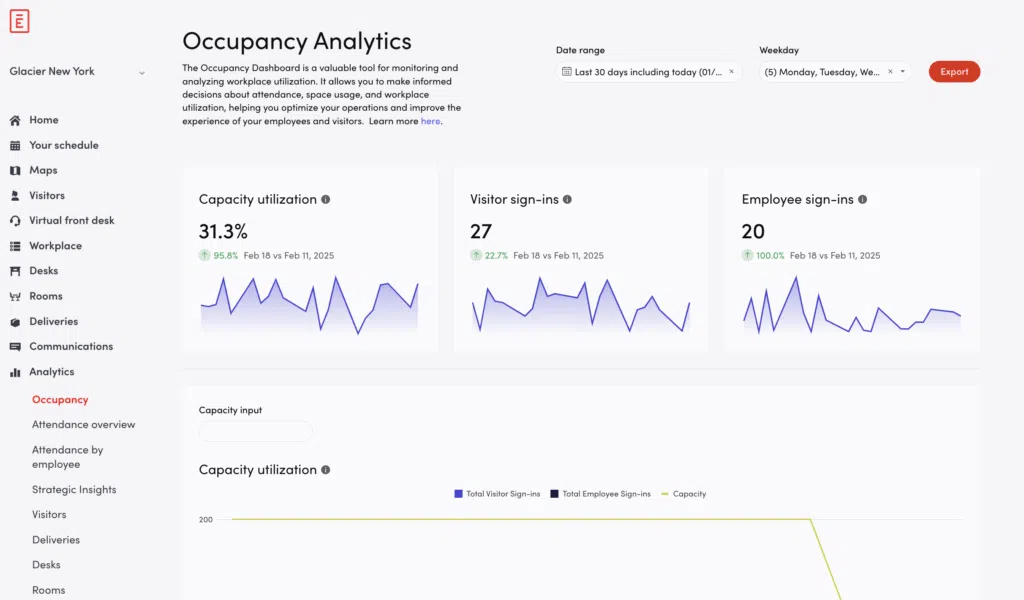
Space utilization has emerged as a top predictor of tenant renewals in 2025. Peak utilization metrics help plan for the busiest times of the week or day, enabling property managers to optimize space allocation and demonstrate value to existing tenants.
Research from the MIT Center for Real Estate shows that for every one-point increase in tenant satisfaction scores (on a 1-5 scale), renewal likelihood improves by 8.6%. The 2024 study "Tenant Satisfaction and Commercial Building Performance" by Hu, Kok, and Palacios found this relationship holds across thousands of commercial buildings. Modern tenants expect their space to work efficiently, and buildings that can prove optimal utilization through IoT sensors and analytics platforms command premium rents.
Key measurement strategies include tracking peak usage patterns, space type utilization, and comparing individual versus collaborative space performance to ensure the right mix of environments.
Metric 2: Tenant satisfaction scores and net promoter scores
Tenant satisfaction directly correlates with renewal probability. Conducting regular tenant surveys, soliciting feedback, and implementing tenant-centric amenities and services can foster a positive tenant experience and increase renewal rates.
According to the BOMA International Commercial Real Estate Impact Study, 72% of tenants would renew their lease if it were up today, matching pre-pandemic renewal rates. Properties that implement quarterly satisfaction surveys and rapid response protocols for tenant concerns consistently outperform this benchmark.
Properties should track response times to service requests, amenity usage rates, and tenant feedback sentiment analysis. Building Engines and similar platforms provide comprehensive tenant experience metrics that support renewal success.
Metric 3: Nature-based amenity engagement and biophilic design ROI
Nature-based amenities have emerged as a powerful predictor of tenant renewals, with properties featuring biophilic design elements achieving higher retention rates. Buildings that boast biophilic design elements have the capacity to increase their property value and charge more for rent per square foot.
Research from Terrapin Bright Green demonstrates that 10% of employee absences could be attributed to architectural elements that did not connect with nature, while properties with green roofs, living walls, and nature access show measurable tenant engagement improvements.
Alvéole's urban beekeeping programs represent a leading example of this trend, providing measurable engagement metrics through educational events and sustainability programs. Properties with nature-based programming demonstrate clear ROI through reduced turnover costs and enhanced tenant satisfaction.
The hospitality industry validates this trend, with research showing guests willing to pay 18% more for resort hotels and 12% more for city hotels with views of nature. Commercial tenants show similar willingness to pay premiums for buildings that provide authentic connections to nature through thoughtful design and programming.

Metric 4: Energy efficiency and sustainability performance
Sustainability metrics increasingly drive tenant renewal decisions as ESG requirements become standard practice. LEED-certified buildings command rent premiums of approximately 4% and achieve occupancy rates 6% higher than conventional buildings.
Real estate organizations have a generational opportunity to strategically position themselves for future developments as they move past turbulent years, with sustainability performance becoming a key differentiator in competitive markets.
Tenants prioritize buildings that can demonstrate measurable environmental impact through energy usage reduction, waste diversion rates, and carbon footprint improvements. Alvéole's biodiversity monitoring services provide quantifiable environmental data that supports tenant sustainability reporting requirements.
Metric 5: Technology integration and smart building capabilities
Smart building technology directly impacts tenant satisfaction and renewal decisions. Properties with comprehensive IoT sensor networks, mobile app integration, and predictive maintenance systems achieve higher satisfaction scores than traditional buildings.
Research indicates that smart building technologies can improve operational efficiency by 10-20% and reduce energy costs by 15-30%, according to Johnson Controls. These improvements translate into tangible value propositions for tenants.
The most effective technology integrations focus on tenant experience improvements, including seamless access control, climate optimization, and real-time space booking systems. Properties should track technology adoption rates, user engagement metrics, and tenant feedback on digital services to optimize these investments.
Metric 6: Common area activation and amenity utilization
Common area programming significantly influences tenant renewal decisions. Properties that actively program shared spaces and measure utilization rates consistently achieve higher tenant satisfaction scores.
Many landlords are incorporating flex options like tenant lounges and reservable desks, responding to changing work patterns and tenant expectations for flexible, community-focused environments.
Successful properties track event attendance, shared space bookings, and tenant feedback on programming quality. Alvéole's tenant engagement programs provide measurable community-building activities that support renewal goals through regular programming and educational workshops.

Metric 7: Lease flexibility and renewal option terms
Financial flexibility has become a critical renewal factor as market uncertainty continues. Tenants with strong credit and a solid business outlook may have greater leverage in negotiating lease renewals, making competitive renewal terms essential for retention.
Properties offering flexible lease options, including shorter terms with renewal options and adaptive space configurations, demonstrate improved tenant retention compared to traditional rigid lease structures.
Commercial building ROI metrics comparison table
MetricIndustry BenchmarkVerified ImpactTenant Satisfaction Score72% baseline renewal rate8.6% improvement per satisfaction pointLEED CertificationStandard building performance4% rent premium, 6% higher occupancyNature-Based AmenitiesBaseline engagement18% hotel premium (resort), 12% (city)Smart Building TechnologyTraditional systems10-20% operational efficiency improvementCommon Area UtilizationVaries by property typeMeasurable satisfaction improvementESG Reporting Capability90% of S&P 500 report ESGCompetitive advantage in tenant retentionLease Flexibility OptionsTraditional 5-10 year termsImproved tenant retention vs rigid terms
Sources: MIT Center for Real Estate "Tenant Satisfaction and Commercial Building Performance" (2024), BOMA International COVID-19 Commercial Real Estate Impact Study (2022), CBRE Green Building Analysis, Johnson Controls Smart Building Research, KPMG ESG Reporting Survey 2024.
The winning formula for maximizing tenant renewals
The most successful commercial properties in 2025 implement a comprehensive approach combining operational excellence with tenant-centric amenities. The share of lease renewals will continue to increase given rising costs and limited supply in North America and EMEA, making retention strategies essential for long-term success.
Properties achieving superior renewal rates typically excel in three key areas: space optimization through technology, meaningful tenant engagement through programming, and authentic sustainability initiatives that align with corporate goals.
How amenities impact property value in today's market
Tenants are generally willing to pay higher rents to secure premier spaces, aiming to enhance employee experience, with nature-based and technology amenities leading the premium pricing trend. Properties featuring comprehensive amenity programs demonstrate measurable value through both rental premiums and occupancy advantages.
The impact extends beyond immediate financial returns to long-term asset value protection. Buildings with high tenant satisfaction scores and strong renewal rates achieve better investment performance and attract premium investors seeking stable, income-producing assets.
Which metrics matter most for property managers
For property managers and asset managers, the data reveals clear priorities for 2025. Space utilization tracking provides immediate operational insights, while tenant satisfaction monitoring ensures retention success. Nature-based programming and sustainability metrics increasingly drive tenant decisions, particularly among Fortune 500 companies with ESG mandates.
CBRE foresees several positive developments in 2025, including a modest increase in commercial real estate investment volume of approximately 10%, creating opportunities for properties that can demonstrate superior performance through measurable metrics.
The most successful properties implement integrated measurement systems that track these seven key metrics continuously, using platforms like Yardi, MRI Software, and specialized tenant experience tools to maintain competitive advantage.
Implementation strategies for commercial real estate professionals
Successfully implementing these ROI metrics requires systematic data collection and analysis. Properties should establish baseline measurements, implement regular monitoring protocols, and create feedback loops with tenants to ensure continuous improvement.
The integration of technology platforms enables real-time tracking of utilization metrics, while tenant engagement programs provide qualitative data supporting quantitative performance indicators. Regular benchmarking against market peers ensures competitive positioning and identifies optimization opportunities.
Conclusion
The commercial real estate landscape of 2025 demands data-driven approaches to tenant retention and property value optimization. The seven metrics outlined in this analysis provide a comprehensive framework for predicting renewal success and maximizing ROI through tenant-centric strategies.
Properties that excel in space utilization, tenant satisfaction, nature-based programming, sustainability performance, technology integration, amenity activation, and lease flexibility consistently outperform market averages in both renewal rates and rental premiums.
For property managers, asset managers, and ESG professionals, implementing systematic measurement of these metrics provides the foundation for sustainable competitive advantage in an evolving market landscape. The properties that adapt to these proven success indicators will capture the premium tenants and investment capital driving the industry forward.
Ready to implement nature-based amenities that drive tenant renewals? Explore Alvéole's comprehensive sustainability programs designed specifically for commercial real estate professionals seeking measurable tenant engagement and environmental impact.