
Commercial tenant retention in industrial real estate: what keeps tenants beyond rent

Industrial leases used to renew on autopilot. They don't anymore. For the asset manager and the property manager, a renewal is now a negotiation, and the tenant holds more leverage than before. This article explains what actually keeps industrial tenants in place once rent stops being the deciding factor.
Key takeaways
- Rent cuts and concessions no longer decide industrial renewals. Functionality, service, and on-site engagement do.
- Replacing a tenant costs far more than keeping one, and renewals are a growing share of industrial leasing.
- Tenant satisfaction is a measurable, leading indicator of whether a tenant renews.
- Nature-based engagement paired with biodiversity reporting is a retention lever most competitors do not offer.
The limits of competing on rent alone
The hybrid era shifted leverage toward tenants, and the asset manager feels it at every renewal. Deals that once closed on habit now require a real case for staying.
Landlords are already responding with money. According to CBRE's U.S. Real Estate Market Outlook 2026, owners are offering more tenant improvement allowances and free rent to hold industrial tenants. CBRE also reports that more than 100 million square feet of negative absorption hit pre-2020 industrial buildings in 2025 as occupiers moved toward better space.
Rent cuts defend a single lease. They do not build loyalty, and they erode net effective rent every time. So the sharper question for the asset manager and the property manager is simple. What keeps a tenant beyond rent?
What actually drives industrial tenant retention beyond rent
Switching costs come first. Relocating a distribution or manufacturing operation is expensive and disruptive, so functional fit usually outweighs a lower headline rent. A well-matched building is hard to leave.
Building functionality and location decide the rest. According to JLL's Q2 2026 industrial data, tenants now prioritize power availability, automation-ready specs, and skilled-labor access over discounted rents. JLL puts national industrial vacancy at 6.8%, and the tightest space is the best-specified space.
Responsive property management matters more than owners expect. Proactive communication, fast maintenance, and reliable day-to-day operations tell a tenant that renewal will be easy. That reputation follows a property team across a portfolio.
Lease flexibility helps growing occupiers stay. Expansion rights and customizable terms let a tenant scale in place instead of shopping the market.
Then there is engagement, the lever most owners underinvest in. CBRE projects that renewals will exceed 35% of 2026 industrial leasing volume, well above the 24% historical average, and that occupiers signed renewals 219 days before expiration in 2025. Retention is now the main event, so the property manager needs a reason for tenants to stay that is not just a number on a term sheet.
The overlooked lever: nature-based tenant engagement
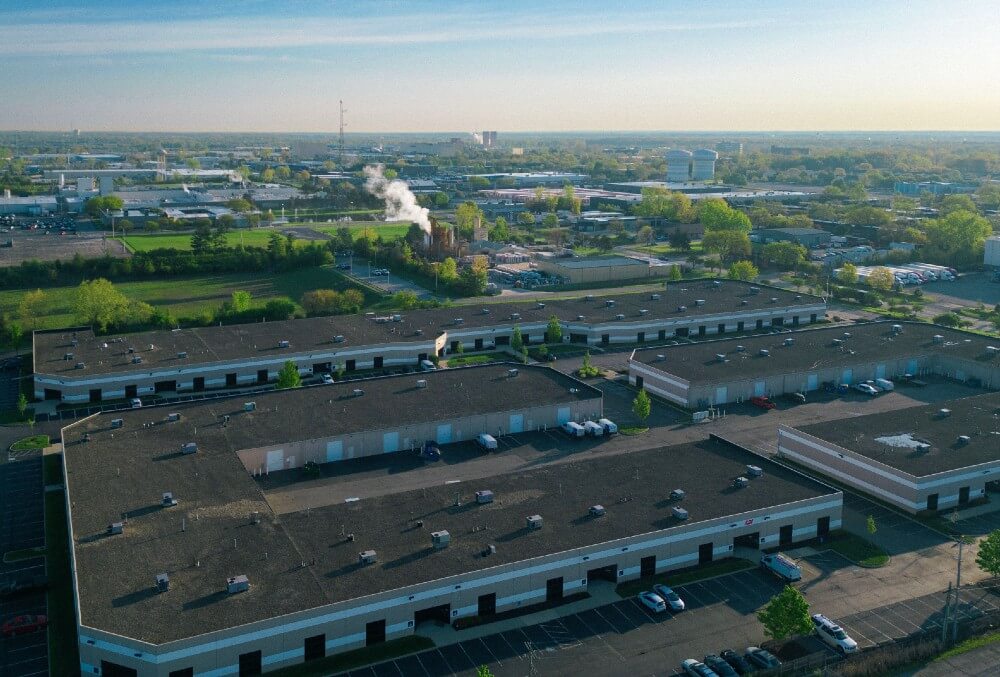
Industrial campuses have something office towers often lack. They have rooftops, yards, and buffer land that generic amenity thinking ignores. That space can do real work for retention.
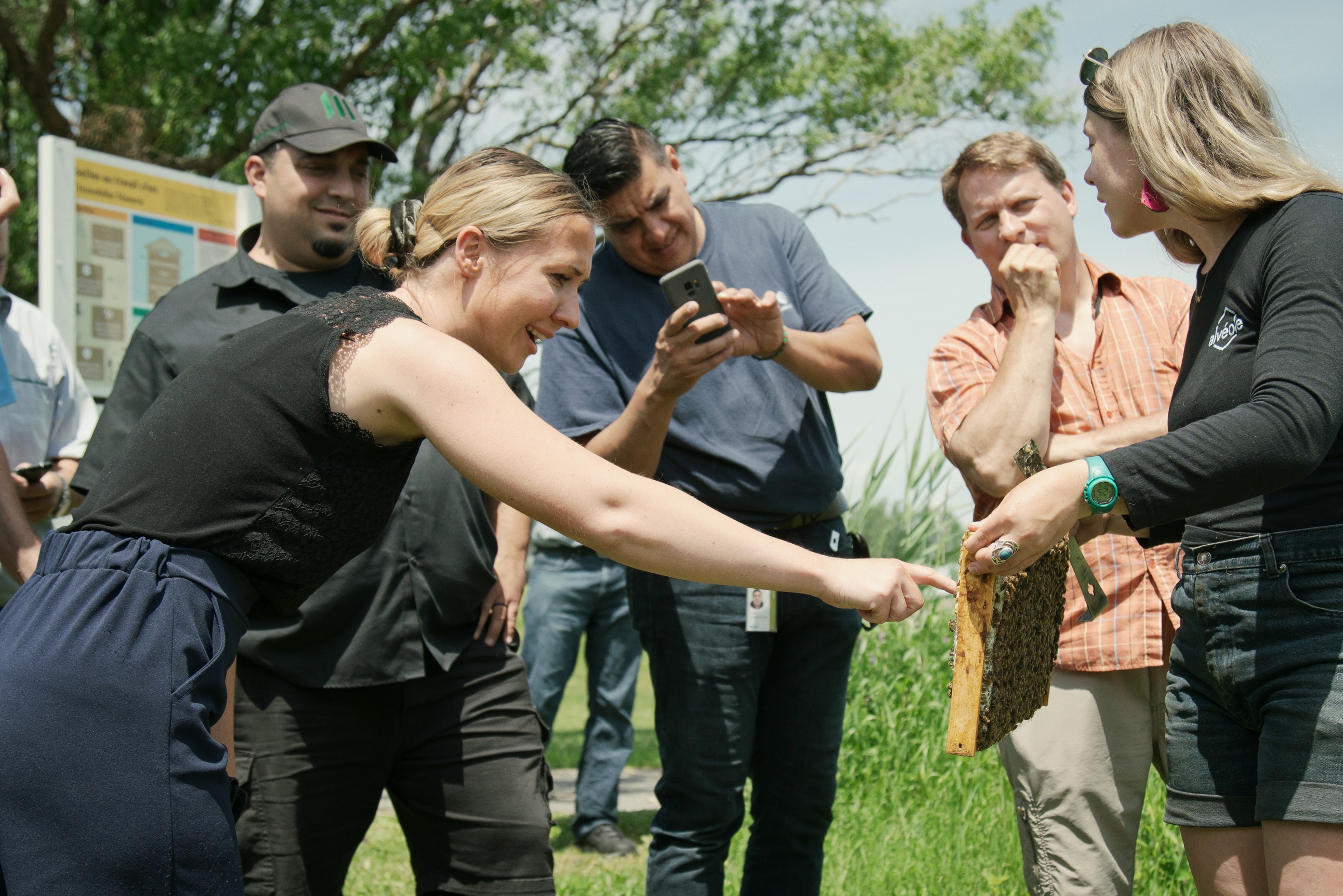
Managed rooftop beekeeping, pollinator habitats through Wild BeeHome, and hands-on workshops give tenants a visible, memorable reason to renew. A honey extraction session or a hive visit lands differently than another rent concession. It creates a story that tenants and their employees repeat.
The MyHive platform lets the property team plan, promote, and measure participation across a whole portfolio. The asset manager sees which buildings engage and which need attention, all from one dashboard.
Best of all, this is repeatable and low-lift. It runs as an operating program, not a capital project, so it scales across many buildings without a heavy budget ask.
Why satisfaction and nature connect to renewals
The link between satisfaction and renewal is measurable. MIT and Maastricht researchers Hu, Kok, and Palacios found that a one-point rise in tenant satisfaction, on a one-to-five scale, correlates with an 8.6% higher willingness to renew and a lower probability of moving out.
One caveat matters. That study covered office buildings, not warehouses. For an industrial portfolio, treat it as a reasonable, evidence-informed inference rather than proof.
The wellbeing evidence points the same way. A 2025 peer-reviewed scoping review found that nature-based programs in workplaces reduced stress in about 90% of the studies reviewed and supported productivity and job satisfaction. That evidence comes from office and healthcare settings, so it is directional for industrial sites, not industrial-specific proof.
There is also an indirect driver the asset manager should not overlook. Gallup's 2024 data shows that 68% of employees who left cited culture or wellbeing reasons, while only 16% cited pay. Tenants tend to stay where their workforce wants to be, and a visible nature program helps make a site somewhere people want to show up.
Turning retention into reportable biodiversity value
The same on-site program produces something the asset manager increasingly has to disclose. Activity on the roof and around the building generates real biodiversity data.
Alvéole's Aura nature intelligence platform and Nature Sensor, a bioacoustic monitoring device, turn that on-site activity into structured reporting outputs. Instead of a policy statement, the asset manager gets asset-level evidence a reviewer can inspect.
The reporting landscape is moving toward nature. GRESB added a biodiversity and nature indicator in 2025, which is currently unscored. The EU CSRD includes a dedicated biodiversity standard, ESRS E4, for in-scope companies when the topic is material. LEED v5, released in 2025, added an ecological conservation and restoration focus.
The result is leverage. One program supports both renewal and disclosure, so retention spend does double duty for the asset manager who has to answer to tenants and investors at the same time.
Making it work on an industrial site
Safety is the first question, and it has a clear answer. Hives and habitats are professionally managed and sited on rooftops or screened areas, with clear signage and tenant communication, so most workers never encounter the bees directly.
Cost is the second. This runs as an operating program comparable to a standard tenant event, not as a capital expenditure, which keeps it inside the budget the property manager already controls.
Scale is the third. Start with a pilot on one or two assets, measure participation through MyHive, then roll out across the portfolio once the numbers hold. Alvéole equips leasing and property teams with talking points and turnkey programming, so the property team's lift stays low. The program is deployed across more than 2,200 buildings and supports GRESB, TNFD, WELL, LEED, BOMA, BREEAM, Fitwel, and CSRD.
A lower rent defends one lease. A reason worth staying for defends the portfolio.
Frequently asked questions
What drives tenant retention in industrial real estate beyond rent? Switching costs, building functionality and location, responsive property management, lease flexibility, and engagement all drive it. JLL's Q2 2026 data shows tenants prioritize power, automation-ready specs, and skilled-labor access over discounted rents.
How much does losing a commercial tenant cost? Industry analysis models replacing a tenant at roughly three times the cost of retaining one. That figure reflects vacancy, tenant improvement allowances, broker fees, and re-marketing, so treat it as a planning model rather than an audited average.
Do nature-based amenities work on industrial and logistics properties? Yes. Industrial and logistics sites have rooftops, yards, and buffer land that suit managed beekeeping and pollinator habitats. That gives tenants a visible reason to renew.
How does tenant engagement support ESG reporting? The on-site program produces asset-level biodiversity data through Aura and Nature Sensor. That data supports reporting and disclosure under frameworks such as GRESB, CSRD's ESRS E4, and LEED v5.