
What amenities help Class A apartment buildings stand out from new construction competitors?
.jpg)
If you manage an established Class A asset, the newest building down the street is a real problem. It has the current finishes, the current floor plans, and the appeal of being new. The instinct is to answer with more amenities. That instinct is expensive, and it usually loses. This guide is written for the asset manager who owns the number. It sorts Class A apartment amenities into what every building already has and what actually protects retention, rent, and NOI against new construction competitors.
Key takeaways
- New construction wins on finishes and novelty, so matching it amenity for amenity is a losing spend.
- Standard amenities like a pool, a gym, package lockers, and a coworking lounge are now table stakes, not differentiators.
- Retention math, not amenity count, is where an established Class A asset defends rent and NOI.
- The amenities that stand out are hard to copy, because they build community and give residents a reason to stay.
- A managed nature program is one differentiator that also produces biodiversity data for reporting frameworks.
Why matching new construction amenity for amenity fails
New supply is pressuring established Class A assets right now. Per NAHB, 2024 multifamily completions reached a 38-year high of 608,000 units. That is the most since 1986. Those units landed in the same markets your assets compete in.
The luxury tier felt it first. CoStar reported that the 4 and 5-star segment, the closest proxy for Class A, ended 2024 with the weakest rent growth of any tier at 0.2% and the highest vacancy at 11.4%. Operators responded with discounts instead of rent cuts. RealPage data shows concessions reached their deepest level in more than 25 years by mid-2026, with an average discount near 11.1% across roughly 16.5% of stabilized units.
Here is the hard truth for the asset manager. A new building will always win on new. Outspending it on finishes is not the play. The winning move is to compete where new construction is weak.
Table stakes vs. true differentiators
Start by being honest about what no longer differentiates. A pool, a fitness center, package lockers, a coworking lounge, a pet area, and smart locks are expected. New construction includes them by default. Adding a fifth lounge does not separate your asset from the building next door. It just raises your cost basis.
Real differentiators are service-based and hard to replicate. They are the things residents encounter often, talk about, and connect to. Resident preference data backs this up. Greystar's 2025 design survey of 137,000 residents found that fitness centers only just entered the top five. The same survey found that willingness to pay premiums for sustainability features softened by about 24% year over year.
Read that correction carefully. It does not mean residents stopped caring about nature or community. It means the asset manager should not lead with a premium claim. Lead with community value and programming that residents actually use. Renters increasingly reward everyday quality over amenity spectacle. A building with fewer features but stronger community can hold residents better than a building with a longer amenity list.
Why retention economics, not amenity count, decides the winner
Amenities earn their place when they improve retention. That is the number the asset manager owns.
The retention picture is tightening. The Zego 2026 resident report found average retention fell to 57%, down from 60% in 2024. The same report found renters begin reconsidering renewal at an average rent increase of just 8%. So the margin for error on renewal pricing is thin.
Now put a cost on it. A 2023 Zego survey of property managers put average turnover at about $3,872 per unit, which rounds to roughly $4,000. Consider an illustrative calculation on a 5,000-unit portfolio. A three-point drop in retention, from 60% to 57%, adds about 150 turns a year. At roughly $4,000 each, that is close to $600,000 in added annual turnover cost. Treat that figure as a calculation, not a measured result, but the mechanism is real.
Class A also turns over more than you might expect. Mid-2022 RealPage-based data put the Class A renewal rate at 53.4% versus 65% for Class C. That split is from 2022, so treat it as directional, not current. The point holds. Class A residents have more options and more reasons to move, so retention has to be earned.
The conclusion for the asset manager is simple. Amenities are worth funding when they lift retention, not when they lengthen a feature list.
The differentiator new construction can't copy quickly: a managed nature program
A new building can replicate a gym in a few months. It cannot replicate an established, running nature program and the community built around it. That is what makes it copy-resistant.
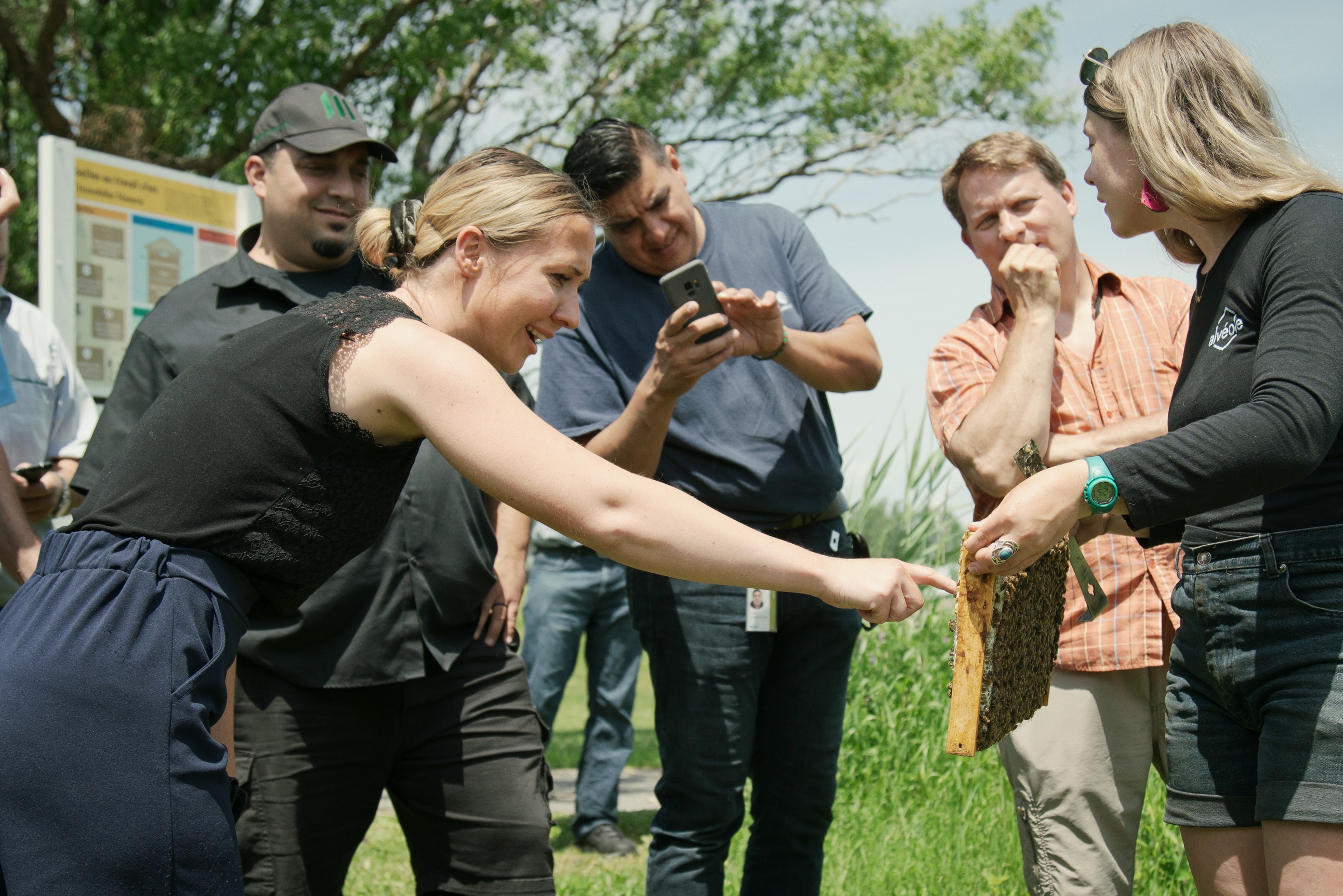
Here is what the program is. Alvéole runs a fully managed rooftop beekeeping and resident engagement program. It includes recurring beekeeper visits, honey extractions, and workshops such as honey tastings and hive Q&A sessions. Residents get branded honey jars from their own building. The MyHive digital platform handles event registration, hive updates, and portfolio-level participation dashboards, so property teams can plan, promote, and measure from one place.
Why it stands out on a tour. A leasing conversation about rooftop hives and building-labeled honey is memorable in a way a fifth lounge is not. It gives the leasing team a story that new construction cannot match with finishes alone.
Why it lasts past move-in. Recognition keeps residents engaged. The Zego 2026 resident report found that 31% of renters would be much more likely to renew if their community offered a rewards or recognition program. A jar of honey at renewal is a concrete, repeatable touch, not a one-time event.
It also fits the budget. This is an operating program, not a capital project, so it works within constrained budgets and scales across a portfolio.
The amenity that also produces reporting data
Most amenities cost money and return nothing to the owner's reporting work. A managed nature program is different. It can generate on-site biodiversity data that supports reporting, compliance, and disclosure.
The frameworks are moving toward nature. GRESB introduced a biodiversity indicator in its 2025 Real Estate Standard, aligned with TNFD. That indicator is not scored in 2025, so it gives participants time to adapt. LEED v5 names three impact areas, one of which is ecological conservation and restoration. WELL v2 includes biophilia features tied to indoor plantings and landscaped areas. On-site nature data helps the asset manager show underlying activity, not just a policy document.
One honesty guardrail matters here. Do not assume rooftop beekeeping improves biodiversity on its own. A peer-reviewed 2023 study in PeerJ found that high-density urban beekeeping may negatively affect wild and native bees through floral competition. So scope the benefit correctly. A managed nature program drives resident engagement and produces biodiversity data that supports reporting. Ecological outcomes depend on responsible program design and appropriate scaling. Stated that way, the claim holds up when a reviewer asks to see the program behind it. For context, the U.S. Fish & Wildlife Service estimates pollinators contribute $34 billion annually to the U.S. economy, which is why credible nature data is worth capturing.
Addressing the practical concerns: safety, cost, and rollout
The asset manager usually has three questions before acting. Here are direct answers.
Safety comes first. Hives are handled exclusively by professional beekeepers and placed on rooftops or in screened areas. Most residents never encounter the bees directly. Clear signage and resident communication resolve the remaining questions.
Cost is the next concern. This is an operating expense, comparable to a resident-events budget, not a capital line item. That makes it easier to approve and easier to defend.
Rollout is the last one. Start with a pilot on one or two assets. Equip the leasing team with simple talking points. Then scale across the portfolio based on measured participation and renewal results. Responsible scaling also matters ecologically, which ties back to the reporting guardrail above.
Bottom line
A newer gym or a fifth lounge will not win your next lease against new construction. Those features are table stakes, and new buildings will always have the newer version. The amenities that stand out are the ones that build community, hold residents longer, and are hard to copy. A managed nature program does all three. It differentiates on tour, supports retention, and produces biodiversity data for reporting. For the asset manager defending premium rent and NOI, that is a spend that pays back. Book a demo with Alvéole to see how the program runs across a portfolio.
FAQ
What amenities do Class A apartments need to compete with new construction?
They need the table-stakes set that residents now expect, plus at least one differentiator new construction cannot copy quickly. The table stakes are the pool, gym, lockers, and lounge. The differentiator should build community and support retention, such as a managed nature program.
Which apartment amenities are just table stakes now?
A pool, a fitness center, package lockers, a coworking lounge, a pet area, and smart locks are table stakes. New construction includes them by default. They are expected, so they no longer separate one Class A asset from another.
Do amenities actually improve resident retention and NOI?
They do when they lift retention rather than lengthen a feature list. The Zego 2026 resident report found retention fell to 57%, and renters reconsider renewal at an average rent increase of just 8%. Amenities that keep residents engaged protect renewal rates and NOI.
How can an older Class A building compete without an amenities arms race?
Compete on retention and community, not amenity count. Match the table stakes, then add a differentiator that new construction cannot replicate fast. Programming and everyday quality hold residents better than spending more on finishes you cannot win on.
Are rooftop beekeeping programs safe for residents?
Yes, when professionally managed. Hives are handled by trained beekeepers and placed on rooftops or in screened areas. Most residents never encounter the bees directly, and clear signage and communication resolve typical questions.
How do nature amenities support building certifications or reporting?
They can generate on-site biodiversity data that supports reporting and disclosure. GRESB added a biodiversity indicator to its 2025 Real Estate Standard, LEED v5 includes ecological conservation and restoration, and WELL v2 includes biophilia features. The data helps the asset manager show underlying program activity, not just a policy.