
Tenant engagement programs that deliver measurable results in commercial office buildings

Be honest. When was the last time a tenant got excited about a lobby coffee cart? They appreciate the gesture, grab a cup, and forget about it by lunch. Meanwhile, lease renewal conversations are getting harder, GRESB submissions need documented programs, and hybrid schedules have turned consistent occupancy into a moving target.
CRE managers already know tenant engagement matters. The harder question is what specific programs actually move the needle on retention, satisfaction, and reporting. This guide breaks down the program categories that generate measurable outcomes, backed by current research and real portfolio data.
What a tenant engagement program is (and why it is not a strategy)
The difference between programs and strategies
A strategy is a broad approach. "Improve tenant communication" is a strategy. A program is a named, scheduled initiative with a defined format, cadence, and success metric. "Monthly tenant town hall with a post-event NPS survey" is a program.
The distinction matters for CRE managers because programs are easier to budget, measure, and scale across a portfolio. A strategy lives in a presentation deck. A program lives in a calendar with assigned ownership and tracked results.
The problem with most commercial tenant engagement strategies is that they never leave the slide deck. A property manager hears "improve communication" and nods, but without a named program, a schedule, and an owner, nothing changes.
We deliver a managed program model across 2,200+ commercial buildings. That operational experience shapes the program categories outlined below.
Why programs matter more in a hybrid office market
Office utilization has stabilized, but not where it was in 2019. The Kastle Systems 10-city Back to Work Barometer hit a 56.5% weekly average in June 2026, a post-pandemic record. Class A+ buildings are pulling ahead at 80.4% average occupancy, with peak days reaching 97.8%.

The gap between top-performing and average buildings is widening. Cushman and Wakefield's 2025 survey found that 57% of occupiers seek improved amenities and 59% are exploring higher-quality space. Tenants are not leaving the office. They are leaving mediocre offices for better ones.
Programs give tenants a reason to come in on specific days. Buildings with active programming see higher midweek peaks, particularly on Tuesdays, which Kastle data shows at a record 66.8% nationally.
The financial case is straightforward. Commercial tenant turnover costs an average of $31,927 per departing tenant. The 2024 MIT study of 104,586 survey responses found that each one-point satisfaction improvement reduces turnover risk by 8.6%. For a property manager running a 500,000-square-foot office building, even a modest satisfaction lift can prevent six-figure replacement costs.
Programs are the mechanism that delivers that satisfaction lift consistently and measurably.
Communication and feedback programs
Management communication is the single strongest driver of tenant satisfaction in commercial real estate. That finding comes from both the MIT study and Kingsley Associates research, which shows a 70% correlation between management staff ratings and overall satisfaction.

Yet 11-22% of commercial tenants reported receiving zero management check-ins during 2024, according to Kingsley Associates data shared on a GRESB podcast. Only 1-4% of tenants said they preferred no communication. The gap between what tenants want and what they receive is the program opportunity.
Three communication programs close that gap.
Tenant satisfaction surveys. Run quarterly on a 1-5 scale, benchmarked against the portfolio. GRESB TC2.1 scores survey programs directly. At Empire State Realty Trust, the property management team uses annual Kingsley survey data to prioritize operational improvements rather than just report on them, turning tenant feedback into a structured decision-making tool.
Tenant advisory councils. Monthly or quarterly forums where tenant representatives share feedback and co-create building improvements. These councils convert passive complaints into collaborative problem-solving.
Digital communication programs. Scheduled newsletters, building app notifications, and event calendars that keep tenants informed between in-person touchpoints.
The critical step is closing the loop. Tenants who see their feedback acted on renew at higher rates. A survey without a visible response is worse than no survey at all, because it signals that management asked but did not listen.
Event and community programs
High-engagement event formats
Events are the most visible form of tenant engagement. They are also the most commonly wasted. A pizza lunch in the lobby generates a brief sugar spike of goodwill and nothing measurable. The programs that drive results share three traits: they are participatory, they are repeatable, and they produce content worth sharing.
Seasonal appreciation events. Tenant appreciation weeks, holiday gatherings, and summer outdoor socials mapped to a quarterly calendar. These anchor events give tenants recurring reasons to engage with building management and each other.

Grab-and-go activations. Fifteen-minute, lobby-level experiences that require no scheduling. Coffee bars, smoothie pop-ups, and branded giveaways work for busy professionals who cannot commit to a longer event. These are low-commitment touchpoints that maintain visibility between anchor events.

Participatory workshops. Cooking classes, wellness sessions, and skill-building events create community rather than passive consumption. Participation rates for interactive formats consistently outperform passive ones.
.jpg)
Networking mixers. Cross-tenant events that introduce employees from different companies in the building. These are particularly valuable in multi-tenant office properties where tenants rarely interact. For more ideas, see this guide to unique commercial building amenities that attract top tenants.

Building a year-round event calendar
Ad hoc events are not a program. A program requires a calendar with a consistent cadence that tenants can anticipate.
Map events to seasons. Spring kickoffs, summer outdoor activations, fall wellness programs, and winter community gatherings provide a natural rhythm. Set a monthly cadence of one anchor event plus one or two grab-and-go moments.
Assign ownership. The engagement manager or property management team owns the calendar, but tenants co-create content. Digital registration platforms make attendance measurable and convert anecdotal engagement into portfolio-level data.
Track attendance and satisfaction per event. Without measurement, an event calendar is a cost center. With measurement, it becomes an operating advantage that CRE managers tie directly to retention outcomes.
Wellness and amenity activation programs
Having a fitness center is not a program. Having a rooftop terrace is not a program. Activating those spaces with scheduled events and tracked usage is.
The Cushman and Wakefield survey found that 57% of occupiers want improved amenities. But existence is not activation. A gym that sits empty on Wednesdays is a sunk cost. A gym with a recurring Wednesday yoga session and tracked attendance is a wellness program.
Fitness and movement programs. Weekly or biweekly yoga sessions, walking groups, and ergonomic workshops with recurring registration. These drive midweek attendance and give tenants a reason to choose the office over working from home.
Mental health and stress reduction. Meditation sessions, quiet room hours, and mental health awareness events. The WELL Building Standard's Mind concept awards points for occupant mental health support, giving these programs a dual purpose.
.jpg)
Amenity activation. Schedule events in underused building spaces. A lobby becomes a community hub. A terrace becomes a seasonal gathering point. Activation turns capital investments into engagement drivers.
Gensler's 2025 Global Workplace Survey confirmed that employees want natural, creative, and residential environments over corporate settings. Tenants are not asking for more polished spaces. They are asking for spaces that feel alive.
That insight leads directly to the most underused program category in commercial real estate.

Nature-based engagement programs
Why nature at work drives engagement and well-being
The research on biophilic design in workplaces is extensive and consistent. A systematic review of 16 peer-reviewed studies, published in PMC in 2023, confirmed that biophilic workplace design improves health, well-being, productivity, job satisfaction, and organizational commitment.

The numbers are specific. Employees in workplaces with biophilic design features report creativity increases of 15% compared to conventional offices, according to the Human Spaces study. Workers with good access to daylight report 18% fewer sick days. Workers without nature views claim 23% more incidences of illness over six months, per Vibrant Cities Lab research.
Certification frameworks are responding. LEEDv5 dedicates 25% of its new credits to ecological conservation and restoration, including a new Biodiverse Habitat credit. WELL Building Standard awards points for biophilia, including landscaped grounds accessible to occupants and indoor plantings.
Most buildings have not touched this category yet. Learn more about nature-based office amenities and their measurable effect on tenant satisfaction and retention.
From rooftop beehives to pollinator habitats
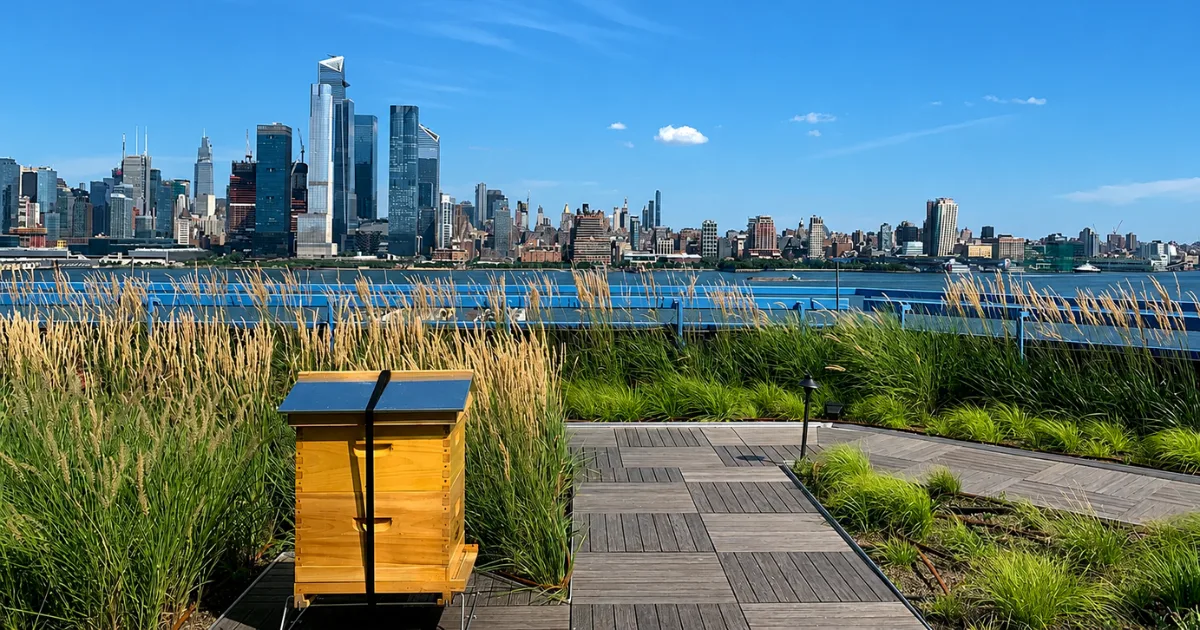
Nature-based programs are participatory, not passive. Tenants do not just look at a green wall. They inspect beehives, harvest honey, and learn about local biodiversity.
Managed beekeeping programs. Rooftop or terrace beehives with seasonal inspections, honey harvests, and educational workshops.
.png)
Daniel Farley, Building Amenity Manager for Tenant Experience at Nuveen, called it "a great leasing initiative," adding: "It's our job to get people here, to get them excited about coming to work. The fact that we get jars of honey with our label is great. People love it."

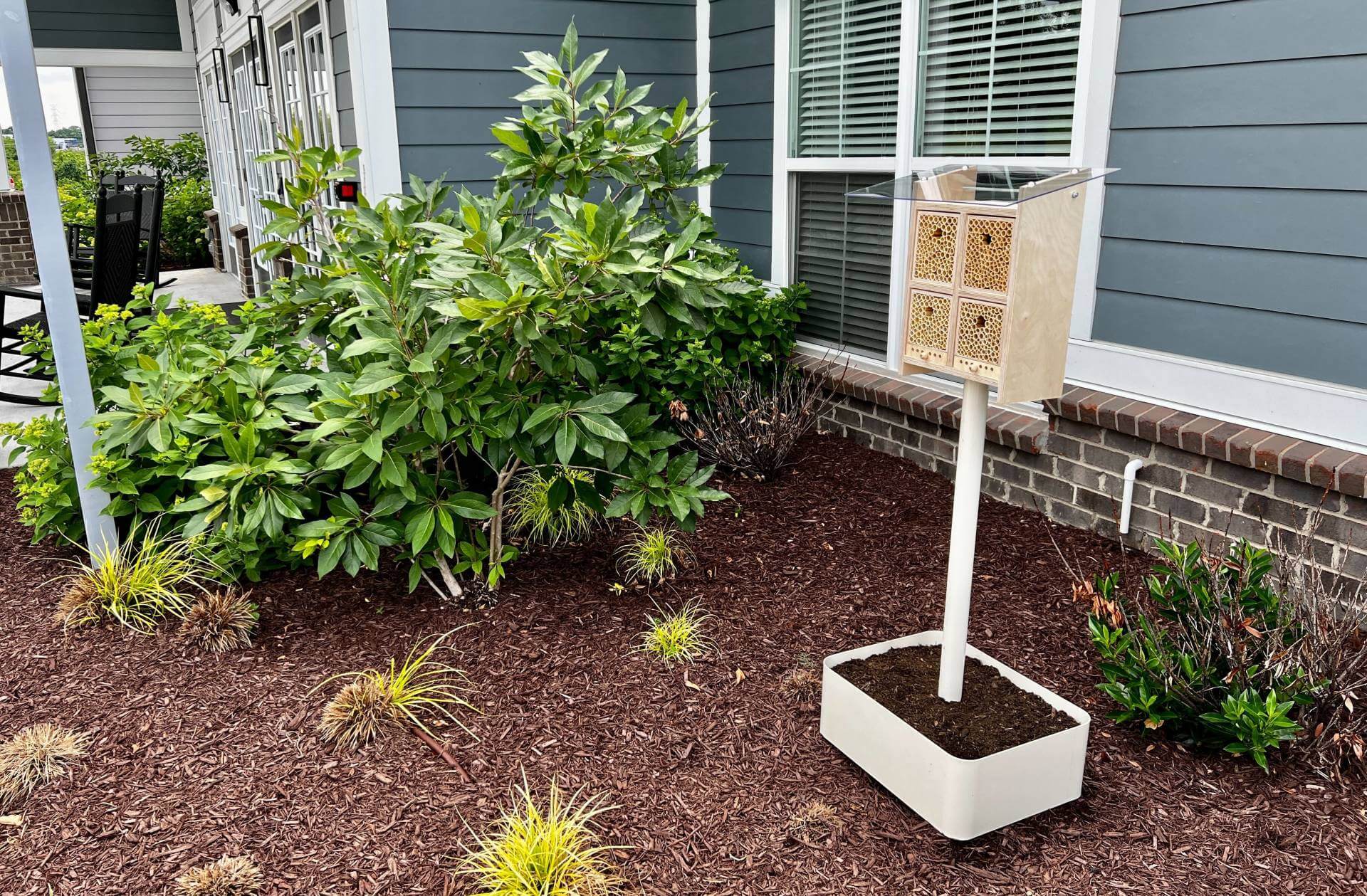
Pollinator habitat installations. Solitary bee homes and native plantings require minimal maintenance and generate biodiversity data that feeds directly into certification submissions. The Wild BeeHome, designed for commercial properties, is installed across 500+ buildings.

Seasonal nature events. Spring hive openings, summer harvests, fall biodiversity walks, and winter educational sessions. These events integrate naturally into a year-round calendar and consistently outperform traditional event formats in attendance.
At 757 Third Avenue, managed by JLL for BGO, the beekeeping program contributed to a 2024 BOMA Pinnacle Earth Building of the Year award. Christopher Gildea, Senior General Manager at JLL, put it simply: "It's a homerun... It's one of my favorite amenities at the building." He described the program as cost-effective, with seamless tenant engagement and strong reporting value.
Programs that support certification reporting and scoring
Tenant engagement programs do not just improve satisfaction. The right programs generate auditable data that CRE managers submit directly for GRESB, LEED, WELL, and BREEAM scoring.
GRESB's Tenants and Community scoring evaluates entities directly on tenant engagement programs. TC1 scores ESG-specific engagement across nine approaches. TC2.2 explicitly includes "biodiversity and green space" as a scored category for programs that improve satisfaction. The 2025 GRESB assessment added RM7, a biodiversity indicator aligned with TNFD. While currently unscored, it signals where scored requirements are heading.
Nature-based engagement programs earn 2-10 certification points spanning LEED, WELL, BOMA BEST, Fitwel, BREEAM, and GRESB. See how these programs earn green building certification points.
%20(1).png)
LEEDv5 dedicates 25% of new credits to ecological conservation, including a Biodiverse Habitat credit and biophilic design credits. WELL awards points for biophilia and landscaped grounds accessible to occupants. BREEAM v7 aligns with England's mandatory Biodiversity Net Gain requirement of 10% minimum for all new developments.
Gecina integrates GRESB and BREEAM scores into sustainability-linked loan covenants, including biodiversity score triggers that affect pricing. Link REIT channels biodiversity scores into loan covenant margin adjustments. When certification performance affects financing costs, engagement programs move from the amenity budget to the capital strategy. For more on this topic, read about certification reporting for commercial real estate.
Sixty-six percent of occupiers now integrate environmental, social, and governance goals into real estate decisions, according to CBRE. Tenants increasingly select buildings that support their own corporate disclosure requirements.
The highest-value program delivers both tenant participation data and certification-ready metrics from a single initiative. Our Aura platform generates GRESB-ready biodiversity data. Nature Sensor, a bioacoustic monitoring device, captures on-site biodiversity activity around the clock, identifies species using AI, and feeds data into reporting dashboards.
.png)
How to measure tenant engagement program ROI
Every CRE manager who has proposed a new line item knows the question that follows: what is the return? Engagement programs need the same rigor as any other operating investment.
Leading indicators tell you whether programs are working in real time. Track event attendance rates, survey response rates, digital platform logins, and program registration numbers. These metrics move within weeks of program launch.
Lagging indicators confirm financial impact over quarters and years. Lease renewal rates, tenant NPS scores, vacancy rates, and effective rent growth are the metrics that matter to ownership and investors.
The benchmarks are clear. Properties with high tenant satisfaction achieve 85-95% lease renewal rates, compared to 45-65% for low-satisfaction buildings, according to BOMA research. The MIT study found that a 10% improvement in building-level satisfaction correlates with 0.9% higher effective rent growth and a 0.3% lower vacancy rate.
SVN International's 2026 valuation analysis added a new dimension. Appraisers are now incorporating tenant satisfaction and utilization metrics into underwriting assumptions. Properties with strong satisfaction data are modeled with lower vacancy risk and shorter downtime. Engagement data is no longer just an operational metric. It affects property valuation.
Digital tracking makes this measurable. Tenant experience platforms log participation at the event and program level, converting anecdotal engagement into portfolio-level data. Our MyHive platform tracks participation per event, per tenant, per building, giving property teams the reporting infrastructure to connect programs to outcomes.
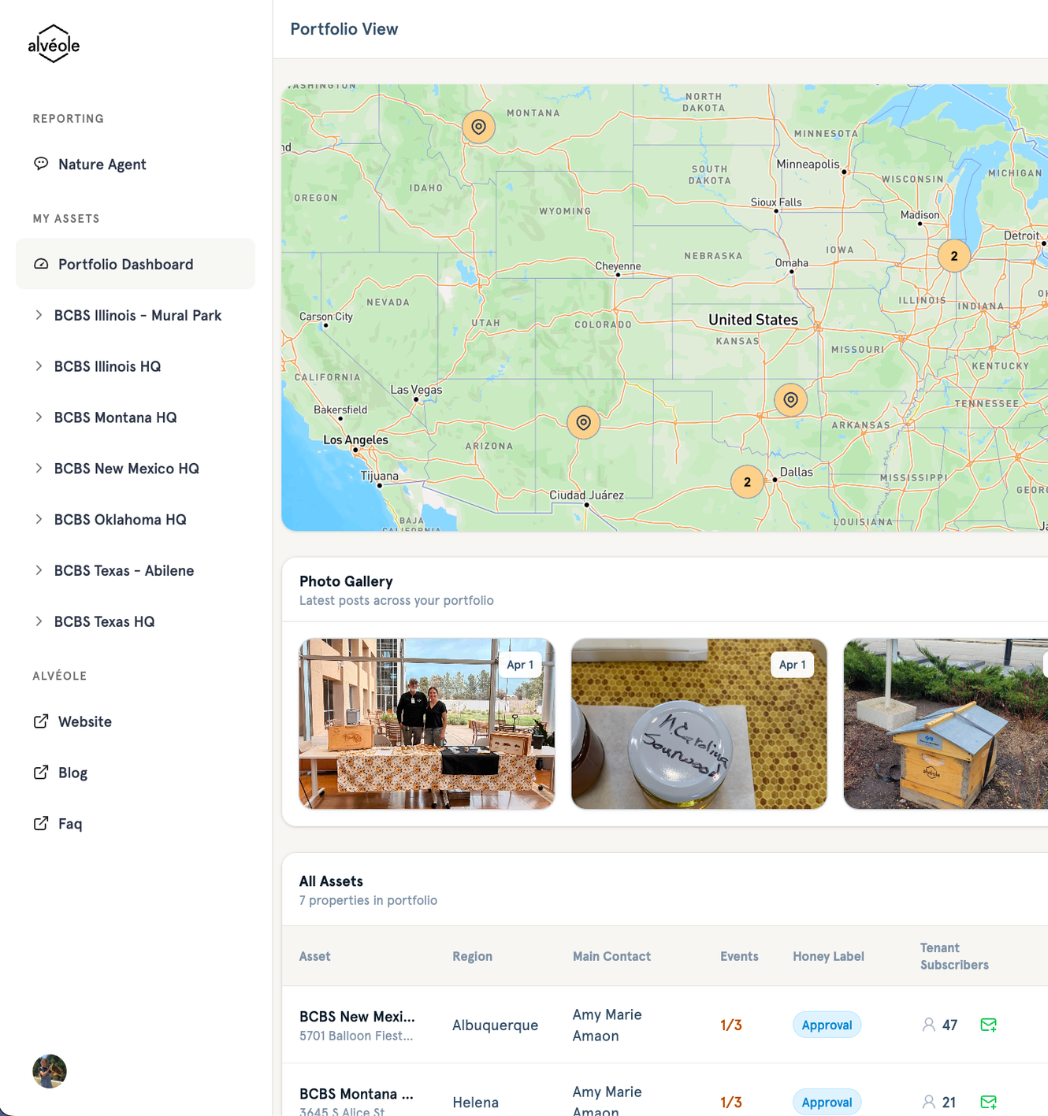
CRE managers who measure engagement at the program level will have the clearest picture of what works and where to invest next.
Frequently asked questions
What is a tenant engagement program in commercial real estate?
A tenant engagement program is a structured, recurring initiative with a set format, schedule, and success metric, designed to increase satisfaction, participation, and retention in a commercial building. Unlike a one-time event, it repeats on a cadence and produces trackable data. Examples include quarterly satisfaction surveys, managed beekeeping programs with seasonal events, and monthly tenant advisory councils.
What are the best tenant engagement ideas for office buildings?
The best ideas combine social interaction with measurable participation, including seasonal appreciation events, wellness workshops, tenant advisory councils, nature-based experiences like rooftop beekeeping, and digital engagement platforms. The key is structure. A honey harvest is an event. A managed beekeeping program with quarterly inspections and tracked attendance is a program that compounds over time.
How do you measure tenant engagement ROI?
Measure leading indicators like event attendance, survey response rates, and platform usage alongside lagging indicators like lease renewal rates, NPS scores, and vacancy. An MIT study of 2,906 buildings found each one-point increase in satisfaction on a 1-5 scale corresponds to an 8.6% higher renewal likelihood. A 10% satisfaction improvement correlates with 0.9% higher rent growth and 0.3% lower vacancy.
How does tenant engagement affect lease renewals?
Tenant engagement has a direct, well-documented effect on lease renewals. High-satisfaction properties achieve 85-95% renewal rates, compared to 45-65% for low-satisfaction buildings, according to BOMA research. With average tenant turnover costing $31,927, retention is the highest-ROI line item in the operating budget, and satisfaction gains compound incrementally, per the MIT study.
Can tenant engagement programs improve GRESB scores?
Yes. GRESB scores tenant engagement directly through its Tenants and Community aspect, evaluating whether a formal program exists (TC1), whether tenants are surveyed (TC2.1), and whether results drive improvements (TC2.2). Nature-based programs score particularly well because they generate both engagement data and biodiversity metrics. The same programs also earn points across LEED, WELL, BOMA BEST, Fitwel, and BREEAM.
What tenant events work best for hybrid offices?
Anchor events perform best on peak-attendance days. Kastle Systems data shows Tuesday is the dominant in-office day nationally at 66.8%, making it the highest-reach day for programming. Use grab-and-go formats on lower-attendance days to maintain visibility, and pair in-person events with digital follow-ups so remote tenants still feel connected to building community.
The bottom line
Tenant engagement programs are not optional amenities. In a market with 19.4% office vacancy and $31,927 average turnover costs, they are a financial strategy.
The best-performing buildings run structured, measurable programs across communication, events, wellness, and nature-based categories. They track participation at the program level and connect results to GRESB, LEED, and WELL scoring.
Nature-based programs remain the least adopted category in commercial real estate, despite being the only one that generates tenant participation data, wellness benefits, and certification-ready reporting from a single initiative. Buildings running these programs report 30-40% participation rates, measurable satisfaction improvements, and documentation that feeds directly into GRESB and LEED submissions.
CRE managers who connect program data to certification scoring gain a competitive advantage in both tenant retention and property valuation. A one-point satisfaction increase corresponds to an 8.6% higher renewal likelihood, 0.9% higher rent growth, and stronger underwriting assumptions.
We deliver managed nature-based engagement programs in 2,200+ commercial buildings across the USA, Canada, and Europe. Book a demo to see how the program works at your property.