

Nature-based office amenities: the next wellness evolution
The commercial real estate landscape is changing. Property managers, asset managers, and ESG leaders are finding that traditional wellness amenities like gyms and meditation rooms no longer meet modern workplace expectations. Today’s tenants want spaces that support both human wellbeing and environmental responsibility.
According to research from Human Spaces, workers in environments with natural features report a 15% higher well being score than those in spaces without them. This data signals the emergence of nature-based office design as the next evolution in workplace wellness strategy.
As organizations compete for talent and seek to improve employee retention while strengthening their ESG credentials, nature-based amenities represent an untapped opportunity to differentiate properties and create meaningful environmental impact.
Unlike conventional fitness centers and meditation rooms, nature-based solutions address the fundamental human need for connection with the natural world while delivering measurable business outcomes.
What are nature-based office amenities?
Nature-based office amenities are living systems and natural elements integrated directly into commercial buildings to improve occupant health, productivity, and environmental performance. Unlike decorative plants or nature imagery, these functional ecosystems actively contribute to building operations and tenant wellbeing.
This approach draws on biophilic design principles—a methodology that connects building occupants with nature to support human health and cognitive function, according to the University of Minnesota Arboretum.
Core nature-based amenities include:
Living building systems: Rooftop gardens, green walls, and indoor plant installations that improve air quality and provide visual nature connections. These often include automated irrigation and monitoring technology.
Urban beekeeping programs: Managed honey bee colonies on commercial properties that create tenant engagement opportunities while supporting pollinators and urban biodiversity.
Biophilic design elements: Natural lighting systems, water features, organic materials, and architectural forms that mimic nature patterns—including daylight optimization, wood, stone, and bright natural colors.
Outdoor workspace integration: Accessible terraces, courtyards, and rooftop areas designed for work and relaxation, often featuring native plants and sustainable landscaping.
Environmental monitoring: Systems that track air quality, biodiversity metrics, and ecological performance, providing tenants with data-driven insights.

How nature-based differs from traditional wellness
The distinction between nature-based amenities and traditional wellness programs reflects a fundamental shift from treating symptoms to addressing root causes of workplace stress and disengagement. This difference has profound implications for both employee outcomes and business performance.
Systemic versus individual focus
Traditional wellness programs often attempt to fix the individual rather than the environment. Fitness centers, meditation apps, and health screenings that require employees to actively participate in separate activities alongside work responsibilities.
Nature-based amenities transform the environment itself. These solutions create inherently healthier spaces that passively benefit all occupants throughout their workday—no additional scheduling required.
Passive versus active engagement
Traditional wellness programs rely heavily on employee motivation and time availability. Despite 85% of large employers offering wellness programs, Gallup research reveals a participation gap:
- Only 60% of employees are aware their company offers a wellness program
- Only 40% of aware employees actually participate
Nature-based amenities provide continuous benefits without requiring conscious participation. Employees experience improved air quality, stress reduction, and enhanced cognitive function simply by occupying the space.
Financial performance comparison
The economic implications of this difference are substantial. According to Terrapin Bright Green's research, industries spanning a variety of sectors, from hospitals to corporate offices, spend, on average, 112 times the amount of money on people as on energy costs in the workplace. This economic reality makes the productivity gains from nature-based solutions particularly compelling for property managers and asset managers.
Measurement and accountability
Traditional wellness programs often struggle with measurement challenges, tracking metrics like gym membership usage or app downloads that may not correlate with actual health outcomes or business performance. Nature-based amenities enable more comprehensive measurement approaches that include environmental impact data, tenant satisfaction scores, and building performance metrics.
Examples of nature-based design in commercial buildings
Leading commercial real estate developers worldwide are implementing innovative nature-based solutions that demonstrate the practical applications and measurable benefits of this approach.
Integrated ecosystem design
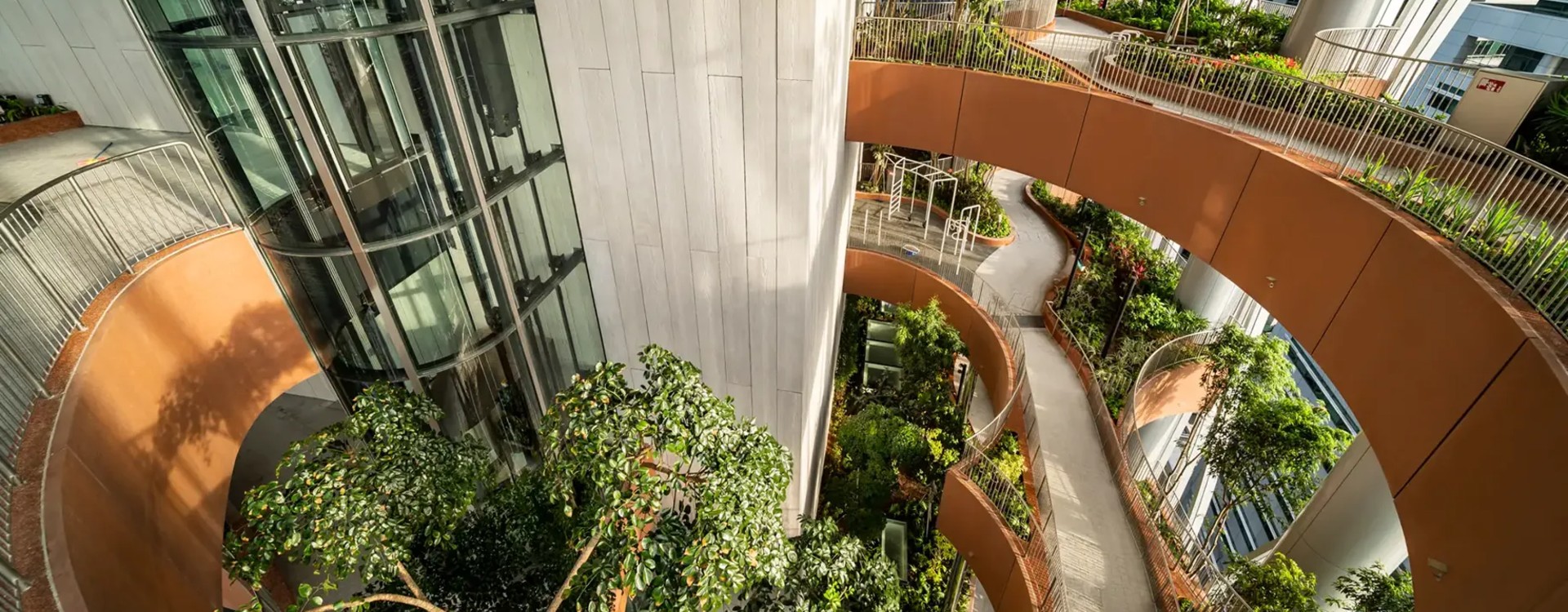
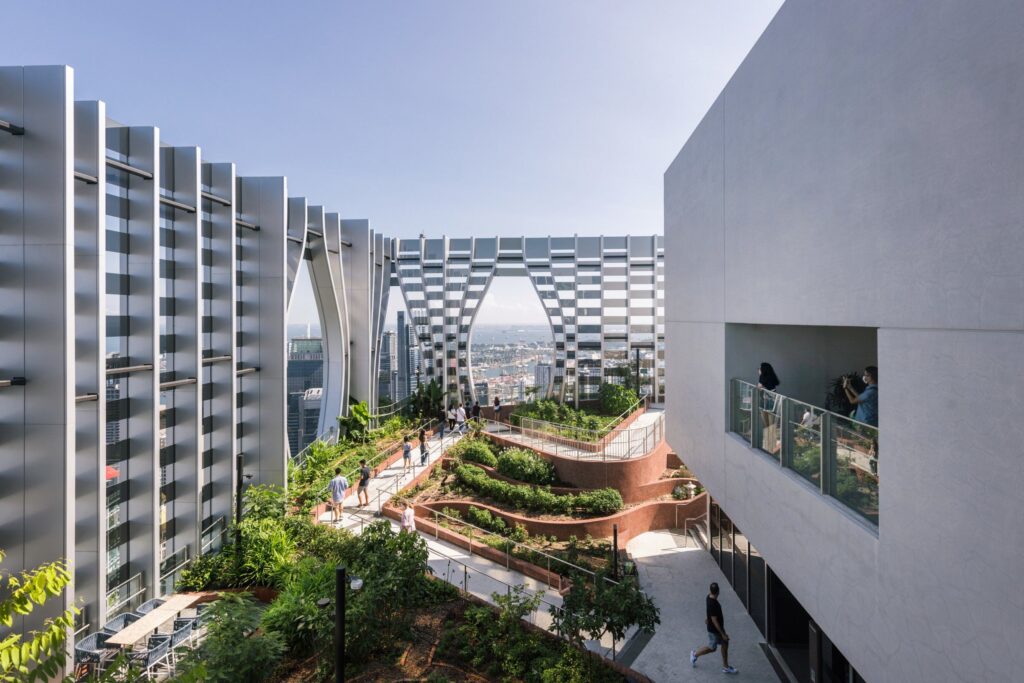
CapitaSpring in Singapore is a 51-floor tower featuring Grade A office space, serviced apartments, and a four-story "green oasis" garden. The project demonstrates how nature-based design integrates at scale in high-density urban environments while commanding premium market positioning.
Workplace productivity integration
ISS World research confirms biophilic design's impact on wellbeing: reduced blood pressure, lower stress, and improved short-term memory. According to their findings, 67% of office workers report that naturally-lit environments with outdoor colors make them happy.
Technology-enabled nature solutions
Advanced nature-based amenities increasingly incorporate monitoring technology and data analytics. Urban beekeeping programs, for example, analyze pollen, honey, and colony health to assess local biodiversity quality. This provides property managers with quantifiable environmental performance data

Biophilic design elements
Biophilic design isn't just about adding a few potted plants (though that's a start!). It's about creating spaces that mimic the patterns, materials, and experiences we find in nature.
The most common biophilic elements include:
- Living walls covered in plants
- Natural materials like wood and stone
- Water features that create gentle sounds
- Windows that frame views of trees or sky
- Natural light that changes throughout the day
These features work together to reduce stress hormones and boost mood. One study found that workers in offices with natural elements reported 15% higher creativity scores than those in standard offices.
They also signal a company’s commitment to wellbeing and innovation, traits that help attract and retain motivated, engaged employees.
Rooftop gardens and urban beekeeping
Empty rooftops are turning into buzzing ecosystems in cities across the world. These spaces offer something special that indoor amenities can't. They offer actual nature, right in the middle of urban environments.
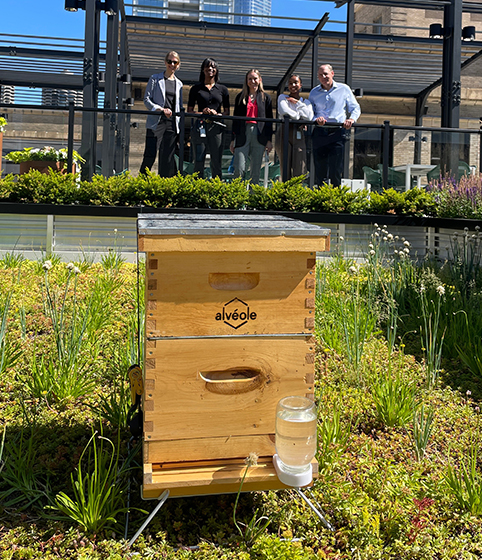
Rooftop gardens provide a place to relax, work outdoors, or grow food. Some buildings are taking this a step further by adding beehives. Urban beekeeping programs, like those offered by Alvéole, install and maintain honey bee colonies on commercial buildings.
These bee installations aren't just cool to look at. They become interactive learning tools where employees can participate in workshops about pollination, honey harvesting, and environmental monitoring. The bees collect data about local plant health and air quality while producing honey that's unique to each location.

Unlike a typical office perk that gets ignored after the novelty wears off, living installations evolve throughout the seasons, creating ongoing engagement opportunities. They also create a sense of place and connection within a dense urban landscape.
Mental health benefits of natural light
The fluorescent lighting that dominated offices for decades is replacing actual sunlight. Access to natural light is consistently ranked as one of the most desired workplace features.
Why? Natural light helps regulate our body's internal clock, which controls when we feel alert or sleepy. When we spend all day under artificial lighting, this system gets confused, leading to poor sleep and mood problems.
Buildings are now being designed with larger windows, interior glass walls, and open floor plans that allow sunlight to penetrate deeper into the space. In areas where natural light isn't possible, new lighting systems that mimic the changing color and intensity of daylight are being installed.
The results are impressive. One study found that employees with access to natural light sleep an average of 46 minutes more per night than those without it (Boubekri et al., 2014). Better sleep means increased productivity, better focus, and improved mood the next day.
The business case for nature-based office amenities
For commercial real estate leaders, the case for nature-based amenities is both financial and strategic:
Table Sources:
- JLL Research: Fitness center costs and wellness program ROI
- University of Exeter Study via Select Software Reviews: Employee wellness program returns
- ISS World Research: Biophilic design workplace productivity
- UK Green Building Council via EHS Insight: Natural light and sick day reduction
- Human Spaces Global Report: Worker wellbeing in natural environments
- JLL Research: Outdoor space and indoor improvements productivity gains
Productivity and retention advantages
Multiple scientific studies show biophilic elements drive productivity increases worth $1,000 per employee to $3.6 million company-wide.
A Journal of Cleaner Production study found that green coverage ratio matters significantly:
20% coverage: Can feel overwhelming
0.2%–5% coverage: Insufficient for restorative psychological effects
12% coverage: Optimal for positive physiological brain activity
Competitive differentiation in leasing
Property managers report that nature-based amenities significantly impact leasing decisions and tenant retention rates. In a Human Space global study, one-third of 7,600 office employees surveyed stated that the design of an office would affect their decision to work at a company.
ESG performance enhancement
For ESG professionals, nature-based amenities provide quantifiable environmental impact data that supports sustainability reporting requirements. These solutions contribute to multiple ESG metrics including biodiversity conservation, urban heat island reduction, stormwater management, and community engagement initiatives.
Implementation strategies for commercial properties
Successfully deploying nature-based amenities requires strategic planning around building infrastructure, tenant needs, and maintenance requirements.
Start with high-impact, lower-complexity solutions such as enhanced natural lighting or green spaces in common areas. ScienceDirect research confirms cognitive performance improved in all biophilic conditions compared to baseline, with multisensory approaches showing the greatest stress reduction.
Properties with urban beekeeping programs often report increased tenant satisfaction due to the engaging, educational experiences these systems provide.
Nature-based systems require specialized knowledge rather than gym equipment maintenance. Partnering with professional service providers ensures optimal performance and reduces operational complexity.
Activate unused spaces
Commercial properties are rich with untapped potential. Areas like rooftops, courtyards, basement areas, and even indoor lobbies can be transformed into vibrant nature-based amenities that deliver immediate value with minimal operational burden.
Rooftops
Rooftops represent one of the greatest opportunities for activation. Urban farms can flourish in these elevated spaces, providing fresh produce while creating visible demonstrations of your building's environmental commitment.
As Anna Mutch from Green City Growers explains, "We're working with property managers to figure out what their goals are, what their unique challenges are, to come up with a customized solution that is tailored to their needs."
The key is strategic placement in high-traffic areas where both existing tenants and prospective visitors can witness your sustainability efforts in action. Modern rooftop solutions extend far beyond traditional gardens—think raised bed systems, hydroponic installations, and even beehives that require minimal maintenance while delivering maximum impact.
Indoor spaces
Don't overlook indoor opportunities. Lobbies, mail room areas, and common spaces can house sophisticated composting systems that make sustainability visible to every tenant. Christina Chu from Demi Composting notes how their smart composting systems are "clean, odor-free, and really sleek that can bring composting front and center into high-traffic, visible areas like lobbies."
These indoor nature-based solutions serve dual purposes: they provide functional sustainability benefits while creating conversation starters that reinforce your building's environmental values daily. The integration of nature into indoor spaces aligns with biophilic design research that demonstrates measurable benefits for employee well-being and productivity.
Ground-level courtyards
Courtyards and ground-level spaces offer unique opportunities for community gardens and outdoor programming. These areas naturally encourage tenant interaction and can host educational workshops, harvest events, and seasonal celebrations that strengthen the building community.
Integrate it into your existing tenant portal
Integrating your nature-based solution with your existing tenant portal is an effective way to keep tenants in the loop and engaged. For example, MyHive is an tenant engagement platform for Alvéole clients. Each client receives a dedicated account, a key tenant experience and engagement tool. Through this tool, tenants can follow updates about their building’s bees, RSVP for special events, and connect with their team.
Show appreciation with unique gifts
No one needs another branded mug. Memorable and useful gifts like locally produced honey or an organic veggie harvest will make stakeholders feel truly appreciated and certainly won’t be left to collect dust.
How to demonstrate impact
Nature-based amenities provide unparalleled marketing and storytelling opportunities that differentiate your property while supporting broader ESG communications.
Use visual storytelling assets
Unlike behind-the-scenes sustainability efforts like energy management systems, nature-based amenities create compelling visual content. Custom honey jars with building branding, rooftop garden photography, and harvest celebration images become powerful tools for leasing tours, social media content, and investor presentations.
These tangible assets help prospective tenants envision themselves as part of a forward-thinking community that aligns with their corporate values. Take 757 Third Avenue's success story, where the integration of urban beekeeping created distinctive marketing assets that set the property apart in Manhattan's competitive market.
Gather tenant testimonials and create case studies
The most powerful marketing comes from satisfied tenants themselves. Property managers regularly receive unsolicited emails from tenants praising their building's composting program or garden. These authentic testimonials become invaluable marketing materials that demonstrate genuine tenant satisfaction.
Measuring success and ROI
Comprehensive measurement strategies for nature-based amenities should encompass tenant satisfaction, building performance, and environmental impact metrics. This multi-dimensional approach provides property managers and asset managers with actionable data for optimization and reporting.
Tenant satisfaction and retention tracking
Regular tenant surveys should assess specific aspects of nature-based amenities including visual appeal, air quality perception, stress levels, and overall workspace satisfaction. According to EHS Insight research, employees in biophilic spaces experience better attention, memory, and innovation, driving productivity and organizational growth.
Building performance analytics
Monitor energy efficiency improvements, air quality measurements, and maintenance cost reductions associated with nature-based systems. Living walls and rooftop gardens often contribute to building insulation and stormwater management while reducing HVAC loads.
Environmental impact documentation
Track biodiversity metrics, carbon sequestration, pollinator support, and other environmental benefits for ESG reporting. Professional biomonitoring services can provide detailed environmental impact assessments that support sustainability certification applications.
Financial performance measurement
Calculate leasing velocity improvements, rental premium capture, tenant retention rates, and operational cost reductions. The American Institute for Preventive Medicine found that for every $1 invested in worksite wellness programs, companies experienced a return of $5.82 in reduced absenteeism.
Conclusion
The shift from traditional wellness to nature-based solutions represents more than a design preference. It is a strategic investment in tenant experience, financial performance, and ESG impact.
For CRE professionals, the question is no longer whether to adopt nature-based amenities. It is how quickly they can be integrated to stay competitive, deliver measurable returns, and build workplaces that truly support both people and the planet.
.png)
.jpg)