
Office building amenities that actually attract and retain tenants

Every building on your shortlist looks the same on a tour. The gym, the lounge, the rooftop terrace. When you manage a portfolio of office assets, you already know that a second climbing wall will not separate your Class A tower from the three others down the street. The market makes this harder.
US office vacancy sits near a historic high of about 19%, according to CBRE's 2025 Americas Office Occupier Sentiment Survey, and nearly half of occupiers say they are concerned about securing the space they want over the next three years. In that market, office building amenities still decide leases. But only the ones that measurably move leasing, retention, and net operating income are worth the budget an asset manager controls.
This article gives you a way to tell the difference.
Facilities versus amenities
Most competitor articles skip the definitional question, so start there. Facilities are the non-negotiables a tenant assumes before they will consider a building at all. Transit access, parking, HVAC, and security fall into this group. Amenities are the features that differentiate a building once those basics are covered.
The demand data confirms the split. 53% of occupiers would reject a building lacking public transit access, and 52% would reject one lacking parking, per CBRE's 2025 survey. Those are the top two non-negotiables. They are the price of entry, not a point of difference.
For the asset manager, this sets up the real question. Once facilities are handled, which amenities actually earn their cost?
What office tenants actually want
Skip the undated "most wanted" lists that fill most search results. The 2025 demand data is more useful, and it is sourced. Outdoor amenities and terraces (44%), building amenity spaces (42%), and fitness facilities (32%) are the features occupiers most cite as shaping rent discussions, according to CBRE's 2025 survey. There is also a segment signal worth noting. 54% of small companies, those under 500 employees, select buildings based on amenities and services.
.jpg)
Competitors already cover the standard categories well, so here they are briefly:
- Wellness and fitness spaces, including on-site gyms and wellness rooms.
- Outdoor spaces, rooftops, and terraces.
- Food and beverage services.
- Work-supporting spaces for collaboration, focus, and meetings.
The more useful lens is prioritization. The most effective amenities support the work itself, not perks built to help employees escape it. Gensler's Global Workplace Survey 2025 finds that the highest-performing workplaces give people a variety of work settings for focus, collaboration, and hybrid meetings, while non-work perks add far less. That distinction matters when you decide where the budget goes.
How amenities drive leasing and NOI

This is the part most articles miss. Amenities are not soft features. They tie directly to the outcomes an asset manager is measured on, and the numbers exist.
Flight to quality
Start with flight to quality. Prime office vacancy runs more than 4.8 percentage points below non-prime vacancy as of Q2 2025, per CBRE. Amenitized prime space stays materially more occupied than commodity space. That gap is a leasing outcome, not a talking point.
Leasing velocity and rent premiums
Velocity and premium follow the same pattern. Mixed-use lifestyle office markets command a 32% rent premium over other Class A space and lease up twice as fast, about 90% leased in two years versus four years for traditional developments, according to JLL's 2025 reporting. The amenities specific numbers are just as concrete. A full-service fitness center adds about 3%, food halls up to 1.4%, and LEED-certified buildings about 3% versus same-submarket peers, per JLL's Workplace Strategy 2024 Building Amenities Outlook.
.png)
The retention side
Then there is the retention side. Hybrid work shifted leverage to tenants. Lease conversations that used to be formalities are now real negotiations. An asset manager who walks into that conversation with instinct and tenant improvement concessions is at a disadvantage. What holds up is documented, differentiated engagement the tenant can feel and you can point to.
"Our goal is retaining folks. We need to put ourselves a step above competitors. COVID really changed the landscape. Ownerships are pushing for amenity spaces and ways to differentiate," says Connor McCormack, Building Manager at JLL's 24 East Washington in Chicago.
How to choose the right amenity mix
Here is the decision framework competitors do not offer. Instead of chasing trends, an asset manager can prioritize by tenant base and outcome. Run each candidate amenity through four short questions.
- Does it support the tenant's work, or only offer an escape from it?
- Does it match this building's specific tenant base and location?
- Does it produce a measurable leasing, retention, or NOI outcome?
- Does it generate data we can report, or is it only a one-time tour moment?
This mirrors how the discipline is shifting. Amenities have moved from extra to essential, and JLL's Virginie Bonin and Tiziana Guatieri argue they should be treated as core elements of a location and leasing strategy, defined at project conception and matched to the specific user base. An amenity chosen this way earns its cost. One chosen by trend rarely does.

The nature-based differentiator
Most articles stop at "add outdoor space." That leaves the differentiator on the table. Managed nature programming is a distinct, story-driven amenity, not furniture on a rooftop.
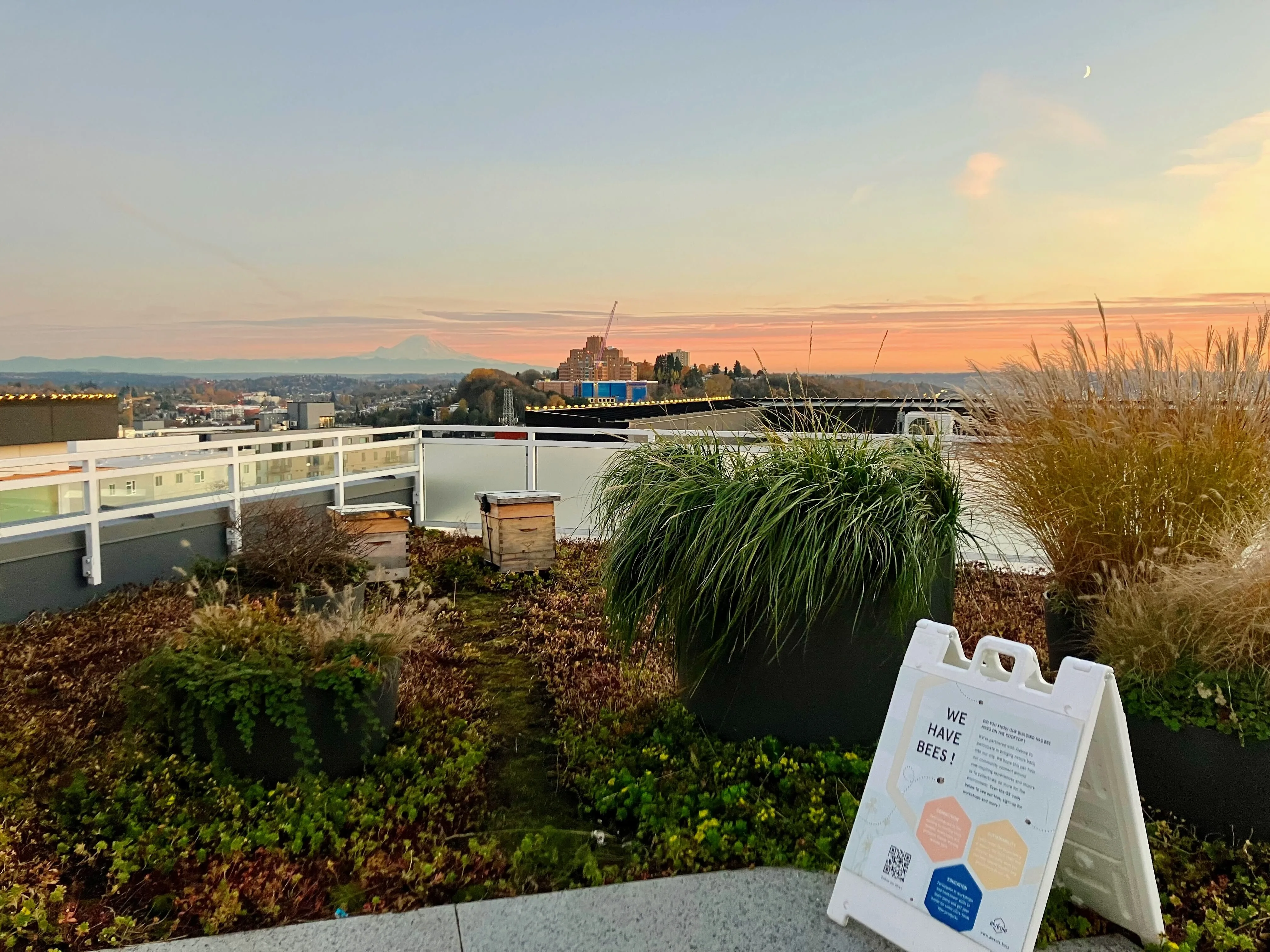
Alvéole runs urban beekeeping and nature-based programs across 2,200 or more commercial buildings, with the Wild BeeHome habitat for wild pollinatorsinstalled across 500 or more buildings. For the asset manager, this delivers on four fronts, adapted to office.
A tour moment leasing can point to
No competing building on the shortlist can say residents and tenants get honey from their own building. It sets the property apart in the one moment a prospect remembers.

"When you have something highly visible like that, it becomes a major stop for every broker tour that comes through the building. It becomes an amenity. My intention was to make it a conversation piece, a community piece," says Scott Talbert, General Manager at FIVE Houston Center (JLL).
Engagement that lasts past the tour
Educational events and participation dashboards in MyHive keep tenants involved long after they sign, so engagement is ongoing rather than a single visit.

A retention touch backed by evidence
When lease conversations come around, the asset manager can point to documented, differentiated engagement instead of relying on goodwill.
Operational spend, not capital
A nature program runs like a tenant events line, not a capital project. For an asset manager watching NOI, that framing matters.
%20-%20Workshop%2003%20(2).JPG)
Amenities that produce reporting data
Here is the second gap no competitor amenity fills. On-site amenities can generate verifiable reporting data.
This speaks to the other pressure on the asset manager. They need verifiable, asset-level nature-related data for GRESB, TNFD, LP due diligence, and sustainability-linked financing. A policy document or a consultant's report no longer holds up when a reviewer asks to see the program on the ground.
The regulatory direction is clear. GRESB added indicator RM7 on biodiversity and nature-related strategy to its 2025 Real Estate Assessment. It is exploratory and unscored in 2025, but it signals future scored requirements, and GRESB is aligning with TNFD. Building the program that produces this data now is the practical move.
This is where amenities connect to compliance. Alvéole's MyHive, Nature Sensor, floral eDNA analysis, and Aura generate data that feeds GRESB, TNFD, BREEAM, LEEDv5, and WELL reporting. That is a claim no standard amenity can make. The same rooftop program that gives the leasing team a tour momentalso gives the reporting team an audit trail.
.webp)
Amenities that justify the commute
The attendance question sits behind every amenity decision right now, so address it directly. Return to office is stabilizing around a hybrid norm. Employers expect about 3.2 in-office days per week while employees average about 2.9, per CBRE's 2025 survey, and landlords increasingly use quality space and amenities to justify the commute.
This ties back to the priority amenities from earlier. The features that justify the commute are the work-supporting amenities that shape rent, not perks that help people escape work. An asset manager who invests there is solving for attendance and leasing at the same time.
The bottom line
A bigger gym or another lounge will not win the next lease. In an oversupplied market where every building looks alike, sameness is the real risk to occupancy.
What wins is a prioritized mix chosen by tenant base and outcome, plus at least one amenity that both differentiates on tour and produces reportable data. That combination serves both sides of the asset manager's pressure at once. It moves leasing and retention, and it produces the disclosure evidence a reviewer will actually accept. For an asset manager measured on occupancy, NOI, and portfolio-level reporting, that is the amenity strategy worth funding.
FAQ
What is the difference between office facilities and amenities?
Facilities are the basics a tenant assumes, such as transit access, parking, HVAC, and security. Amenities are the features that differentiate a building once those basics are met. CBRE's 2025 data shows transit and parking are the leading non-negotiables, so they qualify as facilities, not differentiators.
Which office building amenities actually attract and retain tenants?
The amenities that support work and speak to the business do the most, while escape-from-work perks do the least. In 2025 occupier data, outdoor spaces, amenity spaces, and fitness top the features shaping rent. The retention lift comes from amenities that keep tenants engaged past the tour.
Do office amenities increase asset value, NOI, or rent?
Yes, and the premiums are measurable. JLL reports a full-service fitness center adds about 3%, food halls up to 1.4%, and LEED-certified buildings about 3% over same-submarket peers. Prime, amenitized space also stays more occupied, which protects NOI directly.
Which amenities are worth the investment for my building?
Run each candidate through four questions: does it support the work, match your tenant base, produce a measurable outcome, and generate reportable data. Amenities that clear all four earn their cost. Those chosen by trend rarely do.
What amenities define a Class A office building?
Class A buildings pair the assumed facilities with differentiating amenities such as outdoor terraces, quality fitness, and work-supporting spaces. The dividing line in 2025 is prime versus commodity space, where prime vacancy runs more than 4.8 percentage points below non-prime. Amenity quality is a large part of what keeps a building on the prime side.
What are unique or standout office amenities beyond the standard gym and lounge?
Managed nature programming is the clearest standout because no competing building on a shortlist offers it. Alvéole runs urban beekeeping and Wild BeeHome habitats across commercial portfolios, giving leasing teams a tour moment competitors cannot match. It also produces engagement and data that a gym does not.
How do amenities support GRESB, TNFD, or green certification reporting?
Some amenities generate verifiable, asset-level data instead of just a policy statement. Alvéole's MyHive, Nature Sensor, floral eDNA analysis, and Aura feed GRESB, TNFD, BREEAM, LEEDv5, and WELL reporting. With GRESB adding a biodiversity indicator in 2025, that on-the-ground data is what reviewers increasingly ask to see.