
Sustainability amenities renters actually notice and engage with
_b72540c5.jpeg)
Commercial real estate teams spend real capital on green systems that residents never see. The features residents notice and talk about are usually the visible, usable ones. This guide sorts the sustainability amenities renters want from the ones that quietly earn no credit, and it shows which amenities also produce reporting data.
Key takeaways
- Residents engage with amenities they can see, use, and talk about, not with back-of-house systems they never encounter.
- Interest in sustainability stays high, but willingness to pay a premium for it softened about 24% year over year in 2025.
- Retention slipped to 57% in 2026, and residents start weighing renewal at an 8% rent increase, so visible, engaging amenities matter for the number.
- Nature-based amenities are the rare feature residents participate in that also produces reporting data.
1. The gap between what you install and what residents notice
Here is the operator's dilemma. Capital goes into high-efficiency HVAC, water reclaim, and building controls. Residents never see those systems, so those systems rarely move satisfaction scores or renewal decisions.
The through-line is simple. Residents engage with sustainability when it is visible, useful, and participatory. Everything else delivers value on the P&L and in reporting, but it earns little resident credit.
This matters for asset managers and property managers deciding where amenity budget earns retention. Interest in green features stays high, yet the premium is softening. Renter willingness to pay for sustainability features fell about 24% year over year, according to Greystar's 2025 design survey reported by Multifamily Executive. So the question is not whether to invest. It is which features residents actually notice. This article uses one split to answer that: noticed and engaged versus invisible.
2. What "notice and engage" really means
Residents apply a practical test. They reward features they see and use every day.
The Greystar 2025 data makes the pattern concrete. Multifamily Executive reports that 87% of renters prioritize natural light and 85% prioritize fresh air ventilation. Fitness centers show the same logic in behavior, not just opinion. In that survey, 83% call fitness centers important or essential, and 68% use them regularly.
That 68% is the point. Stated preference tells you what residents say they want. Behavioral engagement tells you what they actually use. A feature that scores high on both is a feature worth funding.
Now compare the invisible side. Efficient HVAC, back-of-house energy management, and hidden water reclaim all deliver value. Residents almost never encounter them, so they generate little goodwill and no renewal conversation. These systems belong in your reporting, not in your leasing pitch.
So use a three-part test on any amenity. Can a resident see it? Can a resident use it? Can a resident mention it to a friend? An amenity that passes all three earns engagement. One that fails all three is an operating cost that stays quiet.
3. Sustainability amenities residents actually notice and engage with
Here is the practical answer, ordered by how visibly residents notice and use each one.
- Natural light and fresh air. These are the highest-priority features in the Greystar 2025 data, noticed every day, and they cost nothing to promote once designed in.
- Smart thermostats and in-unit efficiency. Residents interact with the controls and see the effect on their own bills.
- Water-saving fixtures. Residents notice these at the tap, and the savings show up monthly.
- Green and outdoor space. Multifamily Executive notes that outdoor space is a strong regional draw in markets like the Mountain West, Pacific Northwest, and South. Residents use it, so it earns credit.
- Recycling and waste programs. Residents engage when access is convenient and clearly labeled.
- EV charging. Owners value it, but it did not rank as a top-five draw in recent survey data. Place it accurately as a supporting feature, not a headline.
Notice what these share. Each one is visible or usable at the unit or building level. Certifications like LEED do not appear on this list, because residents rarely notice them. Certifications matter for reporting and disclosure, not for daily engagement.
Energy and water efficiency are now table stakes. They keep you competitive, but they no longer differentiate a Class A property, because prospects expect them on every tour. To stand out, asset managers and property managers need an amenity that residents can join, not just live near.
4. The category competitors miss: nature-based amenities residents participate in
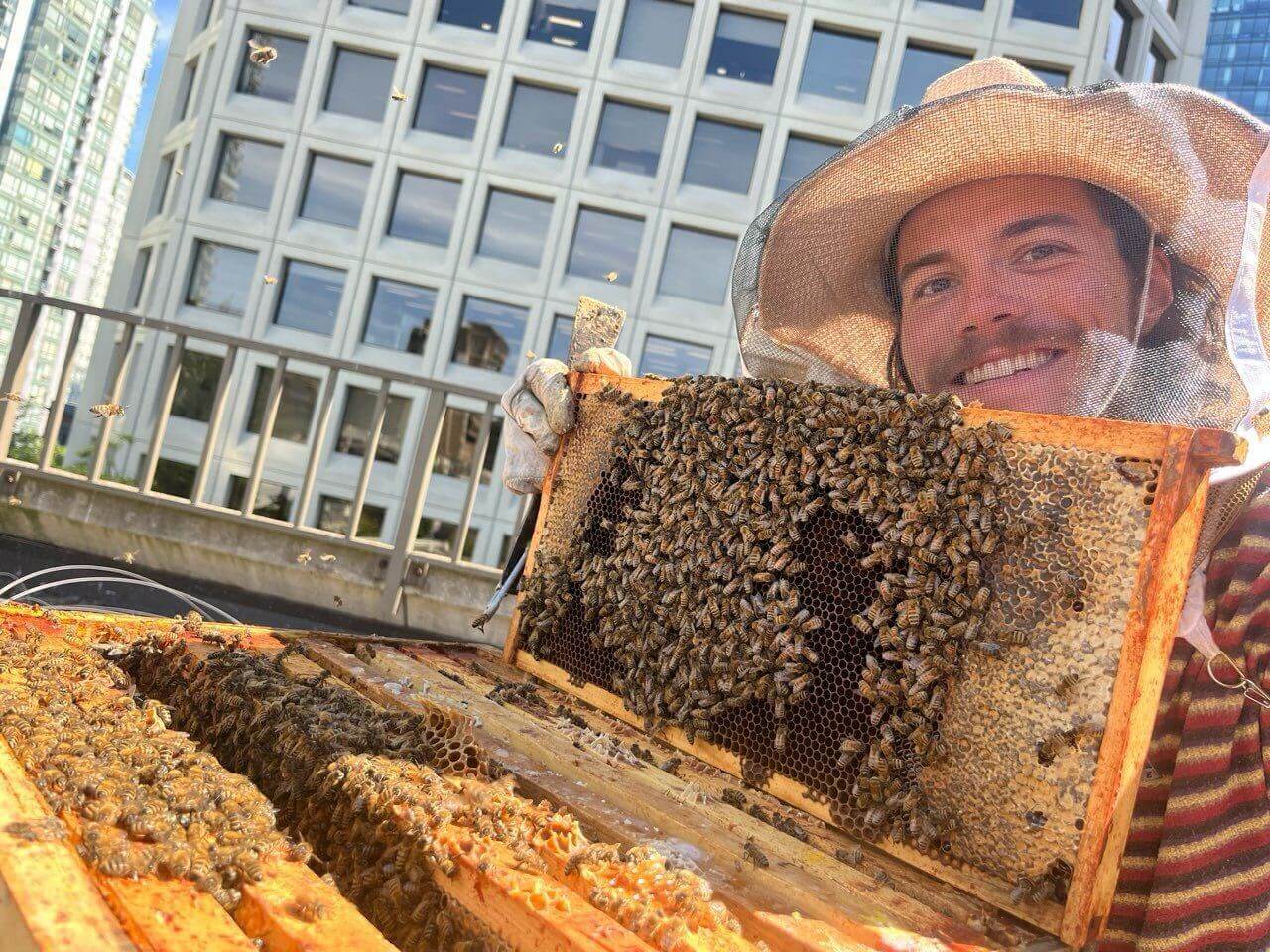
Nature-based amenities are the clearest whitespace for asset managers and property managers. These are living, hands-on features: pollinator and community gardens, green roofs, and managed rooftop beehives.
They win the notice-and-engage test on every point. They are visible from common areas. They are seasonal, so they give residents something new to watch. They are hands-on through workshops, honey harvests, and hive visits. And they are social, because a take-home jar of honey travels well beyond the building.
Real portfolios already run these programs. KBS operates rooftop apiaries that produce roughly 100 pounds of honey per hive each year, distributed to tenants in branded jars. Goldman Sachs Asset Management brought urban beekeeping to more than 30 buildings, where tenants track hive health online. ONE Liberty Place in Philadelphia has kept rooftop honeybees since 2021 and runs events where residents ask questions and make candles from beeswax.
There is a wellbeing rationale, stated carefully. Greater engagement with natural settings is associated with lower depression, anxiety, and stress, per Bressane et al., 2024. That study is correlational and based on Brazilian urban adults, so treat it as supporting context, not a US multifamily promise.
One responsible-framing note. Managed beehives are a visible engagement and monitoring amenity, not a biodiversity fix. High-density urban beekeeping has been associated with lower wild-bee species richness in correlational research published in PeerJ. So responsible programs pair hives with native plantings and monitor hive density. For broader context, the U.S. Fish and Wildlife Service estimates pollinators contribute about $34 billion annually to the US economy, an agriculture-wide figure rather than an urban-hive result.
Alvéole runs this as a managed program, not a capital project. It includes managed rooftop beehives, the redesigned Wild BeeHome for solitary pollinators, workshops such as honey extraction and hive visits, branded honey jars, and the MyHive platform for event registration and portfolio participation dashboards.
5. Why visible amenities matter to the number: retention and NOI
Engagement connects directly to the metrics asset managers own. Retention is under pressure. Average resident retention fell to 57% in 2026, down from 60% in 2024, according to Zego's 2026 resident report. The same report finds renters begin reconsidering renewal at an average rent increase of just 8%.
The reasons residents leave are actionable. Zego finds that controllable factors like rent increases, poor maintenance, and security concerns drive non-renewals, not life changes. That means the quality of what you offer is something you can move.
Turnover is expensive. Apartment turnover costs about $3,872 per resident, according to a 2023 figure from Multifamily Dive. That number is dated, so pair it with the current 57% retention rate rather than treating it as today's cost.
Visible, engaging amenities give leasing and renewal teams something concrete to point to. A nature program runs like a tenant-events line, not a capital line. Participation data is ready before renewal conversations, because MyHive tracks event registration and portfolio participation. So a property manager can walk into a renewal talk with evidence, not instinct.
6. The amenity that also feeds your reporting
Most amenities cost money and produce no reporting value. A nature program can do both, and that overlap is what competitors miss.
The reporting side is moving. GRESB added a TNFD-aligned biodiversity indicator to its 2025 Real Estate Assessment. Per SIG Earth's analysis, that indicator is unscored and exploratory in 2025, narrative disclosure only, and it signals future scored requirements. So asset managers who build the data now will be ready when scoring arrives.
A visible amenity can supply that data. On-site biodiversity data from a managed hive program can support GRESB, WELL, LEED, BOMA, BREEAM, and Fitwel reporting and disclosure. Alvéole's bees sample the surrounding habitat, and that data feeds those frameworks. The result is one feature that serves both resident engagement and disclosure, which is rare.
7. Bottom line
Residents notice what they can see and use, so amenity budget should follow attention. The strongest amenities are visible, participatory, and produce data for both renewal and reporting.
Nature-based programs are the clearest example of that overlap. They give residents something to join, give leasing teams something to point to, and give reporting teams data to disclose. For asset managers and property managers weighing where the next amenity dollar goes, that is a rare three-way return.
Book a demo to see how a managed nature program fits your portfolio.
FAQ
Which sustainability amenities do renters want most? Renters want features they see and use daily. Natural light, fresh air ventilation, in-unit efficiency, and outdoor space rank highest in the Greystar 2025 data. See section 3 for the full ordered list.
Will renters pay more for eco-friendly apartments? Interest stays high, but the premium is softening. Willingness to pay for sustainability features fell about 24% year over year in the Greystar 2025 survey. Lead with engagement value, not a green price premium.
Do sustainable amenities improve resident retention? They can help, because retention is driven by controllable factors you can act on. Visible, engaging amenities give renewal teams evidence to defend rent. Avoid claiming a fixed retention lift, since no single amenity guarantees the number.
What are affordable ways for existing communities to add sustainability amenities? Treat them as operating programs, not capital projects. Recycling access, pollinator or community gardens, and a managed beehive program run on an events-style budget. Each is visible and participatory without a heavy build.
What nature-based amenities do residents engage with? Residents engage with community and pollinator gardens, green roofs, and managed rooftop beehives. These are hands-on and seasonal, with workshops and take-home honey that keep participation going. Responsible programs pair hives with native plantings and monitor density.