

How industrial owners improve their GRESB score
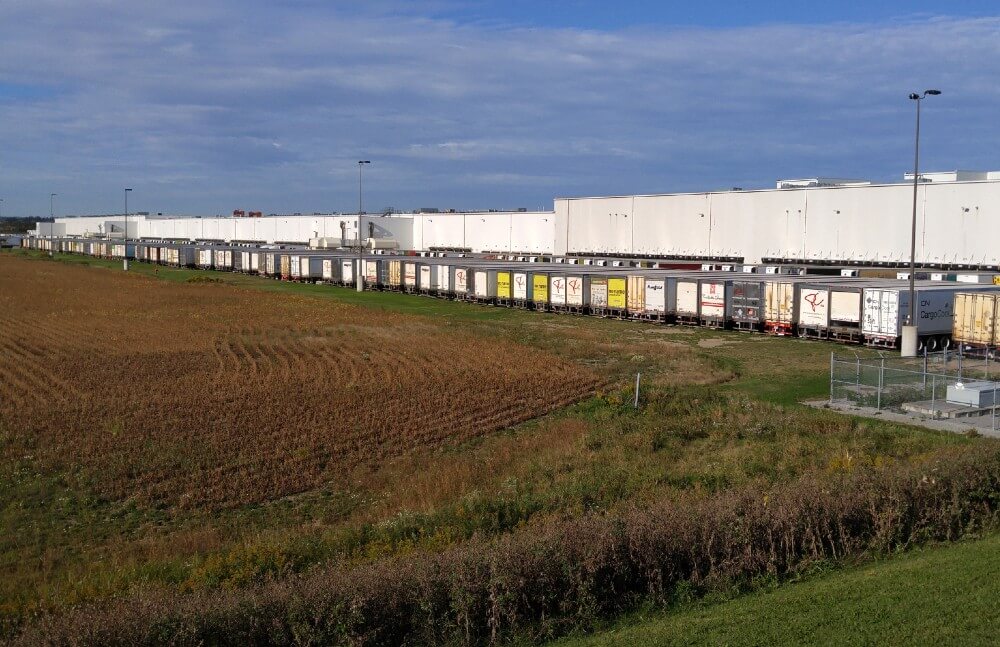
Industrial asset managers often want a clear answer to one question: how to improve a GRESB score without owning tenant operations. The path runs through data coverage, measured performance, and documented engagement. This guide gives the industrial and logistics playbook, plus the nature-data angle most competitors miss.
Key takeaways
- Industrial portfolios usually lose GRESB points on data coverage, not emissions intensity. The triple-net lease is the root cause.
- The score splits into a 30-point Management component and a 70-point Performance component. Performance is where industrial owners have the most room to move.
- The fastest gains come from closing the tenant data gap with green leases, improving warehouse energy performance, and documenting tenant and community engagement.
- Biodiversity and nature data is the emerging differentiator. GRESB added an exploratory nature indicator in 2025 and has signaled nature sits in its long-term performance scope.
Why industrial portfolios trail on GRESB
Many industrial asset managers assume warehouses are low impact and should score well. GRESB does not reward low intensity. It rewards measured performance and complete data. A clean building with thin data still loses points.
The GRESB 2025 results support this. Industrial recorded the lowest GHG intensity of the major sectors at 21.1 kg per square meter, below retail, office, and residential. Emissions intensity is rarely the industrial owner's problem. Data coverage is.
The triple-net lease creates the gap. Tenants control operations and hold the utility meters, so the landlord cannot easily collect energy, water, and waste data. The result is a split incentive. The landlord funds upgrades while the tenant sees the savings, so neither side moves first.
Relative benchmarking makes this worse. A flat score falls behind as peers improve. GRESB's 2025 results show energy data coverage passed 75% globally for the second straight year, a level GRESB treats as sufficient to represent a whole building. Industrial portfolios often lag that threshold, and a lagging portfolio loses ground every cycle.
How the GRESB score actually works
The GRESB Real Estate Assessment tops out at 100 points. For Standing Investments, the Management component is worth 30 points and the Performance component is worth 70 points. GRESB also assigns a 1-to-5 Star rating, which is relative: each year the top 20% earn 5 stars and the bottom 20% earn 1 star.
Performance carries most of the weight. Operational data and actual results move the score more than policies do. For an industrial asset manager, that means measured energy, water, and engagement outcomes matter most.
The weighting may grow heavier. GRESB's "Road to Performance" consultation, opened in February 2026, proposes progressively raising the share of the score tied to direct performance toward 50 to 75% over time. GRESB first proposed this for the 2028 Standard. It is a proposed direction under consultation, not a finalized change, but it signals where the benchmark is heading.
Where industrial owners lose the most points
Four leaks account for most lost points in industrial portfolios.
- Incomplete tenant-controlled utility data. This is the biggest leak, driven directly by the triple-net lease.
- Thin evidence for tenant and community engagement under GRESB's Tenants & Community indicators.
- No like-for-like performance improvement year over year.
- Missing certifications on eligible warehouse assets.
Fix these in order of impact. Data coverage and engagement evidence usually return the most points for the least capital.
Six levers to improve your GRESB score
Each lever below is a concrete action an industrial asset manager or sustainability manager can start before the next submission.
Close the tenant data gap with green leases
Add reporting clauses to triple-net leases. Cover data sharing, submetering, and cooperation on energy, water, and waste. GRESB rewards this directly: under the Tenants & Community section, ESG-specific requirements in lease contracts award up to 1.5 points.
The Department of Energy and IMT frame the lease as the tool to remove the split incentive through their Green Lease Leaders program. IMT estimates green leases can cut utility bills by up to about 50 cents per square foot, a 22% reduction in energy costs, in U.S. office buildings. Treat that figure as an office estimate, not an industrial one, but the mechanism applies to warehouses too.
Improve measured energy and emissions performance
Performance data, not policy statements, drives the 70-point component. Warehouses suit two proven upgrades. The Department of Energy calls large warehouse roofs ideal for solar. Prologis targeted 100% LED coverage across its global warehouse portfolio by 2025, an estimated 70% lighting efficiency gain.
Rooftop solar, LED retrofits, and submetering are industry levers that produce the measured results GRESB scores. They sit with energy and facilities teams, not with a nature program, so plan them as capital and operating decisions.
Earn tenant and community engagement points
GRESB awards points for tenant engagement programs, tenant satisfaction, and community engagement. A tenant engagement program is worth 1 point, a community engagement program is worth 2 points, and related measures add more. Single-tenant warehouses still qualify.
Documented, recurring programming is the evidence GRESB wants. GRESB has also proposed making a tenant engagement program a prerequisite in the 2028 Standard, so this shifts from optional to expected. Build the program now and keep the records.
Add biodiversity and nature data
GRESB added RM7, a biodiversity and nature-related strategy indicator, in 2025. It is exploratory and not scored in 2025. Still, the direction is clear. GRESB joined the TNFD Forum, found high alignment between its Standards and TNFD, and lists biodiversity and nature within the long-term potential scope for performance scoring.
Early nature data positions an industrial owner ahead of that change. Asset-level biodiversity evidence is hard to fake and easy for a reviewer to check, which is exactly what future scoring will reward. Treat this as a first-mover move, not a scored line item yet.
Certify eligible warehouse assets
Certifications feed the score today. LEED offers a Warehouses and Distribution Centers rating, and BREEAM In-Use covers industrial assets of any size and age. Both apply directly to logistics portfolios.
Certifications currently represent about 8.5% of the GRESB score. Their relative weight may fall as performance scoring expands, so certify eligible assets now while the points are available and pair certification with real performance gains.
Win the year-over-year improvement game
Relative benchmarking rewards continuous improvement. GRESB reports that participants see an average 10-point score increase in their second year of reporting. That figure covers all participants, not industrial specifically, but it shows how much a disciplined second cycle can return.
Set a multi-year plan. Standing still means slipping down the benchmark as peers improve, so an industrial asset manager should treat each submission as one step in a repeatable annual process.
How nature-based programs strengthen an industrial GRESB submission
A managed nature program produces the documented engagement GRESB's Tenants & Community indicators ask for. Alvéole runs rooftop beehive programs, workshops, and the Wild BeeHome habitat for solitary pollinators, then records participation in the MyHive dashboard. That creates recurring, verifiable engagement evidence, even on low-occupant industrial sites.
On-site monitoring adds asset-level biodiversity data a reviewer can check. Alvéole's Nature Sensor captures biodiversity activity through bioacoustic monitoring, and eDNA analysis identifies species present on the property. This is ground-level evidence, not a policy document.
Aura, Alvéole's AI nature-intelligence platform, turns that data into GRESB, TNFD, and CSRD reports. One program then supports several disclosure frameworks at once. Alvéole does not provide energy submetering, HVAC, or solar. Its levers are tenant and community engagement, biodiversity data, and reporting, and that engagement also builds the tenant goodwill that opens utility-data conversations on triple-net assets.
A real industrial GRESB example
Horizon Industrial Parks, Blackstone's logistics platform in India, prepared its first GRESB submission with a clear method. The team built a dedicated ESG steering committee, standardized data systems for energy, water, waste, and climate risk, and deepened tenant engagement on energy and water use.
It also treated nature as part of the plan, with roughly 15% green cover and butterfly gardens across its parks. No first-year score was disclosed, so the lesson is the approach, not a number: strong governance, standardized data, tenant engagement, and visible biodiversity features prepare an industrial portfolio for its first submission.
Frequently asked questions
What is a good GRESB score? There is no fixed passing mark, because the GRESB Star rating is relative. Each year the top 20% of entities earn 5 stars and the bottom 20% earn 1 star, so a strong score is one that climbs against your peer set. Aim to move up quintiles rather than to hit a static number.
How is the GRESB score calculated? The Standing Investments score runs to 100 points, split into a 30-point Management component and a 70-point Performance component. Performance carries the most weight, so measured results outweigh written policies. That balance may tilt further toward performance under GRESB's proposed 2028 changes.
How do industrial owners get tenant utility data under a triple-net lease? Use the lease. Adding data-sharing, submetering, and cooperation clauses at renewal or signing removes the split incentive that keeps meters closed. The Department of Energy and IMT built the Green Lease Leaders program around exactly this fix.
Do warehouses qualify for green building certifications? Yes. LEED has a Warehouses and Distribution Centers rating, and BREEAM In-Use covers industrial assets of any size and age. Certifying eligible warehouses adds points while certifications still carry weight in the score.
Does biodiversity affect a GRESB score? Not yet directly. GRESB's biodiversity indicator, RM7, was added in 2025 as exploratory and is not scored. Because GRESB aligns with TNFD and lists nature in its long-term scope, early biodiversity data is a first-mover advantage rather than a scored requirement.
How long until my GRESB score improves? Expect meaningful movement in your second cycle. GRESB reports participants gain an average of 10 points in their second year of reporting. Industrial owners who fix data coverage and document engagement early tend to see the clearest gains.
Conclusion
Industrial owners improve their GRESB score by fixing data coverage, proving measured performance, and documenting tenant, community, and nature evidence. Start with green leases and engagement, because they return the most points for the least capital. The owners who start early and add verifiable nature data get ahead of where GRESB is heading.
Want to build documented engagement and asset-level nature data into your next submission? Book a demo.

_b72540c5.jpeg)