

How sustainability affects industrial asset value
Key takeaways
- Sustainability affects industrial value through risk, financing, disclosure, and leasing, not through a guaranteed price premium.
- Insurance is the fastest-rising cost line and hits net operating income directly in climate-exposed industrial markets.
- Occupiers increasingly attach carbon targets to space decisions, so non-performing stock faces slower leasing.
- Disclosure frameworks like GRESB, TNFD, and LEED v5 now expect nature and biodiversity data, not just carbon.
- Verified, site-level biodiversity data is what turns a nature program into a reportable, value-relevant asset.
What sustainability in real estate actually means
Sustainability in real estate describes how a property is built, operated, and reported against its environmental performance. It now includes a second dimension beyond carbon: nature and biodiversity.
For years, sustainable real estate meant energy and carbon. Owners tracked consumption, cut emissions, and pursued green building certifications. That work still matters. According to the IEA, the buildings sector accounted for roughly one-third of total energy system emissions in 2022, counting both operations and the embodied emissions in construction materials.
The newer dimension is nature. Frameworks and investors are starting to ask what a property does to on-site biodiversity, not only what it emits. This is where site-level data matters.
In this article, sustainability does not mean a vague label. For the asset manager, it means measurable reporting, compliance, and disclosure that a reviewer can check against evidence on the ground. That distinction is what connects sustainable real estate to value. A policy statement does not move a valuation. A verified performance record can.
Does sustainability programming affect industrial asset value?
Yes, but indirectly and asset by asset. There is no switch that lifts every industrial asset value the moment a program starts.
The effect runs through four channels. Physical and insurance risk sets the cost of holding an exposed asset. Financing and cost of capital set the price of the money behind it. Disclosure and reporting requirements set what an owner must prove. Tenant demand sets how quickly performing space leases. The rest of this article works through each one.
The asset manager owns these numbers. Occupancy, NOI, cost of capital, and hold-period value all sit on their desk. Sustainable commercial real estate performance now feeds each of them.
One honest limit belongs here. There is no reliable evidence yet of an automatic North American industrial "green premium." Biodiversity risk is beginning to be priced by investors, per ECGI research, but it is not yet priced across the broad market. The case rests on risk, financing, disclosure, and leasing, not on a promised markup.
Channel one, physical and insurance risk
Physical and insurance risk is the clearest link between sustainability and industrial asset value. Insurance is now the fastest-rising operating cost line, and it flows straight into NOI and therefore valuation.
The industrial-specific data is striking. According to a First Street study reported by Bisnow, insurance rates on industrial properties in high-risk areas rose at three times the rate of those in low-risk markets. Across commercial real estate, insurance consumed 4.1% of net operating income in 2024, up from 1.9% in 2017.
The trend line points up. Deloitte projects that the average monthly insurance cost for a U.S. commercial building could rise from $2,726 in 2023 to $4,890 by 2030. In the states with the highest extreme-weather risk, Deloitte projects costs of roughly $3,077 could nearly double to $6,062 per building each month.
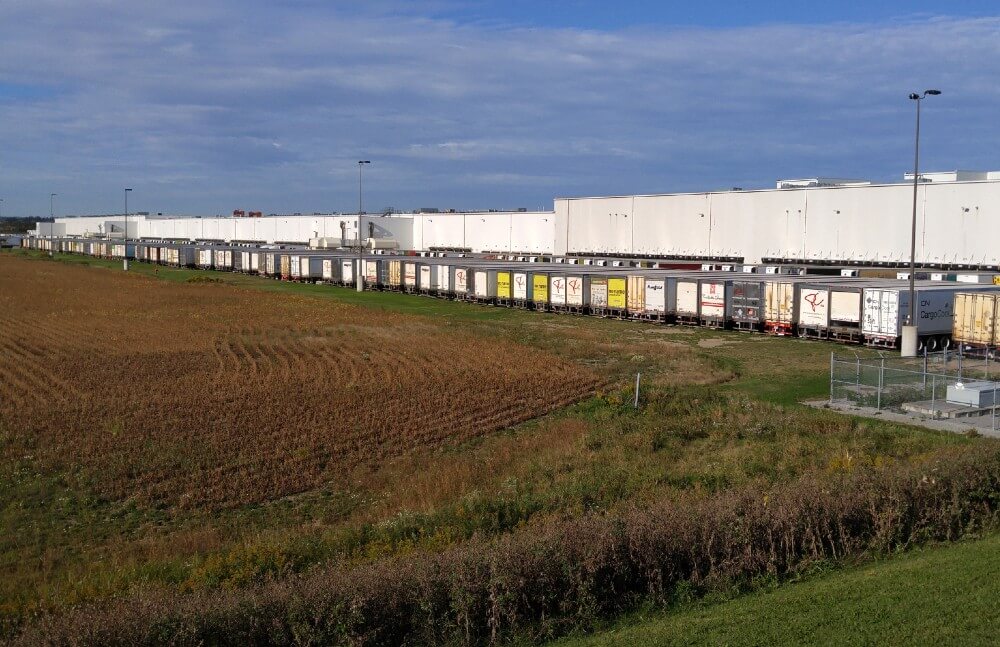
Exposure is concentrated in industrial. The same JLL study found that 69% of U.S. industrial inventory sits in the top 10 markets most exposed to climate risk, compared to 57% for offices. JLL also reports that 76% of U.S. industrial stock is more than a decade old.
This is where the brown discount idea earns its place. Aviva Investors describes a growing split in pricing between green, well-located, good-quality assets and the rest, with the stranded-asset risk of brown assets becoming more acute. For the asset manager, an exposed, non-performing industrial asset carries a rising cost to hold and a widening pricing gap to defend.
Channel two, financing and cost of capital
Sustainability performance affects how an asset manager accesses capital and what it costs. The effect today is real but modest.
Green bonds and green loans carry a small yield advantage. Deloitte Luxembourg, citing EPRA data, reports a greenium of roughly 4.5 to 8.3 basis points for European listed real estate companies against conventional bonds. That is small in percentage terms. On large, long-term deals it still produces multi-million-euro savings, and it signals discipline to lenders and investors.
Green finance is also under-penetrated in real estate. The World Economic Forum reports that of the $7.1 trillion in sustainable debt issued over the past five years, only 7% went to real estate, and just 12% of green bonds funded decarbonizing buildings. For a performing asset, that gap is an opening, not a warning.
The honest frame for the asset manager is this. The main near-term benefit is a broader investor base and clearer signaling, not a large rate cut today. As green finance in real estate matures, performing assets are positioned to draw on it first. Documented environmental performance is what qualifies an asset for that capital.
Channel three, disclosure and reporting requirements
Disclosure is turning sustainability from a preference into a requirement, and the frameworks now expect nature data, not just carbon. This ties compliance directly to value, because investors and lenders read these reports before they price an asset.
The benchmarks are large. GRESB reports that its Real Estate Benchmark covers roughly USD 7 trillion in gross asset value, and that 65% of participants now hold net-zero targets. The TNFD published its final recommendations in 2023, and by late 2025 more than 700 organisations had committed to nature-related reporting aligned with the framework.
Regulation is moving too, though not always in a straight line. The EU CSRD is real, and Wave 1 companies, already subject to earlier rules, began reporting in 2025 on FY 2024 data. Its scope was narrowed by a December 2025 simplification package that limits mandatory reporting to larger companies. The asset manager should treat CSRD as active but narrowing, not expanding.
Certification is following the same path. LEED v5, released in April 2025, emphasizes ecological conservation and restoration alongside decarbonization and quality of life. Nature and biodiversity data is moving from optional to expected.
This is where reporting becomes practical. Alvéole's Aura platform generates GRESB, TNFD, and CSRD reports from on-site nature data, which shortens the path from program to disclosure.
Channel four, tenant demand and leasing
Tenant demand connects sustainability to leasing velocity and retention, which are the levers closest to NOI. In industrial, occupier carbon targets are now shaping space decisions.
The demand signal is specific. JLL studied 900 major industrial and logistics occupiers and found that 65% of their future space needs will be tied to a carbon reduction target. That means nearly two in three future requirements from these occupiers come with an emissions condition attached.
Willingness to pay shows up in surveys, with a geographic caveat. In a Savills survey of logistics occupiers in the Netherlands, almost 90% said they would pay more for a property with a green building certification, and almost 70% accepted a rent premium of 5% or more. That is a Netherlands logistics finding, and it does not transfer directly to North America. It does show where occupier preference is heading.
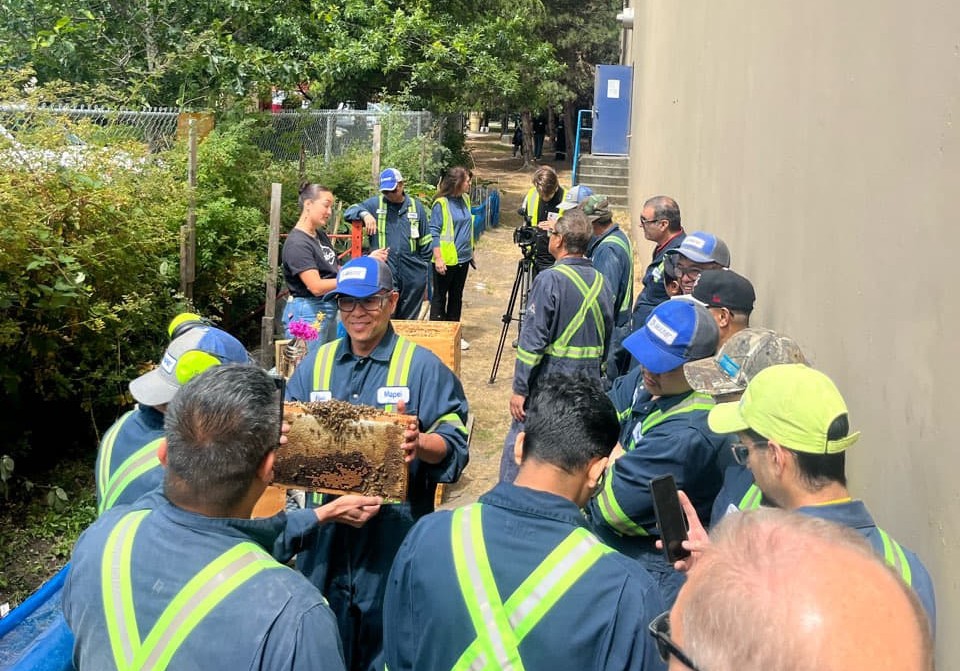
The risk sits with non-performing stock. Slower leasing and higher concessions are the likely outcome for assets that cannot meet occupier targets. Tenant engagement is what makes performance visible and credible to those occupiers. Alvéole's MyHive platform gives property teams a way to run and measure occupant participation across a portfolio, so the program is something a leasing team can point to.
Why measurement is the missing piece for sustainability real estate
Frameworks reward data you can verify, not intentions. This is the part of sustainability real estate that most industrial owners have not solved, and it is where value is decided as pricing matures.
Recall the ECGI finding. Biodiversity is only beginning to be priced by investors. When pricing firms up, credible primary data is what will separate one asset from another. An owner who can show verified, site-level results will be ready. An owner with a policy document will not.
Site-level measurement is concrete. Alvéole captures on-site biodiversity data through bioacoustic monitoring and floral eDNA analysis. Bioacoustic monitoring listens for species activity on the asset around the clock and uses AI to identify what it hears. Floral eDNA analysis identifies the plant sources behind pollinator activity. Both produce data tied to the specific property, not to a regional average or a model estimate.
That distinction is the whole point for the asset manager. A nature program without measurement is a story. A nature program with measurement is a reportable, value-relevant record. Alvéole's Aura platform turns that on-site data into GRESB, TNFD, and CSRD reporting, which is what a reviewer, a lender, or an LP actually asks to see.
What this means for industrial asset managers
The practical path is narrower than a full retrofit and it starts with exposure. Identify the climate-exposed and older assets in the portfolio first, because that is where insurance cost and pricing pressure land hardest.
Where capital is tight, prioritize data and disclosure readiness over large capital projects. The asset manager can often improve a reporting position faster than a physical one, and disclosure is what investors and lenders read.
Nature programming is a low-capex, fully managed step that does two jobs at once. It produces verifiable reporting data, and it gives occupiers something visible to engage with. For an owner managing many buildings, a repeatable program is easier to defend than a set of one-off projects.
The metric does not change. Protect NOI, defend asset value, and stay ahead of disclosure. Sustainable real estate performance now feeds all three, and measured nature data is the piece most industrial portfolios still lack.
Frequently asked questions
Does sustainability programming affect industrial asset value? Yes, indirectly and asset by asset. It works through four channels: physical and insurance risk, financing cost, disclosure requirements, and tenant demand. There is no automatic premium, so the effect is largest for exposed assets and occupiers with carbon targets.
What is the difference between a green premium and a brown discount? A green premium is the extra value or rent a high-performing, certified building can command. A brown discount is the pricing penalty an exposed, non-performing asset faces as risk and disclosure pressure rise. Aviva Investors describes a widening split between the two.
Do industrial tenants pay more for sustainable buildings? Demand is clearly rising. JLL found that 65% of future space needs among 900 major industrial occupiers are tied to a carbon reduction target. A Savills survey found almost 90% of Netherlands logistics occupiers willing to pay a premium for green certification, though that figure is Netherlands-specific.
Which reporting frameworks require biodiversity data? GRESB, TNFD, and LEED v5 all now account for nature and biodiversity. GRESB has responded to TNFD recommendations, TNFD published final recommendations in 2023, and LEED v5, released in April 2025, emphasizes ecological conservation and restoration. Expectations are growing rather than shrinking.
How do you measure biodiversity on a commercial property? Site-level measurement uses bioacoustic monitoring and floral eDNA analysis. Bioacoustic devices record species activity on the asset and use AI to identify it, while eDNA identifies the plant sources behind pollinator activity. Both produce data tied to the specific property.
_b72540c5.jpeg)