
Why commercial buildings are adding urban beekeeping services
.webp)
Most commercial buildings offer the same amenities. In a competitive leasing market, that sameness is the real threat. Prospects tour five similar properties and remember none of them.
So asset managers and property managers are rethinking underused rooftops. That space now carries green roofs, solar, and beehives. A managed beehive is a serious amenity, not a novelty. This article explains why commercial buildings add urban beekeeping services and what they get back. Alvéole runs programs across more than 2,200 commercial buildings, so the pattern is visible across the market.
What an urban beekeeping service includes
A managed urban beehive service works like landscaping. A provider handles installation, regular hive visits, and ongoing maintenance on a set schedule. The asset manager does not need in-house expertise and is not involved day to day.
Beehives have a small footprint. They sit on rooftops or in screened areas, out of tenant walkways. Trained beekeepers handle the bees. Tenants get the visible parts: programming, honey, and data.
With Alvéole, the MyHive platform ties it together. Tenants register for events on the web. Property managers track participation at the portfolio level. The service is turnkey, so the property team keeps its focus on core work.

Three reasons come up again and again when asset managers explain why they added a program.
1. A leasing and retention edge
The shift to hybrid work moved leverage to tenants. Renewals that used to be formalities are now negotiations. An asset manager who walks in without documented tenant engagement is relying on instinct and concessions instead of evidence.
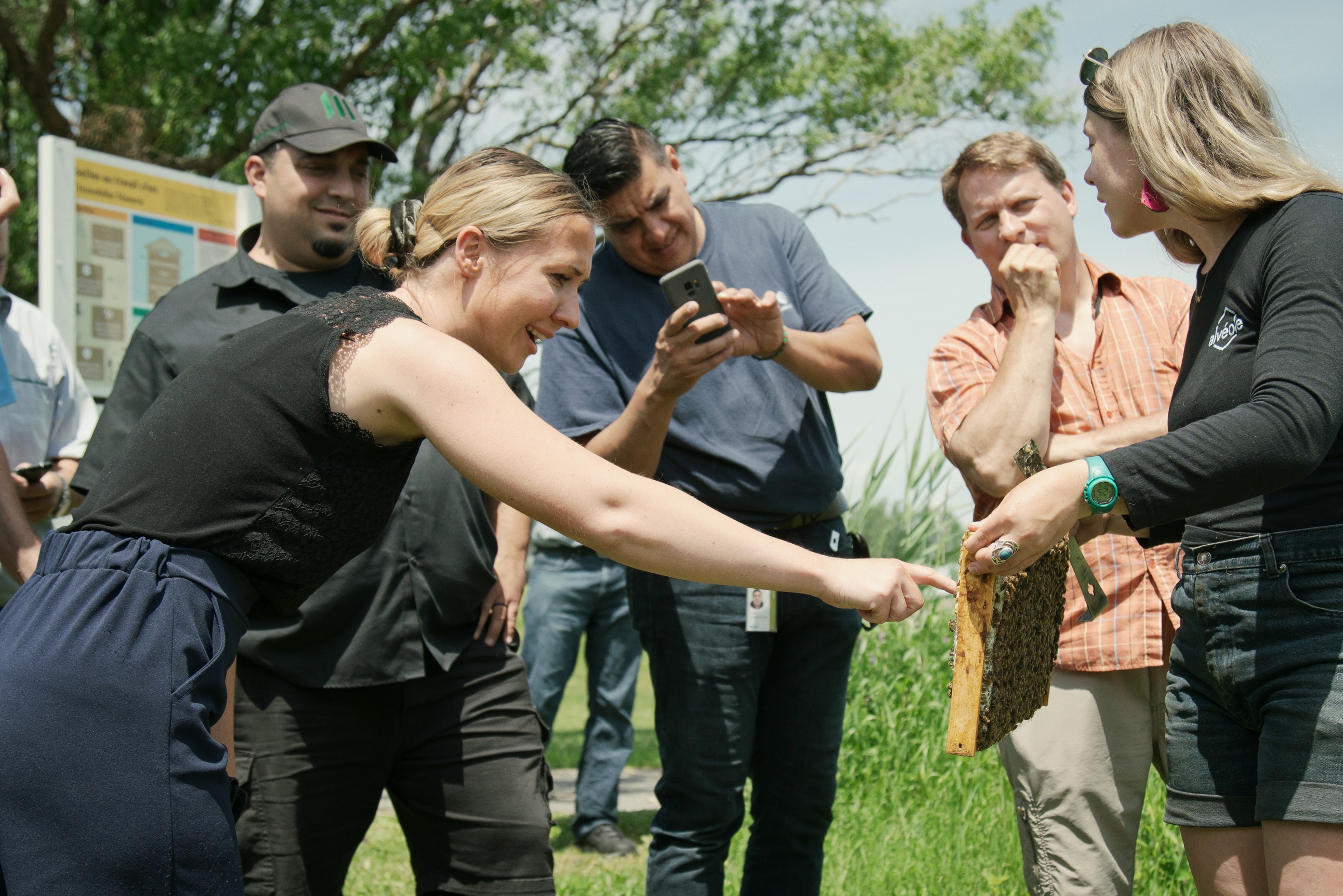
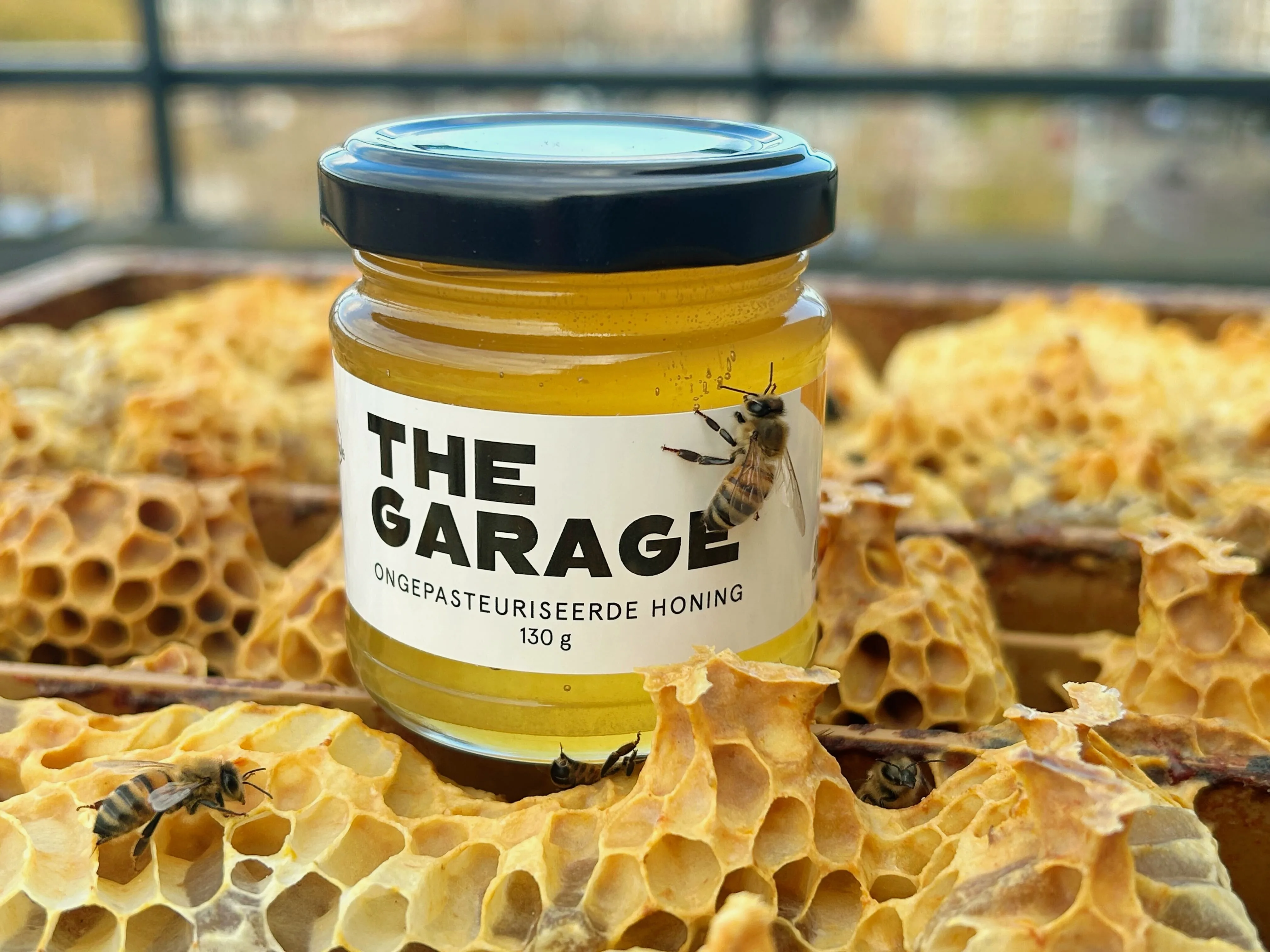
A rooftop hive gives the leasing team a concrete talking point on a tour. Honey harvests, hive visits, and workshops keep tenants involved over time, unlike a one-off event. Beacon Capital Partners installed hives on most of its buildings and gifts custom-labeled honey to prospective tenants. KBS ran hive webinars that drew up to 150 tenant attendees. Rising Realty Partners produces more than 300 jars of honey a year across its properties.
.png)
Branded honey jars are a low-cost renewal touch that lasts on a tenant's shelf. And MyHive records participation, so the manager can document engagement when renewal conversations come around.
2. Nature data you can actually report
.jpg)
Building owners increasingly need verifiable nature data, not policy statements. When a reviewer or a lender asks for evidence, a consultant's summary no longer holds up.
Nature disclosure is scaling fast. As of late 2024, more than 500 organisations and investors, representing US$17.7 trillion, had committed to TNFD-aligned reporting. That was a 57% increase over the prior year.
Modern hives and on-site sensors produce data on biodiversity activity that feeds these frameworks. Smart hive scales track weight in real time. Floral eDNA analysis identifies which plants the bees forage. The Alvéole Nature Sensor captures on-site biodiversity around the clock. Aura turns that input into TNFD, CSRD, and GRESB reports. The result is auditable, asset-level data the buyer can put in a disclosure or an LP request.
.webp)
3. Green building certification credits
Pollinator habitat can contribute toward recognized certifications. It can support LEED and the USGBC Sustainable Sites Initiative (SITES), along with Fitwel, WELL, BOMA, and BREEAM.
For the asset manager, the practical point is the paperwork. A managed provider supplies the documentation, so credits are attainable without extra staff work. With Alvéole, certification documentation flows automatically into MyHive and into submission packages.
.png)
How to do it responsibly
Pollinators matter to more than gardens. About 75% of global food crop types depend at least in part on pollinators, per the FAO. Pollinator extinction rates now run 100 to 1,000 times above normal.
But honeybees are not the whole story. Peer-reviewed research found that wild bee species richness declines as managed honeybee abundance rises in cities. FAO and IPBES note that a high diversity of wild pollinators produces more stable pollination even when managed bees are present.
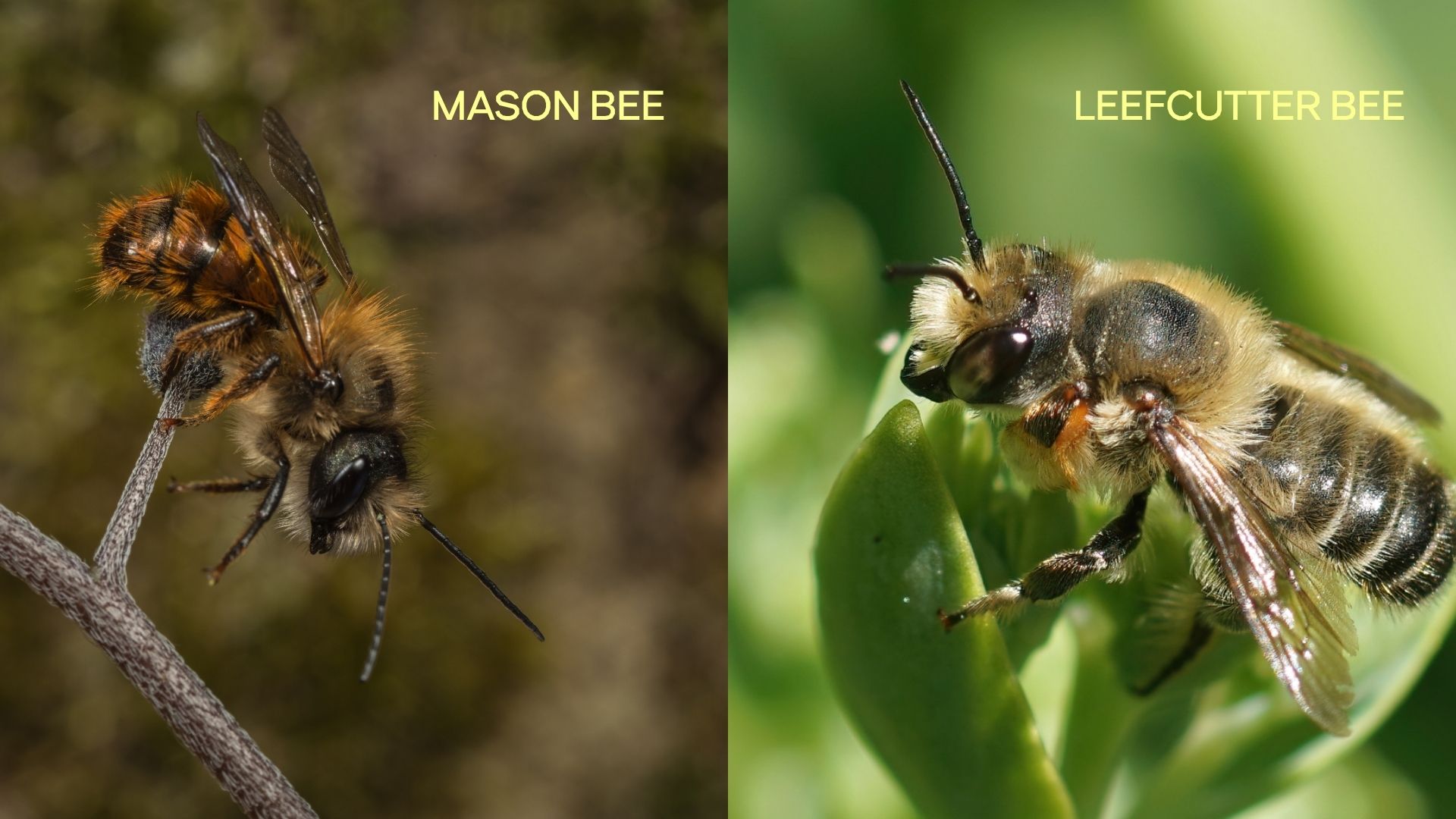
So a responsible program supports wild, solitary pollinators too, and monitors biodiversity to show real outcomes. Alvéole's redesigned Wild BeeHome supports solitary pollinators and runs across more than 500 buildings. An asset manager can add wild-bee habitat alongside or instead of honeybee hives.

Cost, safety, and how programs start
Cost is the first objection. A managed program is an operating expense, comparable to running tenant events, not a capital project. It scales with the number of hives.
Safety is the second. Professional handling, rooftop or screened placement, clear signage, and tenant communication address most concerns. Most tenants never encounter the bees directly.
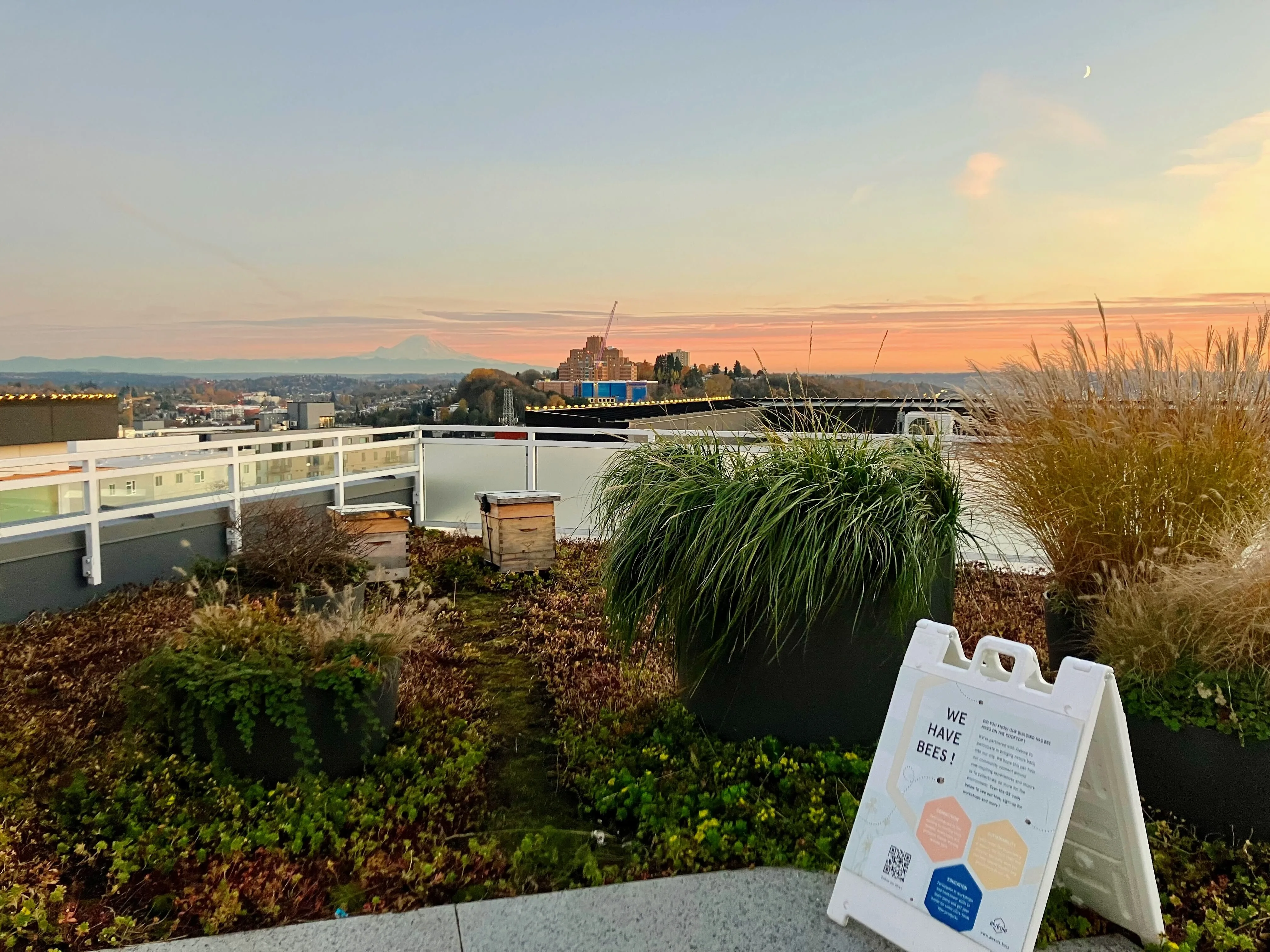
Starting is straightforward. An asset manager can pilot on one or two assets, measure participation and data, then scale across the portfolio. The provider equips leasing teams with talking points and ready programming, so the property team is not adding work.
The bottom line
Commercial buildings add urban beekeeping services because one program serves three goals at once: leasing differentiation, tenant retention, and reportable nature data. For an asset manager, that is a small operating investment measured against outcomes you can see and document. Book a demo to see how it would fit your portfolio.
FAQ
Why do commercial buildings add urban beehive services?
Three reasons at once. The hive differentiates the property on tours, keeps tenants engaged through programming and honey, and produces reportable nature data. That combination is hard to match with a standard amenity.
Is urban beekeeping safe for tenants?
Yes, in a managed program. Trained beekeepers handle the hives, which sit on rooftops or in screened areas. Signage and clear tenant communication cover the rest. Most tenants never encounter the bees directly.
What happens to the honey from the hive?
It becomes a tenant touchpoint. Programs bottle building-branded jars and gift them to tenants and prospects. A labeled jar is a low-cost renewal gesture that lasts on a shelf.
How much does a managed beehive program cost?
It is an operating expense, comparable to running tenant events, not a capital project. Cost scales with the number of hives. Most owners start with a small pilot before scaling across the portfolio.
Do rooftop honeybees harm native pollinators?
They can, if managed carelessly. Peer-reviewed research shows dense honeybees can compete with native bees. A responsible program adds wild-bee habitat and monitors biodiversity so the property supports pollinators beyond honeybees alone.
How do beehives help with green building certification?
Pollinator habitat can contribute credits toward LEED and the USGBC Sustainable Sites Initiative, and documentation can support WELL, BOMA, and Fitwel. A managed provider supplies the paperwork, so credits are attainable without extra staff work.