
Luxury apartment amenities that actually differentiate communities
Be honest about the last Class A tour you walked. Rooftop pool. Fitness center. Package room. Smart locks. Three towers down the street offer the same list, often at a similar price. Adding one more feature rarely wins the next lease.
For asset managers and property managers at Class A multifamily portfolios, this is not a design problem. It is a numbers problem. You set the amenity budget, and you are accountable for renewal rate, net effective rent, and what you can show investors in reporting. When every community owns the same feature list, the amenity you buy no longer defends the premium rent you underwrote.
The thesis of this guide is simple. What differentiates a luxury community now is the resident experience it delivers, not the features it owns. The amenities that win are the ones you run, not just the ones you have.
Key takeaways
- Pools, gyms, concierge desks, and smart-home tech are now table stakes, not differentiators.
- Residents renew for how a community makes them feel, not for the length of the amenity list.
- Recurring, staffed programming differentiates better than one-time amenity installs.
- Nature-based programming is the amenity almost no competitor offers, and it doubles as reporting data.
- The amenities that win defend premium rent, lift renewals, and feed investor reporting.
What are luxury apartment amenities?
Luxury apartment amenities are the shared features, services, and programming a Class A community provides beyond the individual unit. They fall into four common categories: outdoor and rooftop spaces, fitness and wellness, hospitality and concierge service, and community programming and events. The features are now expected across the category. The service and programming are what set one community apart.
Why standard luxury apartment amenities stop differentiating
Pools, gyms, coworking lounges, and smart tech are baselines across Class A. Prospects see the same list at every stop, so the list stops moving decisions.
Two data points explain why the arms race has a ceiling. First, features become standard fast. In the 2024 NMHC and Grace Hill Renter Preferences Survey, interest in shared or coworking workspaces grew from 35% to 48% of respondents between 2022 and 2024. A "differentiated" amenity becomes a baseline in two years.
Second, operators and renters do not agree on what matters. Zego's 2024 Resident Experience Management Report surveyed more than 600 property managers and 1,000 renters. Renters ranked maintenance responsiveness, community security, and cleanliness as their top priorities. Property managers ranked tech-enabled lifestyle features first, and renters ranked them last. Spending chases a priority residents do not share.
Getting this wrong is expensive. Zego has tracked the cost of replacing a departing resident since 2021, and it hovers around $4,000 per move-out in lost rent, make-ready, and marketing. Zego's research places the figure at $3,872. Standard amenities carry the added risk of getting cut first, because they rarely produce a record you can point to when the budget tightens.
What residents actually value: resident experience over features
Residents respond to how a community treats them. In the 2024 NMHC and Grace Hill survey of 172,703 renters, 85% agreed that they enjoy living in their community. The top drivers of that feeling were neighbors respecting the rules, feeling welcomed by community staff, and access to services that support resident wellbeing. Two of the three are about service and connection, not hardware.
Social connection is measurable, and it moves renewals. RealPage research cited by Apartment Life found that a renter who knows no neighbors has a 29% renewal likelihood. A renter who knows seven or more people in the community is 47% likely to renew. That is an 18-point gap tied to belonging. NAA data cited by Apartment Life adds that residents will pay up to $200 more per month to stay in a community where their friends live.
"Community" is asserted on every website and operationalized on almost none. A lounge is not community. Repeated, shared moments are.
So here is the direct answer to what unique resident experiences differentiate luxury apartment communities. They are anticipatory hospitality service, recurring staffed programming, and hands-on nature activities. Each one builds belonging that a competitor cannot copy by buying the same equipment.
The resident experiences that differentiate luxury communities today
Four resident experiences separate a luxury community from the tower next door. Each one is something you deliver on a schedule, not something you install once.
Hospitality-driven service that feels anticipatory
The service signal, not the finish, is what reads as luxury. Concierge and front-desk teams shift from reactive to anticipatory: knowing a resident by name, holding a package before it is asked for, solving a problem before it becomes a complaint. Operational consistency is the real luxury signal, because it shows up every day rather than once on tour. It also maps directly to a top community driver in the NMHC and Grace Hill data: residents who feel welcomed by staff.
Recurring programming and events that build community
A one-off wine night fades by the weekend. Recurring, staffed programming compounds, because residents form the connections that renewal data rewards. The 2025 shift, reported by Multi-Housing News, moves beyond physical fitness toward makerspaces for crafting and classes and service rooms for on-demand wellness vendors. Participation is the metric that matters. Apartment Life, which embeds social programming in about 1,000 communities and hosts roughly 12,000 events a year, reports an average of 7.3 renewals contributed per month per program, worth about $29,543 in avoided turnover cost. Events with real attendance lift renewals. A calendar of them does the work a single lounge cannot.
Wellness and access to nature
Wellness has moved from the gym to whole-building health, and access to nature is central to it. Certification frameworks already treat it as health infrastructure. The WELL Building Standard makes Biophilia a precondition in its Multifamily Residential track, requiring a documented plan for nature inside and around the building. Fitwel scores outdoor space amenities such as gardens and plazas as an evidence-based health strategy for multifamily. Residents feel the same connection. In AMLI Residential's 2024 Sustainable Living Index, 78.9% of residents said living in a sustainably built apartment benefits their health, and 45.7% said green features factored into their decision to rent.
Nature-based amenities: the differentiator competitors skip
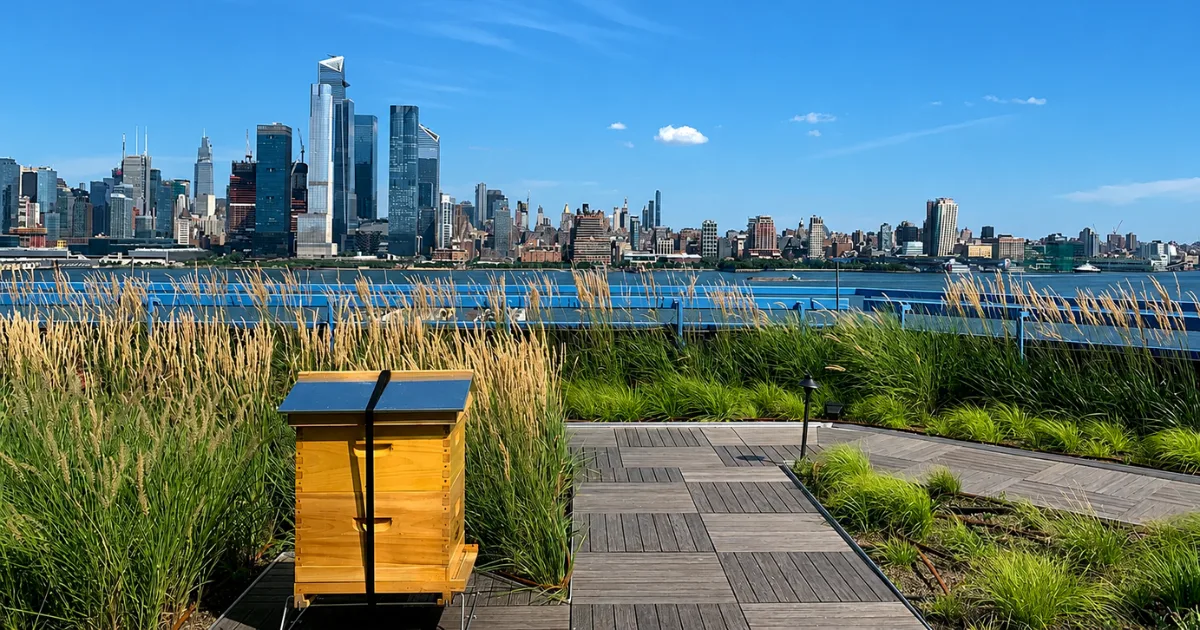
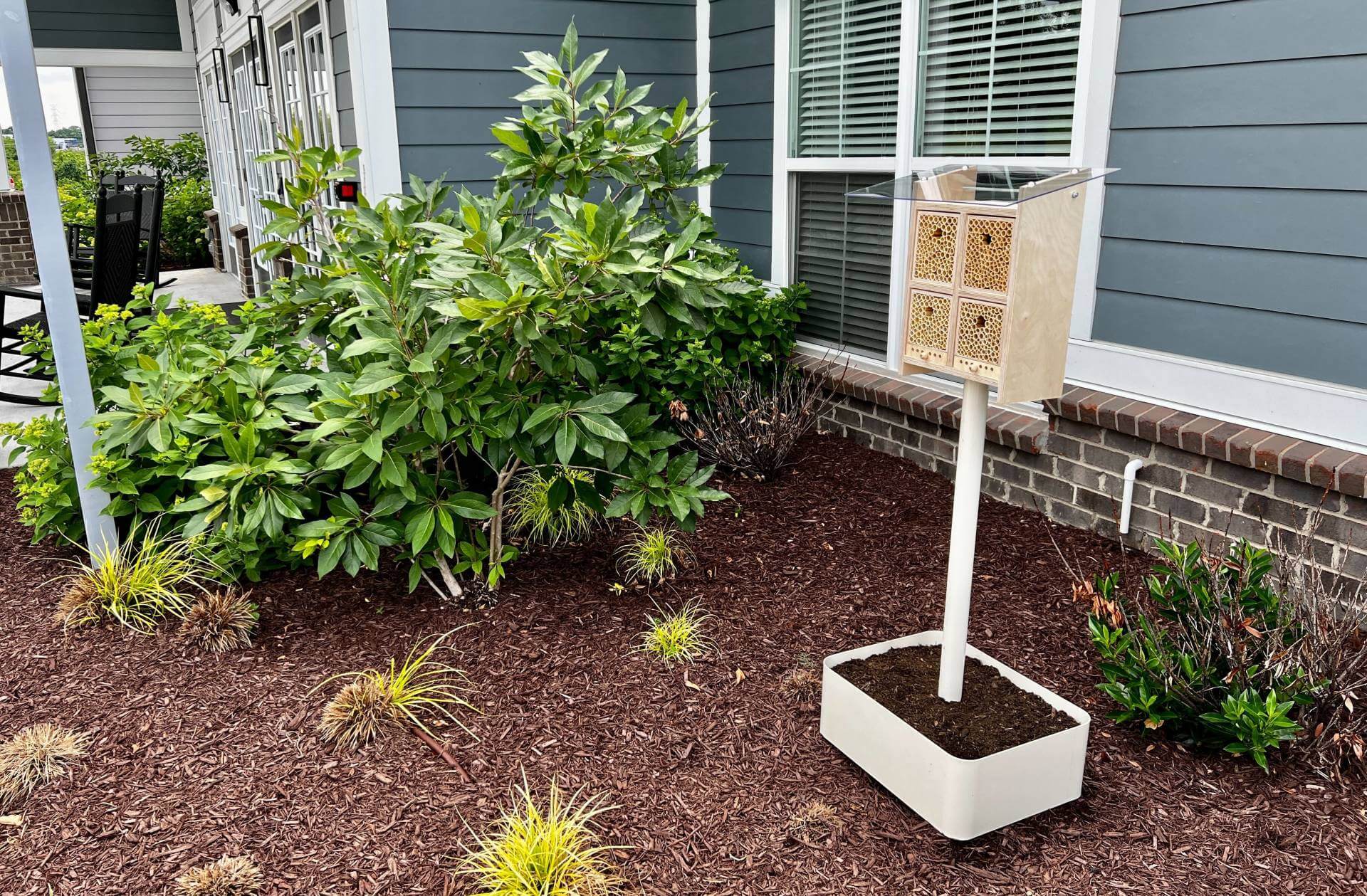
Almost no luxury community offers hands-on nature programming, which is exactly why it stands out. Managed rooftop beekeeping and pollinator habitats create a tour moment a leasing team can actually talk about, plus year-round engagement that a static garden cannot match. This is Alvéole's field of work. The company runs managed urban beekeeping across more than 2,200 buildings and Wild BeeHome habitats for solitary pollinators across 500-plus buildings. A beekeeper visits roughly every three weeks and leads workshops such as honey extractions, tastings, and hive visits. Residents take home jars of honey labeled with their building's name, a tangible reminder that lives on a kitchen counter. The MyHive platform handles event registration and shows portfolio-level participation. The result is a differentiator competitors cannot replicate by buying the same equipment.
From amenity to outcome: proving the resident experience pays
An amenity you cannot measure is a cost. An amenity you can measure is a case. Differentiated resident experiences pay back in three places asset managers report on.
Retention math comes first. At about $4,000 per move-out, small renewal gains add up quickly. At a 200-unit property, a few percentage points of retention cover a year of programming several times over. That is the argument that turns a line item into an investment.
Leasing comes second. A story-driven amenity gives a leasing team something specific to show on tour. "These are our rooftop hives, and residents receive honey from their own building" lands differently than pointing at another fitness room. It gives the premium rent a reason to hold.
Reporting comes third, and it is where nature-based programming does double duty. The same program that engages residents generates asset-level nature data. GRESB added a biodiversity and nature indicator, RM7, in 2025. It is exploratory and unscored this year, driven by the release of the TNFD recommendations. TNFD published its real estate sector guidance in January 2025, and WELL and Fitwel already recognize nature and biophilia in multifamily. Alvéole's program supports GRESB, TNFD, WELL, LEED, BOMA, BREEAM, Fitwel, and CSRD reporting, and MyHive quantifies participation. One program defends premium rent and produces reportable data at the same time.
A note on rent premiums, because the number is often overstated. Research has long linked green certification to higher rents. The most-cited analysis, from Cushman & Wakefield covering 2000 to 2021, found LEED-certified Class A properties achieved 3.1% higher rents in urban Gateway markets. Treat that as directional and historical, not a current guarantee. The reliable case is retention and reporting, not a promised premium.
How to choose resident experiences that differentiate
Start with what residents rank first. Fix responsive maintenance, security, and cleanliness before you add programming. Differentiation built on a shaky base does not hold.
Then prioritize recurring, staffed experiences over one-time installs, and measure participation with usage data. A space nobody books is a space to reconsider.
Pick one differentiator competitors cannot easily copy, and make it visible on every tour. Give the leasing team simple talking points so the story is consistent.
Pilot on one or two assets. Measure renewals and participation, then scale across the portfolio. A turnkey, portfolio-wide program should run without adding work for the on-site team.
Frequently asked questions
What unique resident experiences differentiate luxury apartment communities?
Anticipatory hospitality service, recurring staffed programming, and hands-on nature activities. These build belonging that competitors cannot copy by installing the same features. Nature-based programming, such as managed rooftop beekeeping, is the rarest of the three and doubles as reporting data.
What are luxury apartment amenities?
They are the shared features, services, and programming a Class A community provides beyond the unit. The four common categories are outdoor and rooftop spaces, fitness and wellness, hospitality and concierge service, and community programming and events.
Do luxury amenities improve resident retention and NOI?
Programming that builds connection does. RealPage data cited by Apartment Life shows renewal likelihood rising from 29% to 47% as residents form more connections. At about $4,000 per move-out, small renewal gains protect NOI quickly.
What is the difference between a standard and a luxury apartment community?
Service and resident experience, not finishes alone. Standard communities offer the features. Luxury communities run the programming and deliver the consistent, anticipatory service that makes residents want to stay.
The bottom line
Another gym or a longer amenity list will not win your next lease. The luxury communities that keep residents offer resident experiences worth talking about, defend premium rent, and produce data you can put in a report. Nature-based programming does all three at once, and it is the one amenity almost no competitor offers. Book a demo to see how a managed nature program fits your portfolio.