

Turnkey rooftop beehive management for landlords
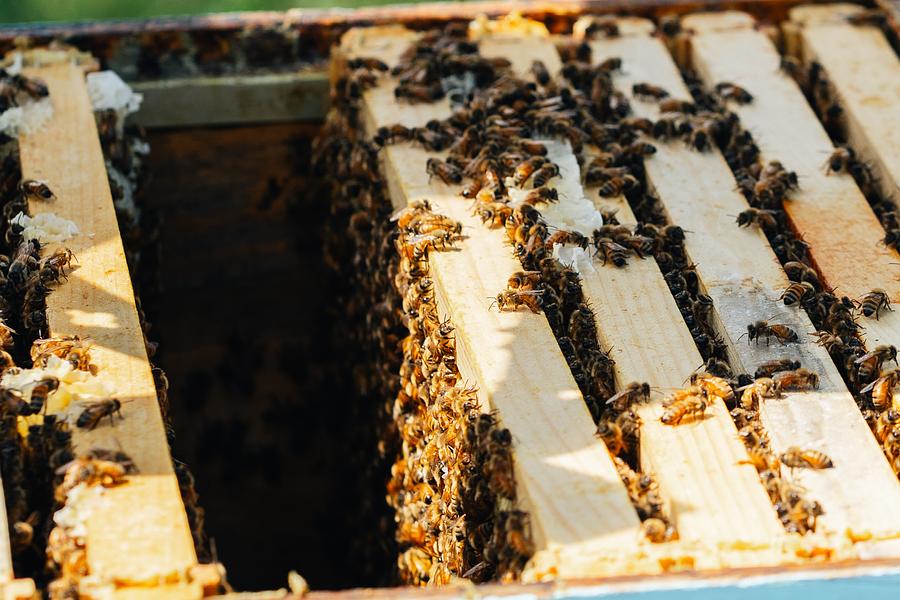
A rooftop beehive is one of the few building amenities a tenant remembers after the tour. It is also one of the few that can produce data for your reporting requirements. For asset managers, property managers, and landlords weighing the idea, the real questions are practical. What does a turnkey program actually cover? Which companies offer it? And how do you pick one that fits commercial real estate rather than a backyard?
This guide answers those questions in order.
Key takeaways
- Turnkey rooftop beehive management means a provider handles siting, installation, maintenance, safety, tenant events, honey, and reporting data, so your building team does nothing operationally.
- A short list of providers serve commercial real estate, and landlords should compare them on safety, service scope, portfolio scale, and data output.
- Rooftop hives are an annual operating expense that supports tenant engagement and nature-related reporting, not a capital project.
- Responsible programs manage hive density and add wild-pollinator habitat to protect native bees.
What "turnkey rooftop beehive management" actually means
Turnkey means end to end. The provider owns every operational step, and your team owns none of the beekeeping.
A full program covers the site assessment, permitting, and installation. It covers ongoing hive maintenance on a set cadence. It covers safety management, tenant programming and events, the honey harvest and branding, and the data reporting that comes off the site. You approve the plan. Trained beekeepers do the work.
This matters because bees are not a set-and-forget amenity. Colony health depends on active management, and the biggest factor is Varroa mite control. A 2024 study in the Journal of Insect Science found that Varroa control is the single strongest predictor of colony survival, ahead of weather. Hobby and DIY hives that skip mite management tend to fail. A managed program is what keeps the hives alive and the amenity real.
Alvéole runs managed rooftop programs across more than 2,200 commercial buildings in the USA, Canada, and Europe. Its MyHive platform handles tenant event registration and portfolio-level participation tracking, so the property team can see engagement without touching a hive.
Why landlords are adding rooftop beehives
Two pressures usually sit behind the decision, and asset managers tend to feel both at once.
The first is tenant engagement and leasing differentiation. Hybrid work moved leverage to tenants, and renewals that used to be routine are now negotiations. A rooftop hive gives leasing and property teams a physical anchor for events that few competing buildings can match. Honey harvests, hive visits, and pollinator programming give tenants a reason to show up and a story to repeat.
The second is nature-related reporting and disclosure. Asset managers increasingly need verifiable, asset-level data to answer reviewers, and a policy document no longer holds up when someone asks to see the program on the ground.
The ecological backdrop gives the amenity real substance. According to the USDA, about 35% of the world's food crops depend on animal pollinators to reproduce. Bees pollinate over one-third of US produce, and bee-dependent crops are valued at more than $20 billion each year in the US. Honeybees specifically pollinate as much as 34% of agricultural crops, though estimates vary by location. Those numbers explain why tenants and reviewers alike take pollinator programs seriously.
Which companies offer turnkey rooftop beehive management
The market sorts into three groups.
National managed-beekeeping providers operate across many cities and standardize safety, service, and reporting. Local and regional apiaries offer hands-on care in one metro but rarely scale across a portfolio. Tech-forward entrants add monitoring hardware and data tooling on top of the beekeeping.
What separates a commercial-grade provider from a residential or hobby service comes down to three things. The first is portfolio scale, meaning the provider can deploy the same program consistently across multiple assets. The second is documented safety systems built for occupied buildings. The third is reporting-grade data, not just a jar of honey at the end of the season.
Alvéole is built for commercial real estate. Its programs run across more than 2,200 buildings, and its capability set spans managed rooftop hives, the Wild BeeHome habitat for solitary pollinators, the MyHive engagement platform, and Aura, its nature intelligence platform. That combination covers both the tenant-facing amenity and the data an asset manager needs to report.
One caution when you research providers. Some editorial roundups of "companies that do the beekeeping for you" are residential-leaning. A service tuned for backyards will not carry the safety, scale, or reporting a commercial property requires, so vet every option for commercial real estate fit.
How to choose a rooftop beehive provider
Use a short checklist. Score each provider on the same four points.
Safety, siting, and insurance
Confirm that hives are sited away from high-traffic areas and accessed by beekeepers only. Ask about signage and tenant communication. Confirm the provider carries liability coverage. Under professional management, most tenants never encounter the bees directly, and safe siting is what makes that true.
Service scope and tenant programming
Get the scope in writing. Confirm the maintenance cadence, the number and type of tenant events, and whether honey is harvested and branded for tenant gifting. A turnkey program should include the programming, not treat it as an add-on your team runs.
Portfolio scale
Ask whether the provider can deliver the same program across several assets with consistent quality and reporting. A provider running one metro is fine for one building. A portfolio needs a provider that has already deployed at scale.
Reporting-grade data output
This is where commercial providers separate from the rest. Ask what verifiable, asset-level data the program produces and which frameworks it maps to. Nature-related reporting has moved onto asset managers' desks, and benchmarks now ask portfolios about their biodiversity and nature strategy. A hive that only makes honey cannot feed that work. Alvéole's data tools, including smart hive scales, floral eDNA analysis, the Nature Sensor bioacoustic monitor, and Aura, are designed to generate data for GRESB, TNFD, LEED v5, and BREEAM reporting.
What rooftop beehives cost
Treat a rooftop hive program as an annual operating expense, not a capital expenditure. It is priced per hive and per program, and it scales with the service level and the number of assets.
Be careful with residential benchmarks. Managed home services have been reported around $100 to $200 per month plus installation, and that number understates a commercial program. Commercial pricing reflects safety systems, tenant programming, and reporting-grade data that a backyard service does not carry.
The value framing is what matters to a landlord. A hive program costs in the range of standard tenant events, but it touches leasing, retention, and reporting at the same time. One line item does the work of three.
Doing it responsibly: protecting wild pollinators
Landlords should know the honest science before they buy. Adding honeybees is not automatically good for nature.
Research has found that high honeybee density is associated with lower overall wild bee richness in cities. A 2023 Montreal study reported a statistically significant negative correlation between honeybee abundance and wild bee species richness, with small bees most affected. A 2025 global review across dozens of cities found that honeybees dominate urban bee communities and pointed to resource competition and disease spillover as risks to wild bees. Both findings are correlational, not causal, and the effect is context dependent. But the caution is real, and no landlord should claim that a hive "saves the bees."
Responsible practice is what makes a nature claim defensible. That means managing hive density, adding native habitat for wild pollinators, and relying on professional oversight rather than a hobbyist's guess. Alvéole's Wild BeeHome, a purpose-built habitat for solitary native pollinators, runs across more than 500 buildings and supports the wild bees that honeybees can crowd out. On-site biodiversity monitoring supports keeping density in check. For a landlord who wants a credible program instead of greenwashing, responsible design is the point.
Rooftop beehives and your reporting requirements
Nature-related disclosure is now part of the asset manager's job, and a managed hive program can supply inputs the frameworks ask for.
Reporting frameworks increasingly account for nature and biodiversity. The TNFD is a voluntary global framework built on four disclosure pillars: governance, strategy, risk and impact management, and metrics and targets. Real estate benchmarks such as GRESB now ask portfolios about their biodiversity and nature strategy, aligned with TNFD. Green building systems point the same way. LEED v5 emphasizes ecological conservation and restoration, and BREEAM helps assets account for biodiversity. In Europe, the EU's Corporate Sustainability Reporting Directive requires large companies to disclose environmental impacts under the European Sustainability Reporting Standards.
The differentiator is the data. A managed program can produce verifiable, asset-level information that feeds these submissions. A hive that only produces honey cannot. Alvéole's Aura platform and its monitoring tools are designed to generate GRESB, TNFD, CSRD, LEED v5, and BREEAM-ready data, which is what turns a rooftop amenity into evidence a reviewer accepts.
Frequently asked questions
Is it safe to have beehives on a commercial building?
Yes, under professional management. Hives are sited away from high-traffic areas and accessed only by trained beekeepers. Programs include signage, tenant communication, and liability coverage. Most tenants never come into direct contact with the bees.
How much roof space does a beehive need?
Not much. A sunny, low-traffic area is usually enough. The provider handles the site assessment and confirms placement before anything is installed.
What happens to the honey?
It is harvested and often branded for tenant gifting. Yields vary by season, and a single hive does not guarantee a set amount, so treat honey as a benefit rather than a fixed output.
Do rooftop honeybees harm native bees?
They can, where hive density is high. Research links high honeybee abundance to lower wild bee richness in cities, especially for small bees. Responsible providers manage density and add wild-pollinator habitat to reduce that risk.
Choosing well
A rooftop beehive program earns its place when it is managed, responsible, and reporting-ready. Managed keeps the hives alive and your team hands-off. Responsible protects wild pollinators and keeps your nature claims defensible. Reporting-ready turns the program into asset-level data you can put in front of a reviewer. Landlords who want all three should choose a provider built for commercial real estate.
Book a demo to see how a turnkey rooftop beehive program would work across your portfolio.
.png)
.jpg)