
How to choose the best beekeeping service for CRE
How to choose the best beekeeping service for commercial real estate
Beekeeping has become a working tool for commercial real estate, not a novelty. If you are an asset manager or property manager weighing a provider, the real question is which kind of service actually fits a building. This guide gives you a clear way to judge one.
Key takeaways
- The best service for commercial real estate is a managed program, not hive equipment or a bee-removal contractor.
- Judge providers on five things: safety, turnkey delivery, verifiable data, reporting support, and tenant engagement.
- Nature disclosure is now a real estate reporting topic. The TNFD released its recommendations in September 2023, and GRESB expanded its biodiversity and nature requirements in its 2025 standard.
- Responsible providers manage hive density and support wild pollinators, not just honeybees.
- Cost is an operating program, not a capital project.
Why commercial buildings are adding beekeeping programs
Pollinators are in decline, and what they are worth is not small. Researchers have estimated the global economic value of animal pollination at about €153 billion a year (Eilers et al., 2011). In the United States, honey bees add about $11.7 billion to crop production each year (Khalifa et al., 2021). Honey bees and wild bees are both losing ground (EPA). The stakes reach nutrition too. The same study found that about 55% of available folate and roughly 74% of plant lipids come from crops promoted by animal pollination (Eilers et al., 2011).
For a building, a beekeeping program does two jobs at once. It gives tenants something concrete to gather around. It also produces on-site nature data that a property can actually use.
That matters because asset managers now face pressure from two sides. Renewals used to be formalities. They are now negotiations that ask for documented tenant engagement. Disclosures used to accept a policy statement. Reviewers now ask for verifiable, asset-level data.
So the question is worth asking carefully. How do you tell a strong provider from a weak one? Here is how.
What "beekeeping service" actually means for a property
Search for a beekeeping service and three different things show up. They solve different problems. Only one fits a commercial building.
The first is hive equipment sellers. They ship boxes, frames, and tools to hobbyists. The second is bee-removal and pest services. They take a swarm off a wall. Neither runs a program for tenants or produces data you can report.
The third is a managed program, and that is the category to shop in. A managed program covers installation, ongoing hive care by trained beekeepers, tenant events, data collection, and inputs for your reporting. The provider runs it. Your team does not.
The cost picture online is misleading, so reset it now. The "$200 to $600 per hive" figures you see are starter equipment costs for hobbyists. They are not the price of a managed commercial service. A managed program is an operating cost, comparable to other tenant programming, not a capital expenditure. Judge it against your events budget, not your build-out budget.
Five things to look for in a provider
Use these five criteria to score any vendor. A strong provider clears all of them and shows you the output.
Safety and liability handled for you
Safety is the first question tenants ask, and a good provider answers it before you do. Hives go on rooftops or in screened areas. Trained professionals handle them, not your staff. Clear signage and tenant communication set expectations. In practice, most tenants never encounter the bees directly. Before you sign, confirm the provider carries insurance and registers hives where local rules require it.
Turnkey delivery so your team does not run it
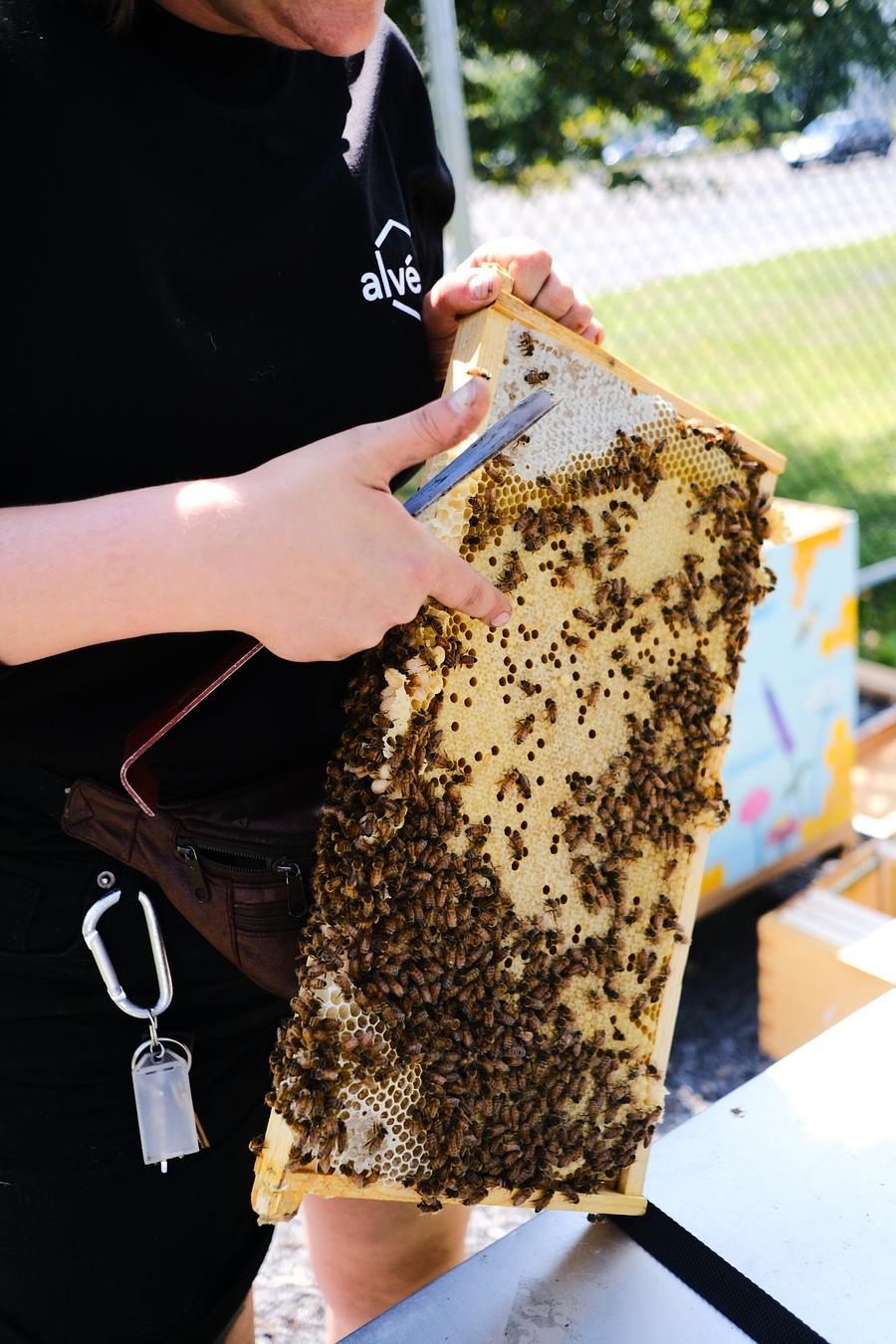
A managed program should run in the background. The provider installs and maintains the hives, leads the workshops, and manages the honey harvests. Your leasing team gets talking points and ready-to-use content, not a new operational task. Ask the provider to show you exactly what lands on your staff. The honest answer should be very little.
Verifiable, asset-level data
Ask how a provider measures and proves impact, not just how it describes it. A weak vendor claims. A strong one exports. Look for portfolio dashboards, hive monitoring, and species-level biodiversity data that you can pull into a report.
Alvéole supplies these through several data sources. MyHive dashboards track participation across a portfolio. Smart hive scales record hive weight in real time. Floral eDNA analysis shows what the bees forage on, and the Nature Sensor, a bioacoustic device, records on-site activity and identifies species. These are the monitoring methods Alvéole uses to turn a hive into data. Impact you cannot export is impact you cannot report.
Support for your reporting and certifications
Nature is now a real estate reporting topic, not a side note. The TNFD released its recommendations in September 2023. GRESB expanded its biodiversity and nature requirements in its 2025 Real Estate Standard, aligned to TNFD's structure of dependencies, risks, and opportunities. A good provider maps its data to the frameworks you answer to. Alvéole's program supports GRESB, TNFD, WELL, LEEDv5, BOMA, BREEAM, Fitwel, and CSRD. Its Aura platform generates TNFD, CSRD, and GRESB reports in minutes. Ask any vendor which frameworks it supports and to show you a sample output.
Responsibility to wild pollinators, not just honeybees
More honeybee hives does not mean more benefit. Dense managed-bee operations can compete with wild bees for forage and spread parasites and pathogens between colonies (Mallinger et al., 2017). Wild and native pollinators help increase crop yields alongside honey bees, so forage overlap has to be assessed (USDA). A responsible provider manages hive density and adds habitat for wild pollinators. Ask what a provider does beyond honeybees. Alvéole answers that with the Wild BeeHome, a purpose-built habitat for solitary pollinators now running across more than 500 buildings.
What a strong program delivers for tenants and leasing
A managed program gives leasing a moment that a gym cannot. A leasing agent can point to the rooftop hives and tell a prospect the building produces its own honey. A jar of honey with the building's label becomes a renewal touch that sits on a tenant's counter for months.
The outcomes are measurable, and they are worth naming plainly. Alvéole's programs report lead conversion gains of 15 to 25% when the amenity is featured in marketing. They report renewal improvements of 2 to 4 points among tenants who take part. They report event participation of 20 to 30%, well above typical tenant events. These are Alvéole's own program results, not independent third-party figures.
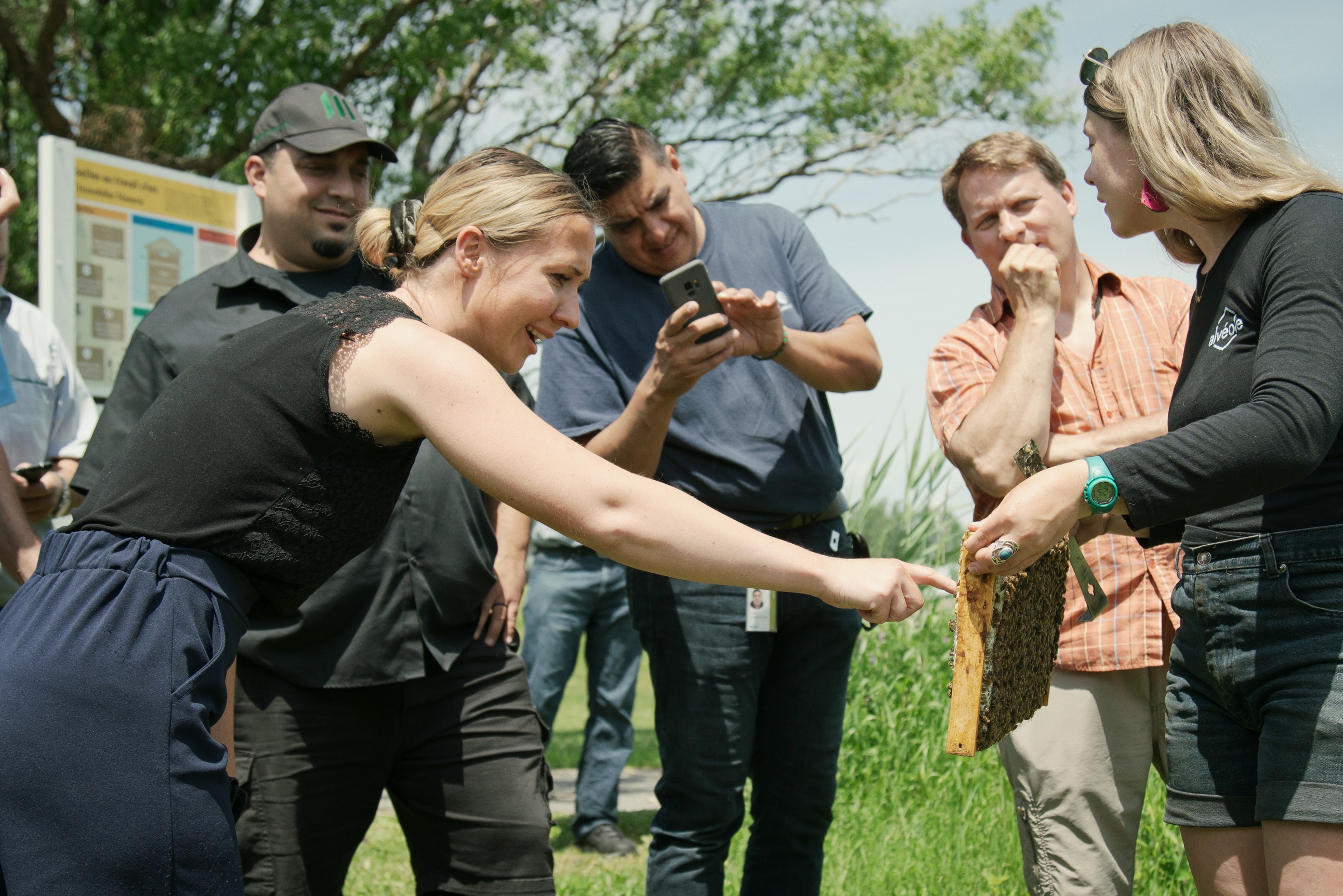
Engagement is durable, which is the part that separates this from a one-off event. Hive checks, honey harvests, and pollinator workshops give tenants a reason to return, and they produce content a property manager can share. The program keeps working between renewal conversations, not just during them.
The math holds at scale. At a 200-unit or comparable property, even a modest lift in renewals can cover the cost of the program through reduced turnover. For an asset manager measured on occupancy and NOI, that is the case the program has to make, and it does.
Questions to ask before you sign
Run this checklist against any vendor. The answers separate a managed program from a hobby kit.
- Who does the hive work, and how often?
- What is included, and is it an operating cost or a capital cost?
- What data do I get, and can I export it for reporting?
- Which frameworks and certifications do you support?
- How do you manage hive density and support wild bees?
- What do my leasing teams receive to talk about the program?
The bottom line
The best beekeeping service for commercial real estate is a managed program. It is safe, turnkey, data-backed, ready for your reporting, and responsible to wild pollinators. The decision is about evidence and outcomes, not just hives. Want to see how a program would work on your assets? Book a demo.
FAQ
It is an operating program, priced like other tenant programming rather than a capital project. Ignore the low per-hive figures online, since those are hobbyist equipment costs. A managed service covers installation, care, events, data, and reporting inputs.
Yes. Trained professionals handle the hives, which sit on rooftops or in screened areas, paired with signage and clear tenant communication. Confirm the provider carries insurance and registers hives where local rules require it. Most tenants never encounter the bees directly.
A managed service includes installation, ongoing hive care by trained beekeepers, tenant events, data collection, and inputs for your reporting. The provider runs the program. Your team is not asked to operate it.
Yes, when the provider produces exportable, asset-level nature data mapped to those frameworks. The TNFD released its recommendations in September 2023, and GRESB expanded its biodiversity and nature requirements in its 2025 standard. Ask any provider to show a sample report.
It can help when hive density is managed and wild-pollinator habitat is added. Adding too many honeybee hives can stress wild bees through forage competition and pathogen spread. Ask a provider what it does beyond honeybees.