
The program doesn't pause for winter. It changes shape.
When climate comes up in a budget conversation, it's usually a proxy for a sharper question: if the hives aren't active every month, is the program actually delivering value every month?
Fair question. Bees have a season, and Chicago winters don't run on the same clock as a Los Angeles summer. A program built around a single national playbook would go quiet in the months when hives do.
.png)
That's not how this one is built. The hive is one component of a year-round engagement calendar, not the calendar itself. When hive activity drops, the local team shifts what tenants see and interact with instead of pausing.
Below is what that shift looks like in four markets with four different climates, using each city's real, currently running activation calendar. Alvéole runs this same model in 70+ cities across North America and Europe. Here's four of them.
New York City

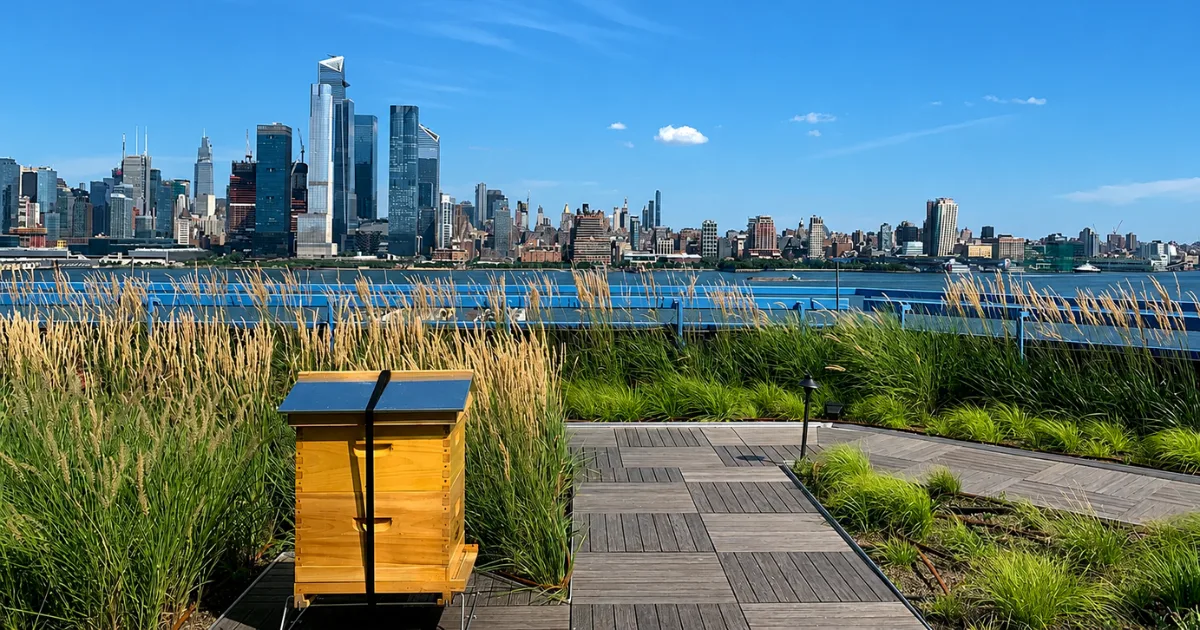
New York sits in a humid continental climate, with cold winters that push the hives into dormancy roughly from December through February. Full activity resumes in April and runs through October.
12-month activation calendar - NYC
Here is how the year breaks down:

Chicago
.jpg)
Chicago has the most extreme winter of the four markets, and the calendar shows it. Dormancy runs longer here, and the active season is shorter than either coast gets.
12-month activation calendar - Chicago
Here is how the year breaks down:

Los Angeles

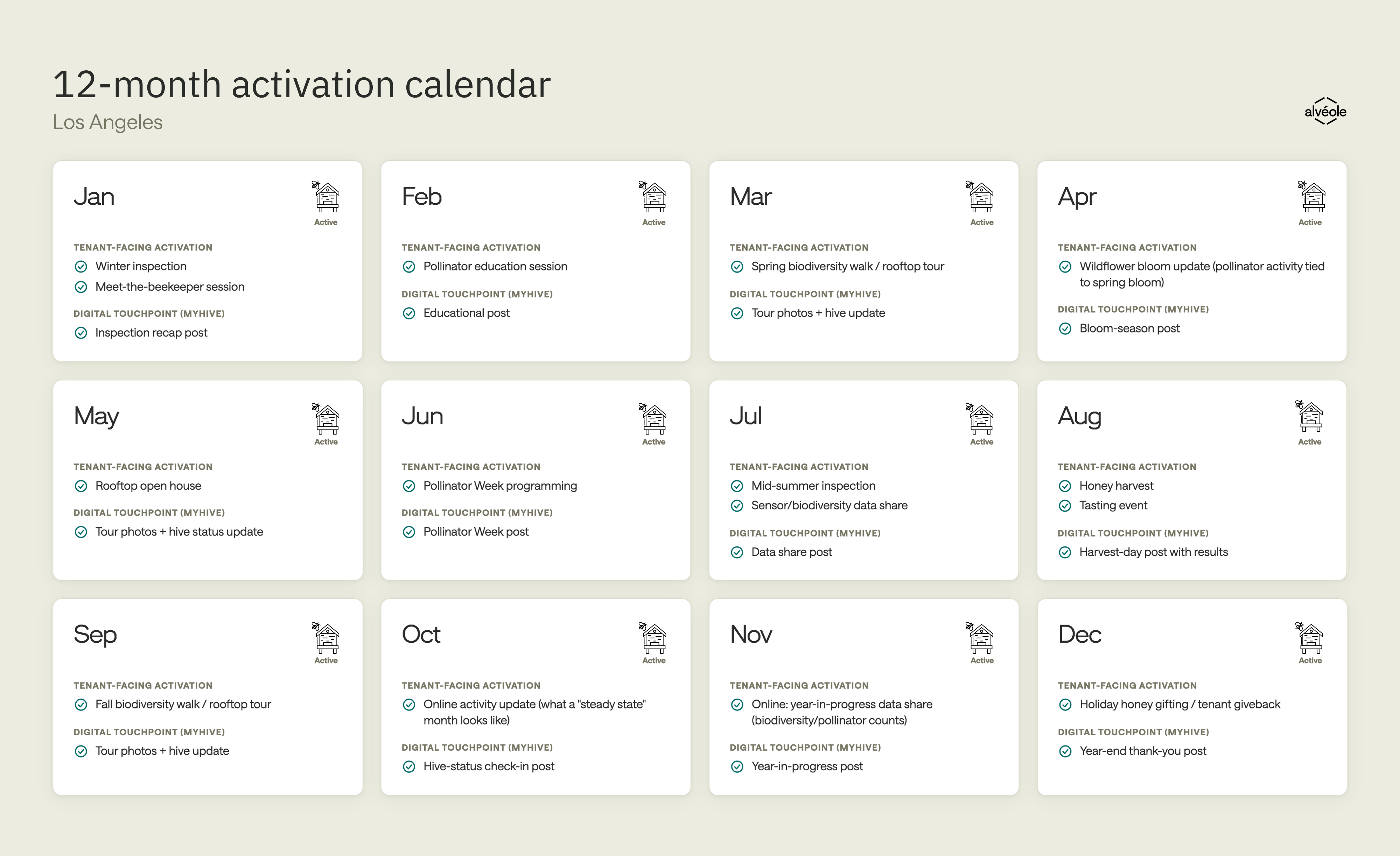
Los Angeles has a mediterranean climate, mild enough year-round that the hives see minimal true dormancy. The challenge here is different: sustaining tenant engagement through months where the hive story doesn't have a seasonal moment to hang a campaign on.
12-month activation calendar - Los Angeles
Here is how the year breaks down:
Miami
.png)
Miami's climate is subtropical, with heat and humidity holding steady year-round. The real operational constraint here isn't cold. It's hurricane season, which runs June through November.
12-month activation calendar - Miami
Here is how the year breaks down:

Designed to adapt, not to pause
Four cities, four different reasons the calendar can't run the same way every month. Chicago goes four straight months without an in-person activation, the longest stretch of the set, and still gets a winter-survival explainer, a reactivation update, a data recap. Miami swaps cold for storm season. Even Los Angeles, where the hives barely go dormant, has to work to keep the program from repeating itself.
"We had a waiting list for the resident workshops that your team put on at all of our residential buildings here last year."— Liza Bauer, Senior Director, Property Management, Concert Properties
.jpg)
The digital layer
Every beekeeper visit gets documented and posted to MyHive, the tenant-facing platform. Even the lowest-activity months still bring tenants an update, so engagement doesn't depend on hive activity alone. See what a live MyHive page looks like.

"Overall customer engagement increased by over 100% with the classes Alvéole offered. We had a cult-like following, and any time we hosted an event or shared updates through My Hive, customers would attend and respond."
Austin Young, ZO. Assistant Club Manager, Tishman Speyer (CME Center, 20 S. Wacker Drive)
Same answer in every market: something scheduled, every month, in whatever format fits what's happening on the roof that week. There isn't a single month with nothing planned. That's the number that matters in the budget conversation, not whether the bees are active, but how many months out of twelve have nothing scheduled.
Curious what the calendar looks like in your city? See where Alvéole is already running or book a call to get your building's version.
.png)