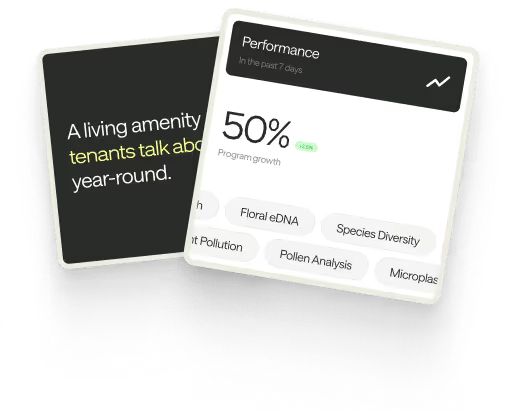

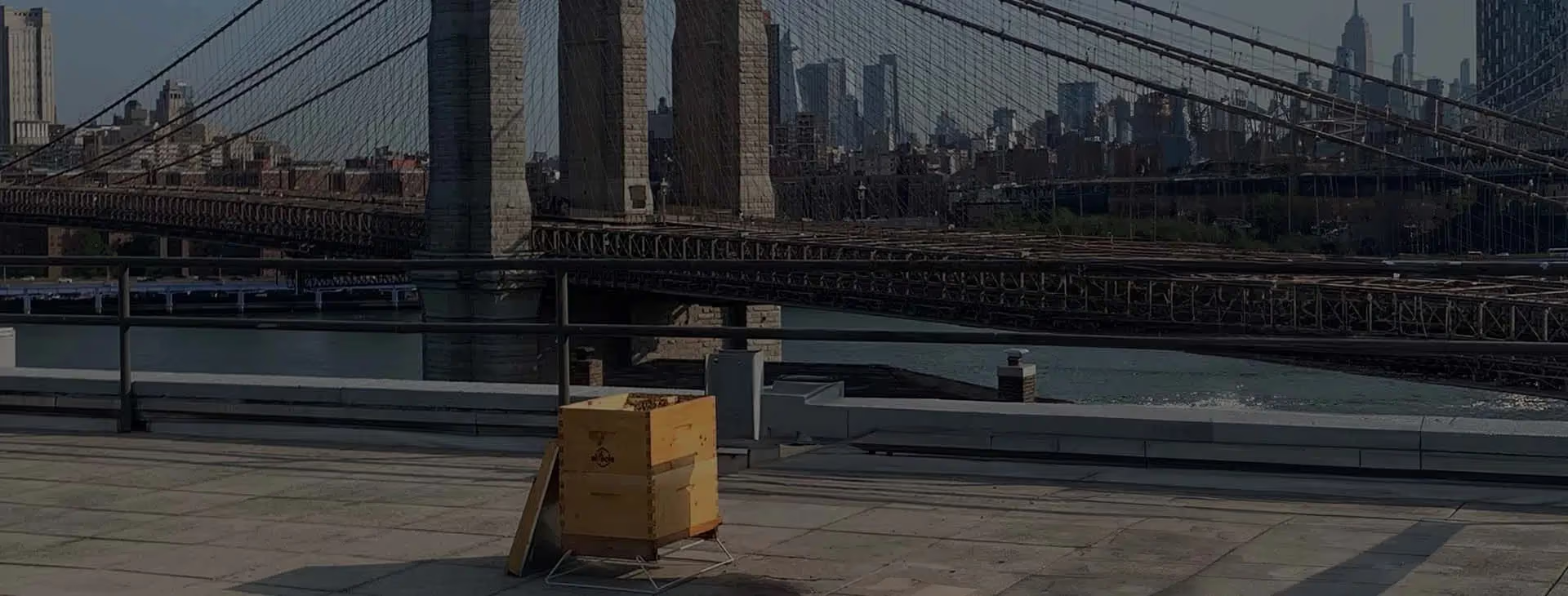
Give your New York City buildings an engagement program tenants talk about.





















Why urban beekeeping works for New York City buildings
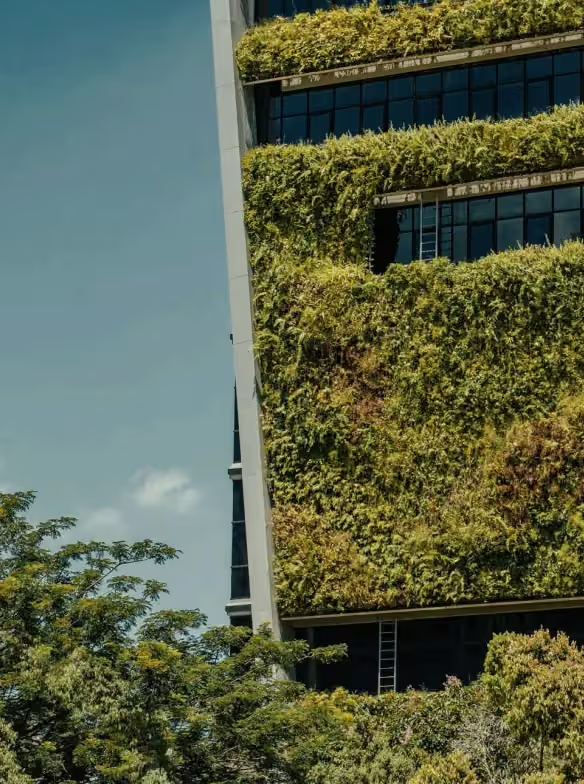
New York City is proving to be better bee habitat than its skyline suggests. A 2025 study modeling pollinator habitat across the five boroughs found the sharpest gains concentrated in Manhattan and the Bronx, tied almost entirely to urban forest and tree canopy growth, the only land type where suitability actually improved over two decades. Green roofs and street trees are quietly becoming real bee habitat, not just decoration.
Local policy backs it up. New York's Birds and Bees Protection Act, signed in 2023, restricts neonicotinoid pesticides on outdoor ornamental plants and turf, with a full phaseout of treated corn, soybean, and wheat seed coatings landing in 2027.
And Local Laws 92 and 94 require a green roof, solar array, or both on most new construction and major roof replacements citywide, turning rooftop space that used to sit empty into something bees can use.
How an urban beekeeping program works in New York City

A living amenity tenants actually use

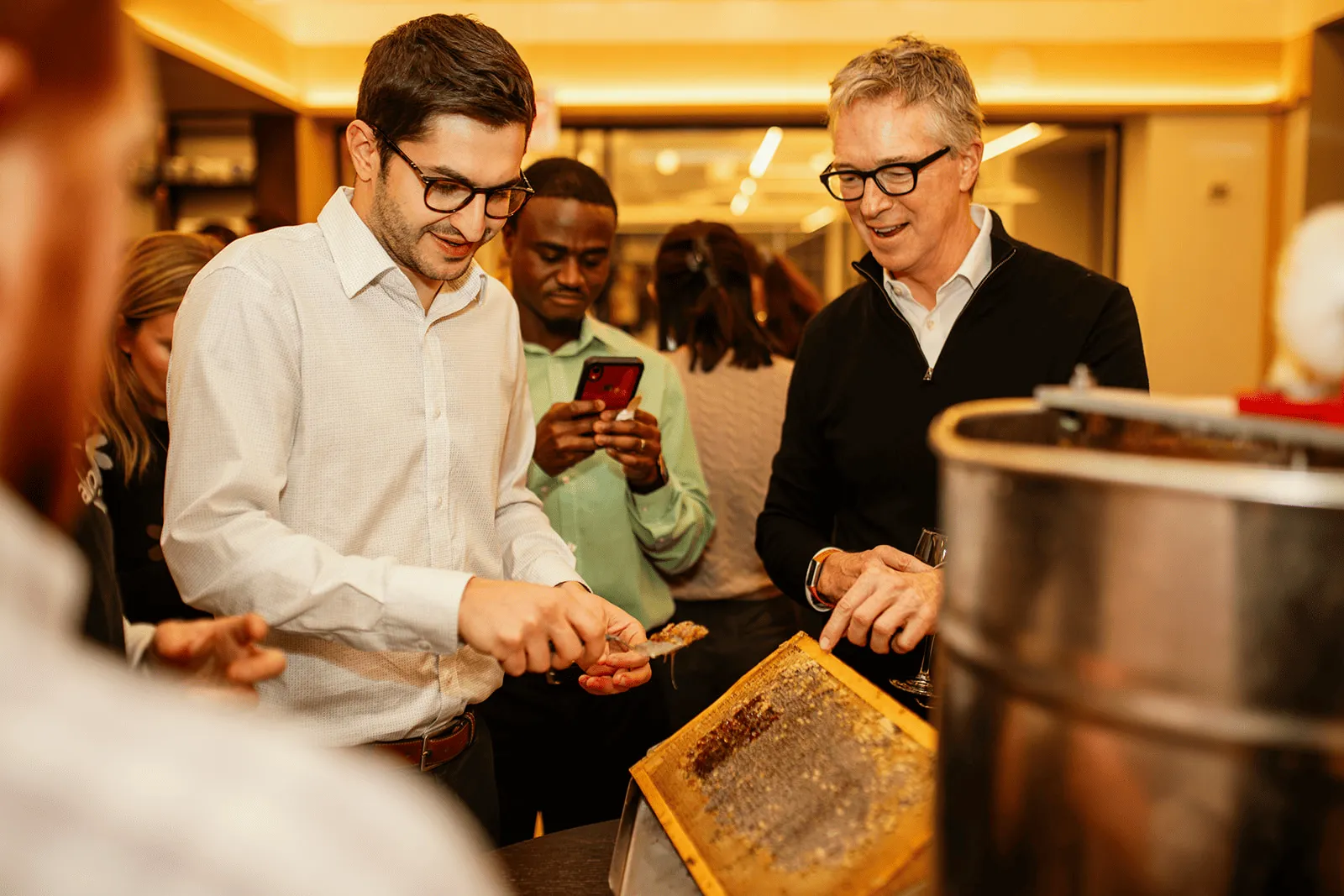

Year-round events

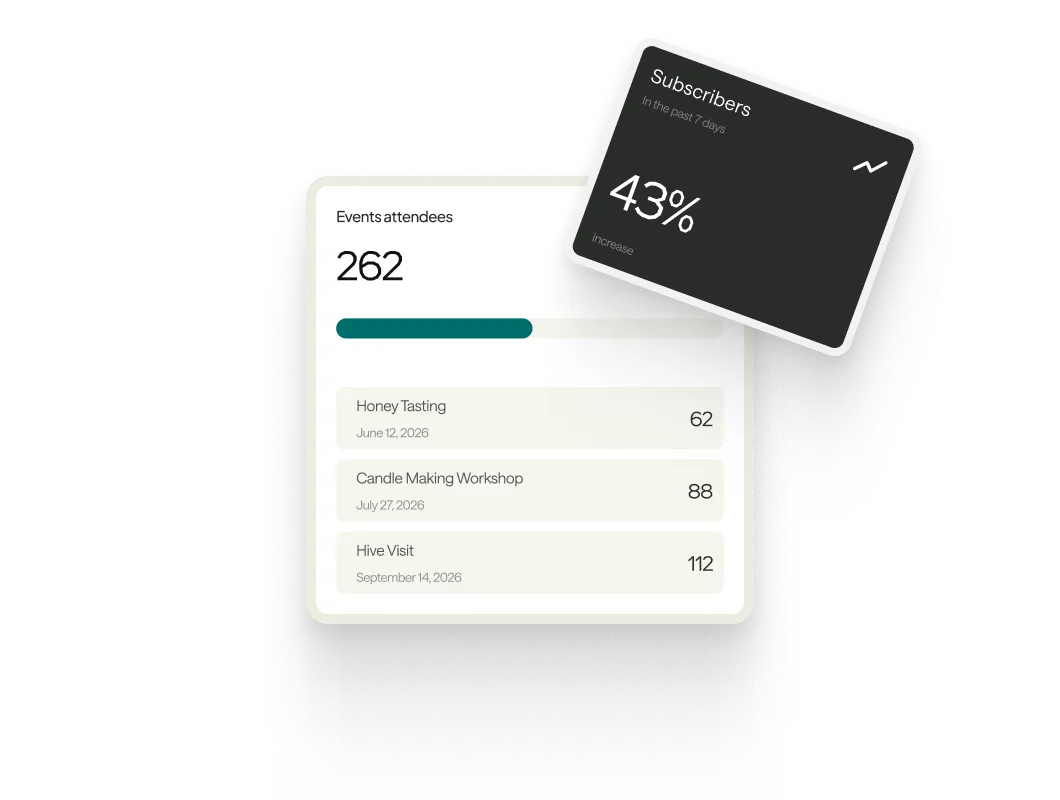
Participation data that compounds
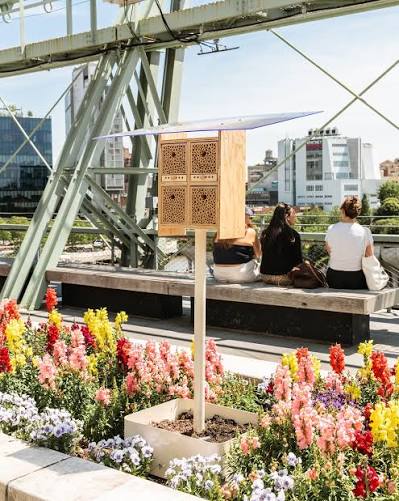
Meet the neighborhood bees
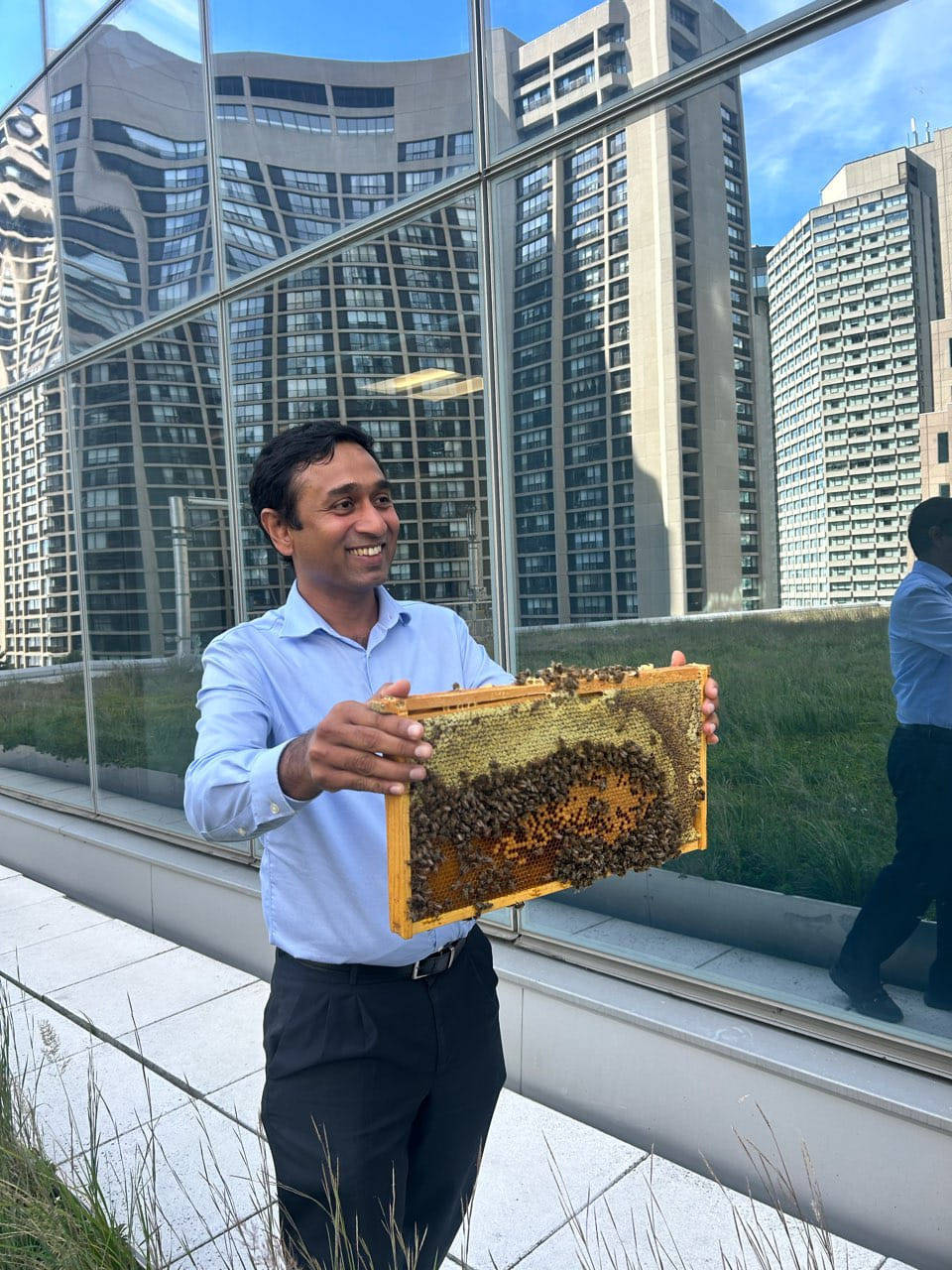
From Rockefeller Center to Brookfield Place, bees have moved into some of the city's most recognized addresses. The Empire State Building, Bloomberg's Manhattan offices, 100 Park Avenue, NYU Langone Health, and Stuyvesant Town all run rooftop hives with Alvéole. Ten landmark sites, one program.


Turning your hives into insight

Data collection and instant reporting
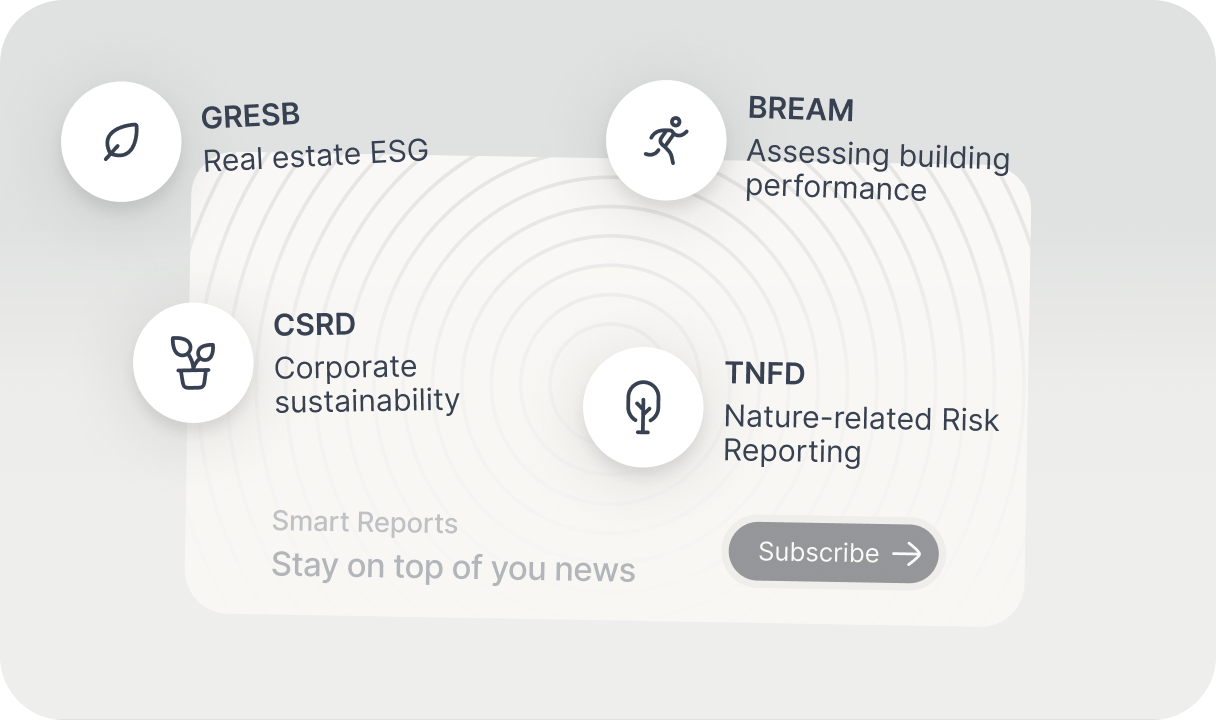
Remote sensing establishes baseline indicators across your portfolio, while onsite monitoring (bioacoustics and eDNA) captures species presence and habitat quality at each property. That data feeds directly into TNFD, CSRD, and GRESB reports, generated in minutes from pre-filled templates, with audit trails showing exactly where each number comes from.


Portfolio dashboard and AI agent
See biodiversity trends across all assets, benchmark each property against portfolio average, and export site-level data for individual disclosures. Ask the AI agent questions about TNFD requirements, GRESB scoring, or site-specific risks, and get answers that reference your actual portfolio data and current framework standards.
We service hives across New York City and the greater metro area, including:
and more...
Alvéole in the media
FAQ
Yes. New York City removed honeybees from its list of prohibited animals in 2010. Every hive must be registered with the city's Department of Health and Mental Hygiene. Alvéole handles registration and siting for every install, to meet the city's placement rules.
New York's own research points to a different constraint. A 2025 study on green space connectivity across the five boroughs found fragmented habitat, not hive density, is what limits pollinators here. Alvéole sites hives based on local forage density rather than adding to already-saturated blocks, and pairs each honeybee hive with wild bee habitat (BeeHome) to support native pollinators too, not just honeybees.
The active season runs roughly April through September, driven by New York's climate and bloom cycle. That's also when most tenant-facing events land, hive tours, harvest days, workshops, so the program's busiest stretch lines up with the season buildings actually want tenant programming.
Yes. Alvéole keeps Italian honey bees, a breed known for its docility, and honey bees are not aggressive away from the hive, rarely stinging unless it's disturbed. Alvéole's beekeepers site hives away from high-traffic rooftop areas and manage all hive access, so tenants interact with the program through workshops and events, not the hive directly.
Yes. Alvéole's program contributes to BOMA 360, BOMA BEST, BREEAM, Fitwel, GRESB, LEED, and WELL, through pollinator habitat, tenant engagement documentation, and biodiversity monitoring.
They stay in the hive. Honey bees don't hibernate or migrate. As temperatures drop, the colony clusters tightly around the queen and vibrates to generate heat, living off the honey it stored through summer. Before the cold sets in, Alvéole winterizes each hive, reducing the entrance, adding insulation, and confirming the colony has enough stores to reach spring. Tenant programming keeps running through winter with indoor workshops, and hands-on beehive visits pick back up in spring once the colony is active again.