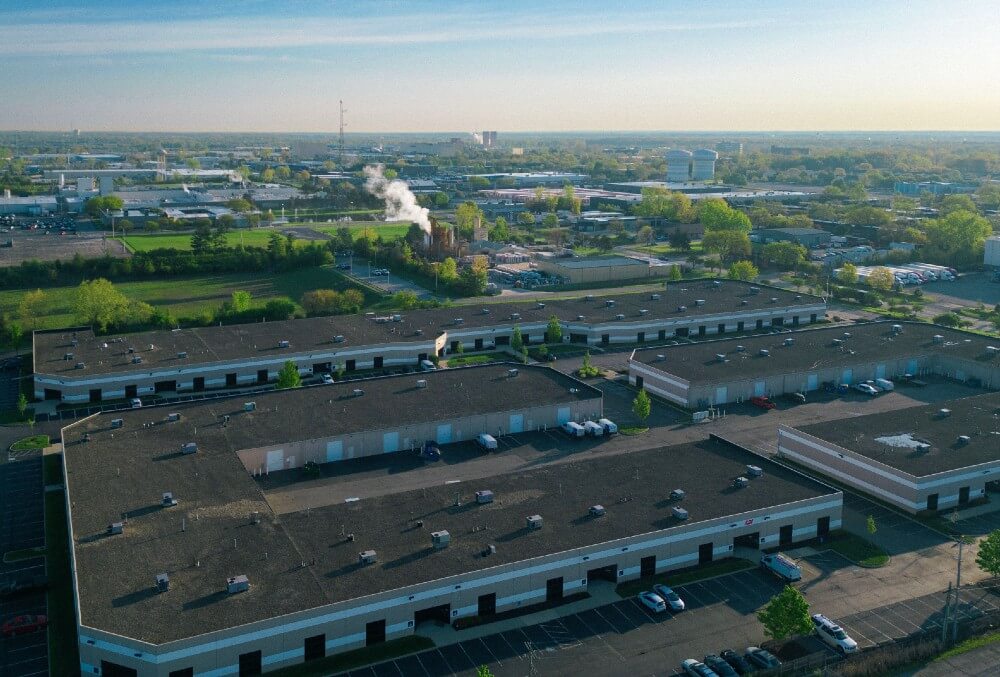

The hidden marketing challenge facing modern CRE properties

In today's increasingly competitive commercial real estate landscape, property managers and asset managers face unprecedented marketing challenges that extend far beyond traditional vacancy rates and lease negotiations.
While many focus on obvious obstacles like economic uncertainty and changing work patterns, a deeper set of marketing difficulties continues to undermine property performance across markets nationwide.
What are commercial real estate marketing challenges
Commercial real estate marketing challenges encompass the complex web of obstacles that property managers, asset managers, and ESG professionals encounter when attempting to attract, engage, and retain tenants in an oversaturated market.
These challenges have intensified dramatically since 2022, with CRE property values falling by over 21% from May 2022 to December 2023, fundamentally altering how properties must position themselves to remain competitive.
The modern CRE marketing landscape requires property professionals to navigate multiple simultaneous pressures. The impact of dozens of elections around the world and shifting political winds are reshaping how real estate professionals do business, while 79% of organizations reported being victims of actual or attempted payments fraud activity in 2024, adding security concerns to an already complex marketing environment.
Why is CRE marketing difficult in crowded markets

The fundamental difficulty in commercial real estate marketing stems from an increasingly crowded marketplace where traditional differentiators no longer provide competitive advantages. Office vacancy rates reached 19% for the U.S. market as of the first quarter of 2024, surpassing previous highs reached during the Great Recession and the COVID-19 recession.
This saturation means properties must compete not just on location and amenities, but on comprehensive tenant experiences that justify premium rents.
Market saturation impacts across sectors
The challenge varies significantly by property type, but affects all commercial real estate sectors. According to recent market data, different sectors face distinct marketing pressures:
Property sectorVacancy rateKey marketing challengeRequired responseOffice19.0-20.0%Post-pandemic relevanceExperience-driven amenitiesIndustrial6.8%Supply chain disruptionTechnology integrationRetailRisingE-commerce competitionCommunity engagementMultifamily4.6-6.5%Affordability concernsValue demonstrationSource: Multiple industry reports including Moody's CRE, CBRE, and National Association of Realtors
The data reveals that even sectors with relatively low vacancy rates face unique marketing obstacles. Both retail and industrial fundamentals softened further in July, with net absorption falling by 40% and 68% compared to a year ago in these two sectors, respectively.
The engagement challenge that makes building marketing hard
Perhaps the most significant hidden challenge facing CRE marketing today involves tenant engagement and community building. Property managers face the ever-growing challenge of keeping tenants happy and engaged, with tenants increasingly overwhelmed by constant emails, calls, and notifications, leading to engagement fatigue.
This engagement crisis creates a vicious cycle where properties struggle to understand tenant needs, leading to misaligned amenities and services that fail to drive retention or attract prospects. 54% of properties have staff dedicated to tenant experience, yet many properties still struggle to create meaningful connections with their tenant base.
The experience economy transforms expectations
The shift toward an experience economy fundamentally changes what tenants expect from their commercial spaces. People would rather spend their money on an experience than on a physical object, meaning tenants are no longer just looking for a property with low rent prices, a nice gym, and an onsite cafe. This transformation requires property managers to become experience curators rather than simply space providers.
Modern tenants expect seamless integration between physical and digital experiences. Properties that fail to provide this integration find themselves at a significant marketing disadvantage, regardless of their physical amenities or location advantages.
Economic uncertainty amplifies marketing complexity
The current economic environment adds layers of complexity to CRE marketing efforts. By some measures, there's more uncertainty today than at any point in the last three to four decades, with unknowns injecting more conservatism and resulting in a wait-and-see mentality that stalls decision-making.
This uncertainty manifests in multiple ways that directly impact marketing effectiveness. Even though transaction volumes are stabilizing, uncertainty plagues buyers and sellers amid interest rates that are still elevated, causing buyers and sellers to exercise caution. For properties, this means longer marketing cycles and more sophisticated value propositions are required to close leasing deals.
Financing pressures create additional obstacles
The looming debt maturity wall adds urgency to marketing efforts across the sector. Properties must now demonstrate not just current performance, but future resilience to potential financing disruptions. This requirement forces marketing strategies to emphasize long-term value creation and stability, complicating traditional leasing approaches.
Technology adoption creates new marketing demands
The integration of artificial intelligence and proptech solutions introduces both opportunities and challenges for CRE marketing. 90% of CRE companies plan to integrate AI to support human experts over the next five years, potentially leading to automation of some entry-level CRE positions while boosting efficiency in other areas.
However, technology adoption requires significant investment and expertise that many properties struggle to implement effectively.
According to industry research, 43% of companies expect they will need more support for CRE technology solutions over the next three years, indicating that technology-related marketing challenges will intensify rather than diminish.
Properties that successfully integrate technology into their marketing strategies gain significant advantages, particularly in tenant engagement and data-driven decision making. Those that lag behind find themselves increasingly unable to compete for quality tenants who expect modern, tech-enabled experiences.
ESG requirements reshape marketing strategies

Environmental, social, and governance considerations have become central to CRE marketing, particularly as institutional tenants face increasing pressure to meet sustainability targets.
This shift requires properties to demonstrate measurable environmental impact and social value, not just claim sustainability credentials.
Nature-based solutions have emerged as particularly effective differentiation strategies. Properties implementing comprehensive environmental programs can attract tenants willing to pay premiums for authentic sustainability initiatives.
Alvéole's commercial real estate services help properties develop these competitive advantages through urban beekeeping and biodiversity monitoring programs.
Quantifiable environmental impact drives decisions
Modern tenants increasingly require verifiable environmental data to meet their own ESG reporting requirements. Alvéole's nature-related risk platform provides the quantifiable environmental metrics that sophisticated tenants demand, helping properties market their sustainability credentials with confidence.
The challenge lies in moving beyond greenwashing to deliver authentic environmental benefits that can withstand scrutiny from ESG-focused tenants and their stakeholders.
Properties that fail to provide genuine sustainability impact find themselves at increasing disadvantage in tenant acquisition and retention.
Solutions for overcoming hidden marketing challenges
Successful CRE marketing in the current environment requires a multi-faceted approach that addresses engagement, differentiation, and value demonstration simultaneously. Properties that excel in today's market typically implement three core strategies.
First, they invest in authentic experience creation rather than superficial amenities. This means developing programming and services that create genuine community connections and provide measurable value to tenant operations.
Properties achieving superior renewal rates typically excel in space optimization through technology, meaningful tenant engagement through programming, and authentic sustainability initiatives.
Second, they leverage technology to enhance rather than replace human relationships. The most successful properties use digital tools to facilitate better communication and engagement, not to automate away personal service.

Third, they demonstrate environmental and social impact through measurable programs that align with tenant values. Alvéole's comprehensive suite of nature-based amenities exemplifies this approach, providing properties with differentiation strategies that justify premium rents while supporting tenant sustainability goals.
The path forward for CRE marketing
The hidden marketing challenges facing modern CRE properties require sophisticated, multi-dimensional responses that go far beyond traditional leasing strategies. Properties that recognize these challenges early and implement comprehensive solutions will emerge stronger as market conditions stabilize.
Success in this environment demands understanding that marketing challenges are fundamentally about creating value for tenants rather than simply promoting space.
The most effective marketing strategies focus on building genuine partnerships with tenants, providing measurable environmental and social benefits, and creating experiences that enhance tenant operations and employee satisfaction.
As the commercial real estate market continues evolving, properties that address these hidden marketing challenges will find themselves better positioned to attract quality tenants, command premium rents, and maintain high retention rates regardless of broader market conditions.
The key lies in recognizing that modern CRE marketing is no longer about filling space, but about creating comprehensive value propositions that address the complex needs of today's sophisticated tenants.