4 ways sustainable pest management can save you money and boost your building’s appeal
When you think of pesticides, what comes to mind? Rows of crops in expansive farmers’ fields? You wouldn’t be wrong. But it’s not the only place you’ll find pesticides. Pest management practices are also common in residential areas and urban settings.
Pesticide use in urban contexts is common. And due to close quarters, the effects of pesticides in cities can be even more damaging to human health and other living things.
Common pesticide applications in urban settings
Insecticides: to manage insects like cockroaches and ants
Herbicides: to manage unwanted weeds
Rodenticides: to manage rats and mice
Fungicides: to control the growth of mold and mildew
Fumigants: to manage pests in large or hard to reach areas like termites or bedbugs
In the commercial real estate world, landscapers frequently use harmful pesticides for pest control. But there are many less harmful, more natural methods to prevent pests and maintain a beautiful property.
By doing good for the environment, your building can benefit too! Keep reading to discover 4 ways sustainable pest management practices can boost your building’s appeal and put money back in your pocket.

1. REDUCED LANDSCAPING COSTS
The most expensive elements of a landscaping service are typically labor and pesticide costs. By limiting pesticide use and opting for more natural options, you can actually save money on your landscaping services. All while maintaining a beautiful and biodiverse property.
Integrated pest management (IPM) is a cost-effective and environmentally friendly approach to pest management. Opting for sustainable practices can reduce the need for pricier chemical treatments, leading to lower landscaping costs.

2. LOWER LONG-TERM MAINTENANCE COSTS
Switching to more sustainable landscaping practices can also reduce your long-term maintenance costs. Opting for native plants, for example, is a way to ensure your greenspace thrives with minimal intervention. These plants are adapted to your environment, making them hardier and less prone to pests and diseases.
Monitor pesticides on and around your property
Not sure where to start? The first step to adopting safer landscaping practices is assessing which pesticides are currently being used around your property.
Enter our newest innovation: measuring pesticide abundance using biomonitoring.
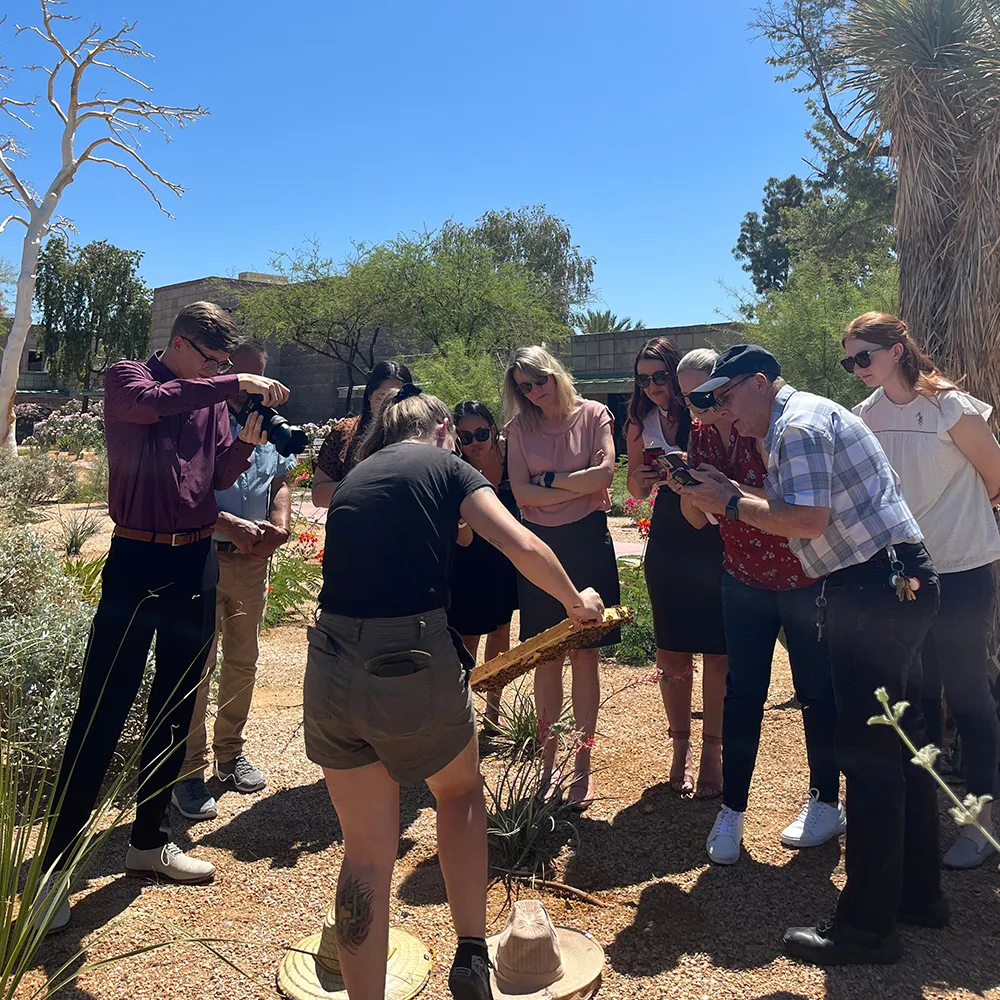
You can now leverage your Alvéole beehive to monitor and report on the use of pesticides in your environment. Then receive site-specific recommendations for safe alternatives.

3. INCREASED AESTHETIC APPEAL
Rewilding (restoring an area of land to its natural state) and sustainable landscaping aren’t passing trends – they’re here to stay. And they’re catching the attention of prospective tenants.
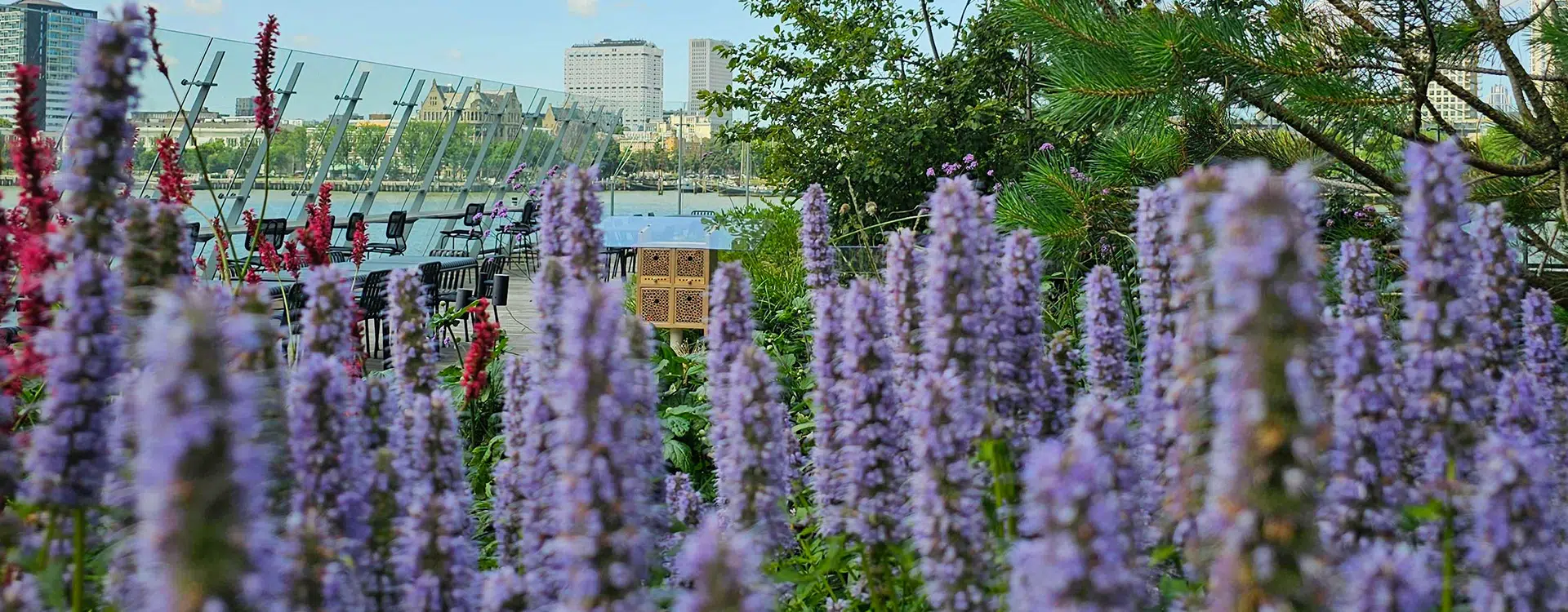
These practices can enhance your property’s visual appeal and elevate overall tenant experience. Green spaces filled with native plants and pollinator-friendly gardens aren’t just better for the environment – they’re beautiful!
4. MARKET DIFFERENTIATION
For buildings looking to up their “cool factor” and stand out to environmentally-conscious tenants, landscaping is a great place to start. Tenants are increasingly prioritizing not only sustainability, but wellbeing and connection to nature. Not to mention investors who are placing more weight on a property’s ESG practices.
Many of the leading green building certifications grant points to buildings who make a proven effort to reduce the use of harmful pesticides, therefore supporting biodiversity. Just another way to help your building stand out on the market.
By embracing rewilding, sustainable landscaping, and safe pest management, you’re better positioned to attract and retain high-quality tenants who value a space that is both visually beautiful and environmentally friendly.
Adopting safe and sustainable pest management practices is more than just an environmental choice. It's a strategic investment in your building's future. By reducing costs, enhancing aesthetic appeal, and differentiating your property in the market, you not only contribute to a healthier ecosystem but also increase the value and desirability of your space. Making these changes today can secure long-term benefits for tomorrow.