

How to choose the right nature-based amenity partner

Commercial real estate professionals face mounting pressure to deliver sustainable, engaging amenities that attract tenants while meeting ESG goals. According to a 2021 Global Investor Intentions Survey conducted by CBRE, more than 60% of respondents had incorporated ESG criteria into their business plans. With nature-based solutions becoming increasingly valuable for commercial properties, selecting the right amenity vendor requires a strategic evaluation framework.
This comprehensive guide provides property managers, asset managers, and ESG professionals with the essential criteria and questions needed to evaluate nature-based amenity contractors effectively.
Why vendor selection matters for nature amenities
Vendor selection affects how companies manage costs, deliver products or services, and reduce operational disruptions. For nature-based amenities specifically, the wrong partner can result in failed installations, regulatory compliance issues, and missed sustainability targets that directly impact property value and tenant satisfaction.
Companies willing to take the plunge into the ESG realm from a real estate perspective are seeing proven returns. Ernst & Young's analysis of ESG impact on property values shows that green buildings are currently netting a 12.3% uplift in sales value and rental yield on average, when compared with 'brown buildings'.
Core evaluation criteria for nature amenity vendors
Experience and track record
The vendor's history and portfolio size provide crucial insight into their capability to deliver successfully. Look for providers with extensive experience across multiple markets and property types.
Key questions to ask:
- How many commercial buildings currently feature your nature-based programs?
- Can you provide case studies from similar property types and tenant demographics?
- What is your client retention rate over the past three years?
Compliance and regulatory expertise
Real estate brokers face a significant concern when it comes to third-party relationships – vendor risk. Nature-based amenities often involve complex local regulations, from urban beekeeping permits to environmental compliance requirements.
Essential compliance factors: Evaluate vendors on their ability to handle local permit management and regulatory compliance, maintain comprehensive insurance coverage and liability protection, demonstrate adherence to health and safety protocols, and conduct thorough environmental impact assessments. Additionally, assess their knowledge of green building certification requirements such as LEED, which can significantly impact your property's value and marketability.
Service delivery model
A comprehensive service model should encompass installation, ongoing maintenance, educational programming, and data reporting. View supplier evaluation as a two-way street. During the assessment process, you need to ensure potential vendors can deliver products and services.
Financial evaluation framework
Total cost of ownership analysis
Beyond initial setup costs, evaluate the complete financial picture including ongoing maintenance, programming, and potential revenue generation opportunities. The following table provides general industry benchmarks for nature-based amenity programs to help guide your budget planning and vendor comparisons.

Note: These are approximate industry ranges for planning purposes. Actual costs vary significantly based on program scope, location, and vendor selection.
ROI measurement capabilities
Data-driven insights such as quality metrics, customer satisfaction, and financial health should also be factored into the selection process. Look for vendors who provide quantifiable metrics on tenant engagement, retention impact, and sustainability benefits.
ESG and sustainability assessment
Track a Carbon Impact Number on how the vendor addresses environmental sustainability. Leading nature amenity providers should offer clear environmental benefits and data to support ESG reporting requirements. Consider vendors who can help you meet standards set by leading benchmarks like GRESB (Global Real Estate Sustainability Benchmark), which represents USD 9 trillion in real asset value and is used by over 150 institutional investors worldwide.
Critical environmental criteria:
- Biodiversity support and pollinator conservation
- Carbon footprint reduction capabilities
- Alignment with green building certification requirements
- Environmental data collection and reporting
Social factors encompass tenant well-being, community impact, accessibility, health and safety, and social value creation. The best nature amenity programs create meaningful community connections while supporting tenant wellness initiatives.
Technology and reporting capabilities
Modern amenity programs require robust data collection and reporting systems. The basis is data, data, data—and the ability to merge this data in a structured way.
Technology requirements: Look for vendors who provide real-time monitoring and data collection capabilities, offer tenant engagement platforms and apps, deliver ESG reporting and analytics dashboards, and ensure seamless integration with existing building management systems.
Risk management and partnership stability
Financial stability assessment
Don't just take a vendor's claims at face value. Conduct thorough due diligence on the vendor's financial health, insurance coverage, and business continuity plans.
Partnership scalability
Consider whether the vendor can support your growth plans and portfolio expansion. Communication is key in keeping your vendor relationships strong.
Questions to ask potential nature amenity companies
Operational questions
- How do you handle seasonal variations in program delivery?
- What backup plans exist if environmental conditions affect the installation?
- How quickly can you respond to maintenance issues or tenant concerns?
Sustainability and reporting questions
- What specific environmental benefits does your program provide?
- How do you measure and report on biodiversity impact?
- Can your program contribute to LEED, BREEAM, or other green building certifications?
Engagement and programming questions
- What educational and team-building activities do you offer tenants?
- How do you customize programming for different corporate cultures?
- What tools do you provide to help property managers promote the amenity?
Making the final selection decision
Scoring methodology
Balance cost and quality by assigning appropriate weights to each in your evaluation matrix, considering total cost of ownership rather than just purchase price, and focusing on value rather than lowest cost.
Create a weighted scoring system across key criteria:
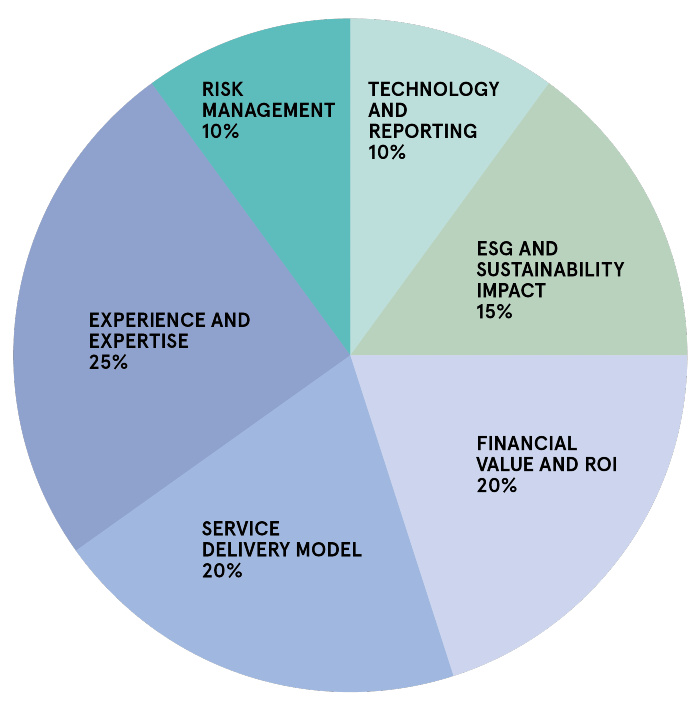
Reference checks and site visits
Check references and past performance by visiting existing installations and speaking directly with current clients about their experience.
Alvéole as your ideal nature amenity partner
When evaluating nature-based amenity providers against these criteria, Alvéole's urban beekeeping solutions consistently demonstrate industry leadership across all evaluation categories.

Proven track record
Alvéole leverages bees on over 2,200 commercial buildings to help companies increase tenant satisfaction and engagement, earn green building credits, and monitor real estate's impact on nature and biodiversity.
Comprehensive service delivery
Alvéole's property manager solutions include everything from installation and maintenance to educational programming and tenant engagement activities.
ESG alignment
Our mission is aligned with the United Nations' SDG 12: Responsible Consumption and Production and SDG 15: Life on Land, providing clear sustainability benefits that support your reporting requirements.
Technology integration
The web app and online monitoring platforms keep tenants engaged while providing valuable data for ESG reporting.
Implementation best practices
Contract negotiation essentials
Key contract terms for international suppliers include payment terms, delivery responsibilities (using Incoterms), dispute resolution procedures, applicable law, and compliance with trade regulations.
Include specific performance metrics, SLA requirements, and clear termination clauses in your vendor agreement.
Ongoing relationship management
Remember, they are usually experts in their fields too. If they give you a tip or suggestion about how you can be better maintaining your properties or assets, make sure to take them seriously.
Establish regular review meetings, performance monitoring protocols, and feedback mechanisms to ensure the partnership delivers expected results. Industry organizations like BOMA International provide valuable sustainability resources to help property managers benchmark their vendor relationships against industry best practices.
Measuring success and ROI
Track key performance indicators including tenant engagement rates, retention impact, green building certification progress, and overall satisfaction scores. Use industry resources like Nareit's REIT ESG Dashboard to benchmark your performance against commercial real estate industry standards.
Vendor selection criteria should be reviewed annually or whenever significant changes occur in your business strategy, market conditions, or regulatory environment.
Conclusion
Selecting the right partner for nature-based amenities requires careful evaluation, from operational expertise to measurable ESG impact. With the right framework and the right questions, property and asset managers can identify vendors who not only deliver quality amenities but also contribute directly to sustainability goals and tenant engagement.
The strongest partnerships bring together proven experience, reliable service, and a clear track record in sustainability. Alvéole’s nature-based solutions help transform properties into destinations that attract tenants, advance ESG objectives, and create lasting value.
When chosen thoughtfully, nature-based amenities become more than features. They become strategic assets that differentiate buildings in a competitive market and support a more sustainable future.
.png)
.jpg)