

How the Metro Toronto Convention Centre transformed its neighbourhood one green initiative at a time

A commitment to giving back
Few places are more fitting for urban beekeeping than the Metro Toronto Convention Centre (MTCC). Located in the heart of downtown Toronto, just steps from the CN Tower, the MTCC has long understood its role in the local community and the broader environmental ecosystem.
So when Sustainability Manager Vivian Fleet reached out in 2016 with interest in bringing bees to the rooftop, it felt like a natural next step.
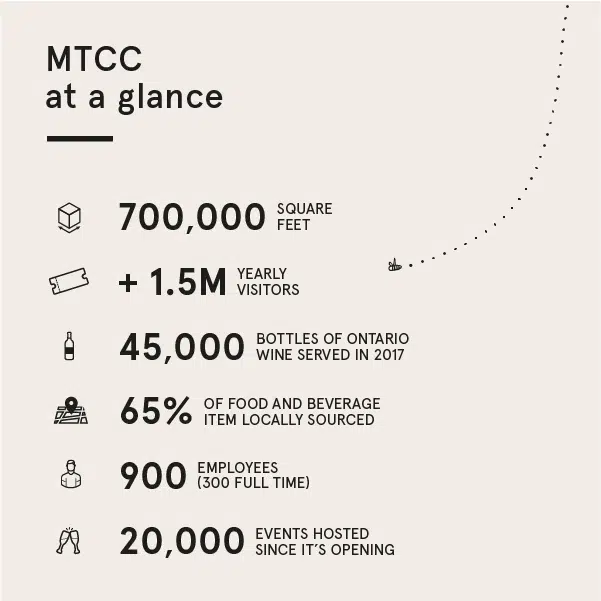
For the MTCC team, sustainability is not just about reducing negative impacts. It is about adding value and giving back.
“It’s a nice thing to cut down and reduce, but you also have to share and give back to your community. You have to give more. That’s how we’re going to have a real impact on our environment.”
— Gabriel Shifferaw, Sustainability Coordinator, MTCC
Today, alongside philanthropic initiatives, mentorship programs, and scholarships, the MTCC also offers something unique: six thriving hives nestled into its rooftop gardens.
Location, location, location
Toronto is Canada’s largest city and the fourth most populous in North America, making it a perfect incubator for urban sustainability projects. Located at the centre of it all, the MTCC benefits from constant activity, easy transit, and a dense urban fabric.
For the bees, the location is just as valuable. On the MTCC’s seven acres of green rooftop space, pollinators thrive among native flowers and the Chef’s Garden, which first inspired the decision to install hives.
“It’s an entire ecosystem, really,” Shifferaw explains. “We needed the hives to produce enough and make the gardens beneficial and self-sufficient. By inviting people to free workshops, telling them that the food they’re eating was produced on their rooftop, and that we have all of these veggies thanks to pollinators, we really get to inform and educate.”
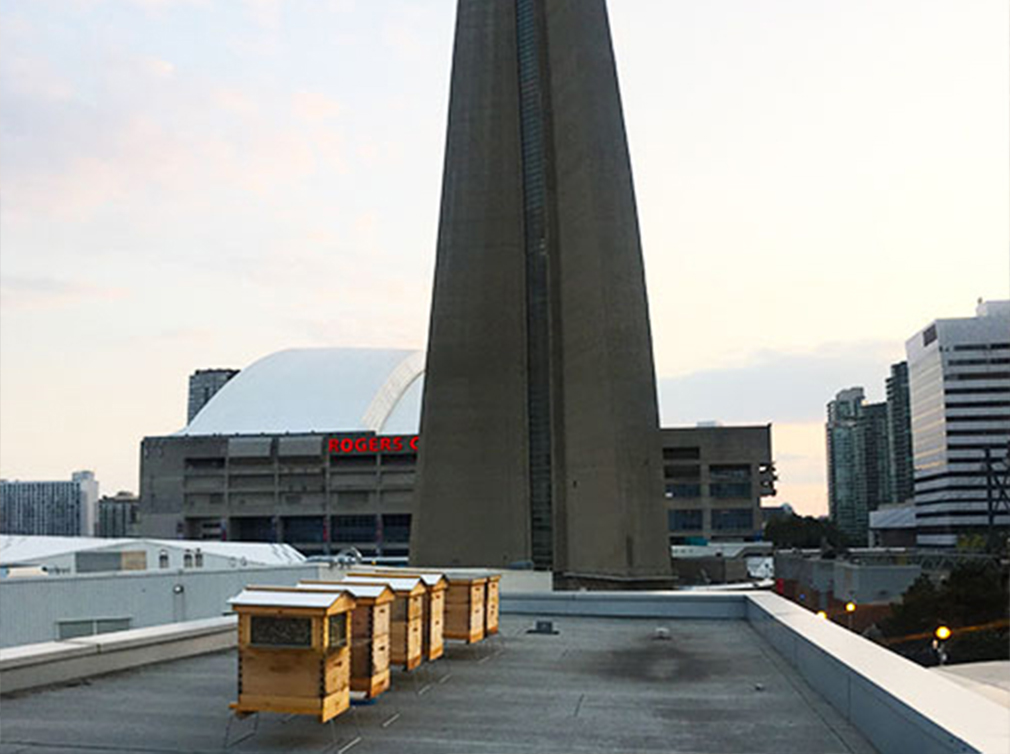
The result is a cycle that benefits everyone. Award-winning chefs season dishes with rooftop herbs and produce. Visitors learn about pollinators through workshops and large educational decals. And guests riding the elevators even pass a hive positioned for a front-row view of bees at work against the city skyline.
All hands on deck
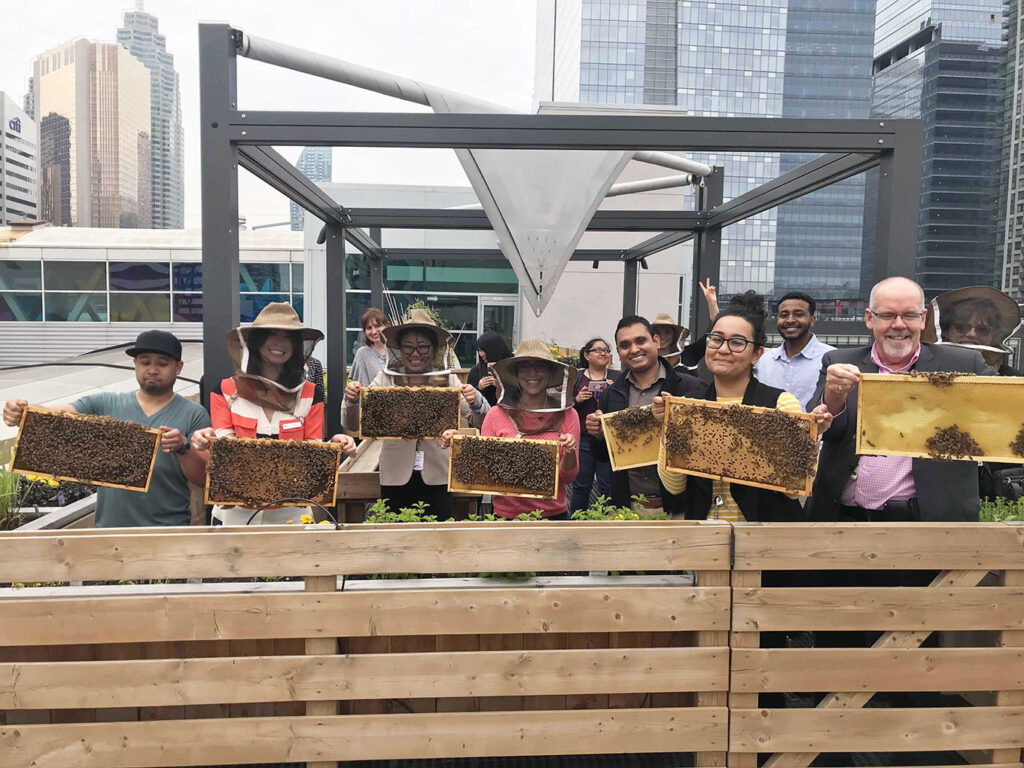
Education is a core part of the MTCC’s sustainability philosophy. Through its partnership with Alvéole, employees are encouraged to take part in workshops, honey extractions, and maintenance visits. Every visit draws a curious crowd of staff eager to learn more about bees and their role in the environment.
For Shifferaw, that bigger picture is always the goal: connecting people with nature in a way that inspires action.
So much more than honey
The six hives produce about 800 jars of raw, branded honey each year. These jars make their way to restaurants, employees, chefs, and VIPs, but the real impact goes much further.
Since launching its sustainability and education programs, the MTCC has seen a measurable boost in employee morale and pride. The organization now holds a Great Place to Work certification with a 98% employee satisfaction rating, thanks in part to programs that make employees feel connected to the mission.
The hives also contribute to the bottom line. They attract visitors, supply fresh produce to the kitchen, reduce transportation costs, and help the MTCC lower its carbon footprint by maintaining a thriving rooftop ecosystem.
“In the industry, people talk a lot about our garden and hives. They come to see the impact the bees have on our garden, and we share all of the educational material with them. Usually, they leave hoping to bring the project to their city.”
Leading a shift in the industry
For Shifferaw, sustainability is more than a trend. It is an opportunity for organizations to rethink how they engage with their communities.
“The major shift in the industry is that clients begin to understand the purchasing power they have. When you make intentional choices, you can give your money to an organization you trust that is doing their best for the environment and the local community. We’re not just doing this for our convention centre, but because we care.”
That awareness is exactly what drives Alvéole partnerships forward.
“I was super impressed by the ownership of the project and the initiative Alvéole took to showcase it,” Shifferaw adds. “It’s a point of pride for them and they’re very vocal about sharing everything about the hives. They really do it for the education side of it.”