

What it actually takes to make tenants want to stay

Everyone in commercial real estate is talking about tenant experience. Not everyone is doing it well.
The gap between the two came up early in a recent conversation with Allie Block, Director of Community and Marketing at Experience By Industrious and it's a gap worth taking seriously. Allie spent over a decade at Jamestown, including years working on Chelsea Market, before bringing those learnings to Industrious, where she oversees experience strategy across the portfolio. She's seen what good looks like, and she's seen what gets mistaken for it.
In this interview, Allie answered nine questions about experience, engagement, and why tenants actually stay. Here's what came out of it.
1. An events calendar is not an experience strategy.
Most buildings, Allie argues, aren't bad at experience; they're just operating without a real philosophy behind it. Programming (yoga classes, pop-ups, food trucks) isn't the problem. Treating programming as the whole strategy is.
"The gap is that a lot of buildings are still thinking about this in terms of isolated activations instead of trying to develop a cohesive operating philosophy."
Experience is hospitality, operations, technology, design, amenities. All of it shaping how people feel in a building on an ordinary Tuesday. A single activation can be great. But it can't do the work of a coherent strategy.
2. The business case for experience runs through retention, not amenities.
When faced with a skeptical CFO (experience budget, no clear return), Allie doesn't lead with tenant satisfaction scores. She leads with turnover.
Losing good people is one of the most expensive things a company can deal with. It slows teams, erodes culture, and damages performance long before it shows up on any spreadsheet. Workplace experience, at its best, helps companies attract and keep talent, and gives people environments where they can actually perform. Buildings that are winning today, she says, are the ones actively helping their tenants do better work. That's a different value proposition than a rooftop event.
3. Free food creates attendance. It doesn't create community.
When asked what well-meaning property teams get wrong, Allie's answer was specific: the over-reliance on food and giveaways as a community strategy.
"It doesn't fall flat, but it also doesn't really create meaningful connection. If every interaction is so transactional... they leave without building any sort of meaningful relationship to the building or to one another."
Free coffee and quarterly lunches have a place. People show up, there's goodwill, it's fine. But showing up for free food is not the same as feeling connected to a place. The community strategies that actually work build familiarity and trust through repeated, intentional interactions over time. Low-lift moments can be part of the mix. The mistake is making them the whole thing.
4. The buildings people talk about have an identity.
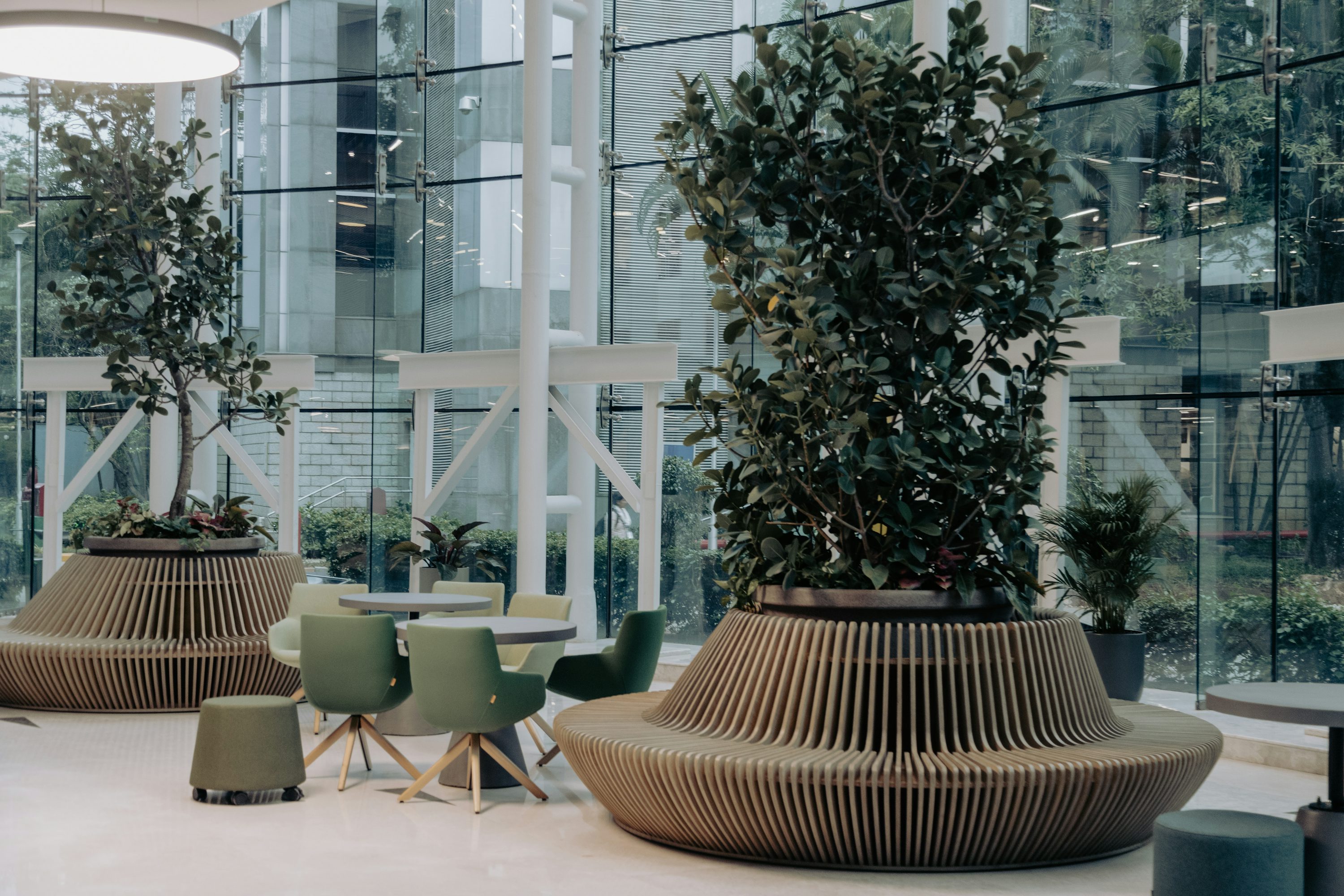
There's a meaningful difference between a building with amenities and a building with a sense of place. The best ones, Allie says, feel immediately distinct. Walk in and the energy, the values, the kind of tenant it's designed for are all legible. Identity shows up in everything: hospitality style, programming, tenant mix, design details, the coffee program.
When that coherence exists, something shifts in how tenants talk about where they work. Instead of "the office," it becomes "my building." That language change is small but telling. It's the point at which people feel genuinely attached, rather than just housed.
5. By renewal time, it's already too late to start paying attention.
Renewals, Allie points out, aren't hinge moments. They're the result of thousands of smaller ones. If a team is only starting to ask whether tenants are happy when the lease is coming up for discussion, the window has already passed.
What Industrious does instead: community managers track how tenants are actually using the building (which amenities, which teams, how frequently) and keep that data flowing to asset managers and leasing teams. By the time a renewal conversation starts, the team can walk in with concrete information rather than a gut feeling. Something like: 80% of your employees are using the conferencing center at least two days a week. That data makes the case for staying in a way that no amount of goodwill can replicate.
6. A great experience works for the introvert too.
Not every tenant is looking for community. Some people come to work to focus, and a good experience strategy has to account for that.
Allie's framing: a workday is made up of hundreds of small moments: how you're greeted at the door, how easy it is to book a room, whether there's a quiet space when you need one. Good placemaking isn't about pushing people into social situations. It's about creating an environment where everyone feels supported in whatever kind of day they need to have, social or heads-down.
7. Budget constraints are often a prioritization problem in disguise.
For property teams working with limited resources, Allie's reframe is useful: most of the time, it's less a budget issue than a question of where attention is going.
The highest-impact improvements in workplace experience are often operational, not capital. Better hospitality training, cleaner arrival moments, stronger day-to-day communication, smarter local partnerships, making better use of spaces that already exist. The in-between moments, the ones that happen every single day, tend to matter more than the big event or the shiny new amenity.
8. Healthy ecosystems don't try to sustain themselves in isolation.
The closing question (what's the one thing buildings get wrong that nature figured out long ago) landed somewhere unexpected.
"Successful, healthy, abundant ecosystems are never self-containing things. Too many buildings only think about the square footage inside their property lines and forget that the surrounding neighborhood is part of the tenant experience too."
The coffee shop on the corner, the park nearby, the local businesses down the block. All of it is part of how people experience coming to work every day. The buildings that understand this look outward, not just inward. They invest in the ecosystem around them because a thriving neighborhood makes the building itself more valuable. Chelsea Market is Allie's reference point, and it's apt. It works because the whole surrounding context works.
A building that ignores its surroundings is trying to be a closed system. Ecosystems don't work that way. Neither do great buildings.
The takeaway
Across nine questions, one idea holds: experience is not what gets activated. It's how the whole environment is designed to function, day in and day out. Not the event on the calendar, but the culture underneath it.
For teams thinking seriously about retention, the shift worth making is from programming to philosophy. From isolated moments to a coherent operating approach that makes tenants feel, genuinely and consistently, like the building is working for them.
The ones that get that right don't just fill space. They give tenants a reason to stay.

.png)