

The essential guide to ESG compliance in commercial real estate

ESG compliance has become the price of entry for commercial real estate owners who want to attract institutional investors and premium tenants. What started as a voluntary framework for socially conscious investing is now a regulatory reality, with mandatory reporting requirements expanding across North America and Europe.
This guide breaks down what ESG compliance actually means for property owners, which regulations apply to your portfolio, and practical steps for building a compliance program that delivers both environmental impact and business value.
What Is ESG compliance
ESG compliance means meeting environmental, social, and governance standards through tracking, reporting, and integrating sustainable practices into daily operations. And yes, ESG does fall under corporate governance; governance is literally the "G" in ESG. But here's the thing: ESG as a whole goes far beyond traditional governance concerns. It provides a framework for companies to assess and manage their environmental footprint and social impact alongside board structure and ethics.
The three pillars work together:
- Environmental: Carbon emissions, energy efficiency, waste management, water usage, biodiversity.
- Social: Fair labor practices, tenant wellness, community engagement, diversity initiatives.
- Governance: Ethical business conduct, board diversity, executive accountability, transparent reporting.
So what makes ESG compliance different from just "being sustainable"? Accountability. A company might voluntarily plant trees or switch to LED lighting. ESG compliance, on the other hand, involves formal commitments to stakeholders such as investors, regulators, and tenants, with measurable outcomes and regular reporting. It is the difference between saying you care about the environment and proving it with data.
Why ESG compliance matters in commercial real estate
Regulatory adherence and risk mitigation
ESG regulations are changing fast across North America and Europe. Properties that fall behind face legal penalties, reputational hits, and operational headaches. Staying ahead of regulatory requirements protects your portfolio from fines while positioning you as a responsible player in the market.
Investor confidence and asset value
Institutional investors increasingly ask for ESG documentation before writing checks. ESG compliant properties attract a broader pool of capital and can command premium valuations. The connection between strong ESG credentials and long-term asset performance has become difficult to ignore.
Tenant attraction and retention
Modern tenants, especially corporate ones, prefer buildings that walk the sustainability talk, with over 70% of corporate tenants now requiring green building certifications as part of their leasing criteria. Nature-based amenities, wellness features, and transparent environmental practices have become real differentiators. Satisfied tenants renew leases, and sustainability compliance connects directly to that satisfaction.
Green building certifications and credits
ESG compliance programs help earn certifications like LEED, BREEAM, WELL, and Fitwel. Third-party validations provide credible proof of your efforts and can contribute to higher rental premiums.

Example of building LEED certification plaque in lobby of a commercial real estate building.
Competitive advantage in the market
In a crowded commercial real estate landscape, ESG implementation sets properties apart. Buildings with robust sustainability programs tend to attract premium tenants and experience lower vacancy rates.
Key ESG regulations and reporting requirements
Figuring out which regulations apply to your portfolio is the first step. Here's a breakdown of the major frameworks affecting commercial real estate today.
Corporate Sustainability Reporting Directive
The CSRD is the EU's mandatory ESG reporting framework, affecting around 50,000 companies. It applies to companies operating in or doing business with Europe and requires comprehensive disclosure across all three ESG pillars. If you have European operations or investors, this one's on your radar.
SEC Climate Disclosure Rules
The U.S. Securities and Exchange Commission has introduced climate-related disclosure requirements for publicly traded companies, including REITs. The focus is primarily on climate risks and emissions data.
Task Force on Climate-Related Financial Disclosures
TCFD is technically voluntary, yet it has become an expected standard globally. The framework covers four areas: governance, strategy, risk management, and metrics. Many investors now treat TCFD alignment as a baseline expectation rather than a nice-to-have.
Modern slavery and supply chain regulations
Social compliance extends to supply chains for building materials and service providers. Due diligence on labor practices throughout your supply chain faces increasing scrutiny from regulators and investors alike.
Regional and local environmental mandates
Building performance standards, energy benchmarking laws, and emissions regulations vary by city and state. New York's Local Law 97, for example, imposes specific carbon limits on commercial buildings. Similar regulations exist in Boston, Washington D.C., and other major markets.
RegulationGeographic ScopePrimary FocusMandatory vs. VoluntaryCSRDEUComprehensive ESGMandatorySEC Climate RulesUSClimate/EnvironmentalMandatoryTCFDGlobalClimate RiskVoluntary/RecommendedLocal Laws (e.g., LL97)City/StateBuilding PerformanceMandatory
ESG frameworks and standards for commercial buildings
Regulations are legal requirements. Frameworks, on the other hand, are voluntary reporting structures that guide how to disclose ESG data. Think of frameworks as the language you use to tell your ESG story to investors and stakeholders.
Global Reporting Initiative
GRI is the most widely used sustainability reporting framework worldwide. Its modular structure lets companies report on specific ESG topics relevant to their operations without tackling everything at once.
Sustainability Accounting Standards Board
SASB provides industry-specific standards, including dedicated real estate sector guidelines. The focus is on financially material ESG factors, the issues most likely to affect your bottom line.
CDP environmental disclosure system
Formerly called the Carbon Disclosure Project, CDP provides a platform for environmental data disclosure to investors. Many institutional investors use CDP scores when evaluating potential investments.
UN Sustainable Development Goals
The SDGs offer a global framework connecting commercial real estate ESG goals to broader societal objectives. Goals related to sustainable cities, climate action, and biodiversity are particularly relevant for property owners looking to align with international priorities.
Green building rating systems
LEED, BREEAM, WELL, and Fitwel provide third-party validation of sustainability efforts. Certifications align with ESG compliance and offer recognizable credentials for marketing and investor relations.
How to become ESG compliant in commercial real estate
1. Assess your ESG regulatory requirements
Start by identifying which regulations apply based on your location, company size, and investor requirements. A gap analysis, comparing current practices against applicable standards, reveals where to focus first.
2. Develop an ESG compliance program and goals
Create a formal policy with measurable objectives, assigned responsibilities, and realistic timelines. Vague commitments won't satisfy regulators or investors. Specificity matters here.
3. Implement data collection and reporting systems
ESG reporting requires reliable data infrastructure. Key areas include energy monitoring, emissions tracking, water usage, waste diversion, and increasingly, biodiversity metrics. You can't manage what you don't measure, and you can't report what you haven't tracked.
4. Integrate ESG Into building operations and governance
ESG works best when embedded into core strategy rather than treated as a side project. Consider establishing a sustainability committee or assigning board-level oversight for ESG initiatives. When ESG lives in a silo, it tends to stall.
5. Engage tenants and communicate ESG efforts
Stakeholder engagement is essential for success. Tenant education programs, sustainability events, and transparent communication build trust and encourage participation. Nature-based programs like urban beekeeping create memorable touchpoints that make sustainability tangible for building occupants.
6. Monitor regulatory changes and conduct audits
Managing sustainability legal compliance means staying current with evolving requirements. Regular self-assessments and third-party audits help identify gaps before they become problems. The regulatory landscape shifts frequently, so ongoing monitoring is part of the job.
Common ESG compliance challenges and how to overcome them
Navigating complex and evolving ESG regulations
Multiple overlapping frameworks create confusion. The practical approach? Start with the regulations most relevant to your portfolio and build from there. You don't have to tackle everything simultaneously.
Managing sustainability data across properties
Data collection across multiple buildings presents logistical challenges. Centralized systems and consistent measurement protocols make aggregation and reporting manageable. Without standardization, comparing performance across properties becomes nearly impossible.
Overcoming limited ESG expertise
Many property teams face knowledge gaps in ESG. Partnering with specialized providers, whether for biodiversity programs, energy management, or reporting software, fills gaps efficiently without requiring you to become an expert in everything.
Balancing cost constraints with compliance goals
Budget concerns are real. However, framing ESG investments as long-term value drivers rather than pure costs helps secure buy-in. Many ESG initiatives deliver measurable returns through reduced operating costs and improved tenant retention.
Avoiding greenwashing and demonstrating authentic impact
Superficial ESG claims damage credibility. Verifiable data, third-party certifications, and measurable outcomes matter more than marketing language. Programs that generate real environmental data, like biodiversity monitoring through pollinator habitats, provide credible evidence of impact that stakeholders can trust.
Nature-based solutions for environmental compliance
Nature-based solutions offer an accessible, tangible approach to meeting environmental ESG criteria. Rather than relying solely on technology or operational changes, nature-based approaches leverage natural processes to address environmental challenges while creating meaningful experiences for building occupants.
Biodiversity programs and pollinator habitats
Urban beekeeping and pollinator gardens contribute to biodiversity metrics while generating measurable environmental data. Pollinator programs support compliance reporting and create engaging tenant experiences at the same time. The data collected from hive health and pollinator activity provides documentation for ESG reports.

Alveole's pollinator habitats measure biodiversity metrics and environmental data.
Green Roofs and Living Walls
Vegetated building features support multiple environmental goals: stormwater management, urban heat reduction, and habitat creation. Green roofs also contribute to tenant wellness and building aesthetics, addressing both environmental and social ESG pillars.
Environmental impact monitoring and data collection
Tracking biodiversity outcomes provides compliance-ready data for ESG reporting. Programs that include environmental monitoring deliver both ecological benefits and documentation for stakeholders. This dual value makes nature-based solutions particularly attractive for properties seeking authentic ESG credentials.
Interested in nature-based ESG solutions that include impact monitoring?
Book a demo to learn how Alvéole helps commercial properties achieve environmental compliance, create meaningful tenant experiences and help report on ESG compliance.
ESG compliance solutions and technology
ESG reporting and regulatory compliance software
Software platforms automate data aggregation, framework alignment, and report generation. Automation reduces manual effort and improves accuracy, especially for portfolios with multiple properties.
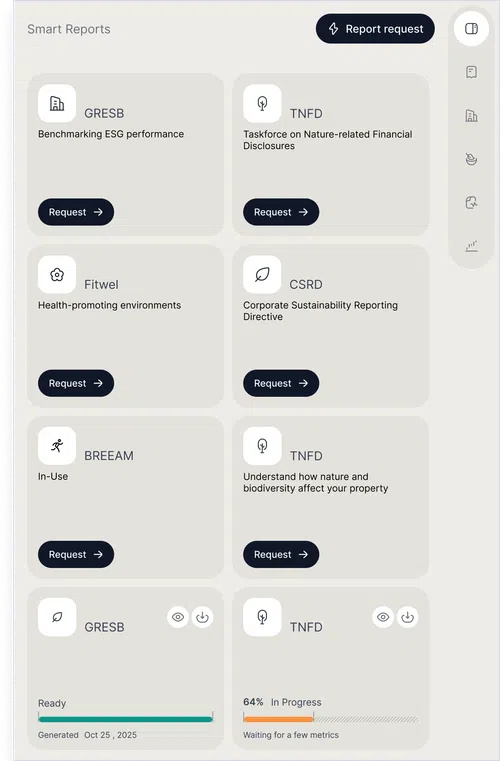
Pictured above: Aura by Alveole is Ai-Powered Nature Intelligence for Commercial Real Estate
Environmental data collection systems
Sensors, meters, and monitoring tools track energy, water, waste, and emissions across properties. Real-time data enables proactive management and accurate reporting rather than end-of-year scrambles to compile information.
Biodiversity monitoring technology
Tools for measuring ecological health and biodiversity impacts represent a growing category of ESG compliance solutions. As biodiversity metrics gain prominence in ESG frameworks, monitoring technology becomes increasingly valuable for demonstrating environmental impact. Biodiversity metrics gain prominence in ESG frameworks, monitoring technology becomes increasingly valuable for demonstrating environmental impact.
Future trends in ESG and sustainability compliance
Stricter global regulatory requirements
What's voluntary today often becomes mandatory tomorrow. The trajectory points toward more comprehensive disclosure requirements across more jurisdictions. Preparing now positions your portfolio ahead of competitors who wait until regulations force their hand.
Increased focus on biodiversity metrics
Beyond carbon, biodiversity is emerging as a critical ESG factor. The Taskforce on Nature-related Financial Disclosures (TNFD) signals growing emphasis on ecological impacts, with biodiversity features able to increase property values by 5-15%. Properties with existing biodiversity programs will have a head start as reporting requirements expand.
Integration of ESG into core real estate strategy
The industry is shifting from treating ESG as a compliance checkbox to recognizing it as a fundamental business strategy. Properties that embrace this shift early capture benefits that late adopters miss.
How to build an ESG compliant property portfolio
ESG compliance in commercial real estate connects regulatory requirements with investor expectations and tenant preferences. The journey starts with understanding your obligations, implementing systematic data collection, and finding authentic ways to demonstrate environmental and social impact.
Nature-based programs offer an accessible entry point. Urban beekeeping, pollinator gardens, and biodiversity monitoring deliver measurable environmental data, tenant engagement opportunities, and genuine ecological benefits. Whether you're beginning your ESG journey or enhancing existing programs, tangible solutions exist that serve both compliance goals and community building.
FAQs about ESG compliance in commercial real estate
Does ESG fall under corporate governance?
Governance is one of the three ESG pillars, so yes, but ESG encompasses environmental and social factors alongside governance. Corporate governance specifically addresses board structure, ethics, and decision-making transparency within the broader ESG framework.
What are the four pillars of ESG?
ESG traditionally has three pillars: Environmental, Social, and Governance, not four. Some frameworks add a fourth element or break governance into subcategories, but the standard model remains three interconnected pillars.
Is ESG reporting mandatory for commercial real estate companies?
It depends on company size, location, and public trading status. Regulations like CSRD in Europe and SEC rules in the US are making disclosure requirements increasingly common for larger real estate organizations. Smaller private companies may face fewer mandatory requirements but often report voluntarily to satisfy investor expectations.
How do green building certifications contribute to ESG compliance?
Certifications like LEED and BREEAM provide third-party validation of environmental performance. They support ESG reporting with credible, standardized metrics that satisfy investor and regulatory requirements while offering marketing benefits.
What environmental metrics should commercial buildings track for ESG reporting?
Key metrics include energy consumption, greenhouse gas emissions (Scope 1, 2, and 3), water usage, waste diversion rates, and increasingly, biodiversity indicators. Specific requirements depend on applicable regulations and chosen reporting frameworks.


_b72540c5.jpeg)