

Best practices for commercial building pest management in 2026

In our recent webinar hosted by Alex Mclean, co‑founder & CEO of Alvéole, and featuring expert entomologist Cam Lay, participants explored how CRE managers can reduce pesticide risks, comply with evolving regulations, and even leverage monitoring to earn green building certifications. This article summarizes this conversation.
The business case for safe pesticide management
Commercial real estate properties can significantly reduce pesticide risks and enhance building value through integrated pest management (IPM), strategic partnerships with qualified experts, and innovative monitoring solutions that demonstrate compliance and environmental stewardship to tenants.
Safe pesticide management in commercial real estate serves four critical business objectives:
Regulatory compliance
Pesticide applications are heavily regulated at federal, state, and local levels. Non-compliance can result in significant penalties and liability issues. As Lay emphasized, regulations vary dramatically by state - from South Carolina's "badge and gun" enforcement approach to Maine's focus on agricultural and environmental cases.
Tenant and environmental health
Urban commercial buildings use more pesticides than many property managers realize - from window cleaning chemicals to treatments for weeds, spiders, and rodents. These applications can pose real health risks to tenants, particularly when applied incorrectly indoors.
Property value enhancement
Green building certifications increasingly include integrated pest management requirements, offering automatic points toward certifications. Buildings that demonstrate safe practices through actual data and reporting can attract and retain quality tenants while commanding premium rents.
Cost savings and ROI
The most expensive elements of a landscaping service are typically labor and pesticide costs. By limiting pesticide use and opting for more natural options, you can actually save money on your landscaping services. All while maintaining a beautiful and biodiverse property.
Integrated pest management (IPM) is a cost-effective and environmentally friendly approach to pest management. Opting for sustainable practices can reduce the need for pricier chemical treatments, leading to lower landscaping costs.
Switching to more sustainable landscaping practices can also reduce your long-term maintenance costs. Opting for native plants, for example, is a way to ensure your greenspace thrives with minimal intervention. These plants are adapted to your environment, making them hardier and less prone to pests and diseases.
The financial cost of inaction
The financial implications of inadequate pesticide monitoring extend far beyond potential lawsuit settlements. Insurance carriers are increasingly scrutinizing environmental liability exposures, with some providers raising premiums for properties without documented pesticide management protocols.
Tenant turnover represents perhaps the most significant hidden cost. When tenants relocate due to environmental health concerns, property managers face vacancy periods, leasing commissions, and tenant improvement costs that can easily exceed $100,000 for commercial spaces. The reputational impact can make subsequent leasing efforts more challenging and expensive.
Over-application of pesticides, common when monitoring systems aren't in place, creates unnecessary costs while potentially violating regulations. Properties with robust monitoring systems typically reduce pesticide-related expenses by 25-30% through more targeted, efficient applications.
Consider the broader financial ecosystem: properties with documented environmental violations often face challenges securing favorable financing terms, as lenders increasingly factor environmental risks into their underwriting processes.
What pesticides are used in commercial buildings?
Not all pesticides pose equal risks, and understanding what's actually used in commercial buildings helps inform better management decisions:
The common ones in commercial buildings:
- Herbicides for landscaping and grounds maintenance
- Insecticides for interior pest control (often misapplied at baseboards)
- Rodenticides around dumpsters and entry points (should be in locked, secured bait stations)
- Disinfectants (technically pesticides with EPA registration numbers)
The rarely used in commercial settings:
- Fumigants (except for specific termite issues in wooden structures)
- Fungicides (except as disinfectants for mold prevention)
Lay noted that most violation cases he investigated involved insecticides used improperly indoors - highlighting the importance of proper application techniques and contractor oversight.
Who makes the rules?
The regulatory framework operates on a multi-tiered system that property managers must navigate:
On the federal level
Sets minimum performance standards through EPA registration and labeling requirements. Product labels serve as "exhaustively researched instruction manuals that have the force of law."
On the state level
States can implement stricter standards based on local environmental conditions and cultural tolerance. For example:
- South Carolina focuses heavily on structural pest control with law enforcement-style inspectors
- Maine emphasizes agricultural and environmental cases
- Montana sees minimal structural pest control issues due to different agricultural patterns
The goal isn't "safety" in absolute terms, but rather ensuring risks don't exceed what "the average person would find unreasonable" when products are used according to label instructions.
Why integrated pest management is the best approach
IPM represents the most effective approach for commercial real estate, translating agricultural pest management principles to building environments. The University of California's IPM program provides extensive resources for understanding these principles.
The Core IPM Principles
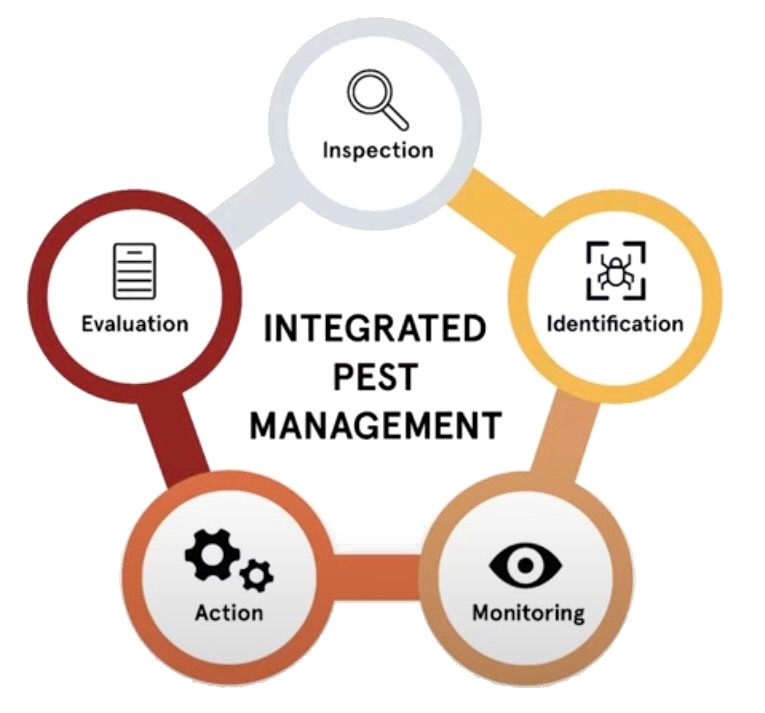
- Inspection and Identification: Determine exactly what pest species you're dealing with and why they're present
- Environmental Modification: Eliminate conditions that attract or sustain pests
- Exclusion: Seal entry points and remove access to food, water, and shelter
- Targeted Treatment: Use the least toxic effective method only when necessary
- Monitoring: Track results and adjust strategies accordingly
Why IPM works for commercial buildings
- Limited resources compared to agricultural settings make pest problems more concentrated and manageable
- Most issues stem from human factors (food in desks, messy break rooms) that can be addressed culturally
- Exclusion methods like caulking and sealing provide permanent, cost-effective solutions
Lay emphasized that many pest problems can be solved without any chemical treatment simply by eliminating the conditions that support pest populations.
How technology is changing pesticide monitoring
Traditional pest management often lacks concrete data to demonstrate effectiveness or safety. Alvéole's pesticide monitoring solution using bees as "flying dust mops" represents an innovative approach to gathering environmental data.
How Alvéole collects data
- Monitoring strips are installed inside rooftop beehives.
- Bees forage within a 2-3 mile radius, visiting plants and water sources.
- The strips collect environmental particles, which are then analyzed for pesticide presence.
- The analysis results are compiled into reports that can be shared with tenants to showcase environmental responsibility.
This type of monitoring addresses the growing tenant demand for transparency and environmental responsibility while providing property managers with concrete data to guide decision-making.
A practical path to implementation in your commercial building
Establishing effective pesticide monitoring begins with comprehensive baseline assessment. This involves cataloging current pesticide applications, identifying all contractors involved in landscape maintenance, and establishing clear reporting protocols.
The first step requires updating landscaping contracts to include specific pesticide reporting requirements. Contractors should provide detailed application logs, including chemical names, concentrations, application dates, and weather conditions. This documentation creates the accountability framework necessary for effective monitoring.
Technology solutions can streamline the monitoring process. Rapid-test monitoring systems allow real-time detection of pesticide residues, providing immediate feedback on application practices. Alvéole's pesticide monitoring solution, for example, offers comprehensive rapid-test capabilities that typically cost around $1,500 but can prevent violations that result in fines exceeding $25,000.

Policy development represents the cornerstone of effective pesticide management. Comprehensive policies should outline approved chemicals, application protocols, notification procedures, and emergency response plans. These policies must be communicated to all relevant stakeholders, including tenants, contractors, and property management staff.
Training programs ensure consistent implementation across all team members. Property management staff should understand pesticide regulations, health risks, and monitoring procedures. Regular training updates help maintain compliance as regulations evolve.
Better options and how to do it right
Beyond traditional IPM, several approaches can reduce pesticide reliance.
Lower-risk products
- Essential oil-based treatments (25b products)
- Generally Recognized as Safe (GRAS) alternatives
- Targeted baits in secure stations rather than broadcast spraying
Cultural and design changes
- Native landscaping that requires fewer inputs
- "Pardon the weeds, we're feeding the bees" campaigns that transform maintenance into marketing
- Improved building maintenance to eliminate pest entry points
- Enhanced cleaning protocols in common areas
Mechanical controls
- Physical barriers and exclusion methods
- Improved sealing around windows and entry points
- Regular inspection and maintenance schedules
How to choose the right partner
The pest control industry has evolved significantly, with many companies now employing Master's and PhD-level entomologists who focus on integrated management rather than chemical applications. When selecting contractors:
What to look for
- Companies with qualified entomologists on staff
- Emphasis on inspection, identification, and environmental modification
- Transparent reporting and monitoring practices
- Willingness to discuss IPM approaches and alternatives
Red flags to watch out
- Contractors who default to chemical treatments without investigation
- Lack of proper licensing or professional presentation
- Reluctance to provide detailed treatment plans or ingredient information
What’s next for pest control in commercial buildings
The industry is moving toward more sophisticated, data-driven approaches that balance effectiveness with environmental responsibility. Property managers who proactively adopt these practices position themselves advantageously for:
- Evolving tenant expectations around environmental health
- Increasingly stringent regulatory requirements
- Growing emphasis on sustainability in building certifications
- Competitive advantages in tenant attraction and retention
As Lay noted, "we are working on the last few percentage points of risk" with modern pest management practices, using better products and methods than were available decades ago. The challenge now is communicating these improvements effectively while continuing to innovate.
Key takeaways
- IPM is business-smart: Integrated pest management reduces costs, risks, and regulatory exposure while enhancing property value
- Data drives decisions: Monitoring solutions provide concrete evidence of environmental stewardship that tenants increasingly demand
- Expertise matters: Partner with qualified professionals who understand both pest biology and regulatory requirements
- Culture change creates value: Environmental initiatives can become marketing advantages when properly communicated
- Proactive beats reactive: Addressing pest issues through design and maintenance prevents larger problems and chemical dependence
The commercial real estate industry has an opportunity to lead in environmental stewardship while creating tangible business value. By adopting comprehensive pest management strategies, property managers can meet tenant expectations, ensure regulatory compliance, and differentiate their buildings in an increasingly competitive market.
For more information about innovative pest monitoring solutions and upcoming webinars on green building certifications, visit Alvéole's resources page.
Want to learn more about how Alveole's urban beekeeping programs can support your pest management strategy? Contact us to discover how hives can create buzz around your sustainability initiatives while fostering genuine community connections.
.png)
.jpg)