

Submitting GRESB this week? Five biodiversity checks before you hit submit

The deadline is close. If this is your first GRESB submission, the biodiversity questions are an easy place to lose points or leave a weak answer behind. They are also one of the few sections where a few minutes of attention right now can change your result.
Here are five things to check before you submit. None of them take long. All of them are easy to miss when you are rushing to the deadline.
1. Answer the nature strategy question, even though it earns no points
GRESB has a question that asks whether you have a plan for nature and biodiversity. It sits in the management section and is often labelled RM7. In 2026 it is optional and earns no points. That makes it easy to skip.
Answer it anyway. Investors read this section, and GRESB has signalled that nature is moving toward being scored in future cycles. So this is the year to get it right while there is no penalty for learning.
One thing to avoid: a one-line answer that just says yes, we have a plan. Use the space to explain how your plan thinks about a few things. How your buildings rely on nature. How they affect it. What the risks are. Where the opportunities are.
2. Claim biodiversity everywhere it actually scores
The strategy question above earns no points. There is no single biodiversity score that does, and no net habitat gain metric. Instead, biodiversity sits as a selectable option inside several scored indicators, which makes it easy to leave points unclaimed.
In 2026 it counts in a few places. Your environmental policy can name biodiversity and habitat as a covered issue (PO1). Your standing-portfolio risk assessments can flag biodiversity and habitat, scored against the share of the portfolio you cover (RA1). Your tenant fit-out program can include biodiversity and green space, which carries weight this year rather than being reporting only (TC3). Your acquisition due diligence can screen for it (RM4.1).
The thread connecting them is simple. You can only select these honestly if something real sits behind them. A policy that genuinely addresses biodiversity. A risk assessment that actually covers it. A fit-out program that really includes green space. Where that is true, make sure you have ticked the box in every indicator it applies to, not just one.
3. Point to something real, not just a policy
When you explain your nature plan, point to something actually happening at your buildings. Reviewers trust evidence more than promises, and they are asking for it more each year.
If the only thing you can point to is a written policy, your answer is weak. That is worth knowing now, not after you submit. Make a note of it, and treat it as the thing to fix before next year.
4. Make sure your proof clearly belongs to you
Any document you attach as evidence should clearly show that the data is about your buildings or your entity. This sounds obvious, but it is a common reason proof gets discounted.
A general company-wide letter is weaker than a document tied to the specific assets you are reporting on. Before you attach a file, ask whether a reviewer could tell, at a glance, that it applies to you.
5. Check that your answers agree with each other
Your biodiversity answers do not sit alone. Read them next to what you said about tenant engagement and building certifications. A story that holds together across the whole assessment reads stronger than one good section that quietly contradicts another.
This is a five-minute read-through. It catches the small mismatches that make a submission look rushed.
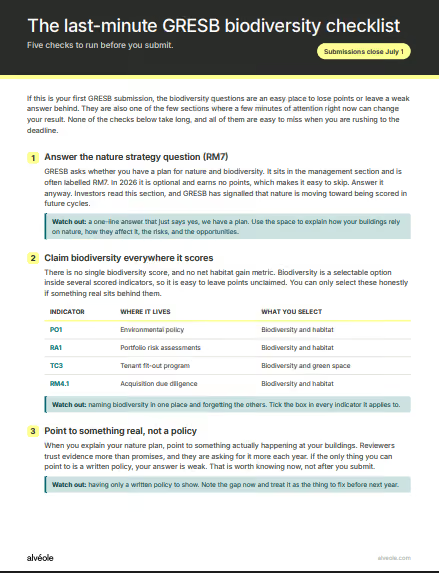
The five checks at a glance
Before next year
If check three stung, the problem is not your writing. It is that you had nothing real to point to. There was no ongoing program at your buildings producing nature data, so the best you could do was describe intent.
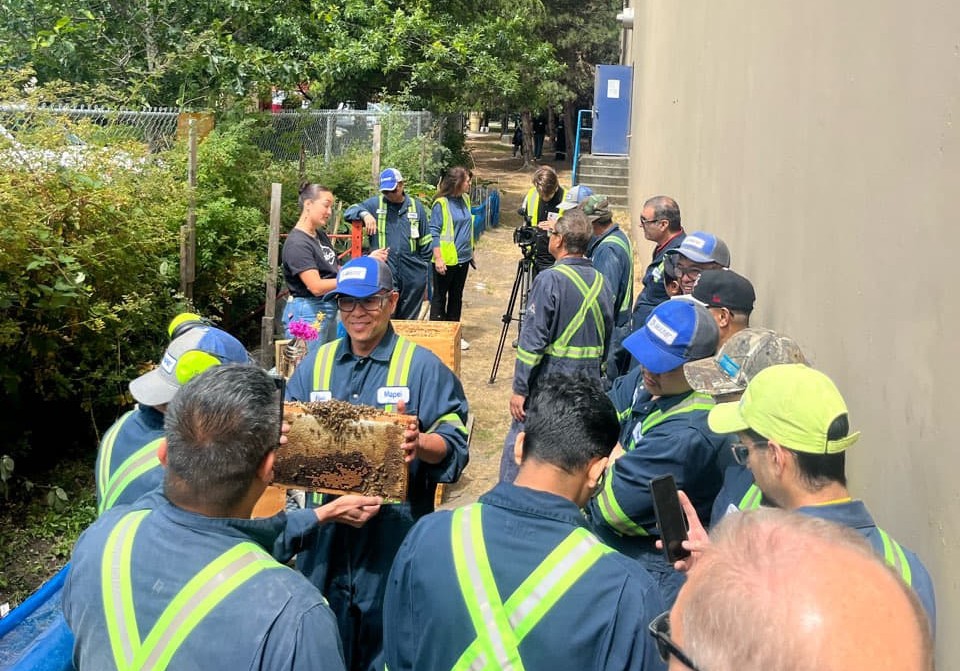
That is the gap to close before the next cycle, when nature moves closer to being scored. A living program at the building, like a managed beehive, produces biodiversity data as a normal part of running. Pollinator diversity, habitat health, and participation trends accumulate on their own, so next year you are pointing to evidence instead of a policy.
You can submit this year with what you have. Just know what to build before you do it again.
Get the checklist
Download the PDF version of this checklist to keep on hand for submission day.
Alvéole is a GRESB partner and solution provider, and our managed programs produce the building-level biodiversity data these submissions increasingly ask for.
_b72540c5.jpeg)