

Tenant programming that counts toward LEED and WELL certification points
Key takeaways
- LEED v5 now explicitly credits tenant programming through its Quality of Life and Ecological Conservation pillars, allocating roughly 25% of total points to quality-of-life credits.
- WELL v2's Mind, Community, and Nourishment concepts directly reward tenant engagement activities like workshops, wellness programming, and food-related events.
- Nature-based programs, including managed beekeeping, pollinator habitats, and biodiversity monitoring, can earn points across both LEED and WELL simultaneously.
- The documentation trail matters as much as the programming itself. Certification reviewers need participation data, outcomes tracking, and program descriptions.
- LEED v5's new Tenant Guidelines prerequisite makes tenant-facing programming a baseline requirement for Core and Shell projects, not a bonus.
The certification landscape has shifted toward tenant programming
You already spend on building systems to hit LEED and WELL targets. Upgraded HVAC, LED retrofits, low-VOC materials. But when the LEED v5 rating system launched on April 28, 2025, it restructured the entire credit system around three pillars: decarbonization (roughly 50% of points), quality of life (roughly 25%), and ecological conservation (roughly 25%). That second pillar changed the math for asset managers.
Quality of life is not about building envelope performance. It is about what happens inside the building, between people and their environment. Tenant programming, the events, education, wellness activities, and nature access you offer occupants, is now a scoreable category.
WELL v2 was already built around occupant health and engagement across its 10 concepts. But LEED v5's shift means both major certification frameworks now reward you for how tenants interact with the building, not just how the building performs on paper.
The numbers back this up. More than 195,000 LEED projects have been certified globally, covering over 29 billion square feet. Meanwhile, 87% of tenants say they want healthy buildings, and green-certified buildings see 10 to 18% higher occupancy rates. Certification is not just a plaque on the wall. It is a competitive asset. And tenant programming is now one of the clearest pathways to earning those green building certification points.
LEED credits that tenant programming can support
LEED v5 organizes credits across several categories. Here is where tenant programming earns or supports points. You can explore the full LEED v5 credit library on the USGBC website.
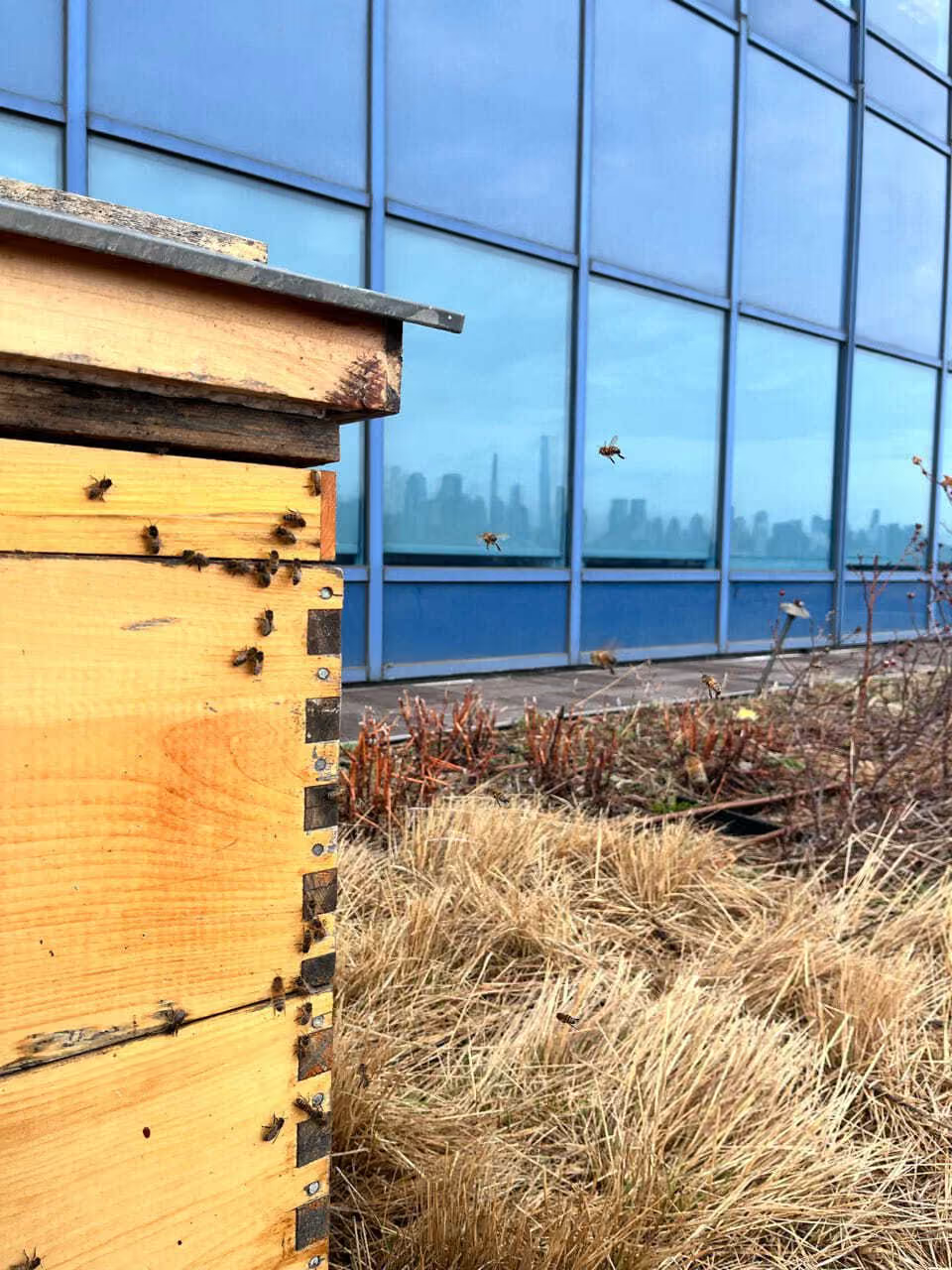
Indoor Environmental Quality (IEQ). The Occupant Experience credit in v5 now covers a full spectrum of comfort factors beyond the daylighting and thermal comfort focus of earlier versions. LEED v5 explicitly formalizes biophilic design, including indoor plantings, water features, and natural materials, as quantifiable requirements within IEQ. If your building offers tenants access to living nature, whether through rooftop beehives, indoor greenery, or pollinator gardens, those elements support this credit. Nature-based amenities are no longer a design afterthought. They are a documented pathway to IEQ points. The LEED v5 changes from v4.1 detail how biophilic design moved from optional to formalized.
Sustainable Sites (SS). This category now integrates credits for biodiverse habitat restoration, accessible outdoor spaces, and heat island reduction. Rooftop beehives, pollinator habitats, and educational gardens that tenants can access and engage with qualify here. The key requirement: projects must demonstrate long-term ecological contribution, not just aesthetics.
Integrative Process, Planning, and Assessments. LEED v5 elevated this from a single credit to a full category with four prerequisites. One of those prerequisites, Tenant Guidelines, applies to Core and Shell projects. It requires a documented tenant engagement strategy. If you manage commercial office or mixed-use assets, this is not optional. You need a plan for how tenants interact with the building's green features, and you need to document it.
Innovation and Project Priorities. LEED offers up to five Innovation credits for exemplary performance or creative approaches that go beyond standard credit requirements. This is where non-traditional tenant programming, such as nature-based engagement, biodiversity education, or on-site food production, can earn additional points. LEED Pilot Credit EQpc123, “Designing with Nature, Biophilic Design for the Indoor Environment,” specifically addresses biophilic design as an Innovation pathway. Asset managers who run structured nature programs already have the activity. The Innovation category gives you the credit framework to formalize it.
LEED ID+C (Interior Design and Construction). For tenant-controlled spaces specifically, LEED ID+C adapts the broader credit structure for leased environments. If your tenants are building out or renovating their spaces, the programming and amenities you provide at the building level can support their certification efforts as well.
WELL concepts where tenant programming earns points
WELL v2 certification scores projects across 10 concepts: Air, Water, Nourishment, Light, Movement, Thermal Comfort, Sound, Materials, Mind, and Community. WELL Platinum requires 80 points with a minimum of 3 points per concept. Four of these concepts are directly supported by tenant programming. You can learn more about how Alvéole's programs map to WELL certification points.
Mind. This concept addresses mental health support, stress reduction, and access to nature. Nature-based programs deliver here. Hands-on beekeeping workshops, outdoor pollinator garden visits, and seasonal engagement events provide tenants with structured opportunities to connect with nature during the workday. These activities support WELL Mind features related to mental health promotion and restorative spaces.
Community. WELL's Community concept rewards civic engagement, health promotion, community building, and stakeholder engagement. Tenant events, educational programming, and participation tracking directly support these features. If you run regular building-wide events that bring tenants together around a shared activity, whether it is a honey harvest, a biodiversity workshop, or a seasonal garden walkthrough, that programming counts. The key is consistent scheduling and documented participation.
Nourishment. Food-related programming, access to healthy food, and food literacy all fall under this concept. Urban beekeeping with on-site honey harvesting provides a tangible food production angle that few other tenant amenities can match. When tenants participate in a harvest event and take home honey labeled with their building's brand, that is a documented food literacy and local food production activity.
Air. While primarily a design credit focused on ventilation and filtration, the Air concept also benefits from nature-based amenities. Pollinator gardens and green roof elements contribute to outdoor air quality around the building. Biophilic elements that bring natural air circulation patterns and living plants into common areas support the broader intent of this concept.
How nature-based programs earn certification credits in practice
Knowing which credits apply is the first step. The second is understanding how specific programming activities generate qualifying documentation for both LEED and WELL submissions. Here is how nature-based programs map to credits in practice.
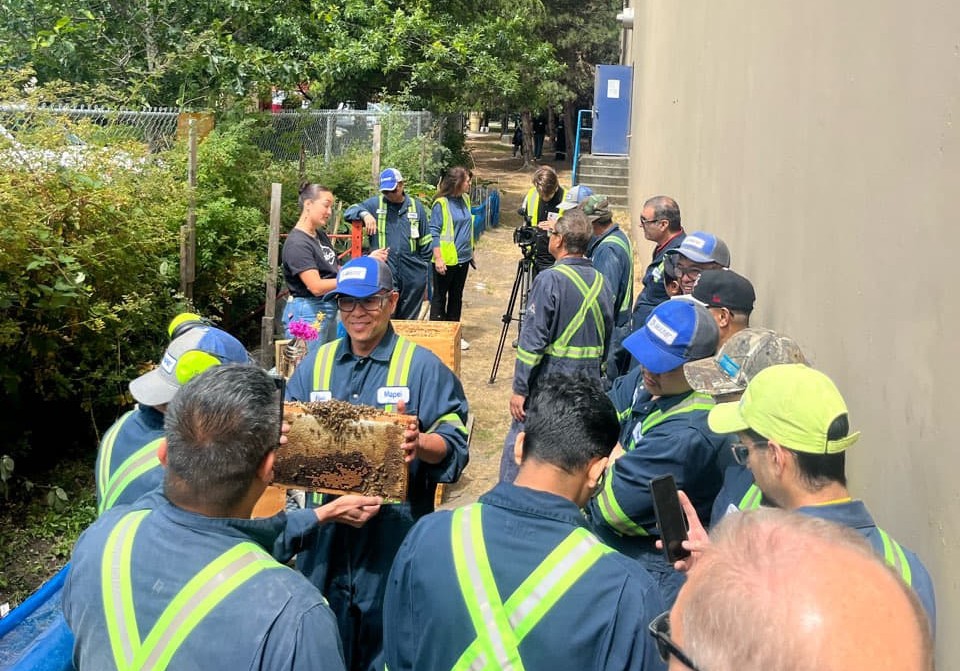
Managed beekeeping events and education. Year-round tenant engagement programming, including hands-on hive inspections, honey harvesting events, and pollinator education workshops, generates participation data that supports WELL Community features. Satisfaction metrics and repeat attendance rates feed WELL Mind. Educational programming that goes beyond standard building amenities supports LEED Innovation credits.
Pollinator habitat installations. Purpose-built habitats for wild pollinators, such as solitary bee homes installed on building exteriors or rooftops, support LEED Sustainable Sites credits for biodiversity and habitat restoration. These installations also feed WELL Mind by providing tenants with visible, accessible connections to nature on-site. The biodiversity integration case for commercial real estate continues to grow as certification frameworks add ecological credits. When habitat data flows automatically into a reporting platform, it eliminates the manual documentation burden.
Biodiversity monitoring. Bioacoustic monitoring devices that capture on-site biodiversity activity around the clock provide the data layer needed for certification documentation. AI-powered species identification cross-referenced with biodiversity databases produces the ecological conservation evidence that LEED v5 credits require. This is the difference between saying “we support biodiversity” and proving it with timestamped, species-level data.
Digital engagement platforms. A centralized platform that tracks event registration, attendance, and tenant participation across your portfolio generates certification-ready reports. The platform exports data formatted for GRESB, TNFD, and LEED/WELL submissions without requiring your team to reformat spreadsheets or compile evidence from multiple sources.
Honey harvesting and food production. On-site honey production supports WELL Nourishment through documented food production and food literacy activities. It also contributes to LEED Innovation credits when framed as a creative approach to on-site food systems. Building-branded honey given to tenants creates a tangible, shareable proof point that certification reviewers can verify.
The documentation that makes certification credits count
Running tenant programs is only half the equation. Asset managers know this: if it is not documented, it did not happen. LEED and WELL reviewers need specific evidence before awarding credits.
What reviewers require. Performance data showing program outcomes over time. Participation records with dates, attendance figures, and engagement metrics. Written program descriptions that explain the activity, its frequency, and its connection to specific credit requirements. Photo and video evidence of programming in action.
Where documentation gaps happen. The most common pitfall is running strong programs without tracking them. A building that hosts monthly tenant events but does not record attendance or collect feedback has the activity but not the evidence. Other gaps include lacking baseline data to show improvement over time and failing to connect program descriptions to specific credit language.
How digital platforms close the gap. Event registration systems that capture sign-ups and check-ins automatically build the participation record. Portfolio-level dashboards that aggregate data across buildings let you report at both the asset and fund level. Platforms that export data pre-formatted for GRESB reporting, TNFD, LEED, and WELL submissions save your team from manual compilation and reduce the risk of formatting errors that delay certification.
Why tenant programming matters more in 2025 and beyond
LEED v5's Tenant Guidelines prerequisite for Core and Shell projects made tenant programming a baseline, not a bonus. If you are pursuing or maintaining LEED certification for a commercial office building, you need a documented tenant engagement strategy. Full stop.
The market is reinforcing this shift. Green-certified buildings command 5 to 8% rental premiums in major markets. GRESB and TNFD reporting frameworks increasingly require documented stakeholder engagement at the asset level, not just policy statements at the fund level. And dual LEED plus WELL certification strategies are growing, which means the same tenant programming can contribute to both certifications simultaneously.
For asset managers who already feel the dual pressure of renewal negotiations and reporting requirements, tenant programming that earns certification credits solves both problems at once. It gives you documented engagement evidence for renewal conversations and verifiable data for your next GRESB submission. Proven tenant satisfaction strategies already show that engagement programming lifts renewal rates by 25%.
The bottom line
Tenant programming is a certification asset, not just a community amenity. LEED v5 and WELL v2 both reward it with scoreable credits across multiple categories. The key is choosing programming that generates both engagement and documentation. Nature-based programs, from managed beekeeping and pollinator habitats to biodiversity monitoring and on-site food production, check both boxes. They create the tenant participation your building needs and the data trail your certification submissions require.
See how Alvéole's tenant engagement program earns certification credits across your portfolio. Book a demo to get started.
Frequently asked questions
How many LEED points can tenant programming earn?
Points vary by credit and project type, but tenant programming can contribute across Indoor Environmental Quality, Sustainable Sites, Innovation, and Integrative Process categories. LEED v5 allocates roughly 25% of its total 110 points to quality-of-life credits, which is the pillar most directly tied to tenant-facing activities.
What WELL concepts reward tenant engagement?
Mind, Community, and Nourishment are the three WELL v2 concepts most directly supported by tenant programming. Air also benefits from nature-based amenities. WELL Platinum requires a minimum of 3 points per concept across all 10 concepts, so programming that touches multiple concepts strengthens your overall score.
Does LEED v5 require tenant programming?
Yes, for Core and Shell projects. The new Tenant Guidelines prerequisite under Integrative Process, Planning, and Assessments requires a documented tenant engagement strategy. This is a prerequisite, meaning your project cannot achieve any LEED level without it.
Can nature-based programs earn certification points?
Yes. Pollinator habitats support LEED Sustainable Sites credits for biodiversity and habitat restoration. Biophilic design through living systems supports Indoor Environmental Quality. LEED Pilot Credit EQpc123 specifically addresses biophilic design as an Innovation pathway. These same programs also support WELL Mind and Community concepts.
What documentation do I need for certification credits from tenant programming?
Certification bodies require participation data, program descriptions, outcomes tracking, and evidence of occupant engagement. A digital platform that automatically tracks event registration, attendance, and satisfaction simplifies submissions and reduces the risk of documentation gaps that delay certification.
Can the same programming support both LEED and WELL?
Yes. Nature-based programming, tenant engagement events, and wellness activities can contribute to LEED (Indoor Environmental Quality, Sustainable Sites, Innovation) and WELL (Mind, Community, Nourishment) simultaneously. Running a single, well-documented program that maps to credits in both frameworks is more efficient than pursuing separate activities for each certification.
_b72540c5.jpeg)