

How to prevent and treat bee stings: A complete guide

Bee stings are rare but can happen, especially when working near a beehive. Honey bees are generally docile, but they will sting as a last resort to protect their colony. Understanding why bees sting, how to prevent stings, and what to do if you get stung can help you stay safe and enjoy the presence of these vital pollinators.
Why do bees sting?
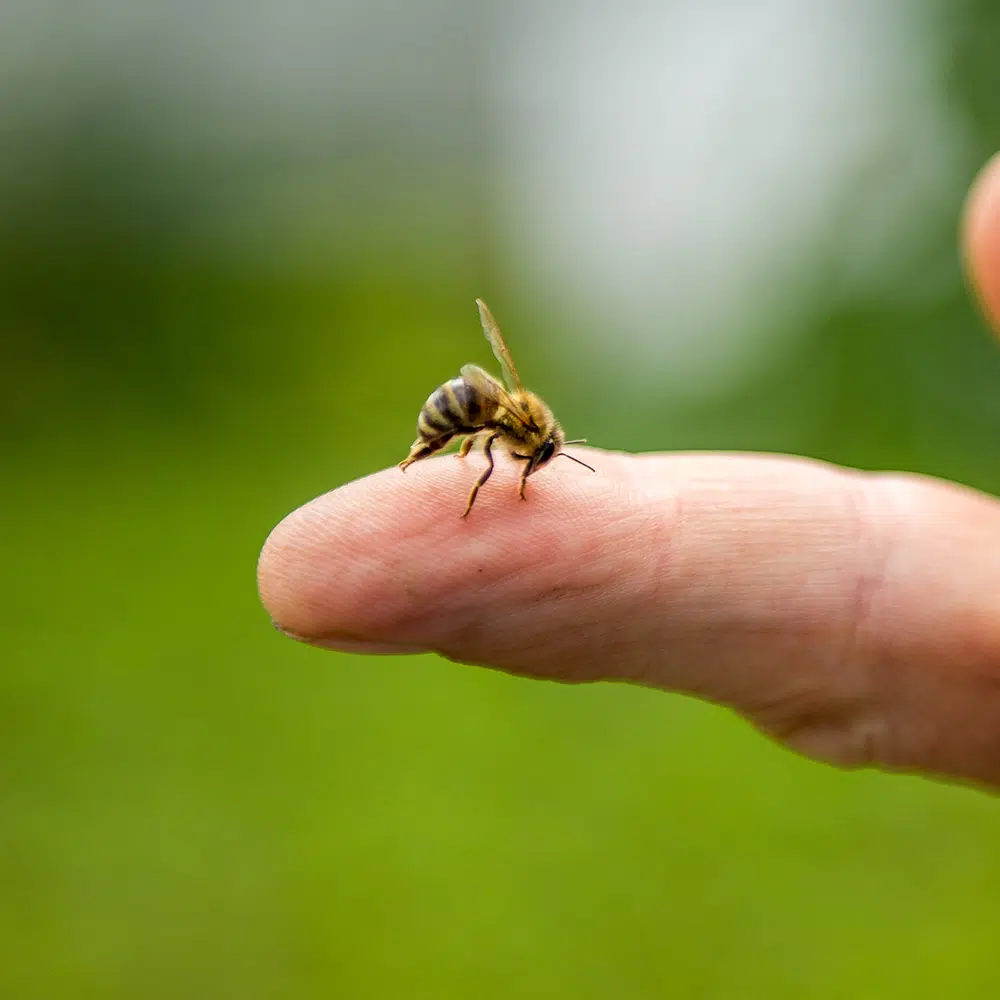
Honey bees don’t want to sting you. Unlike wasps, a honey bee loses its stinger and dies after stinging, so it will only sting if it feels truly threatened. Bees become defensive when they sense danger near their hive, which is why it’s important to move carefully and respectfully around them.
How to avoid bee stings
Preventing bee stings is simple when you follow these guidelines:
- Stay calm and move slowly: Sudden movements can startle bees.
- Give the hive space: Avoid walking directly in front of the entrance where bees are most active.
- Wear neutral colors: Bright colors and floral patterns can attract bees.
- Avoid strong fragrances: Perfumes and scented lotions can confuse bees.
- Keep food and drinks covered. Sugary drinks and food can attract bees.
By practicing these habits, you can reduce the chances of getting stung and peacefully coexist with honey bees.
What to do if a bee stings you
Despite best efforts, stings can sometimes happen. Here’s what to do:
Step 1: Stay calm and move away
If a bee stings you, step away from the hive calmly. Swatting or running frantically may provoke more stings.
Step 2: Remove the stinger quickly
Use a fingernail, credit card, or flat object to scrape the stinger out. Avoid pinching it, as this can push more venom into your skin.
Step 3: Assess the reaction
Your body’s response to a bee sting can vary. Here’s how to handle different reactions:
Mild reaction (Local swelling, redness, itching)
- Apply ice to the affected area to reduce swelling.
- Use a sting relief treatment from a pharmacy.
- Avoid scratching to prevent infection.
Severe reaction (Symptoms beyond the sting site)
- Call 911 immediately.
- If available, use an epinephrine auto-injector (EpiPen).
- Stay with someone until medical help arrives.
Step 4: Monitor for allergic reactions
Most bee stings cause only localized pain and swelling. However, if symptoms spread beyond the sting area, seek medical attention immediately.
What’s normal vs. not normal?

Final thoughts: Coexisting with bees
Knowing how to behave around bees greatly reduces the risk of stings. By staying calm, giving hives space, and following best practices, you can safely enjoy the benefits of beekeeping and support pollinators in your environment.
Stay safe, be mindful, and keep buzzing with knowledge!

.png)
.jpg)