
Engagement programs in CRE need more than just events
I recently spoke with a community manager at Oxford who oversees multiple office buildings in Boston. We started by talking about chocolate - specifically, a build-your-own chocolate box activation that sold out in 45 minutes at one property and moved more slowly at another.
On the surface, it was a conversation about turnout.
But underneath, it was a much bigger discussion about what engagement really means in commercial real estate.
Because engagement isn’t about one event going well. It’s about building a system that makes engagement measurable, repeatable, and aligned with retention.
Engagement has shifted from “nice to have” to “hospitality layer”
In Class A offices, tenants don’t just expect a lobby and security anymore. They expect programming. Thoughtfulness. Moments that make the building feel alive.
What stood out in our conversation was how intentional the approach has become. Events aren’t random. They’re themed. They’re branded. They’re tied to a “why.”
Valentine’s Day isn’t just chocolate in the lobby. It’s a curated product from a local vendor. It’s thoughtful packaging. It’s branding that clearly connects the experience back to ownership.
Because if tenants walk away smiling but don’t associate the experience with the landlord, the opportunity is missed.
Engagement today is hospitality - and hospitality needs identity.
Quality > Quantity (and tenants notice)
One thing we both agreed on: tenants can tell the difference between “free” and “thoughtful.”
If you’re going to invest in engagement, invest in quality. A well-produced activation with a clear reason behind it will outperform a generic giveaway every time.
In this case, the team didn’t just order chocolates. They sourced premium products, designed custom inserts, added QR codes, and created a full build-your-own experience.
And yes, it was manual.
Boxes were assembled by hand. Chocolates were counted and packed individually. Hours went into prep. It was meticulous work - and it showed.
But here’s the lesson: when budgets are tight and time is limited, choose vendors who can deliver end-to-end. The community manager shouldn’t be folding 200 boxes the night before an event.
Still, she pulled it off. And that’s what great community leaders do - they champion the experience, even when the logistics aren’t glamorous.
Data is the missing link
The hardest part of engagement programs isn’t execution. It’s justification.
How do you tie an event to retention?
How do you connect a chocolate box or a wellness workshop to lease renewals?
You can’t - at least not directly.
But you can measure participation.
You can measure repeat attendance.
You can measure app adoption.
You can survey tenant sentiment.
In this case, one activation drove 80+ new registrations on the tenant experience platform. That’s not just a busy lobby - that’s measurable engagement growth.
We’re seeing a shift from event-first thinking to ecosystem thinking. Events drive platform adoption. Platforms drive communication. Communication builds relationships. Relationships support retention.
It’s not linear, but it’s layered.
Scaling engagement across buildings is hard
Every building has a different demographic. One property might “go wild” for free food. Another may value curated, smaller-scale experiences.
The smartest operators test activations in one building before rolling them out elsewhere. They gather feedback. They review post-event surveys. They adjust.
Repeat events are powerful - they build recognition and brand consistency. But they need variation to avoid fatigue.
Engagement isn’t copy-paste. It’s calibrated.
Budget conversations need evidence
Engagement budgets don’t defend themselves.
Community managers are now creating post-mortem decks — attendance numbers, photos, survey data, lessons learned.
Not because they love PowerPoint but because asset managers need evidence.
If engagement is going to live in OpEx, it needs to be tied to something measurable. Not just “it felt busy in the lobby.”
This is where digital platforms matter. Not as “another app.” But as a tenant experience portal that centralizes communication, participation, and data.
The future of engagement isn’t just programming.
It’s visibility.

Engagement programs won’t fix vacancy on their own. But in stable assets, especially Class A office, they create a layer of differentiation that’s hard to replicate.
They build habits.
They build familiarity.
They build positive association with ownership.
And over time, that builds retention.
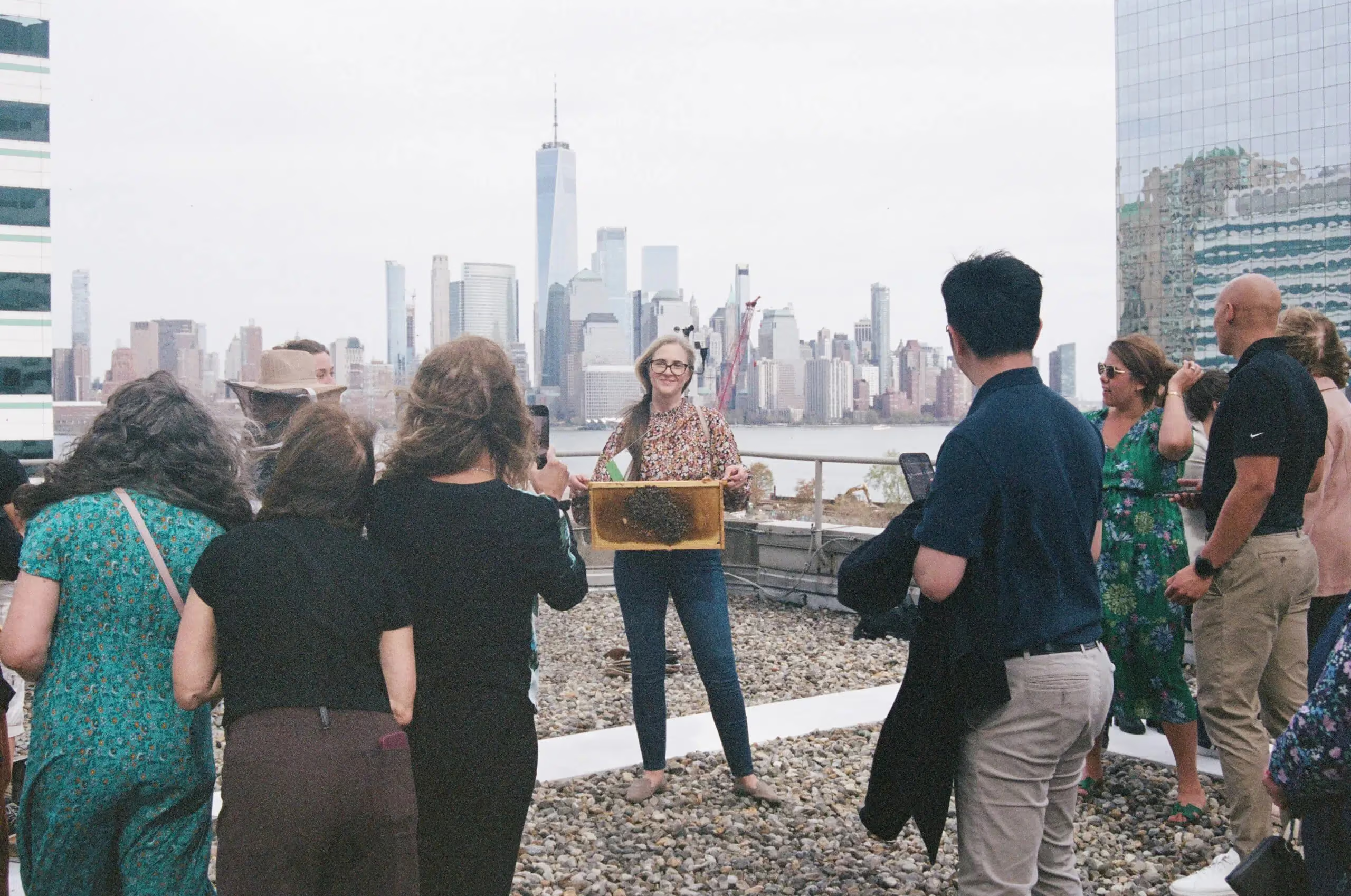
At Alvéole, we see this every day - whether it’s bees, chocolate, or any other activation. The format may vary. The principle doesn’t.
If you’re thinking about how to evolve your engagement strategy - or how to make it more measurable, more branded, more retention-focused - I’m always up for a conversation.
After all, I work in marketing. I believe experience is a brand. And the brand, when done right, keeps people coming back.
Let’s talk.
-