
How QuadReal reaches the tenants that traditional sustainability misses
- Managed beehive program with beekeeper visits
- Seasonal tenant workshops and activations
- Branded honey harvest, distributed to tenants
- MyHive engagement dashboard per property
- Nature data for GRESB, TNFD, and CSRD reporting
- BOMA BEST and LEED certification support
The challenge
By 2018, QuadReal had a serious sustainability record: energy retrofits, healthy building certifications, portfolio-wide reporting. But most of that work lived in a report. A tenant walking into an office tower had no way to see it, and the topics that carried it, energy use reduction chief among them, were not the kind of thing most people stopped to ask about.
Meirav Even-Har, Director, Sustainability at QuadReal, wanted something that could reach the people "who may not be interested in the more traditional sustainability topics, like energy use reduction," and build a connection a report never could.
"It's a relationship that I don't think you can get from passive communication like a poster."
– Meirav Even-Har, Director, Sustainability, QuadReal Property Group
QuadReal needed something tenants would notice on the ground, and that the sustainability team could still report on.
What runs at every site
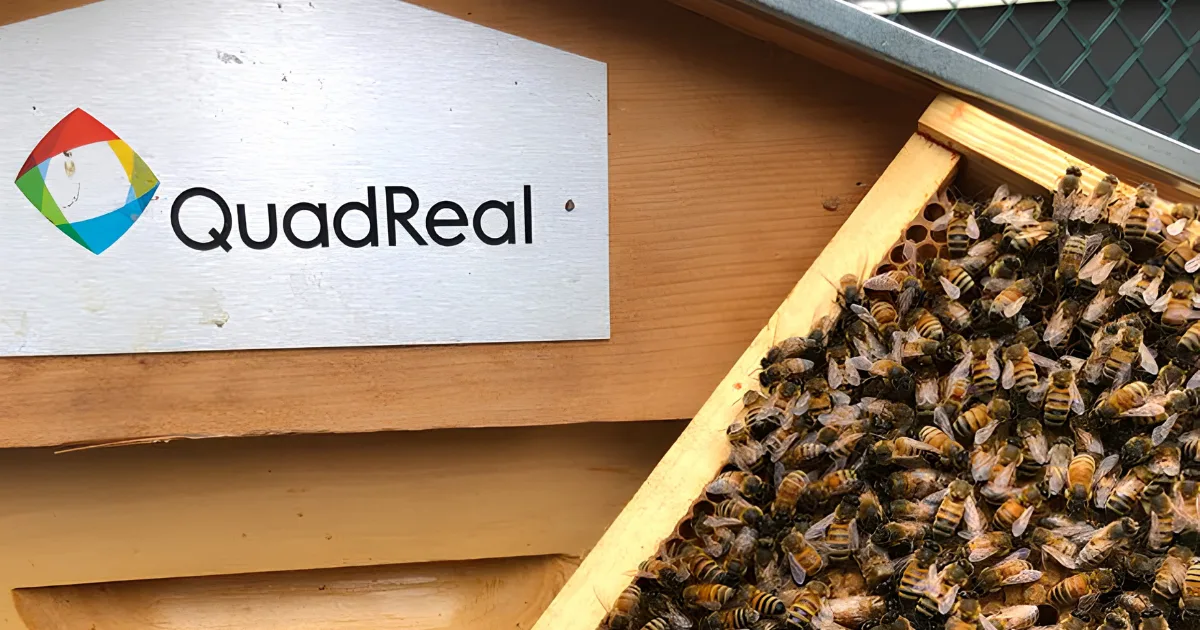
A beekeeper installs the hive, then comes back on a set schedule, roughly every three weeks, to inspect the colony, feed it when needed, and eventually harvest.

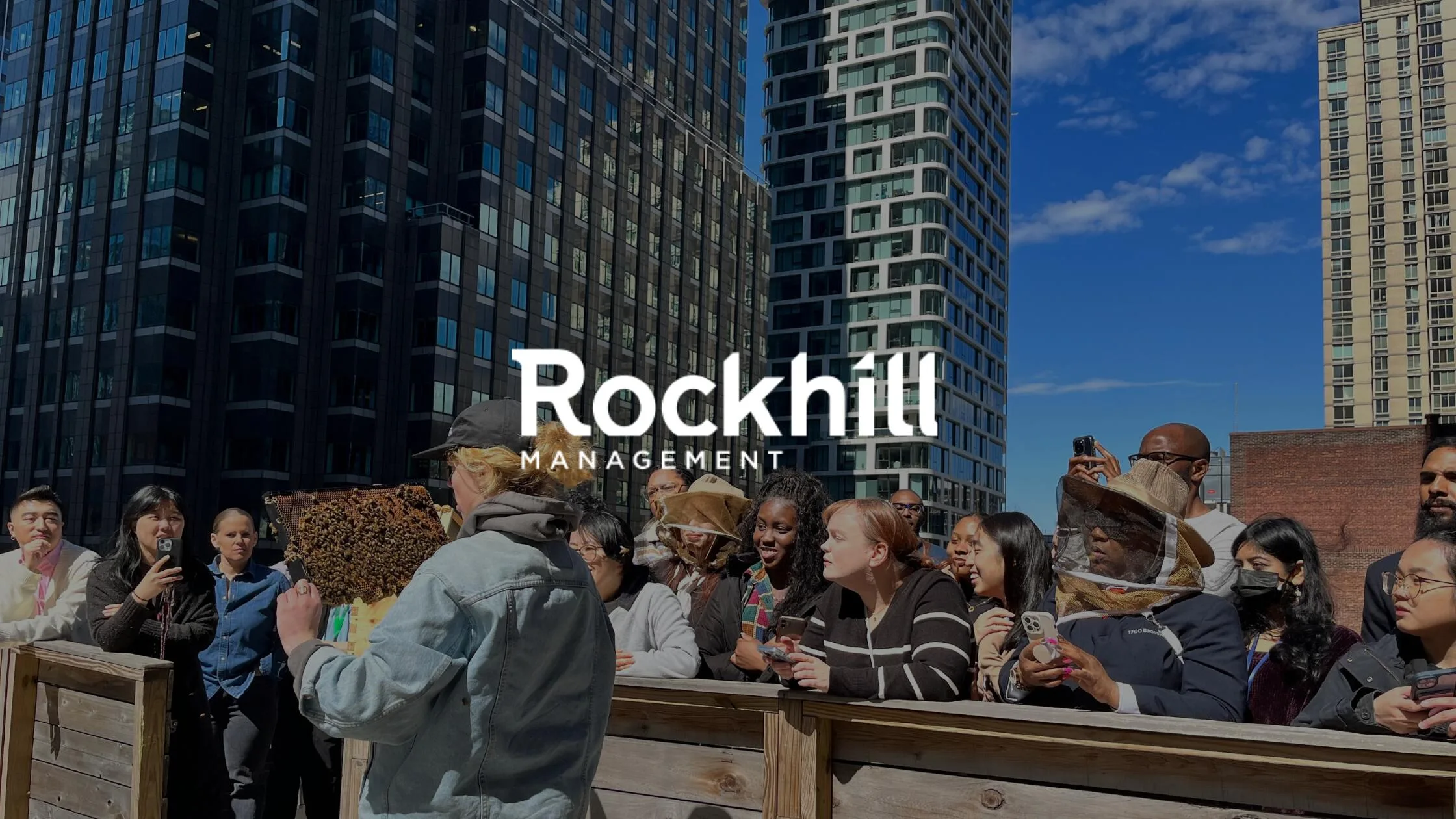
Each property runs seasonal workshops where a beekeeper walks tenants through what is happening on the roof. At harvest, each site gets its own batch of honey, jarred with the building's name and handed out to tenants.
.png)
Alvéole runs all of it. Property teams show up when there is an event, and they get a MyHive link they can send to tenants, where anyone can check on the colony and see how far the bees have been flying that week.
The program started at a handful of buildings and spread across the portfolio the same way, one property team at a time. It now runs at office towers, mixed-use developments, and retail destinations in five cities, including 400 Burrard in Vancouver, World Exchange Plaza in Ottawa, Bayview Village in Toronto, and Marché Central in Montreal. Proud property teams kept opting in on their own.
"So when we were able to roll out the project at more properties, it was natural for our teams to say 'us too!'."
– Meirav Even-Har, Director, Sustainability, QuadReal Property Group
The results
The partnership started in 2018, which makes QuadReal one of Alvéole's earliest commercial real estate partners. Eight years on, it still runs across the portfolio.
.png)
Here is what that looks like in numbers:
| Partnership started | 2018 |
| Years of partnership | 8 |
| Active locations (2026) | 12 |
| Canadian cities | 5 (Vancouver, Calgary, Toronto, Ottawa, Montreal) |
| Area pollinated in 2026 so far | 1,413 km² |
| LEED points per installation | Up to 14 |
| BOMA BEST points per installation | Up to 13 |
A brochure never got a tenant to stop and ask questions. The hives do.
"People have a natural curiosity about bees. It creates a sense of wonderment."
– Meirav Even-Har, Director, Sustainability, QuadReal Property Group
And the value QuadReal points to is not the honey. You can't put a number on engagement, but you can see it in retention.
"You're creating a connection, and that is valuable."
– Meirav Even-Har, Director, Sustainability, QuadReal Property Group
The hives changed landscaping decisions
The program did not stay on the roof. Once the hives went in, they changed how property teams thought about the ground around their buildings.
"Once you introduce beehives, you start having conversations about the importance of urban biodiversity. At some of our buildings, native species play a role in landscaping decisions."
– Meirav Even-Har, Director, Sustainability, QuadReal Property Group
That thinking turned into programming: QuadReal has marked World Bee Day, celebrated native plant species, and run gardening-for-pollinators webinars for its teams and tenants.

Reporting and certification
Every installation produces two types of data no other building program generates at the property level.
Nature data
Recurring seasonal biodiversity data per building, instead of a one-time survey. It supports GRESB, TNFD, and CSRD reporting on biodiversity and ecosystem impacts. The timing matters: GRESB added its first biodiversity question in 2025 and is expanding its nature criteria again for 2026. QuadReal, a five-star GRESB performer for five straight years, already had property-level biodiversity data coming off its rooftops.
"To make decisions and push the envelope as sustainability professionals, you need data. When it comes to biodiversity, it can be difficult to get."
– Meirav Even-Har, Director, Sustainability, QuadReal Property Group
Participation data
MyHive tracks event attendance and participation per property, giving the sustainability team a documented record instead of an anecdote.
"We report on the number of hives, the number of tenants engaged, and we're able to tell stories."
– Meirav Even-Har, Director, Sustainability, QuadReal Property Group
Each installation also supports BOMA BEST and LEED certifications: up to 14 points per property under LEED, up to 13 under BOMA BEST, with no capital infrastructure required.

Why it's still running
Eight years is a long time for a building amenity to survive. This one lasted because it gives QuadReal things it can point to: tenants who stop and ask questions, property teams that opted in on their own, and biodiversity data that goes straight into a GRESB submission.