
The ultimate guide to tenant satisfaction in commercial real estate

How property managers and asset managers can leverage tenant satisfaction to drive NOI growth, reduce vacancy rates, and create competitive advantages in today's commercial real estate market.
What is tenant satisfaction in commercial real estate?
Tenant satisfaction in commercial real estate represents the comprehensive contentment and positive experience that businesses and organizations derive from their office, retail, or industrial spaces. Unlike residential tenant satisfaction, which often focuses on basic comfort and maintenance, commercial tenant satisfaction encompasses a complex web of factors that directly impact business operations, employee productivity, and organizational success.
The evolution of commercial tenant expectations
The landscape of commercial tenant expectations has undergone a dramatic transformation over the past decade. Today's tenants expect far more than the traditional four walls and basic utilities that once defined commercial leasing relationships. According to JLL's Future of Work research, modern tenant satisfaction frameworks now encompass workplace experience environments that actively enhance employee productivity and well-being, rather than simply providing functional space.
Sustainability features have become increasingly important, with tenants seeking green building certifications and environmentally responsible operations that align with their corporate values and regulatory requirements. CBRE's 2022 Global ESG Survey indicates that over 70% of corporate tenants now require green building certifications as part of their leasing criteria. Technology integration is no longer optional but essential, with tenants expecting smart building systems and reliable digital infrastructure that supports their operational needs.
Additionally, community building opportunities have emerged as a significant differentiator, with tenants valuing networking possibilities and collaborative spaces that foster business relationships. The demand for flexibility has also intensified, particularly in the post-pandemic era, where tenants require adaptable spaces that can evolve with changing business needs and workforce patterns.
Why traditional approaches fall short
Many property managers continue to operate under outdated assumptions about what drives tenant satisfaction, focusing primarily on competitive rental rates, basic building maintenance, and standard amenities such as lobby areas, parking facilities, and security services. However, this traditional approach fails to address the sophisticated needs of modern businesses and their employees.
Research from MIT's Center for Real Estate has revealed that tenant satisfaction is now the strongest predictor of lease renewal rates, with even a single point increase in satisfaction scores correlating to an 8.6% higher likelihood of lease renewal. This finding underscores the critical importance of understanding and addressing the evolving expectations of commercial tenants.
The old model's limitations become apparent when considering that today's tenants view their physical workspace as an extension of their brand and culture. They expect environments that not only house their operations but actively contribute to their business success, employee satisfaction, and organizational goals. Properties that fail to recognize this shift risk becoming commoditized, competing solely on price rather than value.
The financial impact of tenant satisfaction on commercial properties
Understanding the financial implications of tenant satisfaction represents one of the most compelling arguments for property managers and asset managers to prioritize tenant engagement initiatives. The relationship between tenant satisfaction and property financial performance is both direct and measurable, affecting every aspect of a commercial property's economic performance.
Commercial real estate performance metrics by satisfaction level
Performance MetricHigh Satisfaction PropertiesAverage PropertiesLow Satisfaction PropertiesLease Renewal Rate85-95%65-75%45-65%Rent Premium8-12% above marketMarket rate5-10% below marketTime to Lease30-45 days60-90 days90-180 daysTenant Expansion Rate40% more likelyBaseline50% less likelyVacancy Cost Savings$50K-150K per avoided vacancyN/AHigher turnover costs
Source: BOMA Greater Seattle Research
Direct revenue impact
The most immediate financial benefit of high tenant satisfaction manifests in lease renewal rates. Properties with exceptional tenant satisfaction scores consistently achieve renewal rates between 85% and 95%, compared to average commercial properties that typically see renewal rates in the 65% to 75% range. According to NAIOP's Commercial Real Estate Development Association research, each avoided vacancy delivers substantial savings, with property owners typically saving between $50,000 and $150,000 in leasing costs for every tenant who chooses to renew rather than relocate.
Beyond retention, satisfied tenants enable property owners to command significant rental rate premiums. Buildings with superior tenant satisfaction can typically charge 8% to 12% higher rents than comparable properties with average satisfaction levels. This premium reflects the additional value that tenants perceive in well-managed properties with exceptional service and amenities. Furthermore, Cushman & Wakefield's Experience per Square Foot research platform shows that satisfied tenants are 40% more likely to expand their space within the same building, providing additional revenue opportunities without the costs associated with acquiring new tenants.
The speed of leasing also improves dramatically with high tenant satisfaction. Properties known for exceptional tenant experiences reduce their time-to-lease by an average of 45 days compared to average properties, according to CBRE's Global Workplace Occupancy Survey. This acceleration in leasing velocity translates directly to reduced vacancy periods and improved cash flow stability.
Operational cost savings and asset value impact
High tenant satisfaction generates significant operational cost savings across multiple categories. PwC's Real Estate 2024 Trends report indicates that tenant turnover represents one of the largest controllable expenses in commercial property management, with tenant improvements and build-outs typically costing between $25 and $75 per square foot. Leasing commissions add another 4% to 8% of total lease value, while lost rent during vacancy periods can cost $2 to $5 per square foot per month.
Satisfied tenants also contribute to improved building operational efficiency. They report maintenance issues 30% faster than dissatisfied tenants, enabling property management teams to address problems before they escalate into costly repairs. Additionally, satisfied tenants generate fewer complaints and disputes, resulting in lower legal and dispute resolution costs and reduced property management overhead per tenant.
Key drivers of commercial tenant satisfaction
Extensive research across thousands of commercial properties has consistently identified several primary factors that drive tenant satisfaction. Understanding these drivers enables property managers to allocate resources effectively and develop targeted strategies that deliver measurable improvements in tenant experience and retention.
Building management responsiveness
Building management responsiveness consistently emerges as the most critical factor in tenant satisfaction across all property types and markets. This encompasses far more than simply addressing maintenance requests; it represents the overall quality of communication, problem-solving, and relationship management between property management teams and their tenants.
Effective responsiveness begins with maintenance response times, where issues should be acknowledged within hours and resolved within 24 to 48 hours depending on complexity. However, quality of communication throughout the resolution process often matters more than speed alone. Tenants value proactive updates, clear timelines, and follow-through that ensures complete satisfaction with the resolution.
The accessibility of property management teams significantly impacts tenant perceptions of responsiveness. Successful properties provide multiple communication channels including mobile apps, phone lines, email systems, and online portals, ensuring tenants can reach management through their preferred method. Regular tenant check-ins beyond issue resolution demonstrate proactive care and often identify potential problems before they become complaints.
Building management responsiveness also extends to strategic support for tenant business needs. This might include accommodating space modifications, facilitating introductions between tenants, or providing flexibility during challenging business periods. Property managers who view themselves as partners in their tenants' success consistently achieve higher satisfaction scores.
Workplace environment and modern amenities
Modern commercial tenants expect amenities and environmental features that enhance their employees' daily experience and support business operations. This expectation extends far beyond basic services to encompass comprehensive workplace experience programs that contribute to employee satisfaction, productivity, and retention.

Fitness and wellness amenities have become increasingly important, with tenants recognizing the connection between employee wellness and business performance. Deloitte's Future of Work study indicates that on-site gyms, yoga studios, wellness programs, and mental health resources help tenants attract and retain top talent while reducing healthcare costs and absenteeism. Food service options, whether through on-site cafeterias, coffee shops, or catered events, provide convenience and social interaction opportunities that enhance the workplace experience.
Collaboration spaces represent another critical category of modern amenities. Conference rooms, co-working areas, and meeting pods that tenants can reserve and utilize help smaller tenants access professional meeting facilities they might not otherwise afford. These spaces also facilitate inter-tenant networking and collaboration opportunities that add value beyond the immediate utility.
The impact of nature and biophilic design
Outdoor areas and connections to nature have emerged as increasingly valuable amenities based on growing research about biophilic design benefits. Terraces, gardens, green spaces, and even simple outdoor seating areas provide employees with break opportunities and stress relief that contribute to productivity and job satisfaction.
According to Harvard Business Review's research on biophilic design, properties that incorporate nature-focused elements see measurable improvements in tenant satisfaction:
- Rooftop gardens: 15% higher tenant satisfaction scores
- Natural light optimization: 20% better productivity ratings
- Biophilic design elements: 25% higher renewal rates
The growing recognition of nature's impact on workplace satisfaction has made features like urban beekeeping programs particularly valuable for forward-thinking properties seeking unique differentiators.
Sustainability and environmental responsibility
Environmental sustainability has evolved from a nice-to-have feature to a core tenant expectation, driven by multiple converging factors that make green building features essential for tenant attraction and retention.
The modern workforce, particularly younger employees, increasingly prioritizes environmental responsibility when evaluating employers and workplace locations. Companies recognize that sustainable building features help attract and retain top talent who value environmental stewardship. Additionally, energy-efficient buildings often provide operational savings that directly benefit tenants through reduced utility costs and improved operational efficiency.
Key sustainability features that drive tenant satisfaction include LEED, ENERGY STAR, or similar green building certifications that provide third-party validation of environmental performance. Renewable energy systems, such as solar panels or wind power, demonstrate tangible environmental commitment while potentially reducing energy costs. Comprehensive waste reduction and recycling programs help tenants meet their own sustainability goals while reducing operational waste.
Measuring tenant satisfaction: beyond traditional metrics
Effective tenant satisfaction measurement requires a sophisticated approach that captures the full spectrum of tenant experience while providing actionable insights for property management teams. Traditional measurement methods often fall short of providing the detailed, timely, and actionable data needed to drive meaningful improvements in tenant satisfaction.
Comprehensive measurement framework
A sophisticated tenant satisfaction measurement system combines multiple data sources and methodologies to provide a complete picture of tenant experience. Regular pulse surveys, conducted quarterly with focused 5 to 10 question formats, provide timely insights into specific aspects of the tenant experience such as maintenance quality, amenity satisfaction, or management responsiveness.
These surveys should incorporate Net Promoter Score (NPS) tracking to measure tenant loyalty and likelihood to recommend the property to other businesses. Kingsley Associates' tenant satisfaction research shows that benchmarking against industry standards helps property managers understand their relative performance and identify areas for improvement.
Behavioral analytics provide objective insights that complement survey data. Space utilization patterns reveal how tenants actually use building amenities and common areas, while amenity usage rates indicate which features provide the most value. Service request frequency and resolution times offer measurable indicators of property management effectiveness, and lease renewal and expansion patterns provide the ultimate measure of tenant satisfaction.
Tenant satisfaction benchmarks by property type
Property typeAverage satisfaction scoreTop quartile scoreRenewal rateNPS scoreOffice buildings7.2/108.5+/1075%+25Retail properties6.8/108.3+/1070%+20Industrial properties7.5/108.7+/1080%+30Mixed-use developments7.8/108.8+/1082%+35
Source: International Council of Shopping Centers (ICSC) and Urban Land Institute Research
Real-time feedback systems enable continuous monitoring of tenant sentiment through digital feedback kiosks in common areas, mobile app rating systems, and post-service interaction surveys. Social media monitoring can also provide insights into how tenants perceive and discuss their building experience publicly.
Tenant advisory committees create opportunities for deeper engagement and collaborative problem-solving. Monthly or quarterly meetings with representative tenants provide qualitative insights that surveys cannot capture. Focus groups for specific initiatives help property managers understand tenant needs before implementing new programs, while co-creation sessions for new amenities or services ensure that investments align with tenant priorities.
Current industry challenges and opportunities
The commercial real estate industry faces unprecedented transformation driven by technological advancement, changing workplace expectations, and evolving societal priorities. These challenges create both risks and opportunities for property managers who understand how to adapt their tenant satisfaction strategies to address emerging needs.
Post-pandemic workplace transformation
The COVID-19 pandemic fundamentally altered workplace dynamics and tenant expectations in ways that continue to evolve. McKinsey's Future of Work research indicates that hybrid work models have become the norm for approximately 60% of office tenants, creating new challenges for space utilization and employee engagement. Average office occupancy has declined by 25% to 40% compared to pre-pandemic levels, forcing property managers to rethink how they measure and deliver value to tenants.
Health and safety priorities have intensified, with tenants expecting enhanced cleaning protocols, improved air quality systems, and contactless technologies that reduce disease transmission risks. These expectations likely represent permanent changes rather than temporary adjustments, requiring ongoing investment in health-focused building operations.
Employee retention has become a critical focus for tenant companies, with workplace experience serving as a competitive advantage in tight labor markets. Companies increasingly view their office space as a tool for attracting and retaining top talent, creating opportunities for properties that provide exceptional workplace experiences.
This transformation presents significant opportunities for properties that can adapt quickly. Flexible leasing arrangements and space-as-a-service models address the uncertainty many tenants face about their long-term space needs. Wellness-focused amenities and health monitoring systems meet the heightened health awareness that emerged from the pandemic. Technology integration for hybrid work support helps tenants manage distributed teams effectively, while community building programs become even more valuable for employees who spend less time in the office.
Technology integration and smart building opportunities
The acceleration of digital transformation has created both challenges and opportunities for commercial properties. Tenants now expect consumer-grade technology experiences in their workplace environments, including seamless connectivity, intuitive interfaces, and personalized experiences. However, implementing these technologies while maintaining data privacy and cybersecurity presents ongoing challenges.
Smart building technologies offer unprecedented opportunities to improve tenant satisfaction while reducing operational costs. Predictive maintenance systems can identify and address issues before they impact tenants, while AI-driven building operations optimize energy efficiency and comfort. IoT sensors provide real-time data on space utilization, air quality, and energy consumption, enabling both property managers and tenants to make more informed decisions.
Mobile-first service delivery and communication platforms align with modern expectations for digital convenience, while data analytics capabilities provide insights that can improve both building operations and tenant experiences. Properties that successfully balance technological sophistication with ease of use consistently achieve higher tenant satisfaction scores.
The role of innovation in tenant engagement
Innovation in tenant engagement is transforming how commercial properties create value and differentiate themselves in competitive markets. Forward-thinking property managers are moving beyond traditional amenities to create unique, memorable experiences that drive tenant satisfaction and loyalty.
Nature-based engagement: the urban beekeeping advantage
One of the most innovative approaches to tenant satisfaction is urban beekeeping, which addresses multiple tenant priorities simultaneously while creating unique value propositions that traditional amenities cannot match. This approach recognizes the growing importance of biophilic design and environmental connection in workplace satisfaction.
Urban beekeeping programs provide exceptional community building benefits through hands-on workshops and educational sessions that bring tenants together around shared learning experiences. Seasonal honey harvesting events create memorable moments that tenants associate with their building, while cross-tenant collaboration on sustainability initiatives builds lasting relationships. The unique corporate gifting opportunities with branded honey provide tenants with distinctive marketing materials that reinforce their environmental commitment.

The sustainability impact of urban beekeeping programs extends beyond symbolism to create measurable environmental contributions to local ecosystems. These programs support pollinator conservation and biodiversity while providing clear alignment with corporate ESG goals. Properties with beekeeping programs often earn enhanced green building certification credits, providing additional value to environmentally conscious tenants.
From an employee engagement perspective, urban beekeeping programs offer stress reduction through nature connection, which research consistently links to improved mental health and productivity. Team-building activities and learning opportunities create positive workplace experiences that contribute to employee satisfaction and retention. The sense of purpose and environmental stewardship that these programs provide helps employees feel more connected to their workplace and their company's values.
Measuring innovation impact
Properties with urban beekeeping programs consistently demonstrate measurable improvements in tenant satisfaction and engagement. Two documented case studies from Manhattan office buildings provide concrete evidence of these benefits in action.
Documented Results from Nuveen's 730 Third Avenue:

- 30-40% engagement rate building-wide with participation continuing to increase over time
- "Tenant experience has skyrocketed" according to Assistant Property Manager Jasmine Czarnecki
- Enhanced return-to-office rates through stimulating educational events that break up the work day
- Improved cross-tenant collaboration as employees who wouldn't normally interact connect through shared learning experiences
As Daniel Farley, Building Amenity Manager for Tenant Experience at Nuveen, explains: "It's our job to get people here, to get them excited about coming to work. The fact that we get jars of honey with our label is great. People love it. It's a great leasing initiative. It's a surprise and delight to give. It's something that many buildings don't offer, and that really stands out as an identifier for the portfolio and for the company."
Award-Winning Results from BGO's 757 Third Avenue:
- Winner of Earth Building of the Year award at the 2024 New York City BOMA Pinnacle Awards
- "This solution outweighs the cost a thousandfold" - Christopher Gildea, Senior General Manager, JLL
- Enhanced ESG reporting capabilities with engagement and environmental data
- Competitive differentiation in award applications and tenant attraction
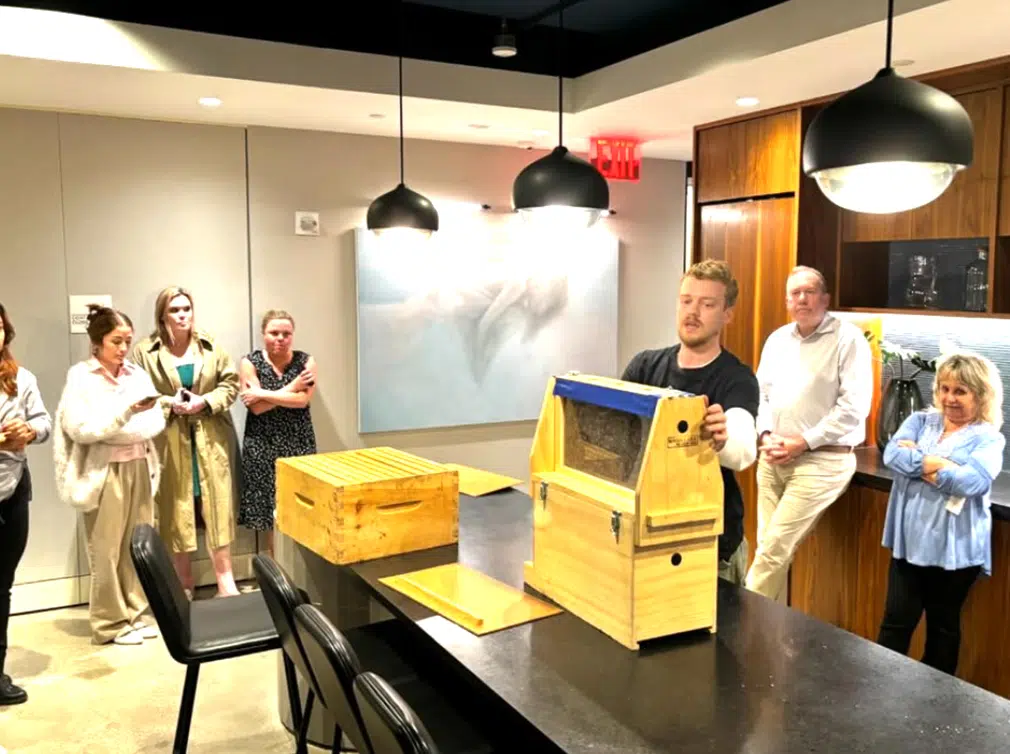
Christopher Gildea from JLL emphasizes the comprehensive value: "The ESG aspect of the program is great. The tenant engagement aspect is seamless. It's cost-effective. It's a homerun... It's one of my favorite amenities at the building. We put a lot of effort into improving tenant experience and upgrading our common areas, but the bees are always the first thing that comes to mind. Our tenants love it."
The program's success extends beyond engagement metrics to create tangible business benefits. As Jasmine Czarnecki from Nuveen notes: "The partnership between both Alvéole and Green City Growers has been great because our hospitality team gets to utilize both parties and see the cycle of how to make our bees happy, which makes our tenants happy, which makes my life easier, which makes me happy."
These documented results demonstrate the unique value that innovative, nature-based engagement programs provide compared to traditional amenities that tenants can find in many buildings. The combination of sustainability impact, community building, and memorable experiences creates differentiation that translates to measurable business outcomes and industry recognition.
Technology-enabled experiences
Smart building integration represents another frontier for tenant engagement innovation. Predictive maintenance systems powered by AI prevent issues before they impact tenants, while energy optimization provides real-time monitoring and adjustment of building systems to maintain optimal comfort and efficiency. Space analytics deliver data-driven insights for space utilization and planning that help both property managers and tenants optimize their operations.
Personalized experiences through customized building settings based on tenant preferences create VIP-level service that differentiates properties from competitors. Digital engagement platforms including tenant mobile apps provide convenient access to service requests, event registration, and community features that enhance daily experiences.
Building a tenant-centric commercial real estate strategy
Creating a successful tenant-centric strategy requires a systematic approach that aligns property management practices with tenant needs and business objectives. This strategy must be both comprehensive and flexible, capable of adapting to changing tenant expectations while delivering consistent value.
Strategic framework development
Understanding your tenant base through detailed segmentation and persona development forms the foundation of effective tenant-centric strategies. Small business tenants with fewer than 50 employees typically prioritize cost-effective space, flexible lease terms, and networking opportunities that help them grow their businesses. Their satisfaction primarily depends on responsive management, shared amenities that provide professional capabilities they cannot afford independently, and community events that facilitate business development.
Mid-market companies with 50 to 500 employees focus on professional image, employee amenities, and expansion flexibility that supports their growth objectives. These tenants value building quality, technology infrastructure, and wellness programs that help them attract and retain talent. Their engagement strategies should include corporate events, employee engagement programs, and sustainability initiatives that align with their corporate values.
Enterprise tenants with more than 500 employees require brand alignment, operational efficiency, and ESG compliance that supports their sophisticated business operations. These tenants value customization options, service level agreements, and strategic partnerships that enhance their business capabilities. Engagement strategies for enterprise tenants should include executive briefings, custom amenities, and co-branding opportunities that reinforce their market position.
Implementation roadmap and resource allocation
A systematic implementation approach ensures that tenant satisfaction initiatives deliver maximum impact while managing resource constraints effectively. The foundation building phase, spanning the first three months, should focus on conducting comprehensive tenant satisfaction assessments, establishing baseline metrics and benchmarking, implementing basic feedback systems and communication channels, and addressing immediate pain points that can be resolved quickly.
The program development phase, covering months four through six, involves designing tenant engagement programs based on satisfaction data, implementing innovative amenities and services that differentiate the property, launching community building initiatives that foster tenant relationships, and establishing regular communication and feedback cycles that maintain ongoing dialogue.
The optimization and expansion phase, from months seven through twelve, requires analyzing program effectiveness and tenant response, refining offerings based on utilization and feedback, expanding successful programs while discontinuing ineffective ones, and developing advanced tenant services and experiences that create lasting competitive advantages.
Investment framework and ROI analysis
Effective resource allocation for tenant satisfaction initiatives typically follows established investment categories that maximize return on investment while addressing tenant priorities. The following framework provides guidance for optimal budget allocation across key areas that drive tenant engagement and satisfaction.
Investment CategoryBudget AllocationPrimary Focus AreasExpected OutcomesTechnology Infrastructure25% - 30%Communication systems, service delivery platforms, building operations technologyImproved response times, streamlined operations, enhanced tenant convenienceAmenities and Services35% - 40%Fitness facilities, food services, wellness programs, workspace enhancementsDirect tenant experience enhancement, employee satisfaction improvementProgramming and Events15% - 20%Community building activities, networking events, educational workshopsStrengthened tenant relationships, increased engagement, business development opportunitiesCommunication and Marketing10% - 15%Tenant newsletters, feedback systems, awareness campaigns, relationship managementEnhanced service awareness, stronger property management connections
This allocation framework ensures that the majority of investment focuses on tangible amenities and services that directly impact daily tenant experience, while supporting these investments with appropriate technology infrastructure and communication strategies that maximize their effectiveness.
The ROI calculation framework should encompass multiple value drivers that justify ongoing investment in tenant satisfaction. Revenue impact measurements include improved lease renewal rates, rental premiums above market rates, and expansion revenue from satisfied tenants who choose to grow within the property. Cost savings from reduced turnover, lower marketing expenses, and operational efficiencies should be quantified and tracked regularly to demonstrate program effectiveness.
Asset value improvements represent the long-term benefits of tenant satisfaction investment, including cap rate compression, enhanced marketability during disposition, and increased investor attraction. These improvements provide sustained value that justifies ongoing commitment to tenant-centric strategies and creates competitive advantages that compound over time.
Getting started: your tenant satisfaction action plan
Transform your property management approach with this comprehensive 90-day action plan designed to immediately improve tenant satisfaction and set the foundation for long-term success. This systematic approach ensures that improvements are both meaningful and sustainable while building momentum for ongoing enhancement.
Phase 1: assessment and foundation (days 1-30)
The first phase focuses on understanding your current position and establishing the groundwork for improvement. Begin by conducting a comprehensive current state analysis that reviews existing tenant satisfaction data and feedback, analyzes lease renewal rates and tenant turnover patterns, audits current amenities and services, and assesses property management response times and processes.
During the first week, initiate tenant outreach by sending a brief satisfaction survey to all tenants focusing on 5 to 7 key questions about their current experience. Schedule one-on-one meetings with key tenants to understand their specific needs and concerns. Identify tenant advocates and potential advisory committee members who can provide ongoing feedback and support for new initiatives. Document current tenant pain points and suggestions to prioritize improvement opportunities.
Complete the assessment phase with competitive analysis research that examines comparable properties and their tenant amenities, analyzes competitor marketing materials and tenant offerings, identifies differentiation opportunities that can set your property apart, and benchmarks your property against industry standards for performance measurement.
Essential tools and implementation framework
PhaseTimelineKey ActivitiesSuccess MetricsAssessmentDays 1-30Current state analysis, tenant surveys, competitive researchBaseline satisfaction score, response rate >40%Quick WinsDays 31-60Immediate improvements, enhanced communication15% improvement in satisfactionProgram LaunchDays 61-90New amenities, events, technology implementation20% increase in engagement
Phase 2: quick wins and communication enhancement (days 31-60)
The second phase emphasizes immediate improvements that demonstrate commitment to tenant satisfaction while building credibility for larger initiatives. Implement faster response times for maintenance requests by establishing 24-hour acknowledgment and 48-hour resolution standards for routine issues. Improve communication channels through regular email updates, enhanced bulletin boards, mobile apps, or online portals that provide convenient access to information and services.
Address simple tenant requests and complaints that have been identified through the assessment phase, demonstrating responsiveness to tenant feedback. Enhance common area cleanliness and appearance through improved maintenance schedules and aesthetic upgrades that create positive first impressions.
Develop a comprehensive communication strategy that includes regular tenant newsletters or update systems, feedback mechanisms such as suggestion boxes or online portals, established office hours for tenant questions and concerns, and welcome packets for new tenants that introduce them to building amenities and services.
Phase 3: program development and launch (days 61-90)
The final phase of the 90-day plan involves implementing substantive improvements that create lasting value for tenants. Based on tenant feedback from the assessment phase, identify the top three amenity priorities and develop budget and timeline for amenity implementation. Research innovative engagement programs such as urban beekeeping, wellness initiatives, or sustainability programs that can differentiate your property.
Plan and execute your first tenant event or networking opportunity, focusing on activities that address specific tenant interests or business needs. Evaluate and implement technology solutions including property management software, tenant portal options, digital communication tools, and mobile-friendly service request systems that improve operational efficiency and tenant convenience.
Track key performance indicators throughout the implementation process, including satisfaction scores, response times, amenity utilization rates, and lease renewal probability. Gather feedback on new programs and services to ensure they meet tenant expectations and provide value. Use this feedback to adjust offerings and plan Phase 2 improvements and expansions that build on initial success.
Long-term success framework
The 90-day action plan establishes the foundation for ongoing tenant satisfaction improvement that delivers measurable business results. Year one goals should target achieving an 8.0 or higher overall satisfaction score, improving lease renewal rates by 15%, implementing 3 to 5 new tenant amenities or services, and establishing regular tenant feedback and communication systems that maintain ongoing dialogue.
Long-term vision for years two and beyond should focus on becoming recognized as a premier tenant-focused property in your market, achieving 90% or higher lease renewal rates, commanding premium rental rates that reflect superior tenant experience, and developing case studies and industry recognition that enhance property reputation and marketability.
Success in tenant satisfaction requires ongoing commitment to measurement, adaptation, and improvement. Properties that view tenant satisfaction as a continuous journey rather than a destination consistently outperform their competitors in both tenant retention and financial performance.
Conclusion: the future of tenant satisfaction in commercial real estate
The commercial real estate industry stands at a pivotal moment where tenant satisfaction has evolved from a relationship management tool to a fundamental business strategy that drives financial performance, competitive positioning, and long-term asset value. Properties that prioritize tenant satisfaction are not just surviving the current market challenges—they are thriving by commanding premium rents, achieving higher occupancy rates, and building sustainable competitive advantages that position them for continued success.
The evidence supporting investment in tenant satisfaction is overwhelming and measurable. The following performance improvements demonstrate the direct financial impact of prioritizing tenant experience:
Financial performance impact of high tenant satisfaction
Performance MetricImprovement vs. Average PropertiesBusiness ImpactLease Renewal Rates25% higherReduced turnover costs, stable cash flowRental Premiums8-12% above market ratesIncreased NOI and revenue per square footLease-Up Speed30% faster time-to-leaseReduced vacancy periods, improved cash flowAsset Values15% higher trading valuesEnhanced investor appeal, better exit returns
Sources: Harvard T.H. Chan School of Public Health's Healthy Buildings program
These performance improvements translate directly to enhanced NOI, improved cash flow stability, and increased investor appeal. Properties that consistently deliver exceptional tenant experiences create sustainable competitive advantages that compound over time, making tenant satisfaction investment one of the highest-return strategies available to commercial property owners.
The opportunity for differentiation remains significant because most commercial properties continue to operate under outdated tenant engagement models that focus primarily on basic services and traditional amenities. This creates substantial opportunities for forward-thinking property managers who understand that modern tenants expect comprehensive workplace experiences that support their business objectives, employee satisfaction, and corporate values.
The urgency for action has intensified due to changing workplace expectations accelerated by the pandemic, increasing sustainability requirements driven by ESG commitments, and competitive pressures from properties that have already embraced tenant-centric strategies. Properties that delay investment in tenant satisfaction risk losing their best tenants to competitors who provide superior experiences and value.
Taking action for immediate impact
Property managers ready to transform their tenant satisfaction strategy should begin immediately with comprehensive assessment of current tenant satisfaction levels using proven survey templates and feedback systems. Identify immediate improvement opportunities that can be implemented within 30 days to demonstrate commitment to tenant experience enhancement. Plan innovative engagement programs such as urban beekeeping, wellness initiatives, or sustainability programs that differentiate your property from competitors and create memorable experiences that strengthen tenant loyalty.
Measure and optimize your tenant satisfaction initiatives continuously using established KPIs and benchmarking data to ensure maximum impact and return on investment. Remember that successful tenant satisfaction strategies require ongoing commitment, adaptation, and improvement rather than one-time initiatives.
Partner with innovation leaders
For property managers ready to implement cutting-edge tenant engagement strategies, partnering with experienced providers can accelerate success while reducing implementation risks. Alveole's urban beekeeping programs have helped hundreds of properties across North America and Europe achieve measurable improvements in tenant satisfaction, lease renewal rates, and sustainability credentials.

Properties working with Alveole consistently report 25% higher tenant satisfaction scores, 40% increases in amenity program participation, 15% improvements in lease renewal rates, and 60% more positive online reviews and social media mentions. These results demonstrate the unique value that innovative, nature-based engagement programs provide compared to traditional amenities that tenants can find in many buildings.
The future of commercial real estate belongs to properties that put tenant satisfaction at the center of their strategy, creating thriving environments that attract and retain the best tenants while maximizing investment returns. The time to begin this transformation is now—contact Alveole today to learn how urban beekeeping and nature-based tenant engagement can revolutionize your property's satisfaction scores and financial performance.
Learn more about transforming your tenant satisfaction strategy visit: alveole.com/tenant-engagement/
Sources and references
- JLL – Future of Work Survey
- CBRE – Global ESG Survey 2022 (PDF)
- Real Estate Research Institute – Tenant Satisfaction & Building Performance (PDF)
- BOMA Seattle – Increases My ROI Infographic (PDF)
- NAIOP – Office Improvements & Competitive Advantage
- Cushman & Wakefield – Insights
- CBRE – Global Workplace & Occupancy Insights 2026
- Deloitte – Workplace Well-Being Research
- Harvard Business Review – The Financial Case for Healthy Buildings
- Grace Hill – Tenant Satisfaction Surveys
- ICSC – Marketplace Perspectives
- ULI – Emerging Trends in Real Estate 2026
- McKinsey Global Institute – Empty Spaces & Hybrid Places
- MIT Center for Real Estate
This comprehensive guide represents the latest research and best practices in commercial real estate tenant satisfaction. For property-specific consultation and implementation support, contact the Alveole team of tenant engagement specialists.