

How to start a corporate beekeeping program
Key takeaways
- A building launches a program in a clear sequence: set goals, assess the site, secure approvals and insurance, install hives in season, then run tenant programming and reporting.
- A single hive needs about a 5x5 foot footprint with a clear flight path, so most rooftops and courtyards qualify.
- Managed rooftop programs have run around $500 to $3,000 per hive per year (an approximate, historical range).
- A managed program can supply biodiversity data for reporting frameworks including GRESB, TNFD, LEED, WELL, BOMA, BREEAM, and Fitwel.
- A responsible program pairs honeybee hives with wild-bee habitat so it supports local biodiversity instead of crowding out native bees.
US commercial beekeepers lost an average of 62% of their colonies between June 2024 and March 2025. That nine-month span saw roughly 1.6 million colonies disappear, with economic impacts exceeding $600 million in lost honey production, pollination income, and replacement costs.
Asset managers and property managers are now fielding requests for visible, verifiable nature programs at the same time tenants expect more from their buildings. Most guides explain how to choose a beekeeping provider. This article covers what they leave out: the step-by-step sequence a building follows to go from idea to active hives.
Why buildings are adding beekeeping programs
Corporate beekeeping delivers value across three areas asset managers care about.
Tenant engagement. Hive visits, honey harvests, and workshops give leasing and property teams a memorable, repeatable amenity that runs year after year.
Reporting data. Pollinator-dependent crops contribute to approximately 35% of global crop production volume. Three-quarters of leading crop types depend on pollinators to some extent. On-site biodiversity data from a beekeeping program supports the frameworks asset managers already report against.
Disclosure momentum. By COP16 in October 2024, more than 500 organizations globally had committed to TNFD-aligned nature reporting. Among them, 129 financial institutions represented $17.7 trillion in assets under management. A beekeeping program supplies tangible, site-level biodiversity metrics for these disclosures.
Step 1: Define your goals and pick the building
Start by answering three questions:
- What is the primary goal? Tenant engagement, leasing differentiation, reporting data, or all three.
- Which building makes sense for a pilot? Look for roof or courtyard access and reasonable foot traffic.
- Who owns the program internally? Assign a property manager or sustainability lead.
The output is a one-page goal statement and a shortlist of candidate assets. A pilot can scale across a portfolio once the first building proves the model.
Step 2: Run a site assessment for placement and safety
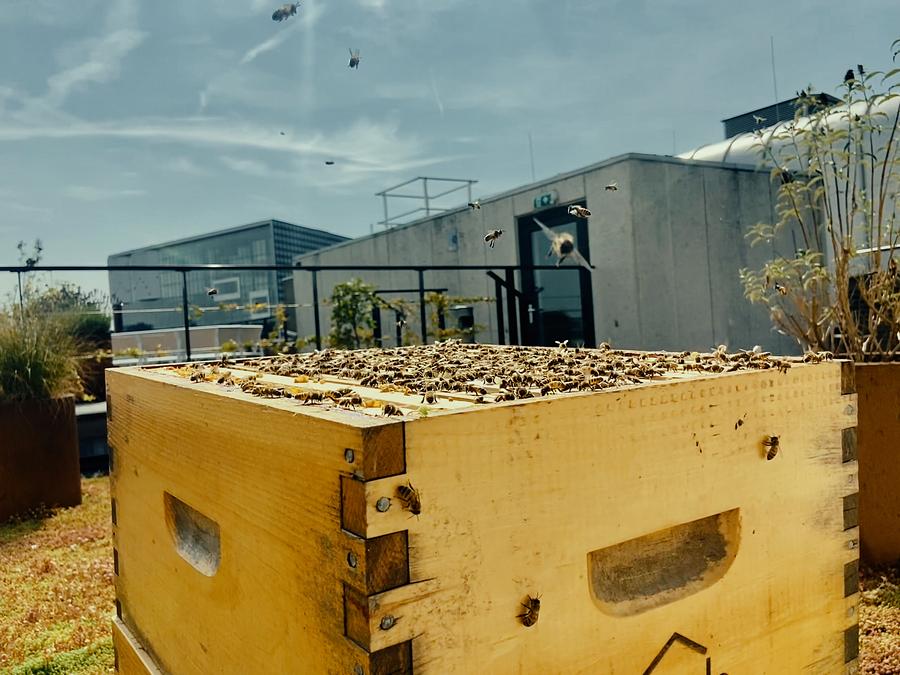
A single hive needs about a 5x5 foot footprint with a clear flight path. Most rooftops, terraces, and unused corners qualify.
Placement guidelines:
- Keep hives away from building entrances, HVAC intakes, and high-traffic areas.
- Check sun exposure, wind exposure, and proximity to a water source.
- Rooftops and screened-off sections work best.
A managed provider conducts this assessment and recommends a location and hive count. Staff involvement is optional.
Step 3: Secure approvals, insurance, and local compliance
Three boxes to check before installation:
Internal sign-off. Get written approval from ownership, property management, and any HOA or board.
Local rules. Most major US cities permit beekeeping, but regulations vary on hive counts, setbacks, and registration. Verify zoning for commercial rooftop installations.
Insurance. A managed provider should carry general liability and can name the property as additional insured. Request a certificate of insurance.
The output is written approval, confirmed local compliance, and a certificate of insurance on file.
Step 4: Install the hives in the right season
Installation is tied to spring and early summer in temperate climates. Colonies establish best during the active foraging season, so plan the decision at least one season ahead.
A managed provider delivers bees, equipment, and a dedicated beekeeper who visits regularly through the active months. The property team does not handle the hives.
The output is installed, actively managed hives ready for the first tenant event.
Step 5: Launch tenant programming and branded honey
The hives become an engagement program when tenants interact with them. A typical program includes:
- Hive visits led by a beekeeper during regular maintenance.
- Honey extraction events where tenants see the harvest firsthand.
- Workshops on pollinators, biodiversity, and urban nature.
- Branded honey jars for tenant gifts, lease renewals, and corporate events.
Alvéole's MyHive platform handles event registration, hive updates, and portfolio-level participation dashboards so property teams can track engagement from one place.
Step 6: Measure impact and feed your reporting
On-site biodiversity data turns a tenant amenity into a reporting asset. Data collection options include:
- Smart hive scales for real-time hive weight monitoring.
- Floral eDNA analysis to identify the plant species bees forage on.
- Bioacoustic monitoring to capture broader on-site biodiversity activity.
This data can contribute documentation toward GRESB, TNFD, LEED, WELL, BOMA, BREEAM, and Fitwel. Participation and event metrics round out the story for leadership and investor reports.
Do it responsibly: honeybees and wild pollinators
A note on ecological impact: peer-reviewed research shows that high densities of managed honeybee hives can compete with wild bees for floral resources.
A 2019 study in Paris found that wild pollinator visitation rates were negatively correlated with honeybee colony densities at the 500-meter scale. A 2023 study in Montreal found that increasing managed honeybee abundance was negatively associated with wild bee species richness, especially among small-bodied species.
The fix is straightforward. Pair honeybee hives with wild-bee habitat, such as a Wild BeeHome for solitary pollinators, and manage hive density per location. This approach makes the program a genuine biodiversity contribution, not just an amenity.
Frequently asked questions
Managed programs have run around $500 to $3,000 per hive per year. This range, based on
Yes. Hives are placed on rooftops or in screened-off sections, handled exclusively by professionals, and paired with clear signage. Most tenants never encounter the bees directly.
A single hive needs about a 5x5 foot footprint with a clear flight path. Most commercial rooftops and terraces easily accommodate two to four hives.
Most major US cities permit beekeeping, but regulations vary on hive counts, setbacks, and registration. Verify local zoning codes before installation. A managed provider can help navigate the requirements.
Biodiversity data from hive monitoring, eDNA, and bioacoustic sensors can contribute documentation toward GRESB, TNFD, LEED, WELL, BOMA, BREEAM, and Fitwel certifications and reporting frameworks.
Bottom line
A corporate beekeeping program launches in a defined sequence: goals, site assessment, approvals, installation, tenant programming, and reporting. A managed provider handles the hives so your property team runs the program, not the bees.
Alvéole delivers turnkey beekeeping programs to more than 2,200 commercial buildings across the US, Canada, and Europe. The program includes dedicated beekeepers, tenant engagement events, branded honey, and biodiversity data that feeds directly into your reporting and disclosure.
.png)
.jpg)