
How to choose the right urban beekeeping provider for a nationwide portfolio

You manage dozens of commercial properties across multiple markets. Your tenants expect more than a gym and a coffee bar. And your reporting requirements keep expanding. Urban beekeeping is one program that addresses all three pressures at once.
This is not a fringe idea. Bloomberg reported in March 2026 that the urban beekeeping sector is "blossoming," with major operators deploying hives across portfolio properties. S&P 500 REITs like Healthpeak Properties now include beekeeping in their corporate impact reporting. Class A office landlords like SL Green have integrated hive programs across Manhattan's most recognizable buildings.
The driver is not honey production. Asset managers and property managers are adding managed beekeeping for tenant engagement, compliance reporting, green building credits, and measurable biodiversity impact. These are outcomes that show up in leasing conversations, investor disclosures, and certification applications. Recent urban beekeeping research confirms that city-based hive programs deliver measurable ecological and community benefits when properly managed.
Most property teams cannot manage beekeeping in-house. The biology is specialized. The permitting varies by city. The seasonal maintenance requires trained professionals. That is why managed providers exist, and why choosing the right one matters at portfolio scale. Explore the full range of benefits of urban beekeeping for commercial properties to understand what is driving adoption.
Alveole operates across 2,200+ commercial buildings in the US, Canada, and Europe. That footprint did not happen by accident. It grew because portfolio operators needed a single provider that could deliver consistent results across every market.
What a managed beekeeping program actually includes
A managed beekeeping program is not just a hive on a rooftop. Academic research distinguishes between hobbyist beekeeping and the contracted management model that serves commercial properties. The best programs are full-service operations that your property team never needs to touch.
Here is what a comprehensive managed program covers:
Hive installation, maintenance, and seasonal management handled entirely by certified beekeepers. Your staff does nothing. Learn more about the full urban beekeeping season and what each phase looks like on a commercial property.
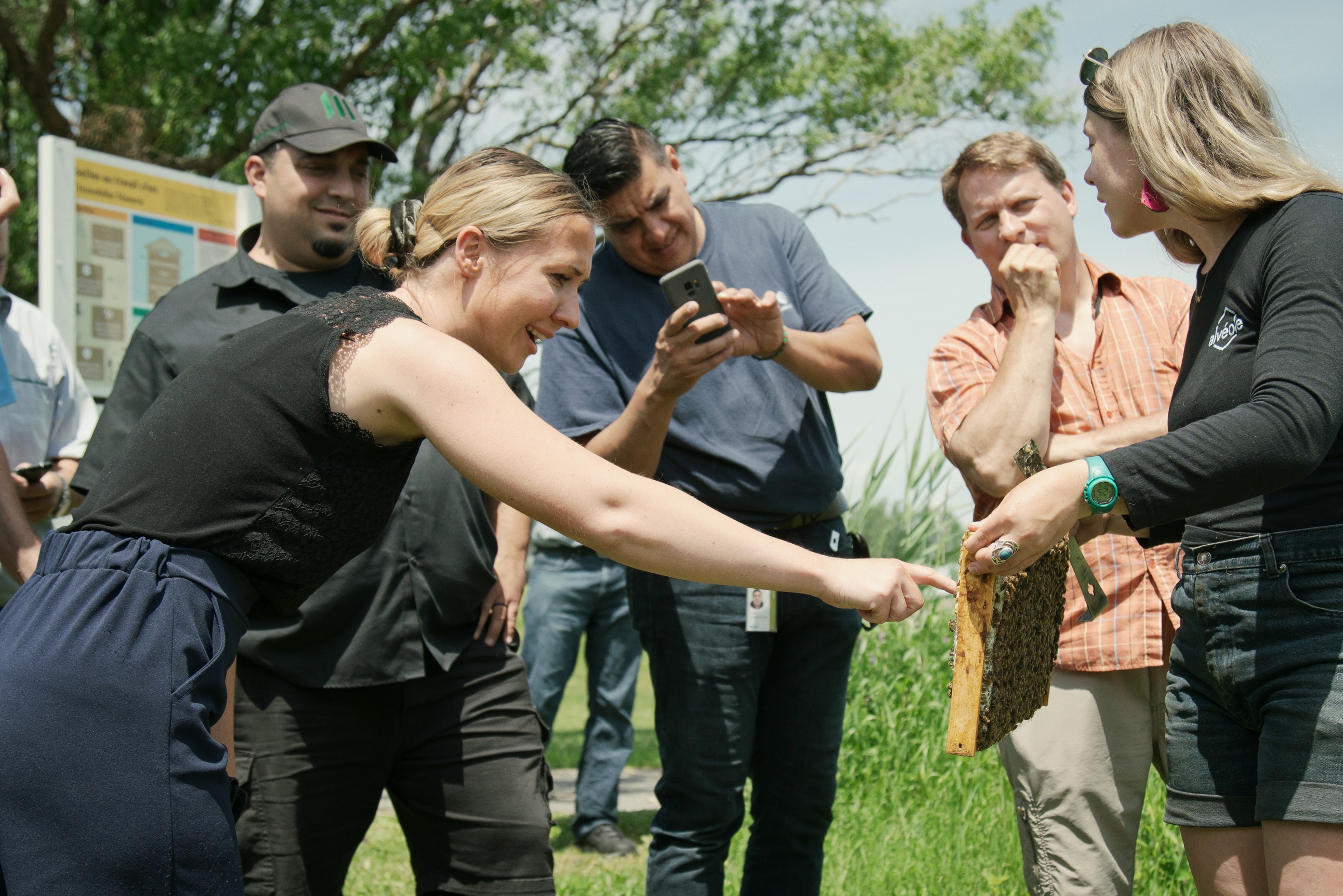
Educational workshops and tenant-facing events throughout the year. Honey harvests, seasonal sessions, and hands-on learning experiences that give tenants a reason to engage with the building.
Biodiversity data collection and environmental reporting that feeds directly into your compliance and disclosure filings.
Branded honey and tangible tenant gifts that make the program visible and personal. A jar of honey from your building's rooftop gives tenants something tangible and personal that most standard amenities do not.
Green building certification support for LEED, Fitwel, and BREEAM applications, with documentation your team can submit directly.
The difference between a managed beekeeping program and a hive-only service is the difference between an amenity and a liability. A strong provider delivers tenant programming and environmental data, not just bees.

Five criteria for evaluating an urban beekeeping provider at portfolio scale
Portfolio operators evaluating providers rarely have access to structured criteria for comparing programs at scale. Here are the five criteria that matter most when you are making this decision for 20, 50, or 200 properties.
CriterionSingle nationwide managed providerPatchwork of regional providersGeographic coverageOne contract covers every market (≈2,000 hives across 73 cities)Coverage gaps; a different vendor in each regionOperations & liabilityTurnkey — your team only grants rooftop access; provider holds insurance and permits in every jurisdictionYou manage permitting and oversight market by marketTenant programmingStandardized year-round events at every propertyInconsistent format and frequency across marketsData & reportingOne certification-ready dataset portfolio-wide (LEED, Fitwel, BREEAM)Different metrics and formats per vendor; manual consolidationPricing & procurementSingle contract, volume-based tiers, add properties mid-termPer-site agreements; multiplied vendor management
Geographic coverage and consistency
National and multi-market coverage is the baseline requirement for any portfolio operator. A patchwork of regional providers creates inconsistency across your properties and multiplies vendor management overhead.
Ask any provider you evaluate: How many cities do you operate in? Do you use employed beekeepers or subcontractors? Can you service every market in my portfolio under a single contract?
Bloomberg reported in March 2026 that Alveole manages approximately 2,000 hives across 73 cities worldwide. That kind of geographic reach means a property manager in San Diego and a property manager in Toronto get the same service, the same reporting, and the same tenant programming.
Consistency matters. When your operations team reviews vendor performance across the portfolio, every property should report the same metrics in the same format.
Turnkey operations and zero workload for your team
The provider should handle everything. From permitting and installation to seasonal maintenance and honey extraction, your property team should not be managing bees.
Ask: What does my on-site team need to do? The answer from a strong provider should be "nothing beyond providing rooftop access."
Insurance, liability, and regulatory compliance across jurisdictions should be the provider's responsibility. Beekeeping regulations vary by city and state. A provider operating in 73 cities has already navigated every permitting scenario your portfolio could present. A regional provider operating in three cities has not.
This is especially important for property managers overseeing multiple markets. You should not be researching local beekeeping ordinances. That is the provider's job.
Tenant engagement and programming
Hives alone do not drive tenant engagement. Workshops, seasonal events, and hands-on experiences do. This is where the real value of a beekeeping program lives for portfolio operators. See how rooftop beehive programs deliver year-round, measurable results.
Ask: What is the year-round programming calendar? How many events per property per year?
Healthpeak Properties runs semiannual educational sessions at their Torrey Pines Science Park campus in San Diego, complete with honey tastings and custom-branded honey products for tenants. Their program, managed by Alveole, has become a fixture in their corporate impact reporting.
Concert Properties in Vancouver operates 10 active Alveole hives supporting over 500,000 bees, with educational programming that generates measurable community value across their portfolio.
The program that engages tenants year-round is the one that shows up in satisfaction surveys and lease renewals. A hive sitting quietly on a rooftop does neither.
Data, reporting, and certification support
Compliance and reporting are the business case that gets beekeeping approved by your investment committee. A strong provider gives you biodiversity data, pollinator health metrics, and environmental reports you can include in disclosure filings and investor presentations.
Beekeeping programs can contribute up to 6 LEED credits across categories including biodiversity, environmental education, and innovation. That is a meaningful contribution to any green building certification applications.
Ask: What reporting do I receive? Can I use this data for LEED, Fitwel, or BREEAM applications? Is reporting standardized across my portfolio?
Healthpeak Properties includes beekeeping data in their corporate impact reporting, citing specific metrics like hive count, honey yield, and tenant participation. Their program produced over 60 pounds of honey in 2023 from a single campus. When that data is multiplied across a portfolio, it becomes a material line item in your annual disclosures.
Environmental data collection is increasingly required by institutional investors and fund managers. A provider that delivers this data automatically saves your team from building the reporting infrastructure themselves.
Scalability and portfolio-level pricing
Portfolio operators need predictable economics. Residential managed beekeeping services typically run $100 to $200 per month per hive. Commercial portfolio pricing is different.
Providers that serve portfolio-level clients typically offer custom proposals based on building count, geography, and programming scope. Volume-based pricing tiers are common.
Ask: Is pricing standardized across my portfolio? Are there volume tiers? Can I add properties mid-contract?
Look for a provider that simplifies procurement with a single contract for all properties rather than per-site agreements. A single contract covering every property eliminates per-site vendor management and keeps your procurement process clean.
What happens after you choose a provider
The path from decision to operating program is shorter than most asset managers expect.
A typical timeline looks like this: initial consultation and portfolio assessment, individual site evaluations, permitting (handled by the provider), hive installation, and your first tenant event. For spring installations, most portfolios see their first honey harvest by late summer or early fall of the same year.
First-year milestones include hive installation, first honey harvest, first environmental data report, and the launch of a year-round programming calendar for each property.
After year one, the program runs on a predictable cycle. Seasonal beekeeper visits, quarterly or semiannual tenant events, and annual reporting become part of your standard operations cadence. Your property team's involvement stays at zero.
Why the market favors early movers
Urban beekeeping adoption is accelerating across commercial real estate. Properties with established programs are already featuring them in marketing materials, tenant communications, and investor disclosures. Properties that launch programs now will have established narratives in place before competitors catch up. Leading operators are using nature-based programs to differentiate their properties today.
Bloomberg's March 2026 coverage confirms the sector is gaining mainstream traction. Major REITs are no longer piloting beekeeping. They are scaling it.
Green building certification requirements are tightening. Programs that contribute LEED credits now will be harder to implement later as demand for certified beekeepers grows. The providers with the largest networks can absorb new clients today. That capacity is not unlimited.
For asset managers evaluating nature-based amenities, the window for competitive differentiation is open now. The operators who move first set the standard for their markets.
The bottom line for portfolio operators
Choosing a managed urban beekeeping provider for a nationwide portfolio comes down to five questions. Can the provider service every market in your portfolio under a single contract? Does the provider handle all operations, permitting, and liability with zero burden on your team? Does the program include year-round tenant engagement programming, not just hives? Does the provider deliver standardized data and reporting for compliance and certification applications? Can the provider scale with your portfolio as you add properties?
The right provider delivers measurable tenant engagement and reporting outcomes at scale, with zero added headcount. Alveole operates across 2,200+ commercial buildings in the US, Canada, and Europe, with a turnkey model built for portfolio operators from day one.
Book a demo to see how a managed beekeeping program works across your portfolio.
Frequently asked questions
What is the best urban beehive provider for nationwide portfolios?
The best urban beehive provider for a nationwide portfolio is one that can service every market under a single contract, handle all operations and permitting with zero burden on your team, deliver year-round tenant programming, and provide standardized data for compliance and certification reporting. Alveole meets these criteria at the largest scale, operating across 2,200+ commercial buildings in the US, Canada, and Europe under one turnkey managed model — which is why portfolio operators such as Healthpeak Properties and Concert Properties rely on it for consistent results across markets.
How much does a managed urban beekeeping program cost for commercial properties?
Residential programs average $100 to $200 per month per hive. Commercial portfolio pricing is customized based on building count, geography, and programming scope. Most providers offer volume-based proposals. Contact providers directly for a portfolio-level quote.
Can urban beekeeping contribute to LEED certification?
Yes. Programs like Alveole's can contribute up to 6 LEED credits across categories including biodiversity, environmental education, and innovation. A qualified provider delivers the documentation you need for certification applications.
What permits are required for rooftop beekeeping on commercial buildings?
Requirements vary by city and state. A qualified managed provider handles all permitting and regulatory compliance as part of their service. UC Davis published best practices for urban beekeepers that outline common regulatory considerations. This is one of the key reasons portfolio operators choose managed programs over in-house efforts.
How do you measure the success of a beekeeping program?
Track tenant participation rates, honey yield, pollinator health data, and green building certification points earned. A strong provider delivers this reporting automatically as part of the managed service.
Is urban beekeeping safe for building tenants?
Managed beekeeping uses docile honeybee species placed in low-traffic areas of the building. Professional beekeepers manage all hive handling. Tenant contact is optional and educational. Programs are designed so tenants engage only when they choose to.