

How BREEAM ecology credits reshape London commercial property

The landscape of London commercial property is undergoing a fundamental transformation. As biodiversity regulations tighten and ESG requirements become non-negotiable, BREEAM ecology credits have emerged as critical indicators of asset value and future-proofing. For Asset Managers navigating this rapidly evolving environment, understanding these changes is no longer optional; it's essential for maintaining competitive advantage and meeting investor expectations.
The new biodiversity imperative in London commercial property
London's commercial property sector faces unprecedented ecological requirements that are fundamentally reshaping development and asset management strategies. The convergence of BREEAM Version 7, mandatory Biodiversity Net Gain legislation, and the Urban Greening Factor has created a complex regulatory landscape that demands immediate attention from Asset Managers.
Since February 2024, all major housing developments are required to deliver at least a 10% benefit for nature with England becoming the first country in the world to make Biodiversity Net Gain a legal requirement. This requirement extends to commercial developments, marking a watershed moment in how the property sector approaches ecological considerations. Implementation for Nationally Significant Infrastructure Projects (NSIPs) is scheduled for May 2026.
The Greater London Authority's Urban Greening Factor adds another layer of complexity, requiring 0.3 for predominately commercial developments as a minimum benchmark. These converging requirements mean that BREEAM ecology credits have become essential tools for demonstrating compliance and achieving market differentiation.
Understanding BREEAM ecology credits in the context of London's standards evolution
BREEAM ecology credits form part of the Land Use and Ecology category within the broader BREEAM assessment framework. With the launch of BREEAM Version 7 in 2025, these credits have gained even more significance. The new version places embodied carbon and health and wellbeing have been awarded more credits, underscoring their importance in 2024, while maintaining robust ecology requirements.
The ecology credits available under BREEAM address several critical areas:
- LE 01 - Site Selection: Rewards development on previously developed land
- LE 02 - Ecological Value: Assesses the site's existing ecological value
- LE 03 - Protecting Ecological Features: Ensures valuable habitats are preserved
- LE 04 - Enhancement of Ecological Value: Requires measurable biodiversity improvements
- LE 05 - Long-term Biodiversity Management: Mandates ongoing ecological stewardship
These credits work synergistically with mandatory Biodiversity Net Gain requirements, creating a comprehensive framework for ecological assessment and improvement.
The financial imperative: Market premiums and asset values
The business case for achieving BREEAM ecology credits extends far beyond regulatory compliance. Recent market data reveals compelling financial incentives for London commercial property owners and Asset Managers.
BREEAM certification impact on London commercial property values
MetricImpactSourceCapital Value Premium20.6% increaseJLL Research 2023Rental Premium11.6% upliftJLL Research 2023Central London Rent Premium13% increaseKnight Frank 2021Central London Sales Premium10.5% increaseKnight Frank 2021Average Property Value Increase8-12%BRE ReportGreen-Rated Office Price Premium8-18%Knight Frank Model
Research by JLL has shown rental premiums of 11.6% with capital values boosted by 20.6% for properties in London with BREEAM certification. These premiums reflect growing investor and occupier demand for sustainable assets that demonstrate clear biodiversity credentials.
Navigating the regulatory convergence: Three pillars of biodiversity compliance
1. Biodiversity Net Gain requirements
The Environment Act 2021 has fundamentally changed how developments approach ecology. Developers can combine all 3 options, but must follow the steps in order. This order of steps is called the biodiversity gain hierarchy:
- First priority: On-site habitat improvements
- Second option: Off-site biodiversity units
- Last resort: Statutory biodiversity credits
This hierarchy aligns closely with BREEAM's approach to ecology credits, creating opportunities for integrated compliance strategies.
2. Urban Greening Factor integration
London Plan Policy G5 requires all major developments to incorporate urban greening as a fundamental design element. The Urban Greening Factor guidance provides detailed methodologies for calculating and achieving required scores.
Commercial developments must achieve a minimum UGF score of 0.3, though many London boroughs are setting higher targets. This requirement directly influences BREEAM ecology credit achievement, as green infrastructure contributes to both frameworks.
3. BREEAM Version 7 enhancements
The latest BREEAM iteration strengthens ecology requirements while providing greater flexibility. Key changes include enhanced focus on biodiversity metrics aligned with national standards, ensuring consistency across assessment frameworks. The new version integrates seamlessly with Biodiversity Net Gain calculations, eliminating duplicate assessments and streamlining compliance processes. Version 7 also places stronger emphasis on long-term management plans, recognizing that ecological value must be sustained over time. Additionally, the updated framework provides recognition of nature-based solutions for multiple benefits, acknowledging how ecological interventions can simultaneously address climate adaptation, wellbeing, and biodiversity objectives.
Strategic implementation: Maximizing BREEAM ecology credits
Successfully achieving BREEAM ecology credits requires strategic planning from project inception. At Alvéole, we've identified key strategies that Asset Managers should consider:
Early-stage ecological assessment
Engaging qualified ecologists during concept design is crucial. Three credits are available, this section requires an ecologist to be involved from an early stage to influence the design stage. This early involvement enables:
- Baseline habitat assessment using the statutory biodiversity metric
- Identification of ecological constraints and opportunities
- Integration of biodiversity features into architectural design
- Cost-effective credit achievement strategies
Integrated green infrastructure design
The convergence of BREEAM, BNG, and UGF requirements demands holistic design approaches. Successful projects incorporate:
- Living roofs and walls: Contributing to multiple credit categories while enhancing biodiversity
- Rain gardens and SuDS: Providing ecological value alongside water management
- Native planting schemes: Supporting local biodiversity while meeting UGF requirements
- Habitat creation: Designing features that serve both human and ecological needs
Long-term management planning
BREEAM ecology credits increasingly focus on sustained ecological value. A Landscape and Ecology Management Plan must be developed for the first five years after the completion of the building works. This aligns with BNG's 30-year management requirement, necessitating:
- Detailed habitat management specifications
- Monitoring and reporting protocols
- Adaptive management strategies
- Legal agreements securing long-term stewardship

Cost considerations and return on investment
While BREEAM ecology credits require upfront investment, the returns are increasingly compelling. Assessment costs typically range from £10,000 to £50,000 for full BREEAM certification, with ecology elements representing a portion of this total.
However, these costs must be viewed against substantial benefits:
- Enhanced asset value: Premium valuations for certified properties
- Reduced void periods: Increased occupier demand for sustainable spaces
- Future-proofing: Protection against evolving regulatory requirements
- ESG compliance: Meeting investor sustainability criteria
- Operational savings: Reduced management costs through ecological design
According to the USGBC, the expense of certifying a building with BREEAM or LEED represents approximately 2% of the total construction cost, while delivering long-term value that far exceeds this investment.
Emerging trends shaping 2025 and beyond
The biodiversity landscape continues to evolve rapidly, with several key trends emerging:
Enhanced reporting requirements
The Taskforce on Nature-related Financial Disclosures (TNFD) is driving sophisticated biodiversity reporting across the sector. Asset Managers must prepare for quantitative biodiversity metrics in annual reports, supply chain impact assessments, and nature-positive investment strategies. Third-party verification of ecological claims is becoming essential for credibility and transparency.
Market differentiation
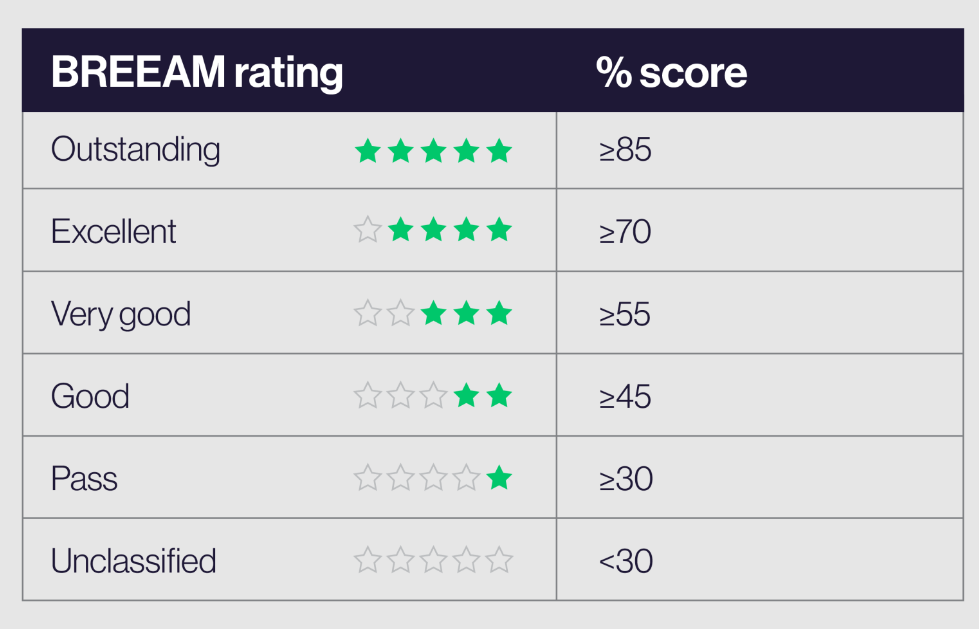
Leading Asset Managers are exceeding minimum compliance to establish competitive advantage. Forward-thinking portfolios are achieving BREEAM Outstanding ratings (85%+) and pursuing biodiversity net gain above 10% through flagship showcase projects. Many are developing proprietary ecological standards that position their assets at the forefront of the sustainability transition, attracting premium tenants and investors in an increasingly ESG-focused market.
The Alvéole advantage in biodiversity compliance
At Alvéole, we understand that BREEAM ecology credits represent more than regulatory compliance; they're opportunities to create value, differentiate assets, and contribute to London's ecological recovery. Our expertise in biodiversity standards, combined with practical implementation experience, positions us as trusted partners for Asset Managers navigating this complex landscape.
The transformation of London's commercial property standards around biodiversity is accelerating. Asset Managers who embrace BREEAM ecology credits as strategic tools rather than compliance burdens will find themselves at the forefront of a market increasingly defined by ecological performance. The question is no longer whether to pursue these credits, but how quickly and effectively they can be integrated into asset strategies.
As London continues to lead global cities in biodiversity requirements, the lessons learned here will shape international property markets. Asset Managers who master BREEAM ecology credits today will be tomorrow's market leaders, delivering returns that benefit investors, occupiers, and nature alike.
For more information on how Alvéole can support your biodiversity compliance and BREEAM ecology credit achievement, visit book a demo with our standards experts.


_b72540c5.jpeg)