

11 facts about bees that will blow your mind
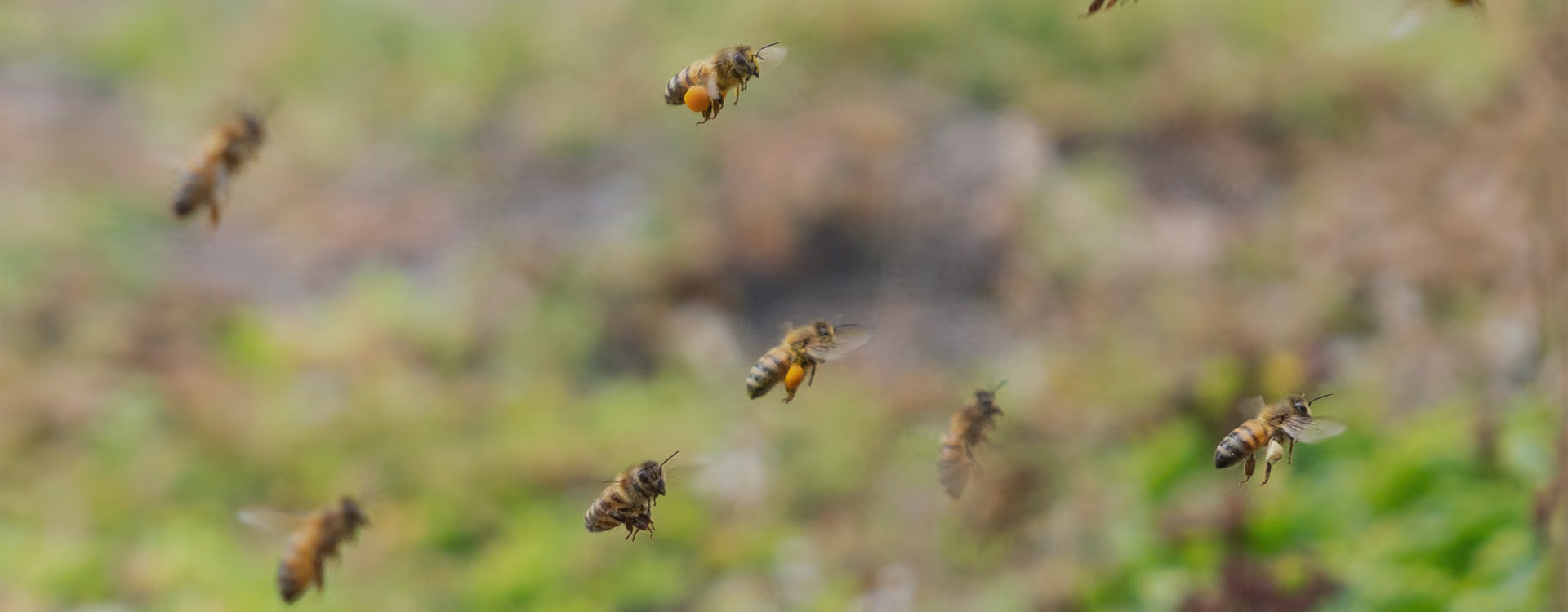
Bees are fascinating creatures that never cease to amaze. You could study bees for years and still learn new facts about bees each day! Here are 11 fun facts about bees that will surprise you, and definitely spice up your office water cooler talk!

1. Bee poop was mistaken for a bioweapon
In the late 1970s, there were reports of a mysterious, sticky, yellow substance falling from the sky in parts of Southeast Asia. This launched a United Nations investigation known as the “Yellow Rain” incident. Some claimed the yellow substance was a toxic chemical or biological weapon. This caused the United States to accuse the Soviet Union of chemical warfare.When scientists sampled the substance they discovered it was actually honey bee feces from passing swarms.
2. Bees don't pee
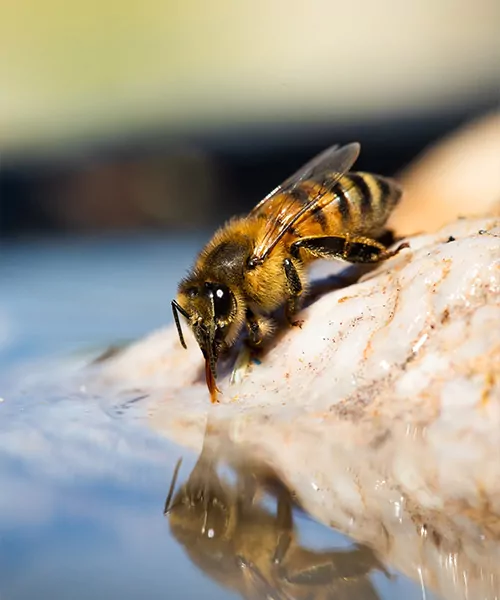
On the topic of bee excrement, they don’t pee. Instead, bees excrete waste in the form of uric acid mixed with their feces (similar to bird droppings). It’s a more efficient way for bees to get rid of waste while holding on to their stored water (which they need to keep from drying out).

3. Bees like caffeine
Just like us, bees love starting their day with a caffeine kick. Certain plants, like coffee and citrus, use caffeine as a natural defense mechanism. It deters harmful insects to protect young leaves, seeds, or fruit.Unlike those unwanted insects, bees are actually attracted to the caffeine-infused nectar. One of the intriguing facts about bees is that caffeine has a similar effect on them as it does on humans: it makes them more alert, increases their energy, and improves their memory.Caffeine’s addictive properties also work on bees. When given the choice, they’ll end up choosing caffeinated nectar over decaf!
4. Beeswax stumped scientists for hundreds of years
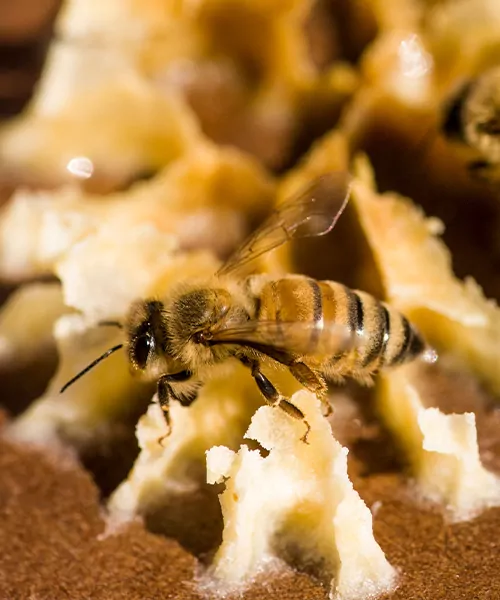
It wasn’t until 1792 that Swiss entomologist François Huber discovered how beeswax was produced. He determined that honey bees produce wax by secreting it from specialized wax glands on their abdomen.Before this breakthrough, it was believed that bees collected resin from trees.
5. Honey bees got their name by mistake
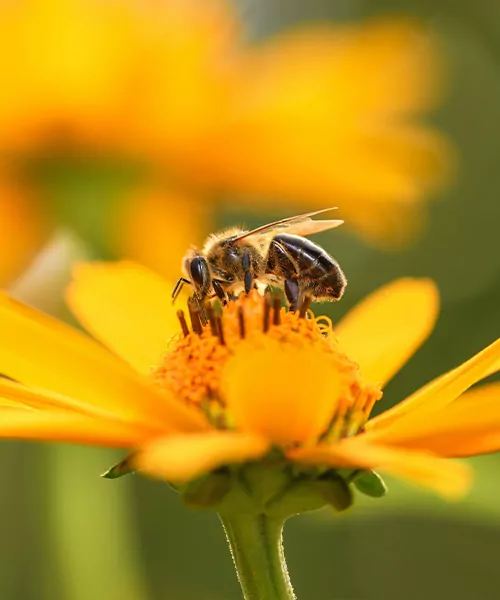
The scientific name for the honey bee is Apis mellifera, coined by Carolus Linnaeus in 1758. This means “honey carrying bee”, because at the time, it was believed that bees collected honey from flowers. Upon realizing that bees collect and carry nectar (not honey), Linnaeus tried to change the name to Apis mellifica, which means “honey making bee”. But Apis mellifera had already stuck.
6. Worker bees live for about 30 days
Bees are nothing if not dedicated. Not only do they always know where to find their colony, but they're also fiercely loyal: they almost never jump ship for greener pastures and head to another hive, at least not intentionally. We've all been blown a little off course now and then, and bees can be taken off course by a strong wind and accidentally land in a neighbouring hive. Though lifespan can vary by type and role, most bees live an average of 30 to 45 days after they're born. That's 30 to 45 days entirely dedicated to sustaining and feeding the colony. A rather heroic feat.

7. Bees talk to one another
But perhaps not in the way you'd think. In fact, their trademark buzzing isn't communication at all. Instead, bees communicate with one another using pheromones, which emit a particular "smell" and cause other members of the hive to modify their behaviour. So if you ever hear one of our passionate beekeepers talking about "smoking" a hive, this is why they're doing it: smoke calms the bees by temporarily hindering their ability to communicate with one another.
8. One queen reigns supreme
Think Queen Bey knows how to draw a crowd? Well, consider that each hive has only one queen, and she makes all of the rules. In fact, one of the fascinating facts about bees is that the queen has an entire court of bees whose sole purpose is to feed, hydrate, and clean her. To be fair, she's too busy laying up to 2,000 eggs every day to do it herself. Talk about a full schedule.
9. And she reigns over 50,000 bees
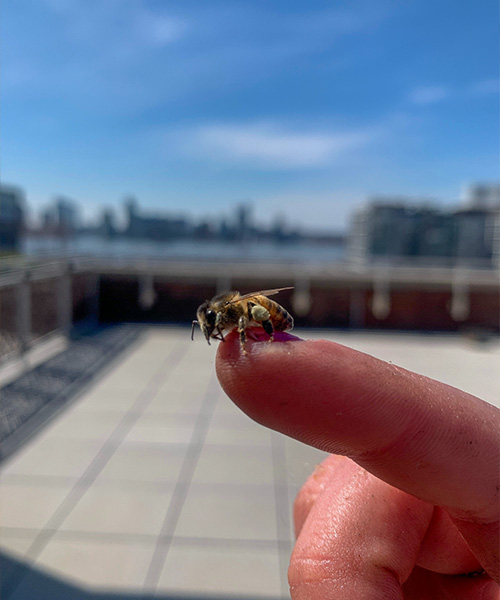
Oh. And did we mention that at the peak of bee season, an individual hive can contain up to 50,000 individual bees? Of those, 90% are typically female worker bees, while the other 10% are male drone bees. That's quite the team.
10. Things heat up in the winter
Though you might not hear them buzzing about, bees are still very active in the winter. In order to keep the hive alive and thriving throughout their hibernation period, they work incessantly to maintain heat in the hive through constant activity. With all that movement in the hive, temperatures can rise up to a whopping 35 degrees Celsius, that's 95 degrees Fahrenheit!

11. Stinging sucks, for you and them
Though many people are still afraid of getting stung, few know that bees will avoid stinging at all costs unless they feel their safety or that of their hive is being directly threatened. Why? Because when they do strike, their stinger gets physically stuck and will tear off, taking part of their abdomen along with it, a fatal blow. That's a rather final consequence for a petty or leisurely sting. Let us guess, you're probably wondering about the actual danger of bee stings at this point, right? The good news is, the Italian bees we work with at Alvéole are known for being incredibly docile and lovely neighbours. In fact, one of the interesting facts about bees is that these aren't the bees you would stumble upon in your yard. Plus, it turns out if you handle bees thoughtfully and carefully, they basically present no risk at all.

.png)
.jpg)