
How to choose the right urban beekeeping company

Contrary to popular belief – and unfounded fears – almost any building can host a honey bee hive. But to truly take advantage of your urban beekeeping experience and keep your bees happy, choosing a qualified and experienced urban beekeeping company is key.After all, beekeeping in the city comes with additional responsibilities, especially if you own or manage a commercial building. To help you make your decision and ask the right questions along the way, here are the 9 things to look for in your ideal urban beekeeping partner.
Key takeaways
- A qualified urban beekeeping company handles everything — installation, maintenance, inspections, seasonal care, and tenant programming — so your building team does nothing operationally.
- The right partner goes beyond keeping bees alive: look for structured tenant engagement, branded honey, and biodiversity data that supports ESG and green-building reporting.
- For a commercial portfolio, prioritize providers that can deliver a consistent, standardized program across multiple assets with portfolio-level participation tracking.
- Ask every provider to confirm their liability coverage, local regulatory compliance, site assessment process, and reporting-grade data outputs before signing.

1. Full-service hive management — so your building team owns none of the beekeeping
Urban hives require regular inspections and maintenance. It's important to work with a professional provider that has the experience, tools, and expertise to keep your bees safe and healthy in a city setting. The right partner will take on everything: installation, maintenance, seasonal hive care, winterization, customer service, public education, workshops, communications and marketing tools, and customized honey jars.
But turnkey means more than keeping bees alive. The strongest programs layer structured tenant programming on top of the beekeeping itself — recurring events like honey harvest workshops, hive tours, candle-making sessions, and honey tastings that give your building a reason to bring tenants together multiple times a year. Your building-branded honey jars become a take-home touchpoint that extends the experience well beyond the event itself.
Look for a provider that also gives your property team a digital way to manage this programming: event registration, tenant communications, and participation data should all flow through a single platform, so you can report on engagement without building a separate process around it.
Though few beekeeping companies provide all of these services while keeping a particular emphasis on education, we believe they are all essential for maximizing your impact, engagement levels, and return on investment.
2. Trained beekeepers who can speak to your tenants, not just tend your hives
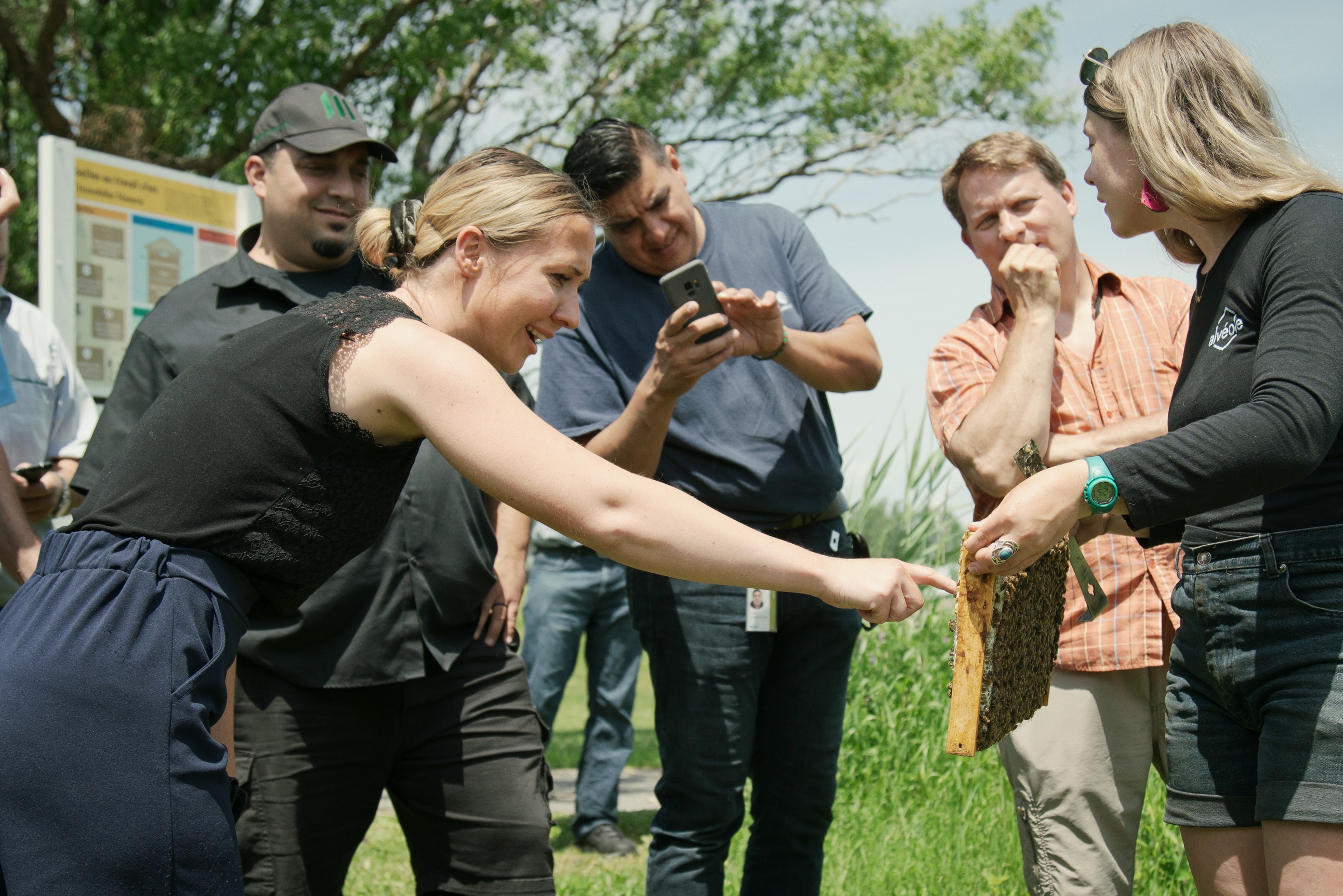
The urban beekeeper's main mission is to ensure the well-being of the colonies across the city while creating opportunities to build public awareness about our delicate ecosystem. Before you know it, hive inspections can quickly become full-blown conversations between you and the tenants in your building, so you'll need a partner at the ready: an experienced urban beekeeping company with a passionate, communicative, and skilled team eager to answer questions and keep the conversation going.
DID YOU KNOW?At Alvéole, our beekeepers are trained in public speaking. Beyond providing sustainable beekeeping services, we include educational workshops and activities in all of our packages.
3. Local teams and regulatory knowledge in every city where you operate
You should be able to count on a local partner who can respond to your needs in a timely manner. That's why we have local beekeeping teams in every city where our bees buzz. We're always nearby and ready to keep your bees happy, healthy, and productive.
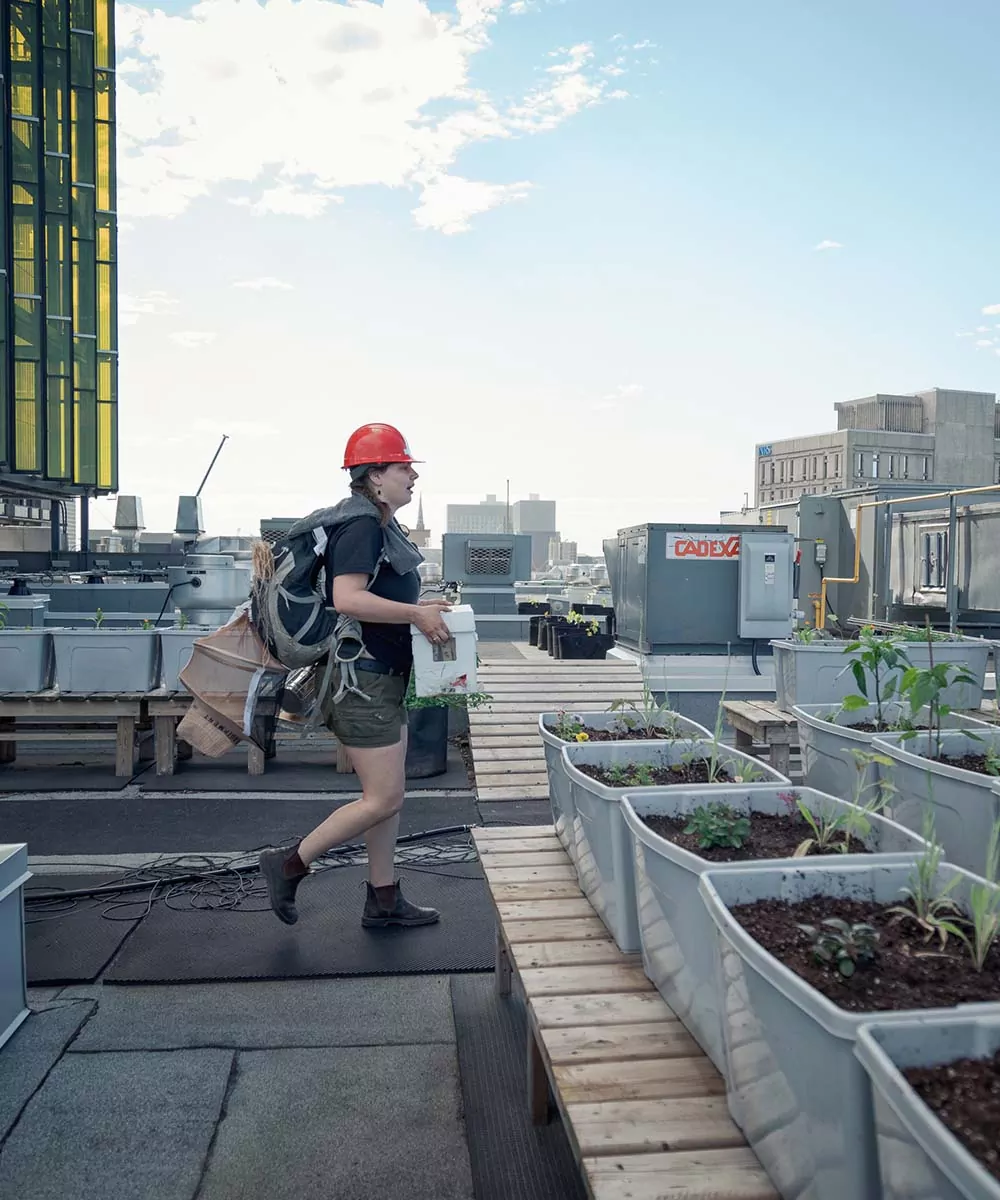
Any partner worth their weight in honey will have an in-depth understanding of local regulations concerning the presence and maintenance of a hive in your urban geographic region. Before you sign on the dotted line, be sure to discuss the regulations in place and validate that your partner has all bases covered.
4. Insurance coverage and safety protocols built for occupied commercial buildings
Though beekeeping in the city is safe when done properly, it does come with additional insurance responsibilities — especially if those bees are in regular contact with the public. To stay compliant and safe, make sure your urban beekeeping company offers complete liability insurance and that your beekeeper has completed the necessary safety training to be prepared for any situation. Hives should be sited away from high-traffic areas, accessed only by trained beekeepers, and supported by a clear tenant communication plan so that occupants know what to expect from the program.
5. Professional equipment and certified facilities from installation to harvest
Urban beekeeping involves a whole slew of specialized equipment and facilities: adapted trucks, certified urban honey houses, extraction and honey-jarring equipment, housing and storage space — the list goes on. To avoid any complications, choose a partner that's properly and professionally set up in your city with the right equipment and certifications to make sure the season rolls out smoothly.
6. A free site assessment to confirm your building is hive-ready before you commit
Once you think you've found your ideal partner, we recommend you kick-start your collaboration by requesting a free site assessment. A good partner will evaluate your needs, determine if your building is suitable for bees, and identify the best potential hive locations on your property— considering rooftop access, flight paths, proximity to tenant gathering areas, and water availability.Nothing should be installed until placement has been reviewed and approved by a professional with experience in occupied commercial buildings.
7. Responsible practices that protect native pollinators, not just honeybees
Urban beekeeping is a powerful way to connect people to nature and inspire environmental action. But just installing hives isn't enough to drive real ecological impact. When choosing an urban beekeeping company, ask what they are doing to implement more sustainable practices.
For example, we at Alvéole made the decision to limit our packages to one hive starting in 2023. In recent years, urban beehives have become more prevalent in cities. There is a growing concern that urban honey bee hives are overtaxing the limited green spaces in cities and potentially competing with wild bees and other honey bees for food resources. By installing one hive per building, we can continue to spark a passion for bees in more city dwellers, without putting additional pressure on other pollinators. We are also proud to include bee homes in our range of services to benefit all pollinators.
8. Sustainability reporting and biodiversity data that feeds your ESG frameworks
A hive on your rooftop is a visible sustainability signal. But a hive that produces verifiable, asset-level data is something your sustainability team can actually use.
When evaluating an urban beekeeping company, ask whether the program can supply measurable outputs that feed into the reporting frameworks your portfolio already works with — including GRESB, LEED, BREEAM, WELL, Fitwel, BOMA, and TNFD. Nature-related disclosure is increasingly expected by investors and certification bodies alike, and a managed beekeeping program is one of the few building amenities that can contribute directly to biodiversity metrics.
Specifically, look for a provider that can deliver:
- Hive health data and colony activity monitoring
- Honey yield and harvest records
- Tenant participation and engagement metrics by property
- Pollinator habitat documentation (including for wild and solitary bees, not just honeybees)
- Portfolio-level reporting that aggregates data across multiple buildings
At Alvéole, our Aura platform generates GRESB, TNFD, CSRD, LEED v5, and BREEAM-ready reports from on-site monitoring data — including our Nature Sensor bioacoustic device, floral eDNA analysis, and smart hive scales — so asset managers can turn a rooftop program into evidence a sustainability reviewer will accept.
A provider that only delivers honey cannot do this work. Make sure you ask what data your program produces, who owns it, and which frameworks it maps to before you sign.
9. Portfolio scalability — one program across all your buildings
If you manage more than one property, your urban beekeeping partner should be able to scale with you. A provider that works well for a single flagship building but cannot replicate the same service quality, programming, and reporting across a portfolio creates more administrative overhead than it solves.
Before you commit, ask:
- Can they service multiple buildings across different cities under one agreement?
- Is the service level, programming, and reporting standardized across all assets?
- Can participation and engagement data roll up into a single portfolio dashboard?
- Is there a central point of contact for account management across your portfolio?
Alvéole currently operates across more than 2,200 commercial buildings in the USA, Canada, and Europe — with clients including major institutional real estate firms managing multi-city portfolios. Our MyHive platform lets property and sustainability teams track event participation, hive updates, and tenant engagement across every building from one dashboard, without duplicating effort at each site.
For a portfolio owner, the right question is not "Can you put bees on this roof?" It is "Can you run this as a consistent, low-lift amenity program across all of our assets, with data we can actually report on?"
Frequently asked questions
Is it safe to have beehives on a commercial building with tenants?
Yes — under professional management. Hives are sited away from high-traffic areas and accessed only by trained beekeepers. Alvéole programs include signage, tenant communication plans, and full liability insurance. Most tenants never come into direct contact with the bees.
How much does an urban beekeeping program cost?
Treat it as an annual operating expense — similar in range to standard tenant events — rather than a capital project. The right benchmark is not cost per hive, but cost relative to other amenity investments: a managed beekeeping program touches tenant engagement, building identity, and sustainability reporting from a single line item.
What happens if a colony fails over winter?
A qualified provider handles colony replacement as part of the program. Ask every vendor directly: who bears the cost and responsibility if a hive fails, and what is the response timeline?
Can the program support our LEED, GRESB, or BREEAM submissions?
Yes — if the provider produces verifiable, asset-level data. Ask what specific data outputs the program generates, which frameworks they map to, and whether the data belongs to your property or stays with the provider.
Do I need to do anything once the hives are installed?
With a true turnkey provider, your team's role is limited to approving the plan and providing roof access. Installation, inspections, seasonal care, tenant programming, harvest, and reporting are all handled by the provider.