

3 ways real estate owners are using Nature Sensor
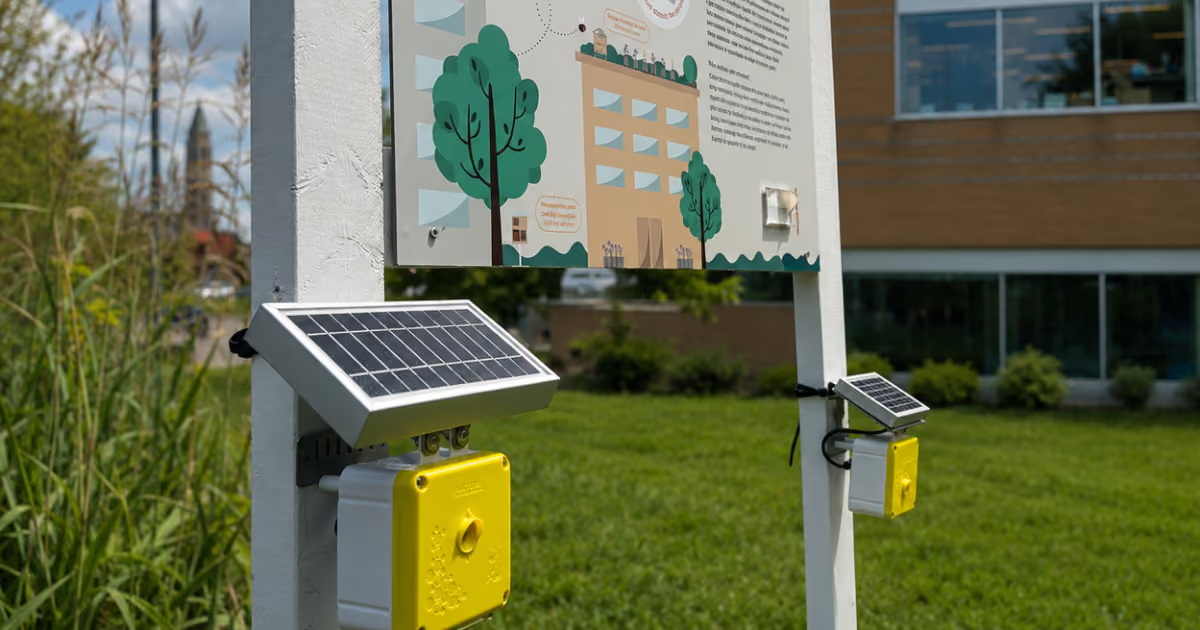
Most people's first read on Nature Sensor is that it's a sustainability reporting tool. It is. But that's only one of the ways teams are actually using it.
Nature Sensor is a hardware monitoring system (paired with a software component) that uses acoustic recognition and AI species identification to track bird and pollinator activity on-site, continuously, and feeds that data into a structured reporting layer.
What's driving adoption isn't enthusiasm for nature. It's pressure. Investors are asking for biodiversity data. Certification frameworks are getting more specific. Regulators are catching up. The question most asset managers are sitting with isn't whether to track biodiversity: it's how soon they need to start.
Norges Bank Investment Management now formally expects its portfolio companies to measure and report on biodiversity. When the world's largest sovereign wealth fund publishes those expectations, "how soon" gets a lot more urgent.
Here's what deployment looks like across three different situations.
1. Building the dataset before LPs ask for it
One leading European real estate investment manager isn't responding to a requirement. They're getting ahead of one.
The bet: LP due diligence on biodiversity is coming, and when it arrives, they want to hand over a year of real, verified, asset-level data rather than a statement of intent. Nature Sensor is how they're building that history now, before the question becomes formal.
It's not a fringe bet. Over 733 organizations across 56 countries, including asset managers overseeing $22.4 trillion in AUM, have committed to nature-related reporting under the TNFD framework. CSRD in Europe already requires biodiversity reporting for large companies. Disclosure requirements are getting broader and more specific, not less.
.avif)
The funds that started early will hand LPs years of on-site biodiversity monitoring data. Everyone else will be starting from zero when the question becomes formal.
2. Closing the biodiversity gap in GRESB reporting
One top-tier Canadian real estate investment manager already had a mature ESG setup. Reporting cycles were structured and GRESB scores were strong. The gap was elsewhere: biodiversity questions were getting more specific, and they didn't have consistent, asset-level evidence to point to.
They deployed Nature Sensor across selected properties.
Bird activity is monitored continuously through acoustic recognition, identifying species from their songs and calls and logging every detection with a timestamp and a verifiable clip. The pollinator sensor runs alongside it, measuring wingbeat activity and acoustic diversity as a proxy for how active and varied the pollinator community is at each site.
.avif)
That data accumulates across the year. By reporting season, the team has a structured biodiversity monitoring dataset rather than a last-minute evidence scramble.
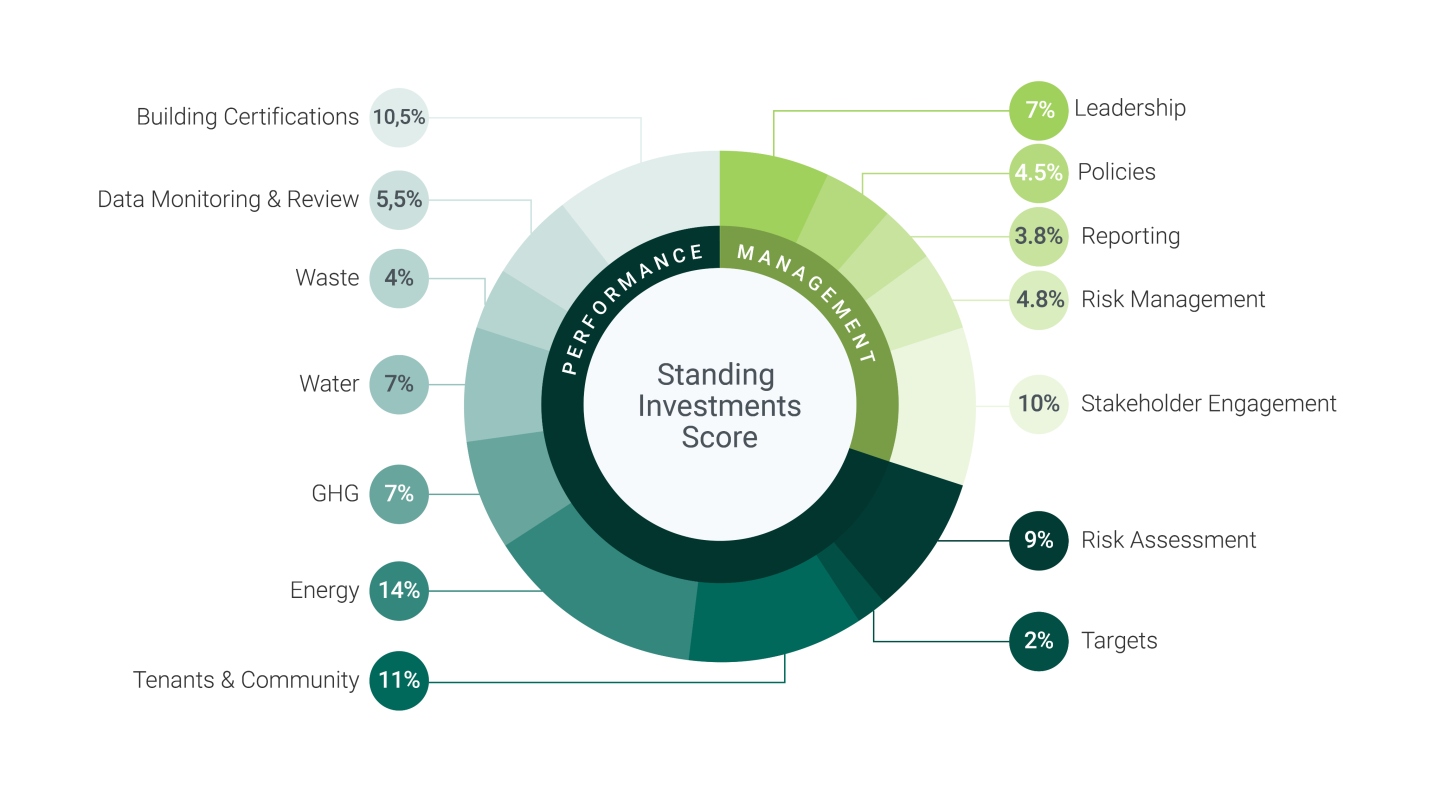
That matters now because GRESB is asking for exactly this. The 2025 update introduced the framework's first biodiversity-specific indicator (RM7), which requires on-site biodiversity assessment and monitoring. Nature Sensor's year-end report is formatted directly for RM7, so the output maps to what the framework requires without additional translation.
3. Extending tenant engagement
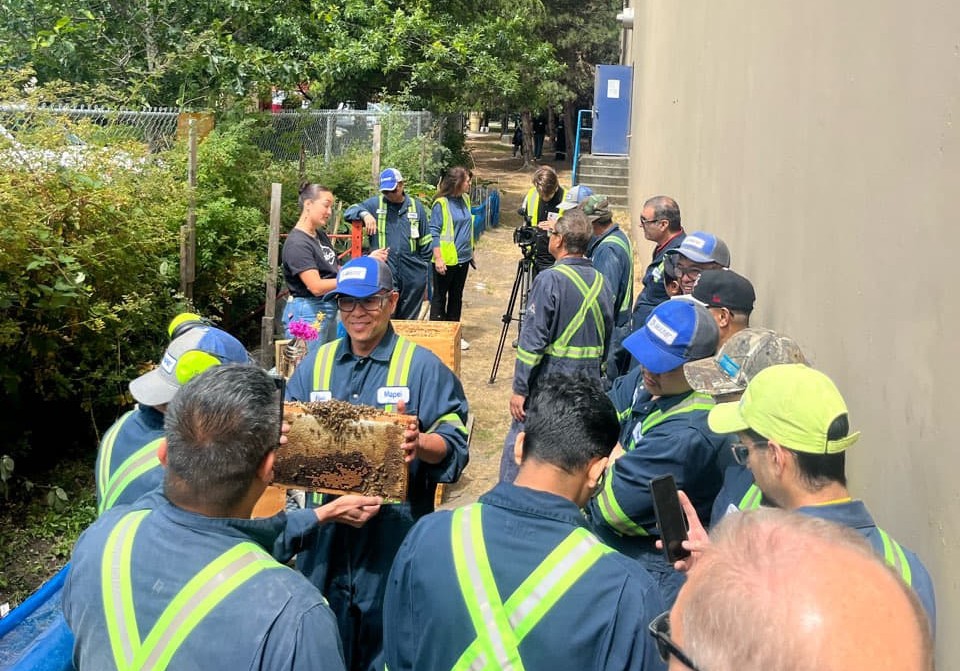
One major office owner had already invested in native species planting and beehives across the site. In 2024, over 3,000 people were reached through beekeeper visits, workshops, and MyHive, Alvéole's tenant engagement platform. But everything stopped at the hive, and everything was episodic.
Nature Sensor extended both. Tenants can now open MyHive (Alvéole's tenant engagement platform) and see which bird species have been detected on-site, hear the actual audio clip, and know exactly when it was recorded. The beehives gave people a connection to something living on their building.
.avif)
Nature Sensor makes the full picture visible: the species coming and going, activity shifting across seasons, the ecosystem the planting is actually supporting.
For asset managers, tenant engagement is an asset. Continuous, year-round biodiversity content gives property teams a reason to stay in front of occupants without scheduling another event. That consistency builds the kind of relationship that shows up in lease performance.
It changes the rhythm too. Instead of appearing during scheduled moments, nature becomes part of the daily environment.
Different situations, same direction
All three are moving from static descriptions of nature to continuous monitoring with verified data.
Most biodiversity work in real estate has been input-based: what was installed, what was designed, what was certified. Nature Sensor shifts the measure toward outcomes: activity tracked over time, not results assumed at installation.
The asset managers who have that data in two years will be ahead of the ones who start collecting it when it's required. That gap is already opening.
_b72540c5.jpeg)