
1,500
550
330 sq mi
It starts with a memorable moment
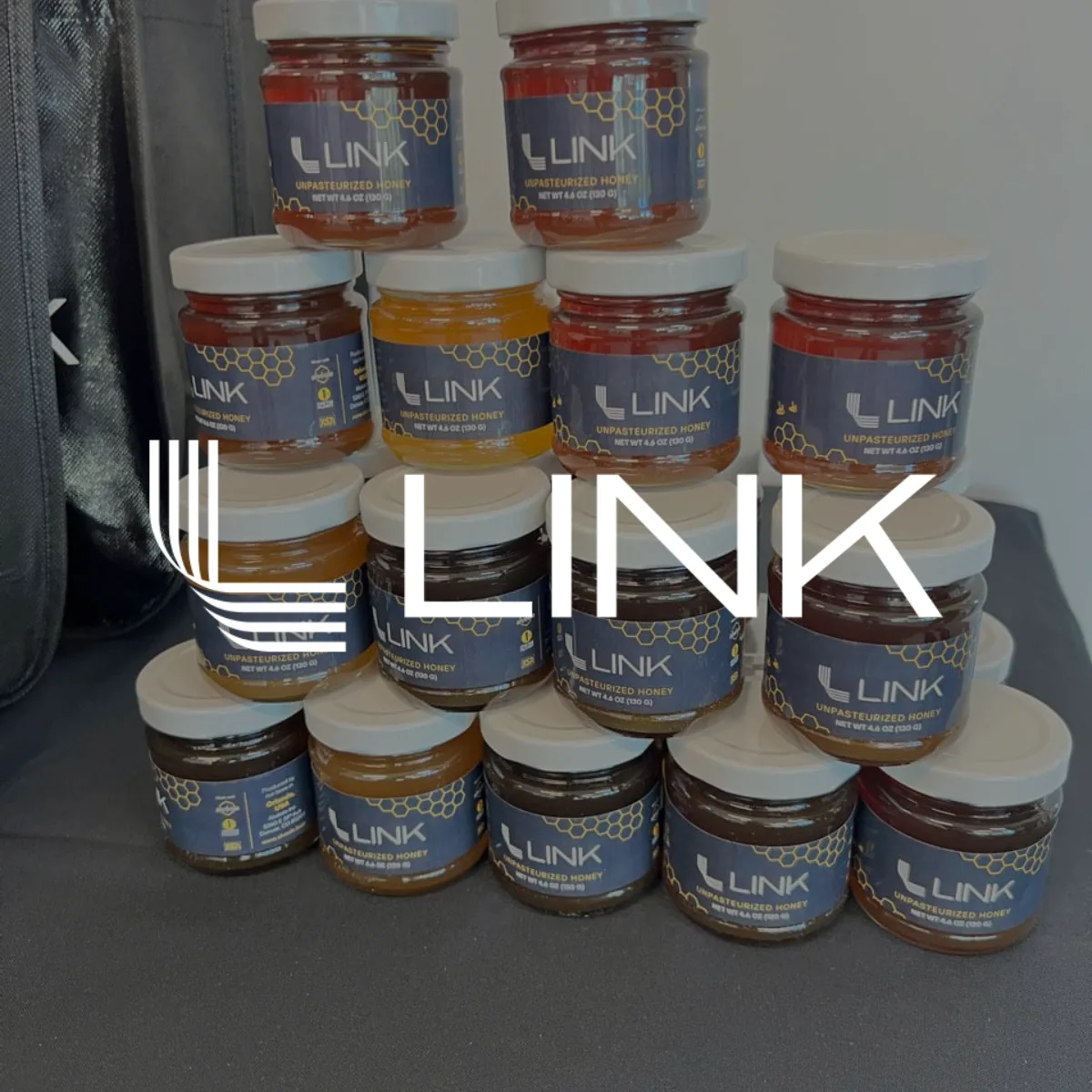
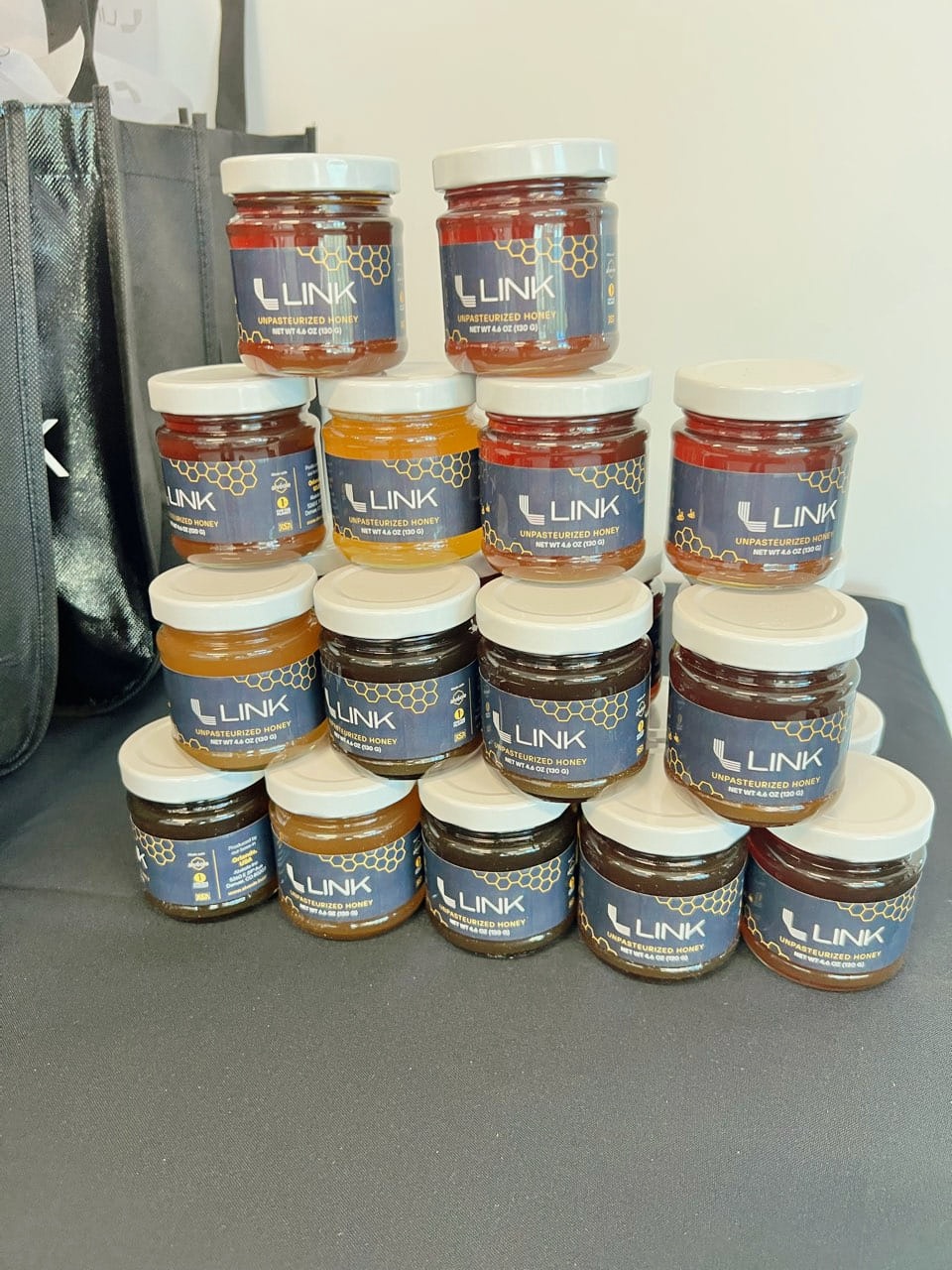
During a tour of a Link Logistics property in South Florida, a prospective customer spotted Link-branded honey jars on display and asked about them.
The conversation quickly moved beyond the building itself. Learning about Link Logistics’ on-site beehive program gave him a different perspective on the company, showing that a firm at Link's scale is willing to invest in both the environment and the local community.
That's exactly what the program does. It helps prospective customers see the company behind the property.
The right fit for an industrial real estate portfolio at scale
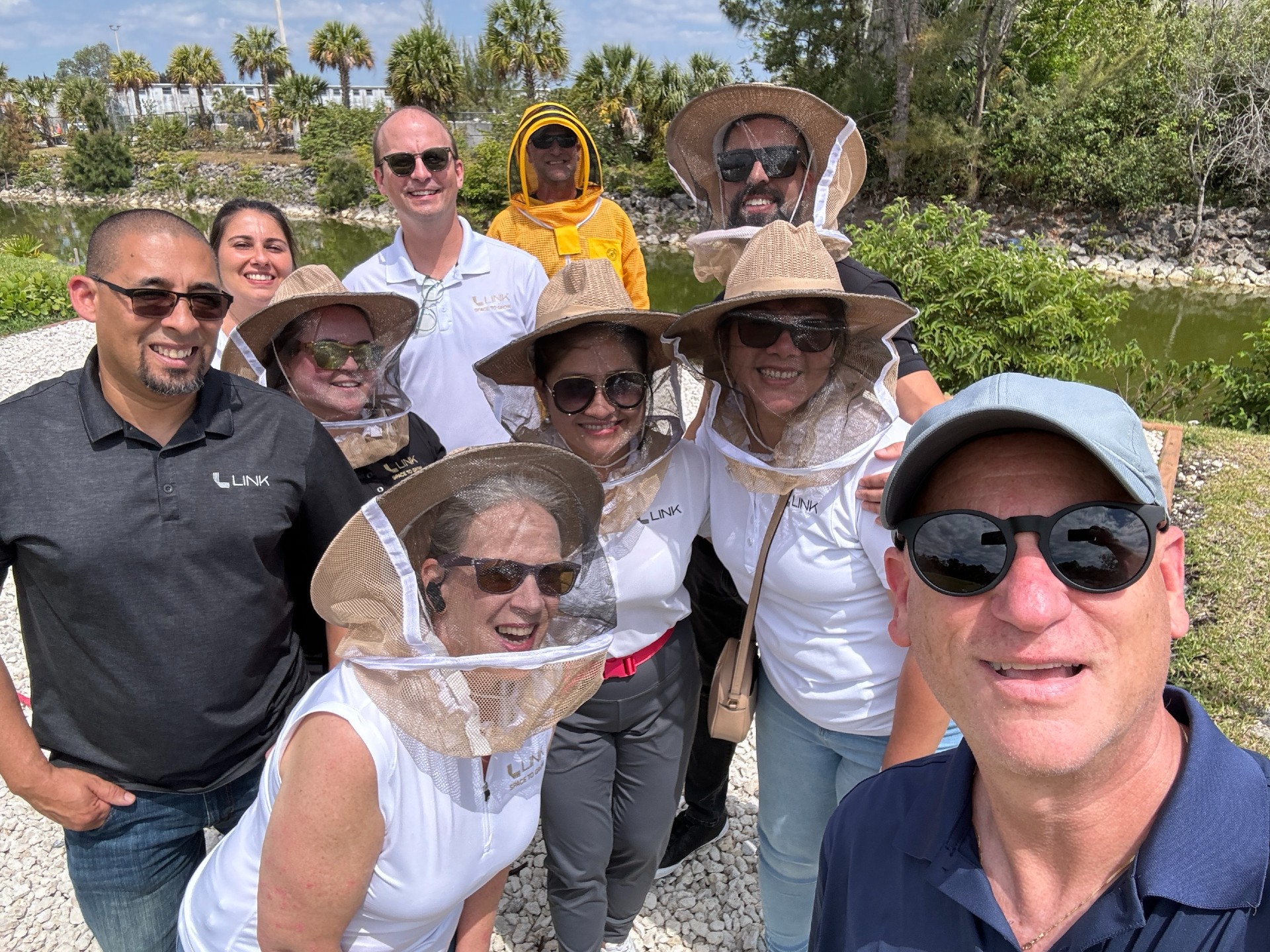
Stuart Pechner, Associate Director of Property Management for South Florida, championed the program across Link Logistics’ South Florida portfolio.
He had already seen it succeed elsewhere. Before joining Link Logistics, Stuart worked for a national third-party provider, overseeing a region covering DC, Maryland, and Virginia. He introduced the Alvéole program there across an office portfolio. Customers responded well, adoption was quick, and the program eventually expanded to other regions across the country.
When Stuart joined Link Logistics, he brought the idea with him: a visible, year-round program with a cost per square foot low enough to fit within a Common Area Maintenance structure.
Hive placement supports the leasing strategy
One of the biggest reasons the rollout worked was treating hive placement as part of the leasing strategy rather than simply a site decision.
The hive is placed where prospects are most likely to encounter it during a tour. Rather than reading about sustainability in a presentation, prospective customers experience it firsthand. The building remains the focus, but the hive gives leasing teams a tangible example of Link Logistics’ commitment to the environment and local communities. It’s also a natural conversation starter with prospective customers.
Deployment follows the same thinking. Rather than installing one hive at every building, Stuart's approach is one hive per cluster. An industrial park with several buildings under one contract shares a single hive across the entire park. That keeps the cost per square foot low and makes the program practical across an entire portfolio, not just at a flagship property.
The experience continues long after the tour
Once a hive is installed, the program is built for customers to find and follow on their own.
The signage invites customers in
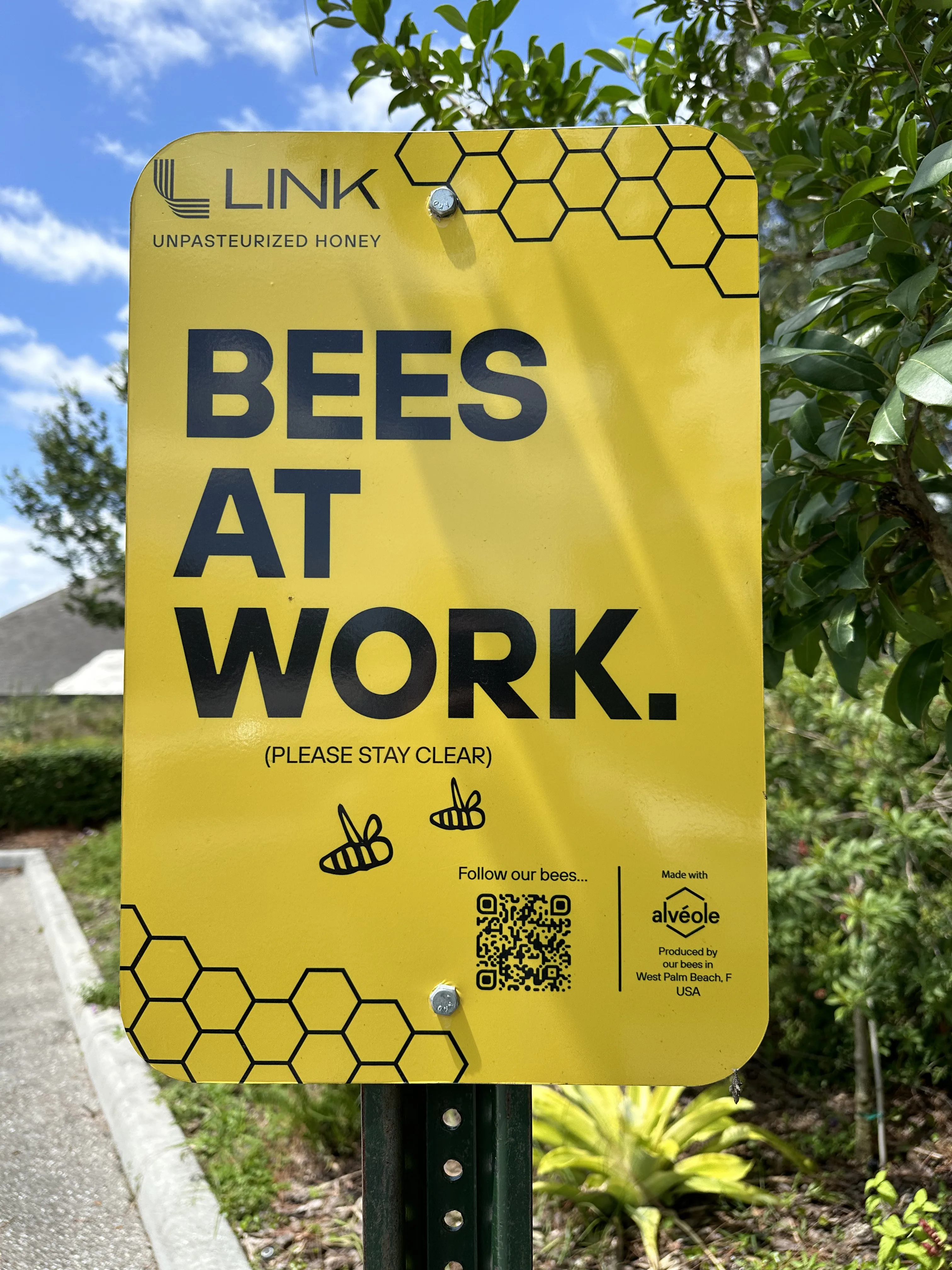
Link Logistics-branded "Bees at Work" signage goes up at each hive, with QR codes linking to a customer-facing MyHive page. Link Logistics customers can follow the colony through the season.
One event a year with the beekeeper
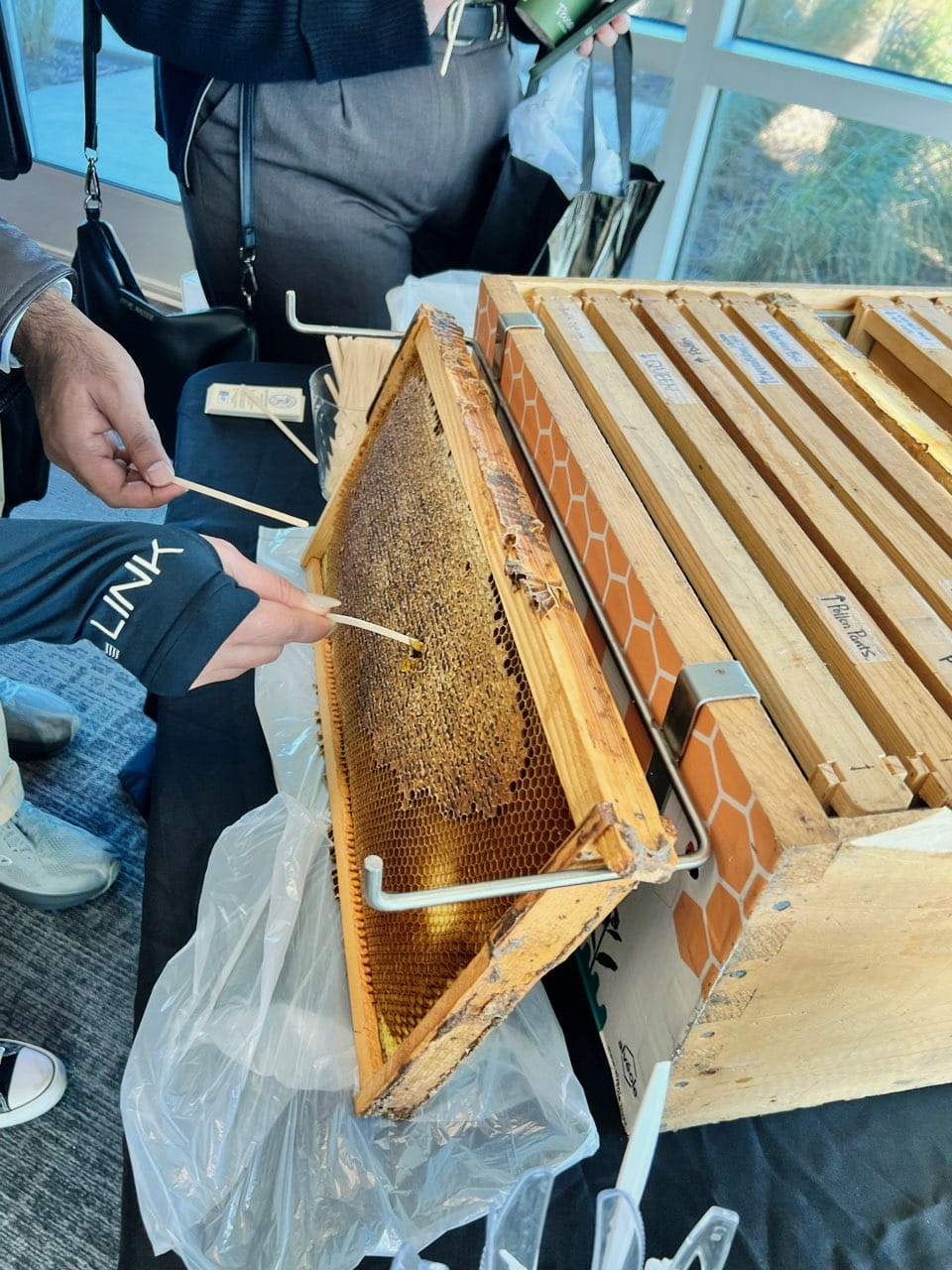
Customers are introduced to the program when it launches and invited to an annual educational session with the beekeeper who maintains their hive.
A turnkey, low-maintenance program for the property team
Alvéole handles the beekeeper visits, hive maintenance, annual programming, and customer communications. Gravel pads replace grass around each installation, keeping nearby maintenance to a minimum. Link Logistics property managers coordinate the initial site walk and forward the necessary templates. After that, everything runs on a predictable calendar without requiring day-to-day management at the property.
Creating a lasting connection to the property
In 2026, Link Logistics’ colonies pollinated roughly 330 square miles of land around the properties where they were installed. That range is one reason each site's honey tastes a little different, depending on what is flowering nearby. Link Logistics bottles it under its own brand.
A broker partner who takes home a jar has a tangible reminder of that particular property. Customers who receive one have a meaningful connection to where they work. Long after a tour is over, those jars keep finding their way back into conversations.
A model designed to grow
Stuart led the first installations in South Florida with the expectation that other regions would eventually follow.
Three years later, property managers in Florida, California, and Illinois are running installations on their own. They coordinate directly with Alvéole's beekeepers, select hive locations, and build the program into their annual budgets. The program scales without requiring a central team to manage it.
Today, Stuart manages 85 properties and 8 million square feet across South Florida. When peers ask whether the program is worth doing, his answer doesn't change.
"Absolutely. It means a lot and people appreciate it."
- Stuart Pechner, Associate Director of Property Management, Link Logistics
Every region that has adopted the program since has started the same way: with a single hive, placed where prospects are most likely to walk past it.
Ready to make your properties more memorable?