
The growing tenant retention crisis in commercial buildings

How property managers can understand the true financial impact of tenant turnover and implement data-driven retention strategies to protect NOI and asset values in today's challenging market.
Commercial tenant turnover costs property owners an average of $31,927 per departing tenant according to recent industry analysis, but this represents only the tip of the iceberg. With 63% of occupiers planning to reduce their real estate footprint per Cushman & Wakefield's 2025 "What Occupiers Want" survey and national office vacancy rates reaching 19.4% in 2024 according to St. Louis Federal Reserve data, understanding tenant departure costs has become critical for asset managers navigating an increasingly challenging market.
Research reveals tenant replacement costs are three times higher than retention costs according to industry analysis, yet many property managers underestimate the true financial burden. Beyond direct expenses like leasing commissions and tenant improvements, hidden costs including management time, reputation damage, and lost NOI compound the problem. With 217 million square feet of office space expiring in 2024-2025 per CRED iQ research, property owners who master retention strategies will gain significant competitive advantages.
Current market realities demand immediate attention
The commercial real estate landscape has fundamentally shifted, with office properties experiencing severe disruption. National office vacancy rates jumped 160 basis points year-over-year to 19.4% in May 2024 according to St. Louis Federal Reserve analysis, with forecasts predicting a peak of 21.6% by late 2025 per CommercialCafe's national office report. This represents a dramatic departure from the 12.1% vacancy rate in 2022.
Regional variations tell a stark story. San Francisco Bay Area leads with 34.7% vacancy by Q1 2025, while Manhattan reaches 22.7% according to Cushman & Wakefield market data. Chicago offers the most affordable major market at $59 per square foot. Meanwhile, retail properties maintain 4.7% vacancy nationally, and industrial properties hold at 6.8% per National Association of REALTORS data.

Office market vacancy rates and lease expirations by region (2024-2025)
MarketCurrent Vacancy RateLease Expirations (Million SF)Avg. Rent/SFMarket StatusSan Francisco Bay Area34.7%15.2$245+Severely DistressedManhattan, NY22.7%32.0$195-225Highly ChallengedChicago18.5%12.0$59Moderate DistressLos Angeles16.8%15.0$145-165Moderate ChallengePhiladelphia15.2%9.0$95-115Stable with RiskNational Average19.4%217.0$125-145Market Correction
Peak forecast: 21.6% vacancy by late 2025
Source: CommercialCafe, CBRE, CRED iQ, Commercial Observer 2024-2025
The lease expiration wave presents both crisis and opportunity. New York MSA faces 173 million square feet of expirations through 2028, with 32 million square feet expiring in 2024-2025 according to CRED iQ analysis. Los Angeles follows with 15 million square feet, Chicago with 12 million, and Philadelphia with 9 million per Commercial Observer reporting.
The financial anatomy of tenant turnover
Understanding turnover costs requires examining direct and indirect expenses. Leasing commissions consume 4-6% of total lease value according to commercial leasing standards. The standard "seven and two" commission structure demands 7% of average annual rent plus 2% of remaining rent, translating to $1.00-$1.25 per square foot annually.
Commercial real estate turnover cost breakdown
Cost CategoryAverage Cost RangePercentage of TotalNotesLeasing Commissions$8,500 - $12,75027% - 40%4-6% of total lease valueTenant Improvements$10,000 - $25,000+31% - 78%$10-100/sq ft nationallyLost Rental Income$3,200 - $8,00010% - 25%40-day average vacancyMarketing & Advertising$1,000 - $2,5003% - 8%$1.00/sq ft averageLegal & Administrative$800 - $2,0003% - 6%Varies by lease complexityManagement Time (Hidden)$2,000 - $4,0006% - 13%40-80 hours @ $50-75/hourTOTAL AVERAGE COST$31,927100%Per departing tenant
Source: Express RPM, Toucan Analytics, Industry Research 2024-2025
Tenant improvement allowances represent the largest cost category, ranging from $10-100 per square foot depending on market conditions per IPG commercial real estate analysis. Northern California commands $211 per square foot, while the Southeast averages $117 per square foot. New York City reaches $145-147 per square foot, while Los Angeles ranges $60-80 per square foot according to CBRE market research.
Lost rental income during the average 40-day vacancy creates immediate NOI pressure according to Express RPM turnover analysis. The cumulative effect reaches $31,927 per comprehensive industry analysis, excluding many hidden costs.
Property class differences significantly impact costs. Class A properties command $92 per square foot in tenant improvements (down 10% in 2024), while Class B/C properties average $73 per square foot (down 16%) according to CBRE's office market outlook.
Why tenants leave: the data speaks clearly
Cost optimization dominates departure decisions, with 63% of occupiers planning to reduce footprint according to Cushman & Wakefield's 2025 survey. Cost drives 80% of tenant location decisions. Large companies (10,000+ employees) are 89% more likely to stay and renegotiate versus smaller companies (47%).
Primary reasons for commercial tenant departures (2024-2025 survey data)
Departure ReasonPercentage of TenantsPrimary DriverRetention StrategyCost Optimization63%Reduce real estate footprintFlexible lease terms, rent negotiationsSpace Right-Sizing57%Downsize while upgradingModular space options, expansion rightsQuality Upgrade59%Move to better-quality spaceAmenity improvements, building upgradesAmenity Enhancement57%Improved employee servicesTechnology, wellness, convenience amenitiesLocation/Accessibility48%Better commute/transport accessTransportation partnerships, parking solutionsFlexibility Requirements58%Expansion/contraction optionsCreative lease structures, short-term optionsESG/Sustainability39%Meet corporate ESG goalsGreen certifications, sustainability programsTechnology Integration44%Enhanced IT/hybrid work supportSmart building features, conference tech
Survey includes 85% expecting enhanced amenities, 87% prioritizing public transport access
Source: Cushman & Wakefield "What Occupiers Want" 2025, CBRE Americas Office Occupier Sentiment Survey 2024
Space right-sizing drives 57% of occupiers to downsize while upgrading. CBRE's 2024 survey reveals 49% of companies sublease excess space (down from 62% in 2023). The global trend shows 22% decrease in average square footage per person.
Quality upgrades motivate 59% of tenants exploring relocation according to CBRE's 2024 Americas Office Occupier Sentiment Survey. 85% of occupiers expect enhanced amenities, with 46% willing to pay premiums per Cushman & Wakefield research.
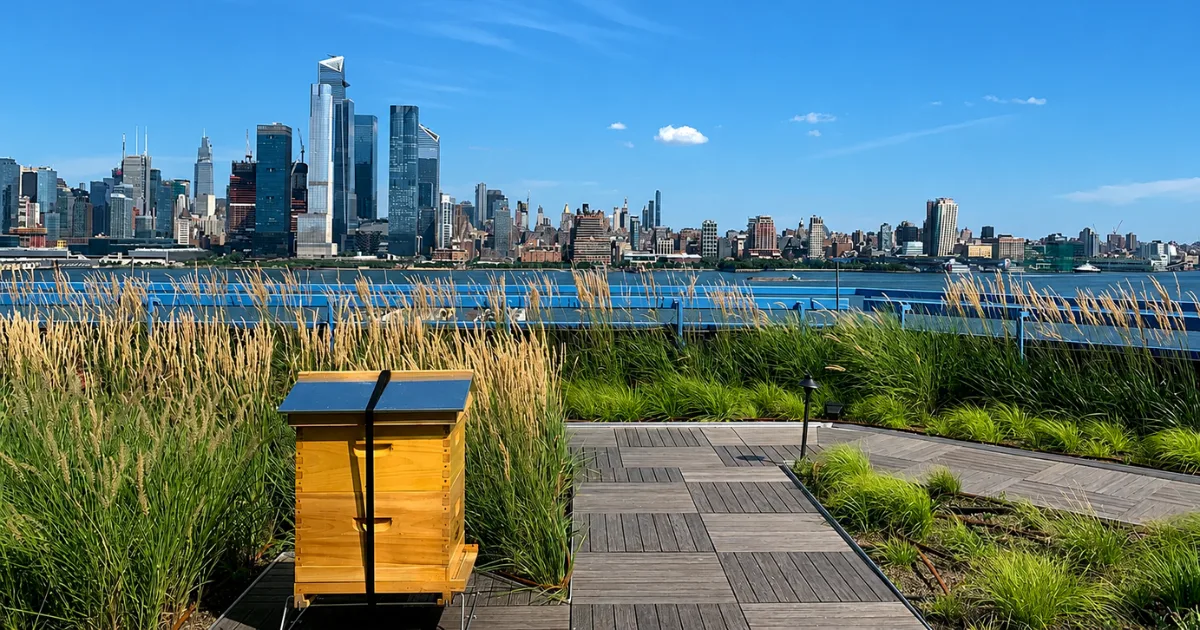
Forward-thinking property managers are implementing unique engagement programs like Alvéole's urban beekeeping services, which create memorable experiences that traditional amenities cannot match.
Location factors remain paramount. 87% prioritize public transport access, while 61% demand in-building parking (up from 54% in 2023) according to CBRE's global workplace insights. 69% desire bicycle/scooter storage.
Post-pandemic trends reshape tenant behavior
Hybrid work has altered space requirements, with 92% using hybrid models according to CBRE's 2024-2025 Global Workplace Insights. JLL's Future of Work Survey reveals 44% remain "office advocates" (5 days/week), while 56% embrace "hybrid adopters." Office utilization stabilized at 51-60% globally per CBRE analysis.

Flexibility demands intensified, with 58% exploring flexible expansion/contraction options and 33% favoring creative lease structures according to CBRE's Americas Office Occupier Survey. Flexible office space adoption grew to 42% of portfolios (up from 36% in 2023). 61% adapt real estate strategies for diverse talent pools per Cushman & Wakefield data.
ESG requirements emerged as significant factors, with 66% implementing ESG goals in real estate strategies according to CBRE's Asia Pacific Office Occupier Survey. 39% rank sustainable building features as highly desirable (rising to 61% among largest companies). Two-thirds integrate ESG into real estate decisions. Property owners are responding with nature-based amenities like Alvéole's urban beekeeping programs, which address both sustainability goals and tenant engagement requirements simultaneously.
Technology integration became non-negotiable, with 44% implementing IT modifications for hybrid working and 40% investing in enhanced conference technology per CBRE research. Organizations target 80-90% office utilization, requiring integrated occupancy sensors and AI capabilities.
Financial impact on asset performance
Tenant turnover creates multiplier effects beyond direct costs. Every $10,000 NOI increase can result in $143,000+ property value increase at 7% capitalization rate according to commercial real estate analysis. Properties with high turnover face higher investment risk, potentially increasing cap rates.
NOI suffers through multiple channels during turnover cycles. Vacancy losses reduce gross rental income, while turnover costs increase operating expenses. Compounding effects create substantial asset value erosion per VAC Development research.
Financing implications become acute as lenders scrutinize NOI stability. Properties with consistent turnover problems face difficulty securing favorable terms, while high-performing assets command premium rates. Reputation damage affects future leasing velocity and market perception.
Building-level research demonstrates 10% higher tenant satisfaction correlates with 0.2% higher gross rent growth, 0.9% higher effective rent growth, and 0.3% lower vacancy rates according to academic research published in SSRN.
Retention strategies that deliver measurable returns
Management excellence represents the highest ROI strategy, with Grace Hill/Kingsley Associates research revealing 70% correlation between management staff ratings and tenant satisfaction. Service delivery shows 54% correlation, while physical attributes achieve only 42% correlation.
BOMA 360 certified buildings demonstrate industry-leading performance, earning higher scores in nearly all tenant satisfaction categories according to BOMA International research. CoStar research confirms BOMA 360 buildings achieve higher retention rates and command higher rental rates.
Innovative amenity programs address multiple priorities simultaneously. Urban beekeeping programs address 57% of tenants seeking improved amenities while meeting 39% who rank sustainable features as highly desirable. Nuveen's 730 Third Avenue reports 30-40% engagement rates building-wide, while BGO's 757 Third Avenue won the 2024 BOMA Pinnacle Earth Building of the Year award partly due to their bee program.
Technology-enabled engagement shows strong returns, with 58% likely to use property management apps. Properties implementing real-time communication systems, mobile apps, and digital amenity management report measurable improvements in satisfaction and retention.
Responsive maintenance programs create 70% improvement in tenant satisfaction when addressing requests promptly. Systematic approaches including preventive schedules, regular inspections, and real-time communication significantly improve renewal rates.
Nature-based amenities deliver superior ROI
Research demonstrates that biophilic design elements provide measurable returns addressing multiple tenant priorities simultaneously. A study titled "The Global Impact of Biophilic Design" found that workspaces incorporating natural features reported a 15% increase in well-being, a 6% rise in productivity, and a 15% boost in creativity. While traditional fitness amenities cost $30-80 per square foot for apartment gyms and $100-350 per square foot for commercial facilities, nature-based solutions like green roofs cost $10-50 per square foot while delivering year-round engagement opportunities.
Urban beekeeping programs represent the most cost-effective solution, addressing the 39% of tenants seeking sustainable features and 57% wanting enhanced amenities identified earlier. Alvéole, the largest-scale urban beekeeping company operating across USA, Canada, and Europe, has partnered with over 2,500 leading organizations since 2013. Major asset managers like Nuveen have brought nature-based bee programs to over 25 buildings across the U.S., while Brookfield Properties has installed 37 beehives across 19 properties.
Documented results demonstrate exceptional returns: Nuveen's 730 Third Avenue reports "30-40% engagement rate building-wide, with that number only increasing over time" according to Assistant Property Manager Jasmine Czarnecki, who noted that "tenant experience has skyrocketed" due to the partnership. These programs also provide green building certification benefits, with BOMA Canada awarding up to 13 points for rooftop beehive services, while properties like BGO's 757 Third Avenue won the 2024 BOMA Pinnacle Earth Building of the Year award partly due to their bee program.
The combination of minimal infrastructure requirements, exceptional engagement metrics, and multi-benefit delivery makes nature-based amenities essential retention tools. Unlike traditional amenities requiring substantial ongoing operational costs, urban beekeeping and biophilic elements create authentic community connections while supporting corporate ESG goals, providing property managers with cost-effective strategies that simultaneously address tenant demands for sustainability, enhanced amenities, and meaningful workplace experiences.
Hidden costs and operational impacts
Management time represents substantial hidden expenses, with each leasing process consuming 40-80 hours per transaction. Opportunity cost of time diversion compounds true turnover costs.
Reputation effects create long-term disadvantages. Properties with high turnover take longer to lease and may attract less stable tenants. Operational disruption affects building operations and other tenants during turnover periods.
Strategic implementation path
Property owners must adopt comprehensive retention strategies addressing immediate tenant needs and long-term asset performance. Management excellence delivers highest ROI, requiring investment in staff training and responsive maintenance. Innovative amenity programs like Alvéole's urban beekeeping services offer cost-effective solutions that simultaneously address multiple tenant priorities: sustainability goals (39% of tenants), enhanced amenities (57% seeking improvements), and community engagement opportunities.
Technology integration became essential, with 58% of tenants likely to use property management apps. Proactive lease renewal should begin 12-18 months before expiration. The cost of replacement at three times retention cost creates compelling business case for investment.
Conclusion
Tenant turnover costs extend far beyond $31,927 per departure, encompassing hidden expenses and long-term asset impacts. With 63% planning footprint reductions and 19.4% national vacancy rates, property owners must prioritize retention strategies addressing evolving needs while maximizing performance.
Management excellence delivers highest ROI in retention, requiring modest investments compared to major capital improvements. Properties implementing comprehensive programs consistently outperform market averages in satisfaction and financial performance.
Success requires understanding that tenant retention is asset management, with direct impacts on NOI, cap rates, and property values. The combination of excellent service delivery, strategic technology adoption, and comprehensive amenity programs creates sustainable competitive advantages in an increasingly challenging environment.