
What retail asset managers need from a pollinator program partner
Rooftop beehives and pollinator gardens sound like easy wins. The reality is messier. Many asset managers discover that their "low-lift" program requires them to design events, create marketing content, and build a narrative from scratch while their vendor simply maintains the hive.
The difference between a basic beekeeping service and a turnkey pollinator program partner determines whether the initiative generates measurable value or quietly disappears.
What pollinator programs deliver for retail asset managers
Pollinator programs produce biodiversity disclosure documentation, recurring tenant events, and participation data that asset managers can use in investor reporting. For retail asset managers, they offer a visible amenity that leasing teams can reference during property tours and that marketing teams can use without additional production work.
The differentiation output is concrete. A rooftop hive or native bee habitat gives leasing teams a talking point backed by a live program. It gives asset managers a line item in investor reports that most competing properties cannot replicate.

The DIY trap: when low-lift programs become high effort
Basic hive maintenance is just the starting point. Without structured programming around the hive, it sits on a rooftop. Tenants never interact with it. It produces no participation data, no events, and no content for investor reporting.
When a vendor delivers a hive but no marketing toolkit, the production burden lands on the property team. Someone on staff has to design the flyers, write the social posts, and coordinate a honey harvest event from scratch. We have seen property teams receive branded honey jars from their provider with no label templates, no suggested uses, and no guidance on distribution. The jars sit in a closet. The program produces nothing the asset manager can report on.
Retail property teams rarely have surplus bandwidth. A pollinator program that requires in-house content creation competes with leasing priorities, tenant relations, and capital projects. The asset manager introduced the initiative to drive value. Instead, it becomes another item the PM team cannot get to. A turnkey partner removes that burden entirely. The PM team stays focused on operations. The asset manager receives events, participation reports, and branded deliverables on a fixed schedule.
Timing challenges: redevelopment and budget cycles
Newly acquired assets often face redevelopment timelines that shift. Asset managers hesitate to commit to a rooftop hive when the rooftop itself might be under construction. Flexible program structures address this directly. Native bee homes are relocatable and can be installed in interim locations. Pre-launch activations like educational signage and naming contests produce early tenant participation before the full program goes live, without requiring a permanent installation.
Budget cycles create their own constraints. A complimentary site assessment in the fall gives asset managers the information needed to include the program in Q1 forecasts. That turns a vague interest into a line item with a defined scope and a timeline.

What a turnkey pollinator program actually looks like
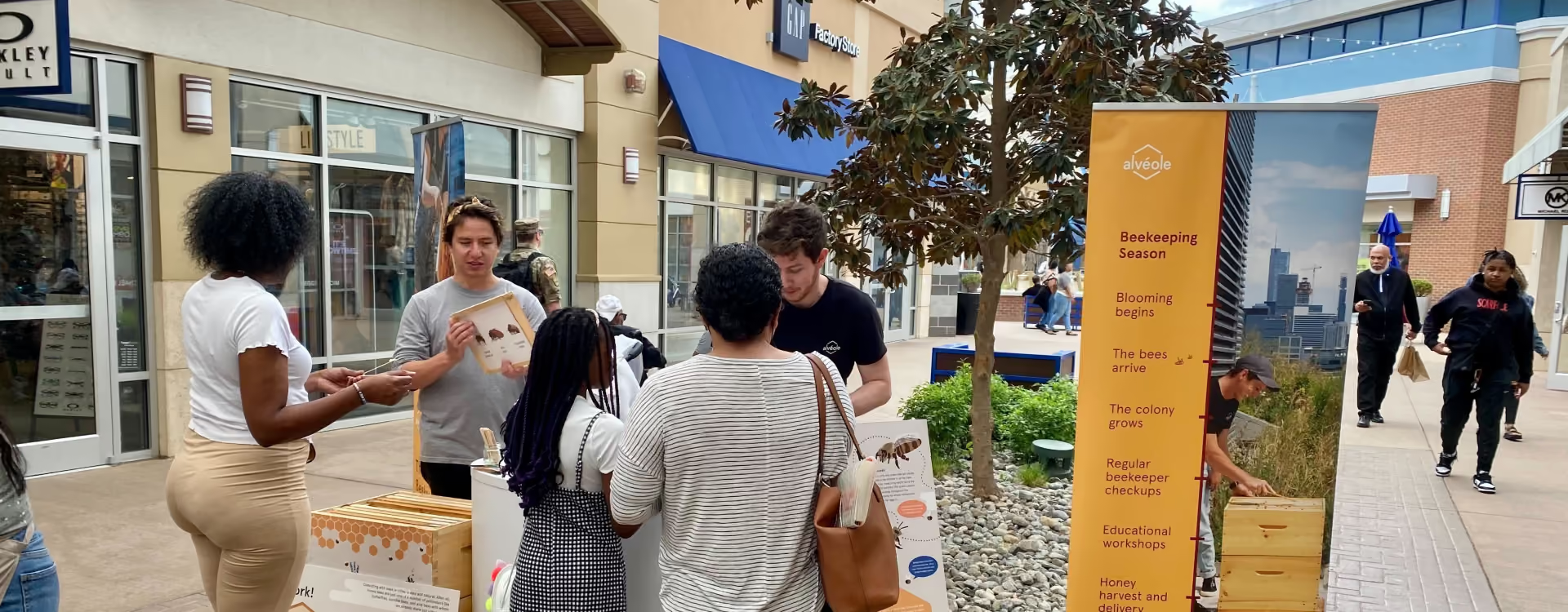
In a turnkey model, beekeeper visits are not maintenance calls. They are scheduled tenant events with defined attendance outputs. One retail center expected 50 attendees at a honey tasting and drew nearly 300. That result only happens when the event is designed, promoted, and managed by the partner, not the property team.
A turnkey partner delivers event playbooks for honey harvests, educational workshops, and seasonal activations. It provides marketing templates including social media graphics, email copy, and signage ready for property branding. It supplies branded honey jars and packaging ready for tenant distribution. After each event, the asset manager receives a participation report. That report is ready for investor meetings without additional work from the property team.
This is the zero-coordination model. The asset manager approves the program. The partner handles every operational detail. The PM team receives no coordination requests.
Program elementBasic vendorTurnkey partnerHive installation and maintenance✓✓Scheduled community events—✓Marketing templates and social content—✓Branded honey jars with labeling support—✓Site assessment and placement guidance—✓Participation reports after each event—✓
Building buy-in and phasing implementation
Asset managers sometimes encounter skepticism from colleagues who have seen sustainability initiatives produce nothing. A pollinator program with a documented activation calendar gives skeptics something concrete to evaluate. The installation is visible. The events are scheduled. The participation reports are exportable. Each phase produces data the asset manager can bring to an investor meeting.

Not every property is ready for a full program on day one. Phased approaches let asset managers test before committing to a portfolio-wide rollout. Pre-launch activations through educational signage and naming contests introduce the program before hives are installed. Relocatable native bee homes adapt as site conditions evolve. Piloting at one or two assets first reduces risk and generates the participation data needed to justify broader deployment.
How to get started
The first step is a site assessment. A local expert evaluates placement options, landscaping conditions, and microclimate factors before any commitment is made. The assessment is complimentary.
Questions to ask when evaluating pollinator program partners: Do you provide a full marketing toolkit, or just hive maintenance? What events and activations are included? How do you handle properties in redevelopment or with uncertain timelines? What participation data and reports do you provide after each event?
For asset managers targeting Q1 implementation, fall is the right time to begin these conversations.
Ready to evaluate your property? Book a complimentary site assessment to explore placement options at your site.