
Why industrial assets need amenities that don't stop operations
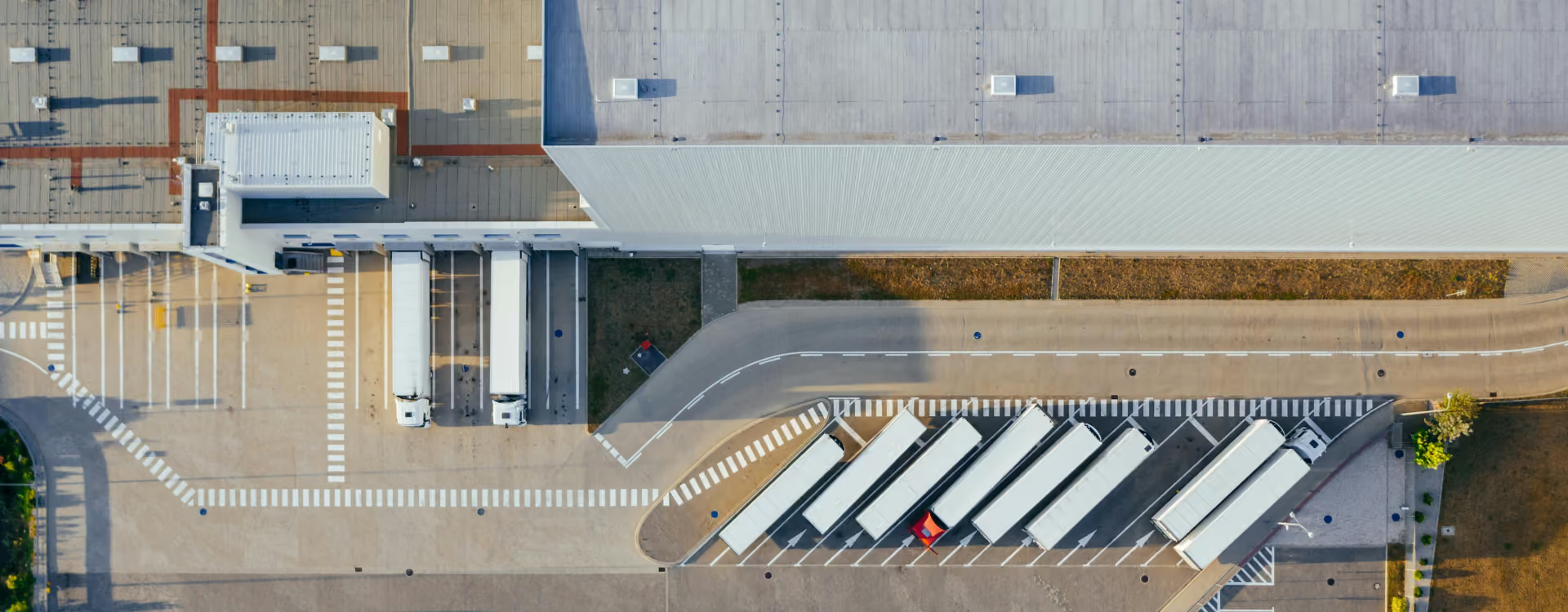
Industrial and logistics properties operate differently than office towers. Asset managers need to differentiate these sites to retain institutional tenants, support tenant hiring efforts, and add value to their locations. The challenge is finding amenities that accomplish this without interfering with operations.
Tenant retention drives NOI protection
Industrial properties face distinct pressures. Asset managers must balance tenant retention, labor recruitment support, and location differentiation. A distribution center tenant manages tight shipping schedules. Any amenity that brings extra people onsite or blocks dock access becomes a liability, not a benefit.

JLL research shows industrial tenants prioritize operational efficiency and supply chain resiliency when making leasing decisions. Many industrial sites receive zero investment in tenant programs. This makes them vulnerable when a lower-cost lease appears nearby.
Traditional amenities don't work for logistics
Food trucks block truck courts. Lounges take up square footage needed for operations. CBRE research confirms modern logistics facilities prioritize power capacity, automation readiness, and dock-to-square-footage ratios over traditional tenant perks.
Industrial tenants need amenities that are:
- Visible without requiring participation
- Independent of daily operations
- Zero-impact on throughput schedules
Ground-level programs work differently
Beehives and pollinator habitats installed on industrial sites function as passive indicators of site quality. They operate independently of warehouse schedules. Tenants do not need to participate for the program to remain active.
Asset managers evaluating industrial portfolios weigh tenant retention as a critical performance metric. The challenge in the industrial sector is balancing differentiation with operational efficiency. A program that requires zero downtime solves both.

Reporting data matters for investor disclosure
Industrial properties are increasingly evaluated on sustainability metrics. GRESB assessments require asset-level environmental performance data for institutional investors.
Asset managers need concrete data to include in quarterly reports. Platform subscriber counts, nature impact metrics, and site-specific biodiversity tracking provide quantifiable outputs for GRESB or CSRD reporting frameworks.
The data comes from the program provider, not the property manager. This means no additional workload for the onsite team.
Portfolio-ready execution is key
A program that works in one industrial site needs to work in 20. Asset managers evaluating amenities for their portfolio look for scalable deployment across multiple sites, consistent data reporting formats, and independent local experts who manage installations.
Industrial sites in different regions have different operational constraints. The focus is on flexibility without requiring site-by-site customization that increases PM workload.

Safety and independence matter
Industrial sites have strict safety protocols. Any amenity program must operate with full independence from site operations. Local experts handle all onsite work. They coordinate with site security. They follow protocols for accessing restricted areas. They carry proper insurance.
The tenant never needs to adjust their schedule. The distribution center runs normally while the habitat is maintained quarterly.

What this means for asset managers
Industrial assets need differentiation, but not at the cost of operations. A visible, low-disruption amenity provides:
- Lease renewal support through passive site quality indicators
- Portfolio-wide subscriber data exports
- GRESB-compatible nature metrics
- Zero operational downtime
- No added PM workload
Retention costs less than turnover across industrial portfolios. The solution is finding amenities that align with how industrial tenants actually operate.