How GRESB Will Score Biodiversity in 2028
GRESB scores biodiversity for the first time. This is a game changer for CRE.
The biodiversity and nature strategy indicator (RM7) is worth 3.25 points out of 100, and to get them you need a portfolio-wide strategy aligned with a recognized framework like TNFD. A few nice projects on a few buildings won't do it on their own.
Nature has always been at the core of Alvéole. Back in 2022, governments met in Montreal, our hometown, and adopted the Kunming-Montreal Global Biodiversity Framework at COP15. Basically nature's version of the Paris Agreement. Nine months later, TNFD (the Taskforce on Nature-related Financial Disclosures) released its final recommendations.
Around that time, when we started telling our clients we wanted to build a data product for nature, the answer was always some version of: "That sounds great, we get why. But until it's scored on GRESB, you won't get much traction."
Fair enough. But as a GRESB partner, we'd been part of a lot of conversations about where the Standard was heading, and the direction was pretty visible. So we made a pretty big bet and built Aura before those points existed.
And now it's scored. Here's what that means.
What changes for biodiversity in GRESB 2028?
RM7 has been in GRESB since 2025, but it wasn't scored. GRESB was basically gathering intel. In the 2028 Standard, it (finally) counts: 3.25 points, in both the Standing Investments and Development benchmarks.
Biodiversity is one of four new topics entering the score, and the biggest of them:
3.25 points might sound small, but it's actually massive when you dig into it.
Think of a building. Think of everything you have to account for: energy, carbon, water, waste, certifications, tenants… a million things. For biodiversity to show up at 3.25 points the very first time it's scored tells you a lot about what investors are asking for.
GRESB says it plainly in the standard: nature-related issues are increasingly material to real estate. Flooding, extreme heat and water stress raise operating and insurance costs, and they affect asset value.
Why is everyone's GRESB score about to move?
Because biodiversity isn't the only change. The whole standard is shifting from management to performance.
For years, you could score well on GRESB by being really well organized. Good policies, good processes, a binder with a million things in it. It's a bit like winning an award for having your HR policies in order.
In 2028, those foundational practices become your ticket in, not what you'll get points on. For example, measured energy and GHG performance jumps from 6.5% of the score to 30%. GRESB has always compared you to your peers, but now it's comparing your buildings actual performance, not your paperwork. I think that's a great thing, even if at first glance it can seem like a daunting change.
Obviously the total is still 100, but with the four new added topics worth a total of 10.25 points, every existing point gets diluted by about 10%.
So if you're a sustainability lead and finally got a grasp on GRESB, well now they're changing the whole thing under you, and nobody is going to accept a lower score. So the question for the next year is very pragmatic: where can I make up my points?
Refrigerants and grid interactivity are pretty complicated to get right. Innovation points depend on what GRESB decides to accept. A biodiversity strategy, once you break it down, is a lot simpler than it looks, but probably isn’t what you thought it was.
Here's the interesting part. In 2026, 60% of Standing Investments participants and 68% of Development participants told GRESB they had a biodiversity strategy. But many of those answers described property-level activity, like native planting or habitat features (or bees on roofs), and only a minority referred to a framework like TNFD.
So a lot of people think they have a biodiversity strategy. Under the 2028 definition, many of them won't get the points.
And coming from a company that puts beehives on roofs, I'll say it plainly: if you only do bees on three buildings, you're not going to get your GRESB points.
That doesn't mean the bees go. On-site projects can absolutely be part of a strategy, the difference is the order. You look at nature-related risks and opportunities across every asset, then you choose where to act, often on your flagship buildings, where it creates the most value. That's a portfolio strategy. Bees on their own are just bees.
Do you need to be TNFD fluent to get the points?
No. The way I read it: they're not asking you to read every page of the guidance. They're asking you to have a strategy aligned with TNFD, and you don't have to go crazy.
TNFD has sector guidance for real estate, with indicators that are pretty intuitive once you see them:
- Does your building keep the lights on all night?
- Are you using harmful chemicals close to natural habitats?
- Is the building next to a protected area or a key biodiversity area?
- (Among others things)
What does TNFD's LEAP look like for a real estate portfolio?
LEAP is the four-step approach behind all of TNFD's guidance. For a portfolio, it goes like this:
- Locate: figure out where your assets are and what's around them. Let's say you have a building and didn't know it was in a protected area. Whatever you do there has way more impact than the same building downtown, because every bit of runoff affects the species around it.
- Evaluate: look at the actual impacts and dependencies on nature at each site, like lighting, chemicals, land and water.
- Assess: decide which nature-related risks and opportunities matter most across the portfolio.
- Prepare: set your targets, your plan, and how you'll measure progress over time.
You don't need a five-year plan to start. One or two data points across every asset and a clear methodology is enough to get going.
How should you use your 2027 GRESB submission?
As a practice round.
The 2027 assessment is still scored the old way. But alongside your official results, GRESB will give you indicative scores showing how you would have done under the 2028 methodology. The benchmark is meant to get you better over time, and this is exactly that. Build the data now, because performance is next. GRESB names biodiversity among the topics in scope for future performance scoring. Energy went from 6.5% to 30% of the score; nature is on the same road.
It's your last submission before biodiversity counts. Next time around, you get all 3.25 points, part of them, or zero. So put a real answer into RM7 this April, even a first version, and let GRESB tell you where you stand.
Isn't this just another box to tick?
It doesn't have to be.
People genuinely love nature, and they choose buildings that have more of it. So the work you do for GRESB can also feed what asset managers are trying to do with tenants.
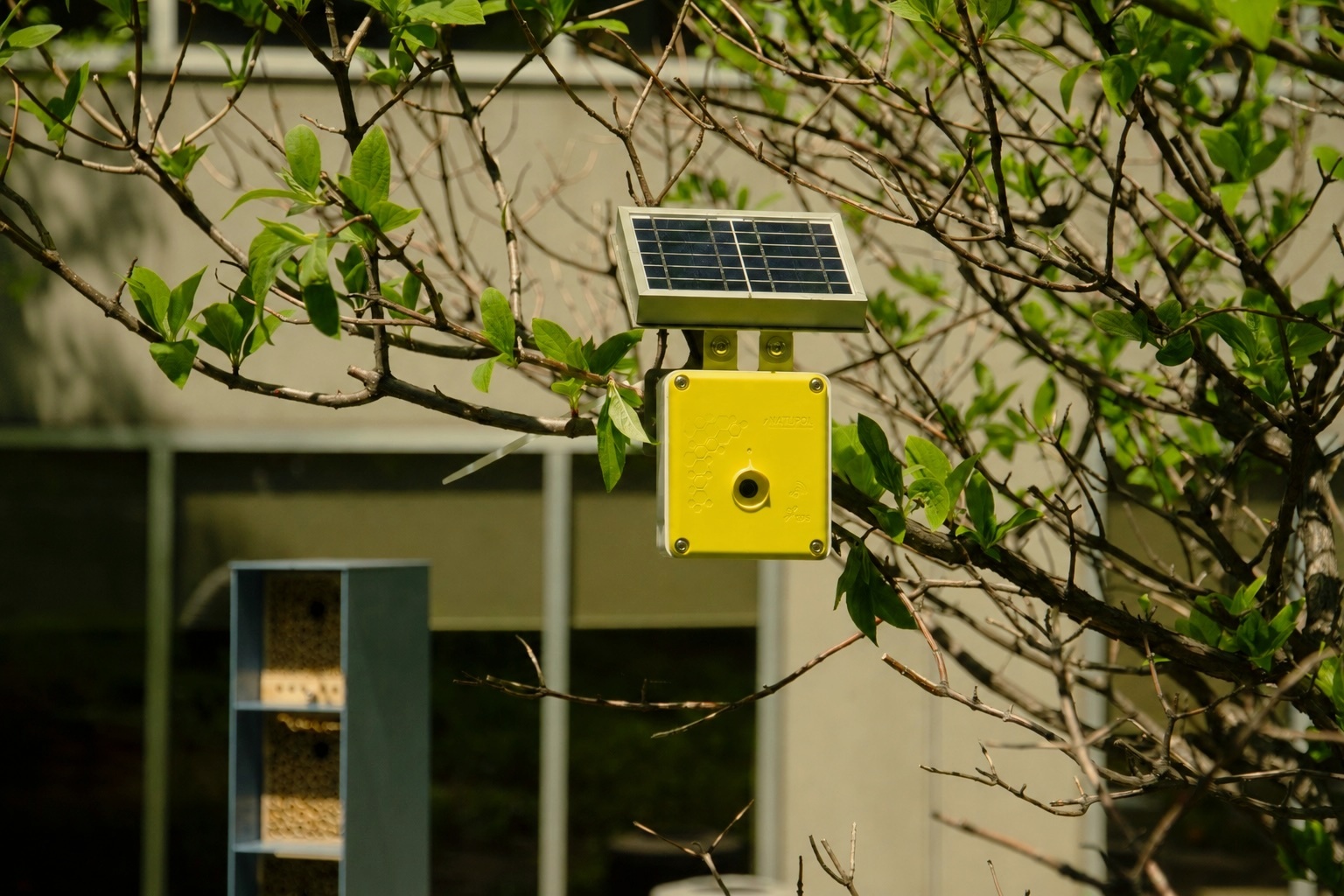
We see it in how our clients buy our nature sensors. It's usually a 50/50 split: half the budget comes from the sustainability team, for the data, and half from the tenant side, because it makes a great story for the people in the building.
Bring investors and tenants along. A clear nature story, backed by data and felt by the people in your buildings, gives you something solid to point to. Data and people, working together.
So where do you start?
Keep it simple. One portfolio-wide strategy, aligned with TNFD's logic, measured over time. And you're not alone here: some of the biggest owners in the world already have biodiversity strategies with real targets.
Not to toot my horn here, but we built Aura knowing this scoring was coming.
Our commitment
Reconnecting people with nature has been our mantra - from the unforgettable moments when tenants and occupiers taste fresh honey from a beehive, to tracking each wingbeat of a pollinator and the frequencies of the dawn chorus around our clients' buildings. Aura, our nature and biodiversity data platform, is a natural evolution for us, ensuring nature can be translated into the data investors need, without losing the magic. Try Aura on one of your buildings for free.