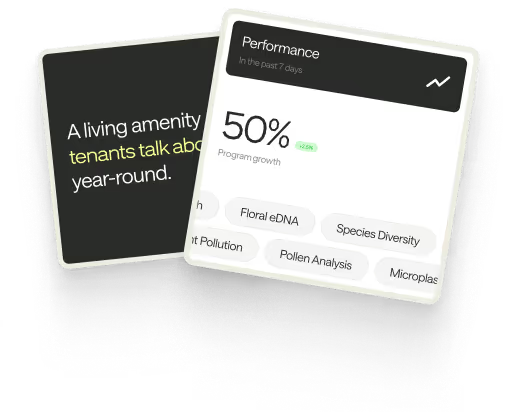


Give your Toronto buildings an engagement program tenants talk about.






















Why urban beekeeping works for Toronto buildings
Toronto is well suited to urban beekeeping. Carved by ancient rivers, its ravine system is one of the largest in the world, about 30 times the size of New York's Central Park, cutting through nearly a fifth of the city and sheltering the vast majority of its indigenous plants and wildlife, according to a University of Toronto-led study. Add in the city's parks and expanding tree canopy, and hives here have real forage within reach of almost any downtown rooftop.
Local policy backs it too. The 2009 Green Roof Bylaw requires most new commercial construction to include a green roof, and the city's Pollinator Protection Strategy commits the city to creating and protecting habitat for the more than 360 bee species that call Toronto home. Together, they've made downtown rooftops a natural jumping-off point for a bee's day of foraging.
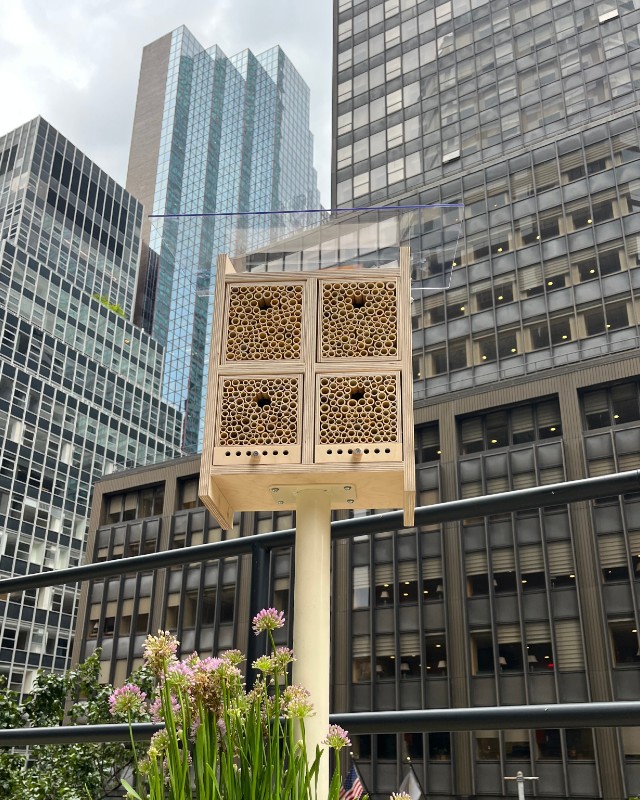
How an urban beekeeping program works in Toronto

A living amenity tenants actually use

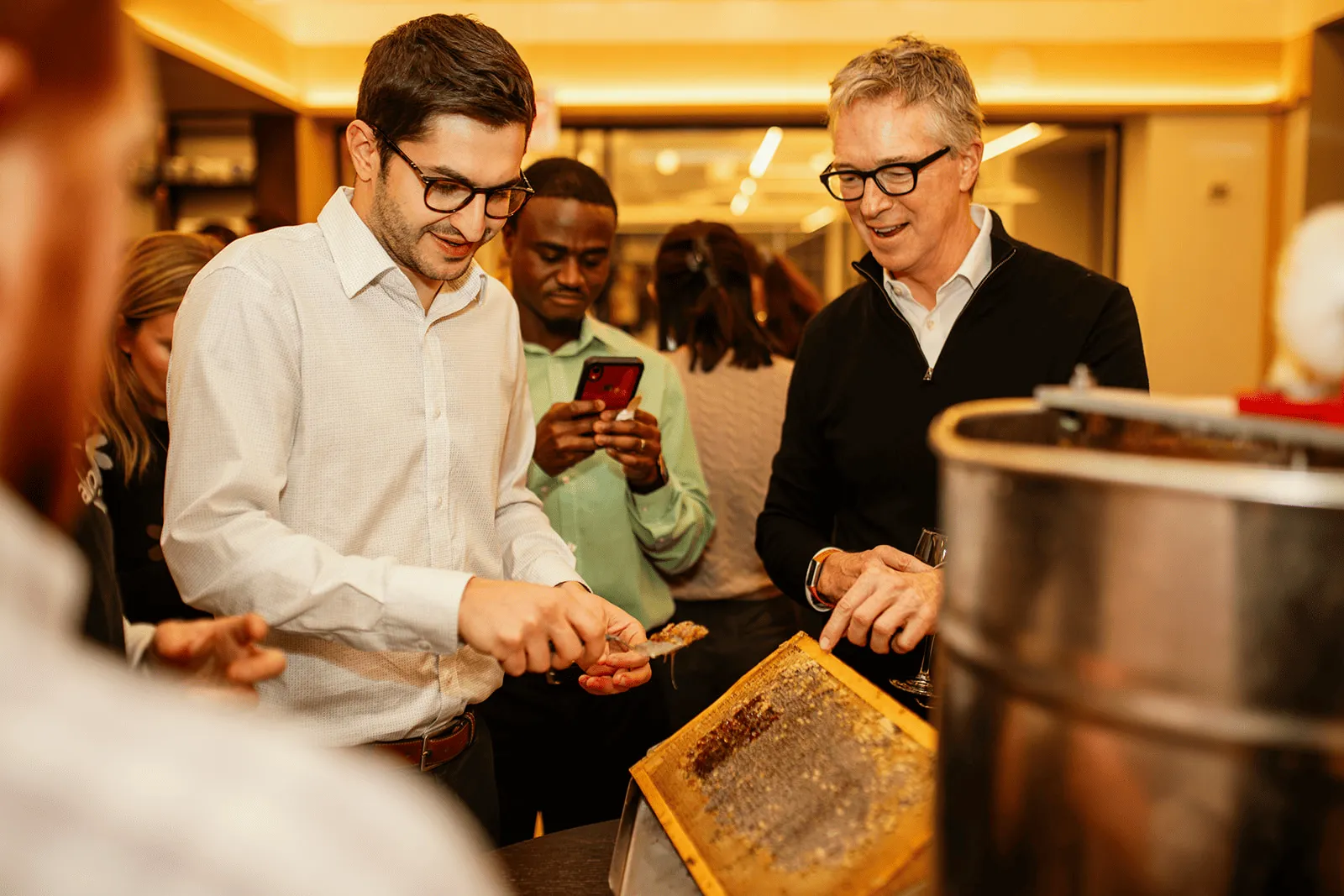

Year-round events

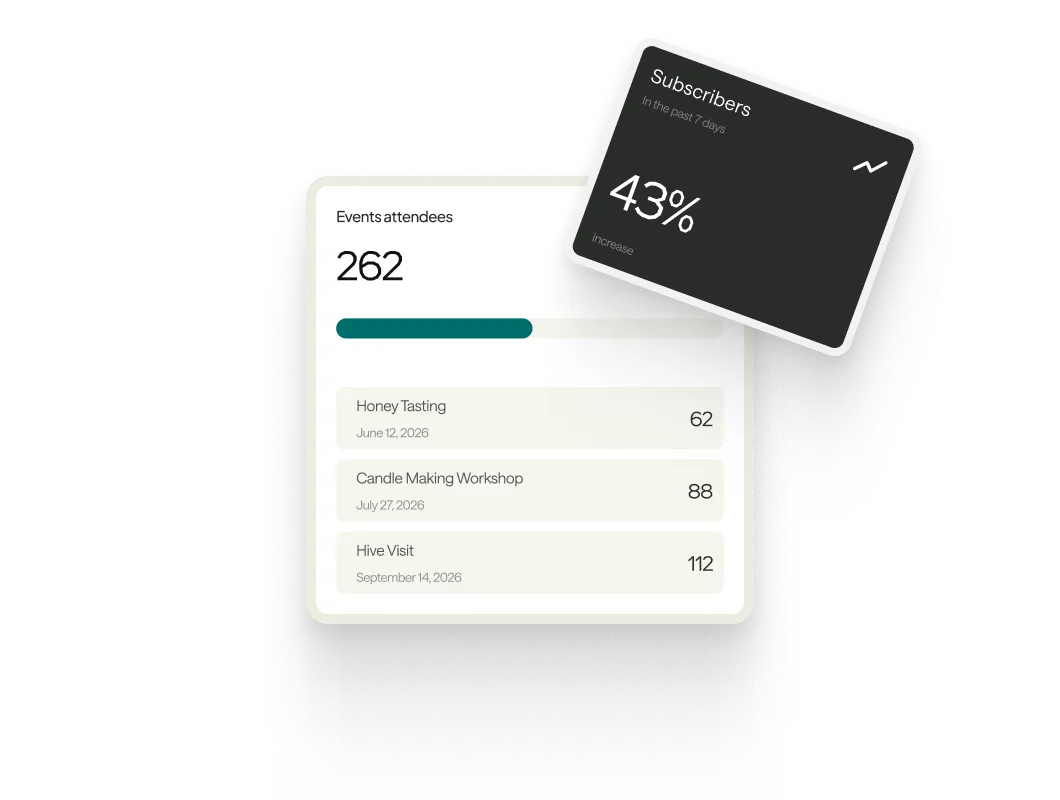
Participation data that compounds
Meet the neighborhood bees
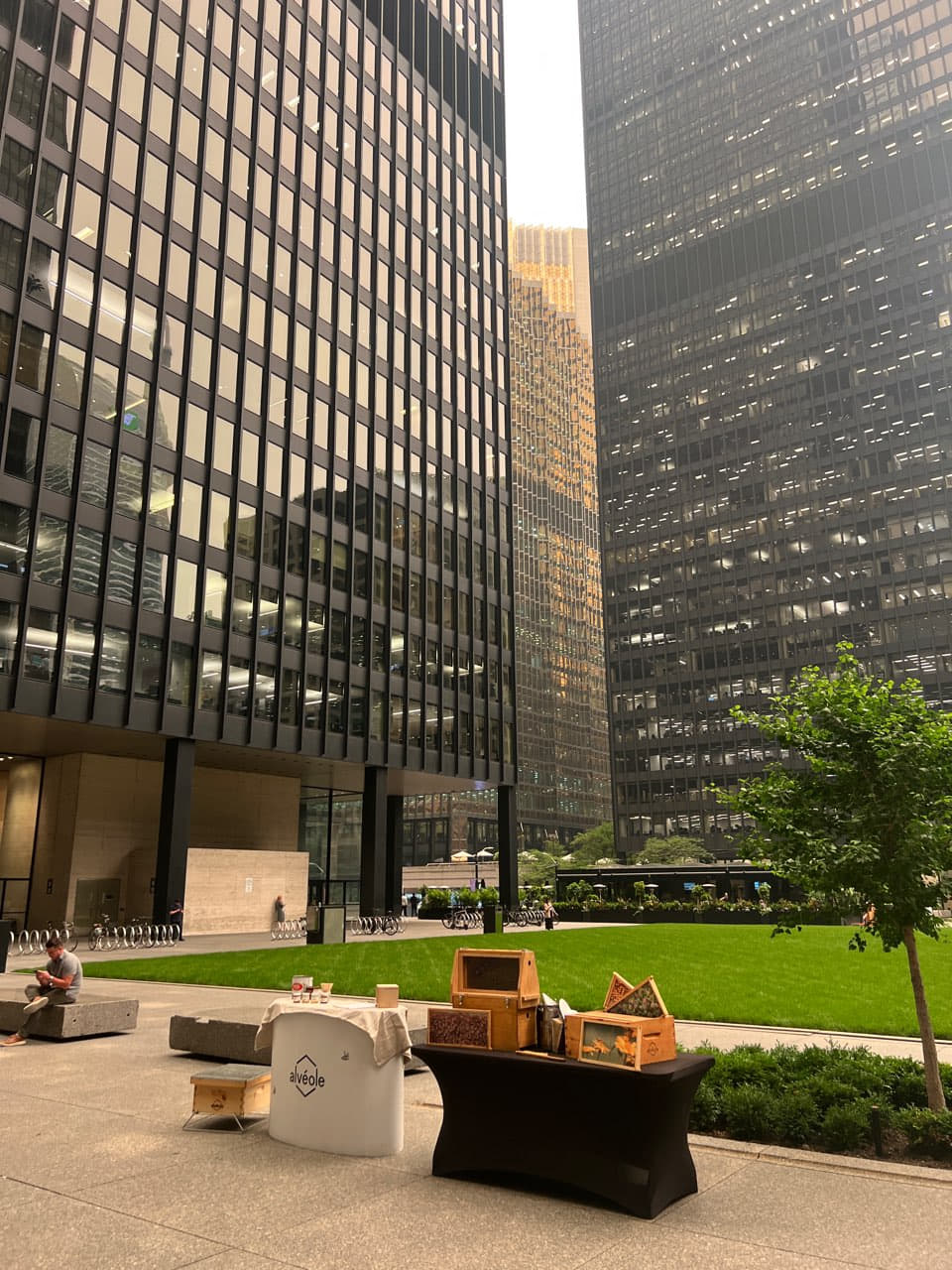
From the Financial District to the Distillery District, bees have moved into some of the city's most recognized addresses. TD Centre, Scotia Plaza, Royal Bank Plaza, Toronto Eaton Centre, CIBC Square, and the Four Seasons Hotel Yorkville all run rooftop hives with Alvéole. Twelve landmark buildings, one program.


Turning your hives into insight

Data collection and instant reporting
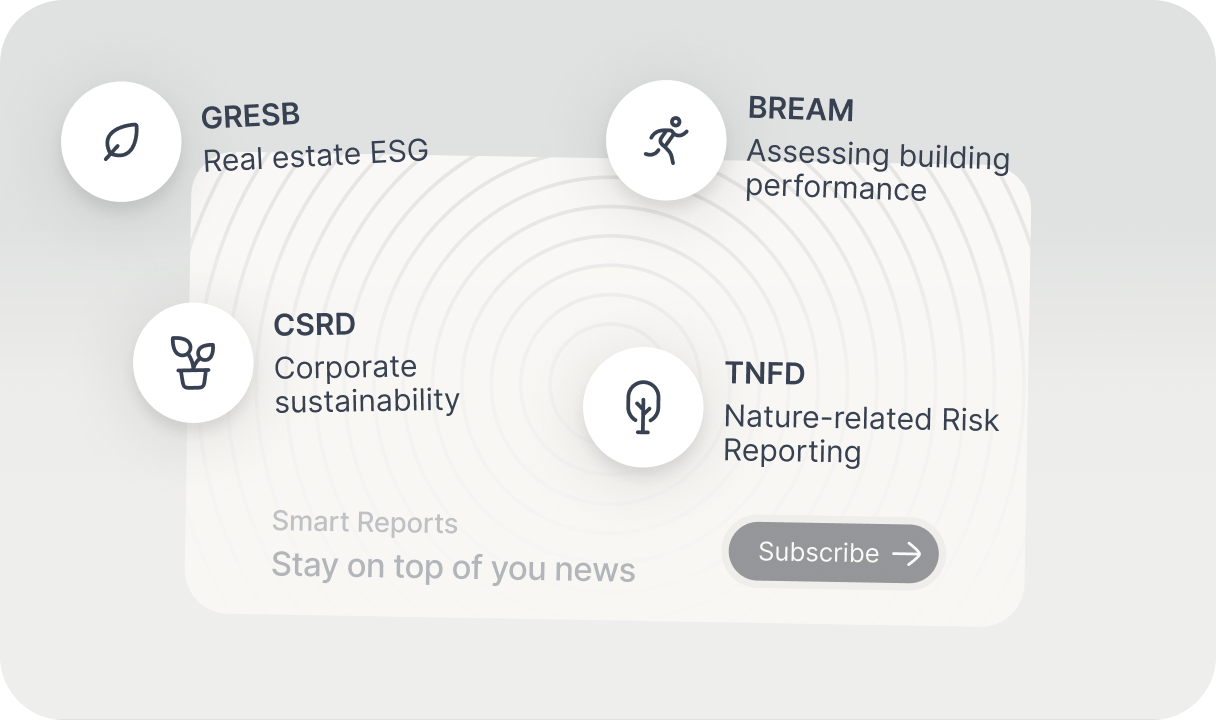
Remote sensing establishes baseline indicators across your portfolio, while onsite monitoring (bioacoustics and eDNA) captures species presence and habitat quality at each property. That data feeds directly into TNFD, CSRD, and GRESB reports, generated in minutes from pre-filled templates, with audit trails showing exactly where each number comes from.


Portfolio dashboard and AI agent
See biodiversity trends across all assets, benchmark each property against portfolio average, and export site-level data for individual disclosures. Ask the AI agent questions about TNFD requirements, GRESB scoring, or site-specific risks, and get answers that reference your actual portfolio data and current framework standards.
We service hives across Toronto and the Greater Toronto Area, including the following municipalities in Ontario:
and more...
Alvéole in the media
FAQ
Yes. Urban beekeeping in Toronto is governed by Ontario's Bees Act, which requires every hive to be registered annually with OMAFRA and kept at least 30 metres from neighbouring homes, parks, or community spaces, and 10 metres from any highway. Alvéole handles registration and siting for every install, to meet provincial setback rules.
A 2023 field study across the Greater Toronto Area, led by York University researchers, found that higher honeybee abundance was linked to lower wild bee species richness in the areas studied. Alvéole takes that seriously: we site hives based on local forage density rather than adding to already-crowded blocks, and pair each honeybee hive with wild bee habitat (BeeHome) to support native pollinators directly, not just honeybees.
The active season runs roughly April through September, driven by Toronto's climate and bloom cycle. That's also when most tenant-facing events land, hive tours, harvest days, workshops, so the program's busiest stretch lines up with the season buildings actually want tenant programming.
Yes. Alvéole keeps Italian honey bees, a breed known for its docility, and honey bees are not aggressive away from the hive, rarely stinging unless it's disturbed. Alvéole's beekeepers site hives away from high-traffic rooftop areas and manage all hive access, so tenants interact with the program through workshops and events, not the hive directly.
Yes. Alvéole's program contributes to BOMA 360, BOMA BEST, BREEAM, Fitwel, GRESB, LEED, and WELL, through pollinator habitat, tenant engagement documentation, and biodiversity monitoring.
They stay in the hive. Honey bees don't hibernate or migrate. As temperatures drop, the colony clusters tightly around the queen and vibrates to generate heat, living off the honey it stored through summer. Before the cold sets in, Alvéole winterizes each hive, reducing the entrance, adding insulation, and confirming the colony has enough stores to reach spring. Tenant programming keeps running through winter with indoor workshops, and hands-on beehive visits pick back up in spring once the colony is active again.